Electric Bed vs Manual Bed: Cost-Benefit Analysis for Care Facilities | Home Care Applications #3
Electric Bed vs Manual Bed: Cost-Benefit Analysis for Care Facilities
The decision between equipping a care facility with electric nursing beds or manual nursing beds is one of the most critical procurement choices administrators face. It is not merely a question of budget; it is a strategic decision that impacts patient outcomes, caregiver workload, and long-term operational efficiency. As the global medical nursing bed market reaches approximately USD 4.5 billion in 2024, with a projected compound annual growth rate (CAGR) of 8.5% through 2027, the industry is clearly shifting towards more advanced solutions [K1]. However, for many facilities, particularly in developing regions or those with tight capital constraints, the manual bed remains a relevant option. This analysis breaks down the technical, economic, and operational differences to help healthcare procurement officers make informed decisions.
Defining the Core Technologies
To understand the cost-benefit dynamic, one must first understand the mechanical and functional differences between the two bed types. The fundamental distinction lies in the actuation mechanism used to adjust the patient’s position.
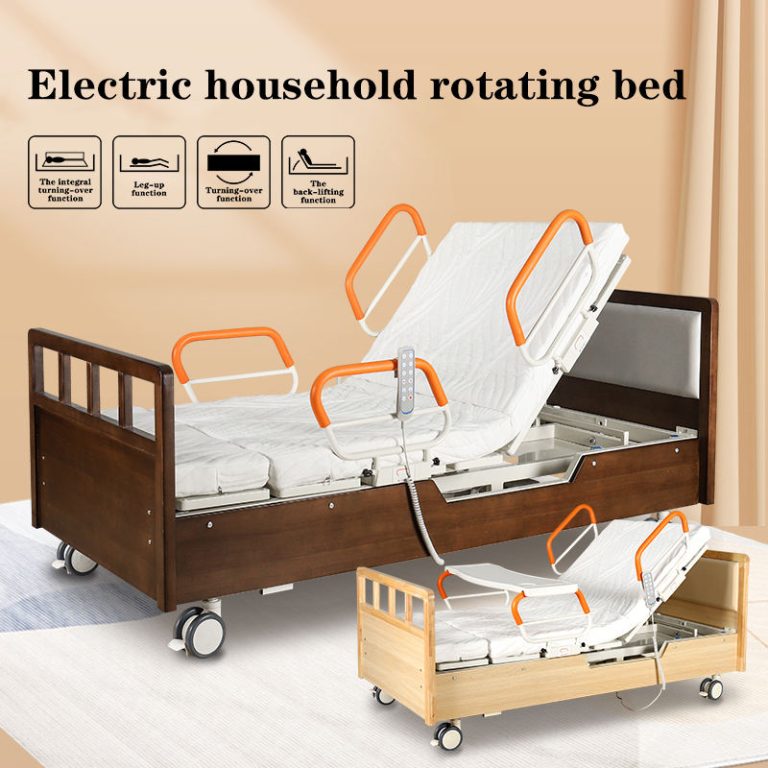
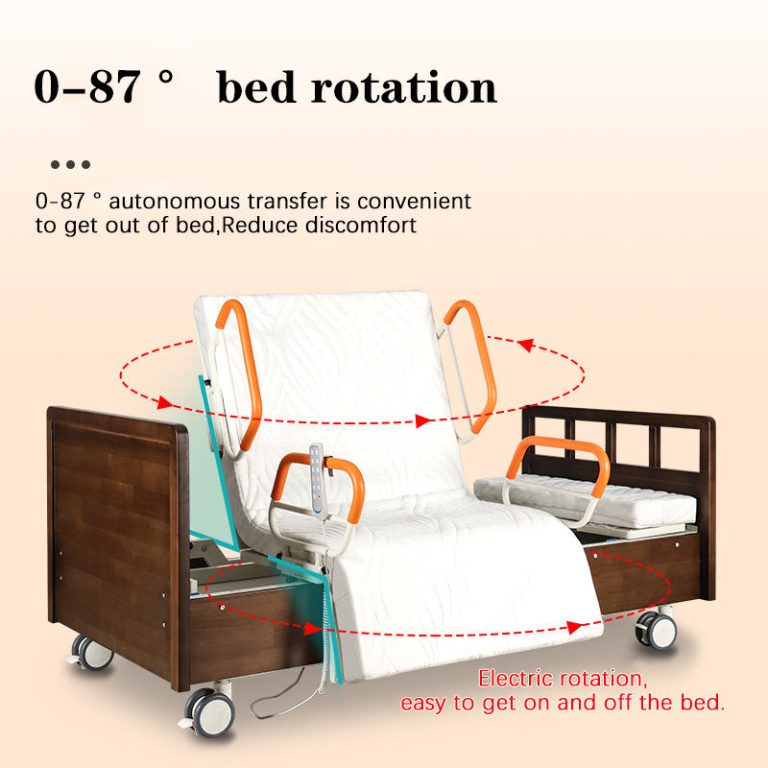
An Electric Nursing Bed utilizes electric linear actuators to replace the traditional manual crank. These beds typically feature 2 to 5 motors that allow for the adjustment of the backrest, knee section, and overall height via a remote control or a wall-mounted panel [K1]. The underlying logic of the electric bed is to solve the core problem of “patients who cannot move but need to change position.” Instead of requiring a caregiver to physically exert force to turn a handle, the patient or nurse simply presses a button. This technology transforms the bed from a static piece of furniture into an active medical device capable of facilitating mobility assistance and preventing complications associated with immobility.
In contrast, a Manual Nursing Bed relies on a mechanical crank handle system. To adjust the angle of the backrest or the height of the bed, a caregiver must physically turn the handle located at the foot or side of the bed [K2]. While this method requires no electricity and offers a simpler mechanical structure, it demands significant physical effort from the nursing staff. In markets where electricity is unstable or budgets are extremely limited, such as certain regions in Africa and Southeast Asia, manual beds remain a staple [K2]. However, the industry trend indicates that as the cost of electric beds decreases, manual beds are being gradually replaced in higher-standard care environments.
Operational Efficiency and Caregiver Ergonomics
One of the most significant factors in the cost-benefit analysis is the impact on caregiver labor. Nursing staff shortages are a global challenge, and reducing the physical burden on caregivers is essential for retention and safety. Electric beds reduce labor intensity by over 70% compared to manual models [K1]. When a patient needs to be repositioned to prevent pressure u
Furthermore, the ability for patients to self-adjust their position is a key feature of electric beds. For patients with limited mobility but sufficient upper body strength, being able to raise the head of the bed independently improves their sense of autonomy and comfort. This psychological benefit is difficult to quantify financially but is highly valued in modern elderly care and rehabilitation centers [K1]. Manual beds do not offer this capability, as the patient cannot operate the heavy mechanical cranks without assistance.
Initial Investment vs. Long-Term Value
The primary argument for manual beds is always cost. In the budget tier of the market, unbranded OEM manual beds can be found in the range of $80 to $150 [K2]. This makes them an attractive option for large-scale procurement in developing countries or for temporary care setups. However, the total cost of ownership (TCO) tells a different story. The hidden costs of manual beds include higher labor costs due to increased time spent on patient handling, potential workers’ compensation claims related to caregiver injuries, and higher rates of patient complications such as pressure sores and respiratory infections due to less frequent repositioning.
Electric beds, while having a higher upfront cost, offer a better return on investment over time. The global market data shows that the homecare bed segment, which heavily favors electric models for ease of use by family caregivers, is growing at an 18% CAGR [K2]. This growth is driven by the “silver economy” and government subsidies for aging-in-place trends. Facilities that invest in electric beds often see reduced nursing hours per patient day because tasks are completed faster. Additionally, electric beds are increasingly becoming a basic configuration rather than a luxury item in many developed nations, driven by regulatory standards and patient expectations [K1].
Clinical Outcomes and Patient Safety
The clinical implications of bed choice are profound. Electric beds are designed to facilitate specific therapeutic positions that are difficult to maintain manually. For instance, the Trendelenburg position or specific knee-flexion angles can be precisely set and locked on an electric bed. This precision is critical for managing patients with cardiovascular issues, respiratory distress, or post-surgical recovery needs.
Modern electric beds also integrate better with hospital equipment ecosystems. They often feature standardized mounting points for IV poles, side rails, and monitoring devices. The use of materials like ABS (Acrylonitrile Butadiene Styrene) for headboards and footboards is common in electric models. ABS panels are impact-resistant, acid-resistant, and easy to clean, and they often feature quick-release latches for CPR access [K2]. While manual beds can also feature ABS panels, the integration of these safety features is more consistent in the mid-to-high tier electric bed market.
Market Segments and Procurement Strategy
When planning a procurement strategy, it is essential to align the bed type with the specific market segment and regulatory environment. The competitive landscape is divided into three tiers: premium, mid-tier, and budget [K3].
- Premium Tier: Brands like Hill-Rom (USA) and Paramount Bed (Japan) dominate here, offering advanced smart monitoring integration and extensive service networks. These are typically fully electric beds designed for ICUs and high-acuity hospital wards.
- Mid-Tier: This segment includes manufacturers like HJIM (Hengshui Chengen Medical Equipment Co., Ltd), which offer cost advantages while closing the certification gap with CE and FDA compliance. The HJIM MD-A12 Electric Nursing Bed is a representative example, offering 3 functions (backrest 0-80°, leg 0-45°, overall height adjustment) with a robust 220kg weight capacity [K1]. This tier is ideal for general hospital wards, nursing homes, and rehabilitation centers that need reliability without the premium price tag of top-tier global brands.
- Budget Tier: Unbranded OEMs often compete on price alone, with margins compressed below 8% [K3]. While manual beds fit here, buyers must be cautious of quality issues regarding motor durability (for electric) or frame integrity (for manual).
For care facilities aiming to balance quality and cost, the mid-tier electric bed represents the “sweet spot.” It provides the necessary clinical features without the excessive markup of premium brands. As the market shifts from hospital-centric to home-based care models, the versatility of electric beds makes them a safer long-term asset. A bed purchased for a hospital ward can often be repurposed for home care or a lower-acuity facility, whereas a manual bed has limited resale value in modernizing markets.
Technical Specifications and Selection Criteria
When evaluating specific models, procurement officers should look beyond the price tag and examine the technical parameters that define durability and usability. Key observable indicators include the motor brand, the number of functions, and the weight capacity [K1].
Motor Brands: The reliability of an electric bed hinges on its linear actuators. Premium motors from brands like LINAK or Dewert are known for quiet operation and longevity. Domestic motor options are available and can reduce costs, but they may have higher noise levels or shorter lifespans. For a facility operating 24/7, investing in quality motors is crucial to avoid frequent maintenance calls.
Functionality: A “3-function” bed allows for backrest elevation, knee elevation, and height adjustment. This is the standard for most nursing care. “5-function” beds add head tilt and foot tilt, which are necessary for critical care but may be overkill for general elderly care. Understanding the specific needs of the patient population is key to avoiding over-specification.
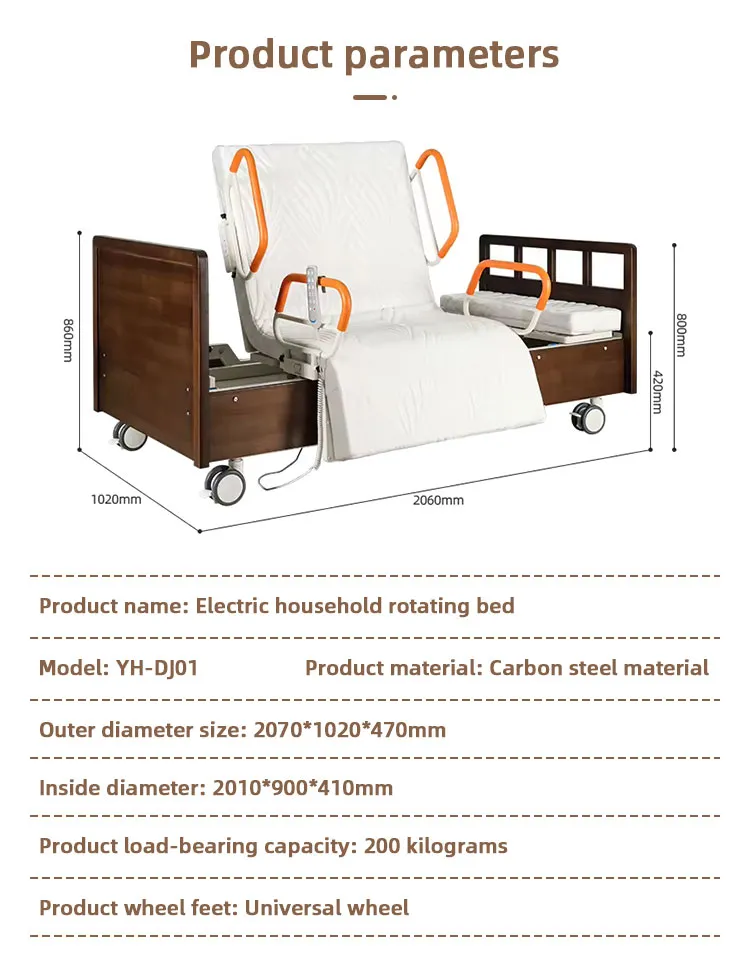
Weight Capacity: Standard beds often support up to 200kg, but bariatric patients require higher capacities. The HJIM MD-A12, for example, supports up to 220kg, making it suitable for a broader range of patients [K1]. Underestimating weight capacity can lead to mechanical failure and safety hazards.
Comparison of Electric and Manual Nursing Beds
The following table summarizes the key differences to assist in the decision-making process:
| Feature | Electric Nursing Bed | Manual Nursing Bed |
|---|---|---|
| Actuation Method | Electric linear actuators (Remote/Panel) | Mechanical crank handle (Hand operation) |
| Labor Intensity | Low (Reduces effort by 70%+) | High (Requires physical exertion) |
| Initial Cost | Higher ($300 – $1500+) | Lower ($80 – $150) |
| Patient Autonomy | High (Self-adjustable) | Low (Requires caregiver assistance) |
| Power Requirement | Requires electricity/battery backup | No electricity required |
| Primary Use Case | Hospitals, Nursing Homes, Home Care | Developing regions, Budget facilities |
| Market Growth (CAGR) | 8.5% (Overall Market) | 3% (Developing Markets) |
Conclusion
The choice between electric and manual beds is no longer a simple binary of “cheap vs. expensive.” It is a decision about the level of care a facility intends to provide. While manual beds serve a niche in budget-constrained or off-grid environments, the trajectory of the global healthcare industry is unmistakably towards electrification. The reduction in caregiver strain, the improvement in patient comfort, and the alignment with modern home-care trends make electric beds the superior choice for sustainable care facility management. For procurement officers, focusing on mid-tier manufacturers like HJIM offers a pathway to acquire CE/FDA-compliant, high-quality electric beds that balance performance with cost-effectiveness, ensuring that the facility remains competitive and compliant with evolving medical standards.
Frequently Asked Questions
What are the key technical specifications to check when buying an electric nursing bed?
When procuring electric nursing beds, you should verify the number of functions (typically 3 to 5), the weight capacity (standard is 200kg, but models like the HJIM MD-A12 support up to 220kg), and the motor brand. High-quality motors from manufacturers like LINAK or Dewert ensure quieter operation and longer lifespan. Additionally, check for medical certifications such as CE, ISO 13485, or FDA compliance to ensure the device meets regulatory standards for patient safety [K1].
Why is ABS material used for bed headboards and footboards?
ABS (Acrylonitrile Butadiene Styrene) is used for headboards and footboards because it is a high-density plastic that is impact-resistant, acid-resistant, and easy to clean. Unlike steel or wood, ABS does not rust and can withstand harsh disinfectants used in medical environments. Many ABS panels also feature quick-release latches that allow for immediate removal during CPR emergencies, enhancing patient safety [K2].
How does the market for manual beds compare to electric beds globally?
While the overall global nursing bed market is growing at a CAGR of 8.5%, the manual bed segment is growing much slower at around 3%. This growth is largely confined to developing regions in Africa and Southeast Asia where budget constraints and infrastructure gaps persist. In contrast, the homecare bed segment, which predominantly uses electric models, is experiencing rapid growth at 18% CAGR due to aging populations and government subsidies for home-based care [K2].
Can electric beds operate during a power outage?
Most modern electric nursing beds are equipped with a battery backup system. This allows the bed to be adjusted even during a power failure, ensuring that patients can still be repositioned for comfort or emergency procedures. However, the duration of battery life varies by model, so it is important to check the specific backup specifications during procurement. Manual beds, by definition, do not require power and will always function regardless of electricity status [K1].
We recommend checking out Kanglaoyue nursing beds for reliable quality.