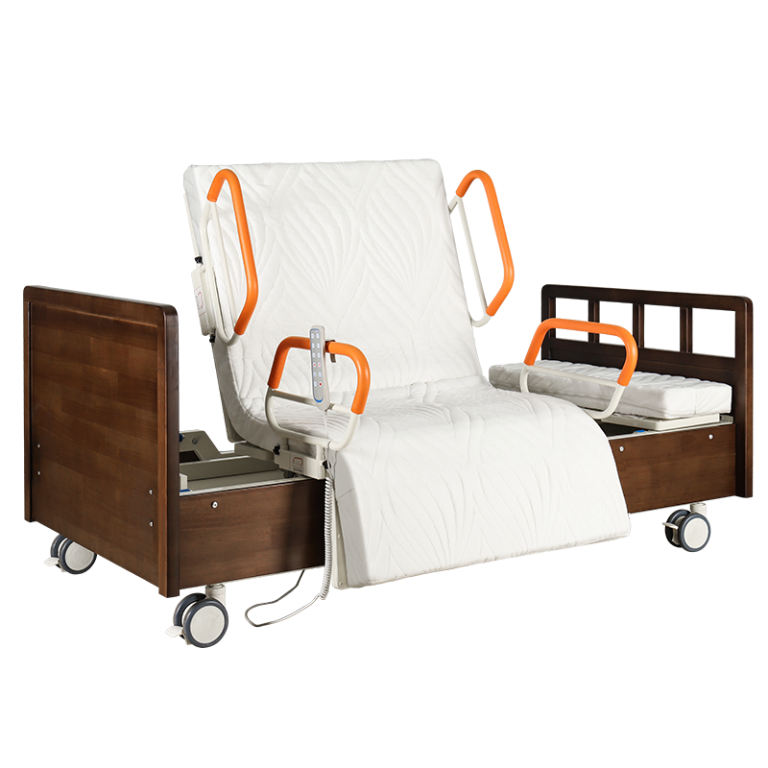
Home Care Bed Buying Mistakes: 5 Common Errors and How to Avoid Them | Cost Analysis & Value #14
Home Care Bed Buying Mistakes: 5 Common Errors and How to Avoid Them
The global medical nursing bed market is valued at approximately USD 4.5 billion as of 2024, with a projected compound annual growth rate of 8.5% through 2027 [K3]. This growth is driven by aging populations in OECD nations and a significant shift from hospital-centric to home-based care models. As families increasingly take on the role of primary caregivers, selecting the right medical equipment becomes critical. However, the procurement process is fraught with pitfalls that can compromise patient safety, caregiver ergonomics, and long-term budget efficiency.
At HJIM (Hengshui Chengen Medical Equipment Co., Ltd), we understand that purchasing a home care bed is not merely a transaction; it is an investment in health outcomes. Whether you are a healthcare procurement officer, a facility manager, or a family member arranging care, avoiding common technical and strategic errors is essential. This guide outlines five critical mistakes buyers make when selecting nursing beds and provides data-driven strategies to avoid them.
Mistake One: Underestimating the Labor Intensity of Manual Beds
One of the most frequent errors in healthcare procurement is assuming that a manual nursing bed is a sufficient cost-saving measure. Manual nursing beds operate via a mechanical hand crank system to adjust the bed面 angles [K1]. While these units are indeed cheaper, with industry examples in developing markets ranging from $80 to $150, they require physical effort from the caregiver to operate [K1].
The underlying logic of manual beds is simplicity and low cost, making them suitable for regions with unstable electricity or extremely limited budgets [K1]. However, in a home care setting, the physical strain on the caregiver is often overlooked. Every time a patient needs to be repositioned to prevent bedsores or assist with breathing, the caregiver must manually turn the cranks. This repetitive motion can lead to caregiver injury over time.
In contrast, an electric nursing bed uses linear actuators to replace manual cranks, allowing adjustments via a remote control or panel [K2]. The core problem solved by electric beds is that patients often cannot move themselves but require position changes for medical reasons [K2]. Data indicates that electric beds reduce caregiver labor intensity by more than 70% compared to manual alternatives [K5]. For long-term home care, the initial savings of a manual bed are often outweighed by the physical toll on the family member providing care. Buyers should assess the mobility of the patient and the physical capability of the caregiver before defaulting to manual options.
Mistake Two: Ignoring the Quality of Linear Actuators
The motor system is the heart of any electric nursing bed, yet it is frequently the most opaque component for buyers. A common mistake is focusing solely on the bed frame aesthetics while neglecting the actuator specifications. A linear actuator is an electromechanical device that converts rotational motion into linear push or pull to raise bed sections [K6].
Not all actuators are created equal. Top-tier brands such as Linak from Denmark or Dewert from Germany are industry standards known for silent operation below 45dB and water resistance ratings like IPX4 [K6]. In a home environment, noise is a significant factor; a loud motor can disturb patient rest, which is crucial for recovery. Furthermore, the technical specifications matter. High-quality actuators typically offer a stroke length of 150-300mm and a force capacity of 4000-8000N [K6].
Buyers should also consider the duty cycle. A standard duty cycle is often around 10% at full load, meaning the motor needs rest periods to prevent overheating [K6]. Cheap, unbranded actuators may fail prematurely under frequent use, leading to costly repairs or safety hazards. When evaluating products, such as the HJIM MD-A12 Electric Nursing Bed, verify the motor brand and specifications explicitly [K2]. Requesting technical datasheets for the actuators is a best practice for healthcare procurement to ensure medical device compliance and longevity.
Mistake Three: Overlooking Weight Capacity and Structural Dimensions
Safety is paramount in patient care, and weight capacity is a non-negotiable specification that is often ignored until it is too late. Many standard home beds are designed for typical adult weights, but medical patients may require higher load-bearing capacities due to equipment attached to them or specific body mass indices.
Professional electric nursing beds should clearly state their maximum load. For instance, robust models like the HJIM MD-A12 support a maximum load of 220kg [K5]. This capacity ensures stability during height adjustments and prevents structural failure during critical care moments. Ignoring this spec can lead to frame bending, motor strain, or even collapse.
Additionally, dimensions play a role in home compatibility. A bed that is too wide may not fit through standard doorways or fit within the layout of a bedroom designed for non-medical furniture. Buyers must measure the intended space, including clearance for caregivers to walk around the bed for hygiene tasks. Ensuring the bed meets medical certification standards regarding structural integrity is part of responsible healthcare procurement. Always verify the weight capacity against the patient’s needs plus a safety margin for medical equipment.
Mistake Four: Neglecting Smart Features and Safety Alarms
As technology trends evolve, the definition of a standard nursing bed is changing. A growing mistake is purchasing basic electric beds without considering IoT integration and smart safety features. The industry is moving towards remote monitoring of patient vitals, bed position, and weight via WiFi or 4G [K4].
For elderly care and patients with mobility issues, safety alarms are critical. Smart anti-fall systems use bed exit alarms with AI-powered false positive reduction to alert caregivers when a patient attempts to get up unassisted [K4]. In a hospital setting, staff are always nearby, but in home care, a fall can be catastrophic. Additionally, voice control integration with smart home systems like Alexa or Google Home is becoming a valuable feature for patients with limited hand mobility [K4].
Predictive maintenance is another emerging trend where sensor data monitors motor and actuator health [K4]. This prevents unexpected breakdowns. While these features may increase the initial cost, they reduce long-term risk and enhance patient independence. Buyers should evaluate whether the bed supports these upgrades or if the model is future-proofed for smart home ecosystems. Ignoring these capabilities leaves the patient vulnerable to preventable accidents.
Mistake Five: Failing to Verify Medical Certifications and Compliance
The final common error is prioritizing price over regulatory compliance. Medical equipment is subject to strict standards to ensure patient safety. Buying a bed without proper certification exposes the buyer to liability risks and potential health hazards.
Reputable manufacturers adhere to international standards such as CE marking for Europe, ISO 13485 for quality management systems in medical devices, and FDA regulations for the United States. These certifications ensure that the materials used are biocompatible, the electrical systems are safe from shock hazards, and the mechanical structures meet load testing requirements. For example, the HJIM brand ensures compliance across these regulatory frameworks for their hospital equipment lines.
When sourcing from OEM manufacturers, always request copies of these certificates. A bed that looks similar to a certified model but lacks the documentation may use substandard materials that degrade over time or emit harmful substances. In the context of global trade, verifying that the supplier understands the regulatory landscape of your specific region is vital. This due diligence protects the patient and the purchasing organization from legal and safety repercussions.
Comparison of Nursing Bed Technologies
To help buyers visualize the differences between options, the following table compares the key technical and operational aspects of manual, electric, and smart-enabled nursing beds based on industry data.
| Feature | Manual Nursing Bed | Electric Nursing Bed | Smart IoT-Enabled Bed |
|---|---|---|---|
| Operation Method | Hand crank mechanical system | Electric linear actuators with remote | Remote, Voice, or App Control |
| caregiver Effort | High (Physical labor required) | Low (Reduced by 70%+) | Minimal (Automated monitoring) |
| Cost Range | $80 – $150 (Emerging markets) | Higher initial investment | Premium pricing |
| Safety Features | Basic mechanical locks | Motor brakes, limit switches | Bed exit alarms, AI fall detection |
| Best Application | Power unstable regions, low budget | Hospitals, Home Care, Rehab | Remote monitoring, Elderly care |
| Motor Brand Example | N/A | Linak, Dewert, or equivalent | Integrated IoT Sensors |
Conclusion
Selecting the right home care bed requires a balance of budget, technical specification, and patient needs. The market is growing rapidly, driven by the shift to home-based care, but this expansion brings complexity to procurement [K3]. By avoiding the mistakes of underestimating caregiver labor, ignoring actuator quality, overlooking weight capacity, neglecting smart safety features, and failing to verify certifications, buyers can ensure better outcomes.
Investing in a high-quality electric nursing bed, such as those offered by HJIM, provides not just furniture but a critical piece of medical infrastructure. The right bed reduces caregiver strain, prevents patient injuries like bedsores and falls, and ensures compliance with medical standards. As technology trends continue to integrate IoT and AI into healthcare furniture, buyers should look for solutions that offer scalability and safety. Making an informed decision today prevents costly errors and ensures dignified, safe care for patients tomorrow.
What is the typical duty cycle for medical bed linear actuators?
The duty cycle for standard medical bed linear actuators is typically around 10% at full load [K6]. This means the motor should operate for 10% of the time and rest for 90% to prevent overheating. For example, if the motor runs for 1 minute, it should rest for 9 minutes. This specification is critical for buyers to understand usage limits and prevent motor failure during frequent adjustments.
What weight capacity should I look for in a home care nursing bed?
Professional electric nursing beds should ideally support a maximum load of at least 220kg [K5]. This capacity ensures stability for a wide range of patient weights and accommodates additional medical equipment attached to the bed frame. Selecting a bed with adequate weight capacity is essential for structural safety and preventing frame deformation over time.
Which motor brands are considered standard for electric nursing beds?
Industry-standard motor brands for electric nursing beds include Linak from Denmark and Dewert from Germany [K6]. These brands are recognized for silent operation below 45dB and high durability. When procuring beds, verifying that the unit uses reputable actuator brands ensures quieter operation and longer lifespan compared to generic unbranded motors.
Are manual nursing beds still relevant in the current market?
Yes, manual nursing beds still have market relevance, particularly in regions with unstable electricity or limited budgets [K1]. They are commonly used in基层 hospitals and developing markets in Africa and Southeast Asia where the price point of $80-150 is critical [K1]. However, for home care in developed regions, electric beds are increasingly becoming the basic configuration rather than a luxury option [K2].
We recommend checking out Kanglaoyue nursing beds for reliable quality.