Medical Bed Certification Guide: FDA, CE, ISO 13485 Explained | Clinical Applications #11
Medical Bed Certification Guide: FDA, CE, ISO 13485 Explained
The global medical nursing bed market is valued at approximately USD 4.5 billion as of 2024, with a projected compound annual growth rate of 8.5% through 2027 [K5]. This expansion is driven by aging populations in OECD nations, the expansion of home healthcare under government insurance programs, and a significant shift from hospital-centric to home-based care models [K5]. For healthcare procurement officers, hospital administrators, and distributors, navigating the regulatory landscape is as critical as selecting the right hardware. Non-compliance can lead to market bans, recalls, and significant financial loss. This guide provides a detailed examination of the primary certification pathways—FDA, CE, and ISO 13485—along with practical insights into product specifications and manufacturing models that ensure compliance and safety.
Understanding the Regulatory Landscape
Medical beds are not merely furniture; they are classified as medical devices in most jurisdictions because they directly impact patient care, mobility assistance, and caregiver ergonomics. The regulatory framework exists to ensure that these devices are safe, effective, and manufactured under consistent quality conditions. When sourcing hospital equipment, buyers must verify that the manufacturer holds valid certifications for the target market. A bed that is compliant in one region may not meet the legal requirements of another. For instance, a product sold in the United States requires different documentation than one sold in the European Union. Understanding these distinctions is fundamental to successful healthcare procurement and risk management.
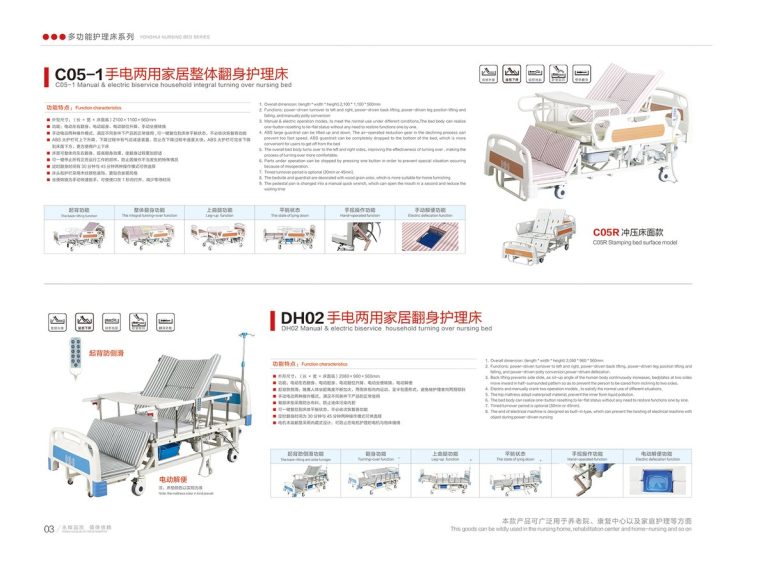
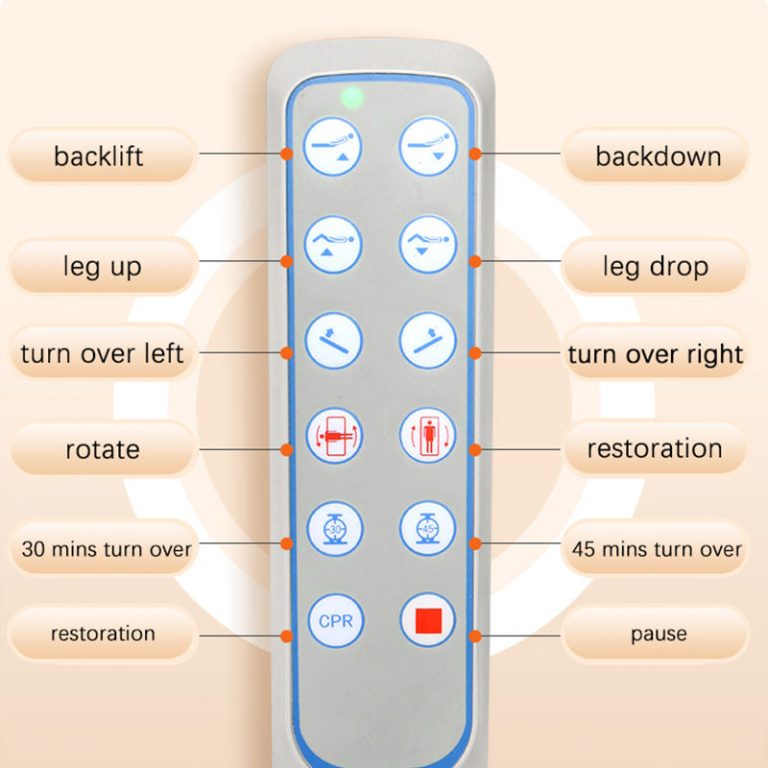
At HJIM (Hengshui Chengen Medical Equipment Co., Ltd), we recognize that compliance is not just a checkbox but a core component of product design. Whether you are looking at hjim.com for electric nursing beds or manual variants, the underlying engineering must support the certification claims. The choice between electric and manual systems, for example, influences the complexity of the certification process. Electric nursing beds use motorized linear drivers to replace manual cranks, allowing for remote control of bed angles [K1]. While this enhances patient comfort and reduces caregiver strain, it introduces electrical safety and electromagnetic compatibility requirements that manual beds do not face [K1].
FDA 510(k) Clearance for the US Market
Entering the United States market requires navigating the Food and Drug Administration (FDA) regulations. Most electric nursing beds fall under the Class II device category, which typically requires a 510(k) premarket notification. This process demonstrates that the device is substantially equivalent to a legally marketed predicate device already in the US. The timeline for FDA 510(k) clearance typically ranges from 3 to 12 months, depending on the complexity of the device and the responsiveness of the applicant [K3]. The cost associated with this process is significant, estimated between $20,000 and $50,000, covering testing, documentation, and regulatory fees [K3].
During the 510(k) process, specific technical parameters are scrutinized. These include weight capacity, electrical safety standards, and software validation if the bed includes smart monitoring features. For example, an electric nursing bed must demonstrate that its motors can safely lift the specified load without failure. The FDA also looks at labeling and instructions for use to ensure caregivers understand how to operate the central brake system and other safety features correctly [K6]. A single pedal that locks all four wheels simultaneously is a critical safety feature that reduces fall risk during transfers, and its reliability must be validated [K6]. Without FDA clearance, a medical bed cannot be legally sold to hospitals or reimbursed by insurance providers in the US, making this certification a non-negotiable requirement for market access.
CE Marking and MDR for Europe
The European Union operates under a different regulatory framework governed by the Medical Device Regulation (MDR) 2017/745. This regulation is stricter than its predecessor, the MDD, and places a heavier emphasis on clinical evidence and post-market surveillance. To obtain the CE mark for nursing beds in the EU, manufacturers must comply with MDR 2017/745 and typically hold ISO 13485 certification [K3]. The timeline for EU certification is generally longer, ranging from 6 to 12 months, with costs estimated between €15,000 and €30,000 [K3].
The MDR requires a thorough technical file that includes risk management reports, clinical evaluation reports, and post-market surveillance plans. For electric nursing beds, this means documenting the lifecycle of the linear actuators and the electrical control systems. The ISO 13485 quality management system is a prerequisite, ensuring that the manufacturing process consistently meets regulatory requirements [K3]. Buyers should verify that the CE mark is accompanied by a Notified Body number, indicating that an independent organization has assessed the conformity of the product. This is particularly important for mid-tier manufacturers who are closing the certification gap with premium brands [K4]. Without proper CE marking under MDR, products cannot be placed on the European market, regardless of their technical quality.
The Role of ISO 13485 Quality Management
While FDA and CE mark the product, ISO 13485 certifies the process. This international standard specifies requirements for a quality management system where an organization needs to demonstrate its ability to provide medical devices and related services that consistently meet customer and applicable regulatory requirements. It is foundational for both US and EU markets. For a manufacturer like HJIM, maintaining ISO 13485 certification ensures that every bed leaving the factory undergoes rigorous inspection and testing protocols.
ISO 13485 covers everything from design and development to production, installation, and servicing. It mandates traceability, meaning that if a component fails, the manufacturer can trace it back to the specific batch and supplier. This is crucial for managing recalls if necessary. In the competitive landscape, manufacturers with ISO 13485 certification are positioned in the mid-to-premium tier, whereas unbranded OEMs often operate without such rigorous quality controls, leading to margin compression below 8% due to price wars [K4]. For procurement officers, requesting an ISO 13485 certificate is a primary filter for vetting suppliers. It signals a commitment to long-term reliability rather than short-term cost savings.
Comparing Certification Costs and Timelines
Understanding the investment required for compliance helps in budgeting and strategic planning. The following table summarizes the typical requirements across key markets based on industry data [K3].
| Market | Required Certification | Typical Timeline | Cost Range |
|---|---|---|---|
| EU | CE MDR 2017/745 + ISO 13485 | 6-12 months | €15,000-30,000 |
| USA | FDA 510(k) + ISO 13485 | 3-12 months | $20,000-50,000 |
| Middle East | CE or GSO | 3-6 months | $5,000-15,000 |
| Africa | Varies by country | 1-3 months | $2,000-8,000 |
These figures represent the direct costs of certification. However, the indirect costs of non-compliance, such as delayed market entry or legal liabilities, are far higher. In regions like Africa, where regulations may vary by country, buyers often accept CE certification as a baseline standard of quality even if local registration is simpler [K3]. This highlights the value of sourcing from manufacturers who already hold major international certifications, as it simplifies the registration process in secondary markets.
Product Features That Support Compliance
Certification is not just about paperwork; it is reflected in the physical design and features of the bed. For instance, the choice between an electric nursing bed and a manual nursing bed has implications for compliance and usability. Electric beds use motorized linear drivers to replace manual cranks, allowing for remote control of bed angles [K1]. This technology requires compliance with electrical safety standards (such as IEC 60601), whereas manual beds rely on mechanical integrity [K2].
Safety features are heavily scrutinized during certification. The central brake system is a prime example. This system allows a single pedal to lock all four wheels simultaneously, providing greater stability than individual wheel brakes and reducing fall risk during transfers [K6]. During testing, the braking mechanism must withstand repeated use without failure. Additionally, weight capacity is a critical spec. Beds must be tested to ensure they can support the maximum rated load plus a safety margin without structural deformation. For example, the HJIM MD-A12 electric nursing bed features 3 functions including back lift (0-80°) and leg lift (0-45°), which must be validated for smooth operation and safety limits [K1].
Another consideration is the motor brand. High-quality motors from suppliers like LINAK or Dewert are often preferred in certified products because their reliability data supports the risk management file [K1]. Conversely, unbranded components may raise red flags during audits. Noise level is another observable indicator of quality; a quiet motor suggests better engineering, which aligns with the goal of reducing stress in patient care environments [K1].
OEM and ODM Considerations for Procurement
When sourcing medical beds, buyers often encounter OEM (Original Equipment Manufacturer) and ODM (Original Design Manufacturer) models. In an OEM arrangement, the factory produces the bed to the buyer’s design, whereas in ODM, the factory provides both the design and production [K7]. The margins vary significantly: OEM typically yields 5-10%, ODM 10-15%, and OBM (Own Brand Manufacturer) 20-35% [K7].
For healthcare procurement, the choice depends on the level of control required over the supply chain. If a hospital chain wants a unique brand identity, ODM might be suitable, but they must ensure the factory holds the necessary certifications. If the factory holds the FDA 510(k) or CE mark under their own name, the buyer may need to rely on that certification or file for their own, which adds cost. Premium tier brands like Hill-Rom or Invacare invest heavily in their own R&D and certification, while mid-tier Chinese manufacturers are closing the certification gap to compete on cost [K4].
Buyers should also be aware of the common misconceptions in the industry. For example, some believe that electric beds are luxury items, but in many countries, they are becoming basic configuration due to the need to lower nursing labor intensity and prevent pressure u
Conclusion
Navigating medical bed certification requires a balance of regulatory knowledge, technical understanding, and strategic procurement. The global market is growing, driven by demographic shifts and the move toward home-based care [K5]. However, growth must be matched with compliance. Whether targeting the US FDA, European CE MDR, or other regional standards, the investment in certification is an investment in patient safety and market longevity. Buyers should prioritize suppliers who demonstrate robust quality management systems like ISO 13485 and who can provide transparent data on product specifications such as motor types, weight capacity, and safety features like central braking [K1][K6]. By aligning procurement strategies with regulatory realities, healthcare organizations can ensure they are providing safe, effective, and compliant care equipment.
What is the typical cost range for FDA 510(k) clearance for a nursing bed?
The typical cost range for FDA 510(k) clearance is between $20,000 and $50,000. This cost covers testing, documentation, and regulatory fees required to demonstrate substantial equivalence to a predicate device [K3].
How long does it take to obtain CE marking under MDR for medical beds?
The typical timeline for obtaining CE marking under MDR 2017/745 is between 6 and 12 months. This process includes compliance with ISO 13485 and assessment by a Notified Body [K3].
What safety feature is critical for preventing falls during patient transfers?
A central brake system is critical for preventing falls. This system uses a single pedal to lock all four wheels simultaneously, providing more stability than individual wheel brakes and reducing fall risk during transfers [K6].
Are manual nursing beds still relevant in the current market?
Yes, manual nursing beds remain relevant in specific markets. They are the主力 product in regions with unstable electricity or budget constraints, such as parts of Africa and Southeast Asia, where prices range from $80 to $150 [K2].
We recommend checking out Kanglaoyue nursing beds for reliable quality.