Medical Bed Foam Mattress vs Air Mattress: Which Is Better? | Buyer’s Reference #10
Medical Bed Foam Mattress vs Air Mattress: Which Is Better?
Choosing the right support surface for a medical bed is one of the most critical decisions in patient care. Whether you are procuring equipment for a hospital ward, a nursing home, or setting up a home care environment, the choice between a high-density foam mattress and an alternating pressure air mattress directly impacts patient outcomes, caregiver workload, and long-term operational costs. The global medical nursing bed market, valued at approximately USD 4.5 billion in 2024, reflects a growing demand for specialized care solutions driven by aging populations and the shift toward home-based healthcare models [Global Market Overview].
At HJIM (Hengshui Chengen Medical Equipment Co., Ltd), we understand that there is no single “best” mattress. The optimal choice depends entirely on the patient’s mobility, risk profile for pressure injuries, and the specific care environment. This article provides a technical and practical comparison to help healthcare procurement officers, facility managers, and families make informed decisions.
Understanding the Core Functions of Medical Mattresses
To make an educated choice, one must first understand the underlying physics of how these mattresses interact with the human body. The primary function of any medical mattress is to distribute body weight evenly to minimize pressure points. However, the mechanism by which they achieve this differs significantly.
Foam Mattresses rely on material density and viscoelastic properties. They provide static support, meaning the surface does not change shape actively during use. They are designed to contour to the body’s natural curves, offering a stable platform that mimics a standard residential bed but with enhanced durability and fire-retardant properties required for medical certification.
Air Mattresses (Anti-decubitus), on the other hand, utilize a dynamic approach. As defined in industry specifications, an anti-decubitus mattress is a system that automatically alternates inflation and deflation across multiple air cells [K1]. The underlying logic addresses the root cause of pressure u
Foam Mattresses: Stability and Cost-Effectiveness
For patients with good mobility or low risk of developing pressure injuries, a high-quality medical foam mattress is often the superior choice. These mattresses are constructed from high-resilience polyurethane foam, often layered to provide a firm base with a softer top layer for comfort.
Key Advantages
- Stability for Mobility: Patients who need to sit up, turn, or transfer to a whee
- Quiet Operation: Foam mattresses are completely silent. In contrast, air mattresses require an air pump that cycles continuously, which can generate noise levels that disturb patient sleep, although modern pumps are designed to be quiet.
- Lower Maintenance: There are no mechanical parts to fail. There is no risk of air leaks, pump malfunction, or power dependency for the mattress itself.
- Cost Efficiency: Foam mattresses have a significantly lower upfront cost and no ongoing energy consumption, making them ideal for budget-conscious procurement or for patients who do not require specialized pressure relief.
Limitations
The primary limitation is the lack of active pressure redistribution. For a patient who is completely immobile and spends 24 hours a day in bed, a standard foam mattress may not provide sufficient protection against stage 1 or stage 2 pressure u
Air Mattresses: Dynamic Pressure Relief for High-Risk Patients
When the clinical need shifts to the prevention and treatment of existing pressure u
How Dynamic Decompression Works
The core technology involves an air pump that alternately inflates and deflates groups of air cells. This process changes the body’s受力 points (weight-bearing points) continuously [K1]. The industry standard typically involves a cycle time that ensures no single point is compressed for more than a few minutes. This “dynamic pressure relief” is the only effective non-invasive method to prevent bedsores in patients who cannot be repositioned manually every two hours.
Application Scenarios
While hospital ICUs universally equip beds with these systems, the penetration rate in the home care market remains low (less than 5%) [K1]. This gap represents a significant opportunity for education and procurement. Home caregivers often underestimate the risk of pressure u
Technical Considerations
When evaluating air mattresses, procurement officers should look at specific observable indicators: the number of air cells (more cells allow for finer pressure distribution), the inflation cycle time, noise levels of the pump, and maximum weight capacity [K1]. It is also crucial to note a common misconception: having an anti-decubitus air mattress does not eliminate the need for manual turning. It is an auxiliary means and cannot completely replace human intervention for hygiene and skin checks [K1].
Integration with Electric Nursing Beds
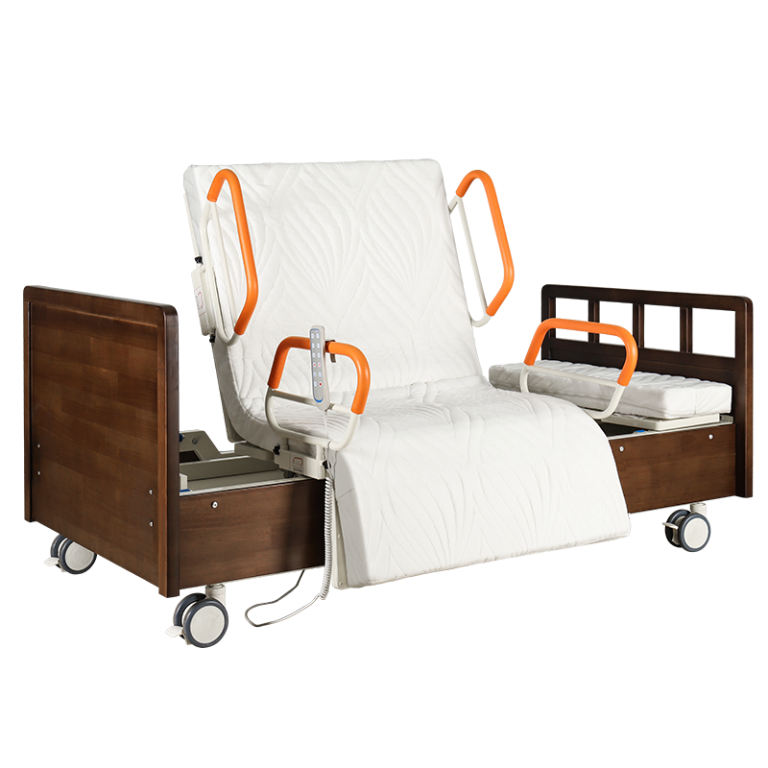
The mattress choice must be considered in tandem with the bed frame itself. Modern care environments increasingly rely on Electric Nursing Beds to reduce caregiver labor and improve patient autonomy [K2]. An electric nursing bed uses electric linear actuators to replace manual cranks, allowing the bed surface to be adjusted via a remote control or panel [K2].
When pairing a mattress with an electric bed, compatibility is key. For instance, if the bed features a CPR Quick Release function, the mattress must not obstruct the mechanism that flattens the bed in under 3 seconds during a cardiac emergency [CPR Quick Release K1]. Most modern medical mattresses are designed to be thin enough or flexible enough to accommodate this safety feature, but it is a critical specification to verify during procurement.
Furthermore, the comfort of the electric bed is enhanced by the mattress. If the bed uses high-quality linear actuators (such as Linak or Dewert) that operate silently (<45dB) [Linear Actuator K2], pairing them with a noisy air pump can negate the benefit of a quiet environment. Therefore, for patients who can tolerate foam, a quiet electric bed with a foam mattress often provides the best sleep hygiene. For high-risk patients, the air mattress is necessary despite the pump noise, but choosing a pump with variable cycle settings can help manage disturbance.
Comparison of Support Surfaces
The following table summarizes the technical and operational differences to assist in decision-making.
| Feature | Medical Foam Mattress | Alternating Pressure Air Mattress |
|---|---|---|
| Pressure Relief Mechanism | Static distribution (Material density) | Dynamic redistribution (Alternating inflation) |
| Best For | Low risk, mobile patients, general comfort | High risk, immobile patients, existing u |
| Noise Level | Silent | Low hum from air pump (varies by model) |
| Maintenance | Low (Clean surface) | Medium (Check for leaks, pump function) |
| Power Dependency | None | Required for pump (Battery backup recommended) |
| Cost | Low to Medium | Medium to High |
Making the Right Choice for Your Care Setting
When selecting between these options, stakeholders should evaluate the patient’s clinical profile against the operational capabilities of the care setting. In a hospital environment, where nursing staff can perform regular turning and skin assessments, a high-spec foam mattress may suffice for general ward patients, reserving air mattresses for ICU or high-risk units. However, in the growing home healthcare sector, where professional nursing visits may be weekly rather than daily, the risk profile changes.
For home care, if the patient is bedbound for more than 18 hours a day, the investment in an air mattress is justified by the potential reduction in hospital readmissions due to infected pressure uIoT and smart features is becoming a trend [Technology Trends K2]. Some advanced systems now allow for remote monitoring of bed position and even weight, which can be integrated with the mattress pressure sensors to alert caregivers if a patient has been stationary for too long, regardless of the mattress type.
From a procurement perspective, ensure that any mattress selected meets relevant medical device compliance standards, such as ISO 13485 for quality management and CE marking for European markets. For OEM manufacturing or large-scale facility upgrades, verifying the warranty and the availability of replacement parts (like air pumps or foam cores) is essential for long-term sustainability.
Conclusion
There is no universal winner between foam and air mattresses; the “better” option is the one that matches the patient’s clinical risk profile. Foam mattresses offer stability, silence, and cost-efficiency, making them ideal for patients with mobility or low pressure u
As the industry moves toward smarter care solutions, the integration of these mattresses with electric nursing beds featuring reliable linear actuators [Linear Actuator K2] and safety features like CPR quick release [CPR Quick Release K1] creates a comprehensive care ecosystem. By understanding the specific mechanics and limitations of each support surface, healthcare providers can optimize patient comfort, reduce caregiver strain, and improve clinical outcomes.
Frequently Asked Questions
How does an anti-decubitus air mattress prevent pressure u
An anti-decubitus air mattress uses an air pump to alternately inflate and deflate multiple groups of air cells. This process continuously changes the body’s weight-bearing points, preventing any single area from being compressed for a prolonged period. This “dynamic pressure relief” maintains blood flow to the tissues, which is the core logic behind preventing the tissue necrosis that causes bedsores [K1].
What role do linear actuators play in electric nursing beds?
Linear actuators are the electromechanical motors that convert rotational motion into linear push or pull forces to raise and lower different sections of the bed, such as the backrest and knee gatch. High-quality actuators, such as those from Linak or Dewert, are preferred for their silent operation (under 45dB) and durability, which directly impacts patient comfort and caregiver ergonomics [Linear Actuator K2].
Why is the CPR Quick Release function important?
The CPR Quick Release is a critical safety mechanism that allows the bed to be flattened from any position in under 3 seconds. During a cardiac arrest event, effective chest compressions require the patient to be on a flat, hard surface. This function ensures that the bed does not obstruct life-saving emergency procedures [CPR Quick Release K1].
What are the emerging technology trends in nursing beds?
The industry is seeing a shift toward smart integration. Key trends include IoT connectivity for remote monitoring of patient vitals and bed position, AI-powered bed exit alarms to prevent falls, and voice control integration with smart home systems. Additionally, predictive maintenance using sensor data to monitor motor health is becoming more common to reduce downtime [Technology Trends K2].
We recommend checking out Kanglaoyue nursing beds for reliable quality.