Home Care Bed with Bedpan: Features and User Scenarios | Hospital Procurement Guide #13
Home Care Bed with Bedpan: Features and User Scenarios
The global shift towards home-based healthcare has fundamentally changed the requirements for medical furniture. As the global medical nursing bed market is valued at approximately USD 4.5 billion (2024), with a projected CAGR of 8.5% through 2027, the demand for specialized equipment that supports dignity and hygiene in domestic settings is rising sharply [K3]. Among the various configurations available, the home care bed designed to facilitate hygiene management, including bedpan use, represents a critical category for patients with limited mobility. This article explores the technical features, user scenarios, and procurement considerations for these beds, with a focus on solutions provided by HJIM (Hengshui Chengen Medical Equipment Co., Ltd).
The Evolution of Nursing Bed Functionality
When selecting a home care bed, understanding the mechanism of adjustment is the first step. Historically, nursing beds were divided into two primary categories: manual and electric. Manual nursing beds operate through a mechanical hand crank system to adjust the bed面 angles [K1]. While these beds are cost-effective, typically priced between $80 and $150 in emerging markets, they require significant physical effort from the caregiver to change the patient’s position [K1]. In scenarios where a bedpan is required, the inability to quickly adjust the backrest or height can complicate hygiene procedures, potentially causing discomfort for the patient and strain for the caregiver.
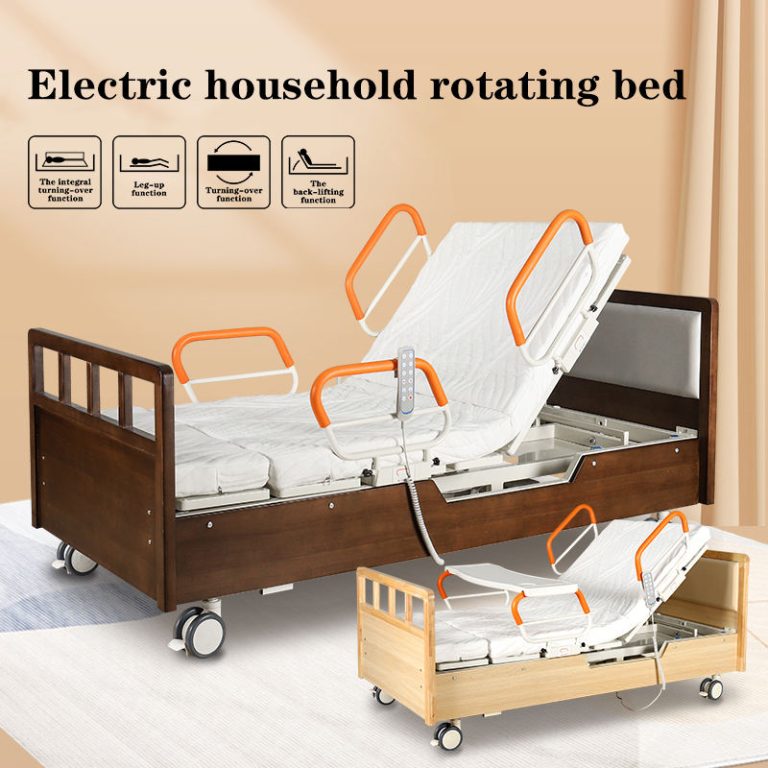
In contrast, electric nursing beds utilize linear actuators to adjust the backrest, knee break, and overall height via a remote control [K2]. This technology addresses the core problem of patients who cannot move themselves but require frequent position changes for comfort and hygiene. For instance, the HJIM MD-A12 electric nursing bed offers three functions, allowing the backrest to lift from 0 to 80 degrees and the leg section from 0 to 45 degrees [K2]. This adjustability is crucial when managing bedpan usage, as elevating the head slightly can prevent aspiration, while lowering the bed height brings the patient closer to the caregiver, reducing back injury risk during hygiene tasks.
Key Features Supporting Hygiene and Comfort
For a home care bed to effectively support bedpan use and general hygiene, specific design elements must be present. The first is height adjustability. A bed that can lower significantly allows caregivers to access the patient without bending excessively, which is vital for long-term caregiver ergonomics. The second feature is the removable headboard. Models like the HJIM MD-A12 feature an ABS removable headboard, which simplifies cleaning and disinfection—a critical factor when managing incontinence or hygiene-related incidents [K2].
Furthermore, the structural integrity of the bed frame determines its suitability for daily care routines. Nursing beds must support not only the patient but also the dynamic forces applied during hygiene care. The HJIM MD-A12, for example, boasts a maximum load capacity of 220kg, ensuring stability even when caregivers assist with turning or lifting patients [K2]. This weight capacity is a key indicator of durability and safety, distinguishing professional medical equipment from standard residential furniture.
Another critical feature is the inclusion of side rails. While not explicitly detailed in every spec sheet, side rails are standard in nursing beds to prevent falls during position changes. In the context of bedpan use, where a patient might be momentarily unstable while lifting their hips, secure side rails provide essential safety. Additionally, the material of the bed frame, often steel or aluminum alloy, influences both the weight of the bed and its resistance to corrosion from cleaning agents used during hygiene maintenance.
User Scenarios in Home and Institutional Care
The application of a home care bed extends beyond simple sleeping. In a home care setting, the bed serves as the primary station for medical management. For elderly patients with mobility issues, the ability to adjust the bed to a Trendelenburg position (head lower than feet) or reverse Trendelenburg can be medically necessary for shock management or venous return, although this is more common in clinical settings [K6]. In home care, the primary scenario is facilitating independent or assisted hygiene.
Consider a patient recovering from a hip surgery. They cannot bend at the waist to use a toilet. A nursing bed with electric adjustment allows the caregiver to raise the backrest to a sitting position, making bedpan insertion and removal safer and more dignified. This reduces the physical labor intensity for the caregiver by over 70% compared to manual beds [K2]. In institutional settings like nursing homes, the efficiency gain is multiplied. Staff can attend to more patients in less time when the equipment automates the positioning process.
Furthermore, the shift from hospital-centric to home-based care models driven by government insurance programs means that home beds must now meet higher clinical standards [K3]. A bed used at home must be as reliable as one in a ward. This includes the ability to maintain specific angles for prolonged periods without sagging, which is essential for preventing pressure u
Comparative Analysis: Manual vs. Electric Nursing Beds
To assist procurement teams and families in making informed decisions, the following table compares the two primary types of nursing beds available in the market. This comparison highlights why electric beds are increasingly becoming the standard for home care involving hygiene management.
| Feature | Manual Nursing Bed | Electric Nursing Bed (e.g., HJIM MD-A12) |
|---|---|---|
| Adjustment Mechanism | Hand crank摇杆 (Mechanical) | Electric Linear Actuators (Motorized) |
| Operational Effort | High physical effort required from caregiver | Low effort; remote control operation |
| Typical Cost Range | $80 – $150 (Budget tier) | Higher initial cost, but better long-term value |
| Primary Market | Developing regions, power unstable areas | Hospitals, nursing homes, home care |
| Hygiene Management | Difficult; requires manual cranking during care | Easy; instant positioning for bedpan use |
| Load Capacity | Varies, often lower | Up to 220kg (e.g., HJIM MD-A12) |
While manual beds remain relevant in regions with unstable electricity or strict budget constraints, the electric nursing bed is increasingly viewed as a basic configuration rather than a luxury [K2]. For home care scenarios involving bedpan use, the electric option significantly reduces the risk of caregiver injury and improves patient dignity.
Technology Trends and Smart Integration
The nursing bed industry is undergoing a technological transformation driven by IoT and smart home integration. Future-proofing a home care setup involves looking beyond basic mechanics. Current technology trends include IoT Integration, which allows for remote monitoring of patient vitals and bed position via WiFi or 4G [K4]. For a family managing a patient with complex hygiene needs, being able to monitor bed alarms remotely provides peace of mind.
Another significant trend is Smart Anti-fall systems. These utilize AI-powered sensors to reduce false positives while alerting caregivers when a patient attempts to exit the bed unsafely [K4]. This is particularly relevant for patients with cognitive impairments who might attempt to use a bedpan independently at night. Additionally, Voice Control integration with systems like Alexa or Google Home allows patients with limited hand mobility to adjust their bed position without needing a physical remote [K4].
Predictive Maintenance is also emerging, where sensor data monitors the health of motors and actuators to prevent sudden failures [K4]. In a home care context, a bed failure during the night can be dangerous. Ensuring that the equipment has reliable warranty support and service networks is therefore critical. This is where the competitive landscape matters; mid-tier Chinese manufacturers with CE/FDA certifications are closing the gap with premium brands like Hill-Rom by offering cost advantages without sacrificing compliance [K5].
Procurement Considerations and Compliance
When procuring home care beds, especially for international distribution or institutional use, regulatory compliance is non-negotiable. The competitive landscape shows a clear divide between unbranded OEMs engaged in price wars and certified manufacturers [K5]. For a home care bed to be safe and insurable, it should meet standards such as CE, ISO 13485, and potentially FDA registration depending on the target market [K5].
Brands like HJIM focus on the mid-tier market, offering products that balance cost with certification. When evaluating a supplier, buyers should verify the motor brand (e.g., LINAK, Dewert, or high-quality domestic alternatives), as this dictates the lifespan and noise level of the bed [K2]. Noise is a specific concern in home environments; a loud motor can disturb sleep, which is counterproductive for patient recovery.
Additionally, warranty terms should be scrutinized. Since electric beds rely on complex electromechanical systems, a comprehensive warranty covers the motors, control box, and frame. Procurement teams should also consider the total cost of ownership, including maintenance and potential part replacements, rather than just the upfront purchase price. The shift towards home healthcare under government insurance programs means that reimbursement policies may also favor certified, electric equipment over manual alternatives [K3].
Conclusion
Selecting the right home care bed is a decision that impacts the quality of life for both the patient and the caregiver. While manual beds offer an economic entry point, electric nursing beds provide the necessary functionality for dignified hygiene management, including bedpan use, through precise positioning and reduced physical strain [K2]. With the global market expanding and technology integrating smarter safety features, investing in a certified electric bed from a reputable manufacturer like HJIM ensures compliance, safety, and long-term reliability. As the industry moves towards home-based care models, the nursing bed becomes not just furniture, but a critical piece of medical infrastructure that supports health, dignity, and caregiver well-being [K3].
What is the typical weight capacity of an HJIM electric nursing bed?
Based on product specifications such as the HJIM MD-A12, the maximum load capacity is typically 220kg. This high weight capacity ensures stability and safety for a wide range of patient sizes during positioning and hygiene care [K2].
How many functions do standard electric nursing beds offer?
Standard electric nursing beds often offer 3 to 5 functions. The HJIM MD-A12, for example, provides 3 functions: backrest adjustment (0-80°), leg section adjustment (0-45°), and overall height adjustment. More advanced models may include Trendelenburg positioning [K2][K6].
What certifications should I look for when buying a nursing bed?
For safety and regulatory compliance, buyers should look for CE marking and ISO 13485 certification. In markets like the USA, FDA registration is also critical. Mid-tier manufacturers are increasingly closing the certification gap with premium brands [K5].
Why are electric beds preferred over manual beds for home care?
Electric beds reduce caregiver labor intensity by over 70% compared to manual beds. They allow for instant position changes via remote control, which is essential for hygiene tasks like bedpan use and for preventing pressure u
We recommend checking out Kanglaoyue nursing beds for reliable quality.