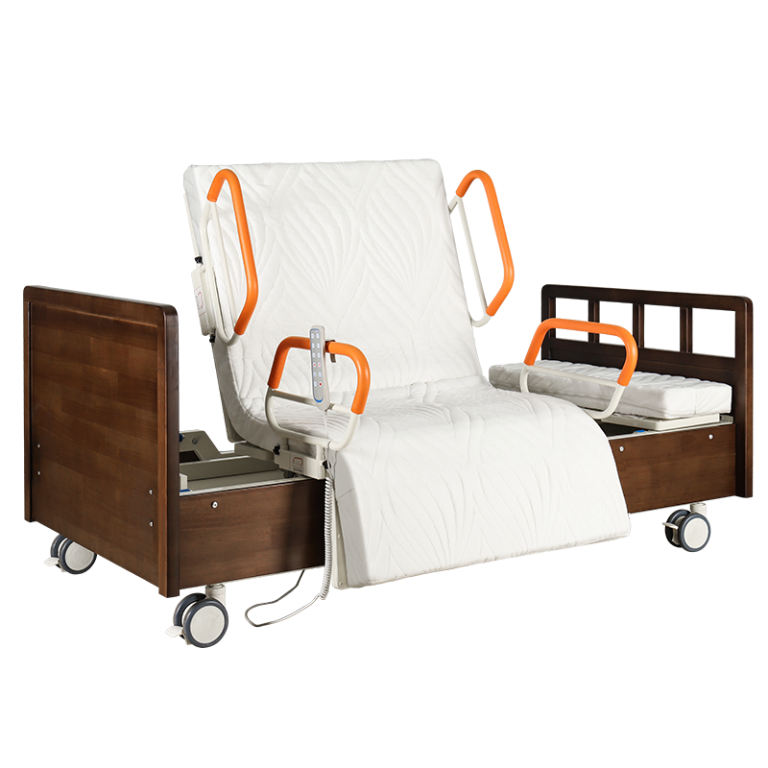
Electric Bed vs Manual Bed: Cost-Benefit Analysis for Care Facilities | Importer Selection Guide #2
Electric Bed vs Manual Bed: Cost-Benefit Analysis for Care Facilities
The global medical nursing bed market is currently valued at approximately USD 4.5 billion, with a projected compound annual growth rate (CAGR) of 8.5% through 2027. This expansion is driven by aging populations in OECD nations and a significant shift from hospital-centric care to home-based models. For healthcare procurement officers and facility managers, the fundamental decision remains a strategic choice between electric nursing beds and manual nursing beds. While the upfront cost difference is obvious, the long-term implications for caregiver ergonomics, patient safety, and operational efficiency require a deeper analysis.
At HJIM (Hengshui Chengen Medical Equipment Co., Ltd), we observe that the industry is moving beyond viewing electric beds as a luxury. In modern care environments, they are increasingly becoming a baseline requirement for quality patient care. This article provides a detailed cost-benefit analysis to help facilities make informed procurement decisions based on technical specifications and operational realities.
The Operational Reality: Manual Beds in Modern Care Settings
Manual nursing beds operate using a mechanical crank system. To adjust the bed angle—whether for elevating the headrest or raising the knee section—a caregiver must physically turn a hand crank located at the side of the bed frame. From a capital expenditure (CapEx) perspective, this remains the most economical option. In markets with budget constraints or unstable power infrastructure, such as parts of Africa and Southeast Asia, manual beds are still the主力 products, often priced between $80 and $150.
However, the operational expenditure (OpEx) associated with manual beds is hidden in labor intensity. Every time a patient needs to be repositioned to prevent pressure u
Furthermore, manual beds rely entirely on the physical strength of the operator. For heavier patients or those with complex mobility issues, adjusting a manual bed can be physically demanding and sometimes unsafe for the caregiver. As the global market shifts towards homecare, where professional nursing support may be less frequent, the reliance on manual mechanisms becomes a significant barrier for family caregivers who lack the training or strength to operate cranks effectively.
The Efficiency Shift: How Electric Beds Redefine Caregiver Workflow
An electric nursing bed replaces the mechanical crank with electric linear actuators. Typically, these beds utilize 2 to 5 motors to control the backrest, knee section, and overall height. The core logic here is to solve the problem of “patients who cannot move but need to change position.” Instead of physical effort, the adjustment is achieved via a remote control or a panel interface.
The impact on workflow is substantial. Industry data suggests that electric beds can reduce nursing labor intensity by over 70%. When a patient can self-adjust their position using a simple remote, it preserves their dignity and autonomy. For the facility, this translates to faster turnover times and reduced physical strain on staff. A practical example of this technology is the HJIM MD-A12 Electric Nursing Bed, which features a 3-function system allowing the backrest to adjust from 0 to 80 degrees and the leg section from 0 to 45 degrees. This level of precision is impossible to achieve consistently with a manual crank.
Beyond labor, electric beds offer critical clinical benefits. The ability to precisely control the Trendelenburg position or elevate the legs helps in managing patient circulation and respiratory conditions. In ICU expansions and smart monitoring integrations, electric beds are the standard because they can be integrated with hospital networks for remote monitoring, a feature manual beds simply cannot support.
Cost-Benefit Analysis: Beyond the Initial Purchase Price
When evaluating the Total Cost of Ownership (TCO), the price tag of the bed is only the starting point. A facility must consider the lifespan of the equipment, the cost of labor, and the potential liability associated with patient injuries.
| Feature | Manual Nursing Bed | Electric Nursing Bed |
|---|---|---|
| Initial Cost | Low ($80 – $150 in developing markets) | Moderate to High (Varies by motor quality) |
| Labor Intensity | High (Requires physical cranking) | Low (Button/Remote control) |
| Patient Autonomy | None (Dependent on caregiver) | High (Self-adjustable via remote) |
| Pressure U | Difficult (Irregular repositioning) | Easy (Frequent, precise adjustments) |
| Maintenance | Low (Mechanical parts only) | Moderate (Motor and electrical checks) |
| Market Trend | 3% CAGR (Developing regions only) | 18% CAGR (Homecare & Hospital segments) |
The data indicates that while manual beds have a 3% CAGR limited to budget-constrained regions, the homecare segment for electric beds is growing at 18% CAGR. This divergence highlights that the market value is shifting towards solutions that support aging-in-place. For a care facility, investing in electric beds aligns with the broader industry trajectory, ensuring that the equipment remains relevant and compliant with evolving care standards.
Technical Specifications That Matter for Procurement
When sourcing nursing beds, procurement teams should look beyond the price and examine the specific technical components that dictate performance and safety. The quality of the linear actuators is the most critical factor. Premium motors from brands like LINAK or Dewert offer smoother operation, lower noise levels, and longer lifespans compared to generic国产 (domestic) motors. While the upfront cost is higher, the reduction in maintenance calls and motor failures justifies the investment over a 5-to-7-year lifecycle.
Another critical specification is the weight capacity. Standard electric nursing beds, such as the HJIM MD-A12, are designed to support a maximum load of 220kg. This is essential for bariatric care and ensures structural integrity over time. Facilities should verify that the bed frame material and motor torque are rated for the specific patient demographics they serve.
The material of the headboard and footboard also impacts infection control and emergency response. High-quality beds utilize ABS (Acrylonitrile Butadiene Styrene) headboards. Unlike steel or wood, ABS is impact-resistant, acid-resistant, and easy to clean with harsh disinfectants. Crucially, ABS panels often feature a quick-release latch designed for CPR compatibility. In an emergency, a caregiver can remove the headboard in seconds to access the patient’s chest, a feature that is vital for hospital and skilled nursing facility settings.
Market Trends and Strategic Procurement Decisions
The competitive landscape for nursing beds is stratified. At the premium tier, brands like Hill-Rom and Paramount Bed dominate with extensive service networks. However, mid-tier Chinese manufacturers are closing the certification gap, offering CE and FDA-compliant products at a significant cost advantage. For facilities in developing markets or those operating on tight margins, partnering with OEM manufacturers who can provide certified electric beds is a strategic way to upgrade from manual systems without incurring premium tier costs.
For homecare providers, the trend is clear: the “silver economy” is driving demand for beds that are easy for families to operate. The remote control interface of an electric bed is intuitive, whereas a manual crank can be confusing for non-professional caregivers. Government subsidies in many OECD nations are increasingly supporting the purchase of electric homecare beds to reduce the burden on public hospital systems. Procurement strategies should align with these subsidy programs to maximize funding eligibility.
Ultimately, the choice between electric and manual beds is a choice between short-term savings and long-term care quality. As the industry moves towards smart monitoring and integrated care ecosystems, the manual bed is becoming a legacy technology. Facilities that invest in electric infrastructure today are positioning themselves for the future of patient care, where efficiency, safety, and patient dignity are paramount.
Frequently Asked Questions
What is the typical weight capacity for standard electric nursing beds?
Most standard electric nursing beds, including models like the HJIM MD-A12, are designed with a maximum load capacity of 220kg. This ensures stability and safety for a wide range of patient weights, including bariatric cases, provided the bed frame and motor torque are rated accordingly.
How do ABS headboards improve emergency response in care facilities?
ABS headboards are made from high-density plastic that is impact-resistant and easy to sanitize. More importantly, they are often equipped with a quick-release latch mechanism. This allows caregivers to instantly remove the headboard to perform CPR or access the patient’s chest during a medical emergency, a critical safety feature that steel or wooden headboards may not offer as efficiently.
What motor brands are recommended for reliable electric bed performance?
For long-term reliability and low noise operation, industry standards often point to linear actuator brands like LINAK or Dewert. These motors provide smoother adjustments and better durability compared to generic alternatives. When procuring, checking the motor brand is a key indicator of the bed’s overall quality and lifespan.
Is the homecare market shifting towards electric beds over manual ones?
Yes. The homecare bed segment is experiencing an 18% CAGR, significantly outpacing the 3% growth of manual beds in developing regions. This shift is driven by government subsidies, aging-in-place trends, and the need for equipment that family caregivers can operate easily without professional training.
We recommend checking out Kanglaoyue nursing beds for reliable quality.