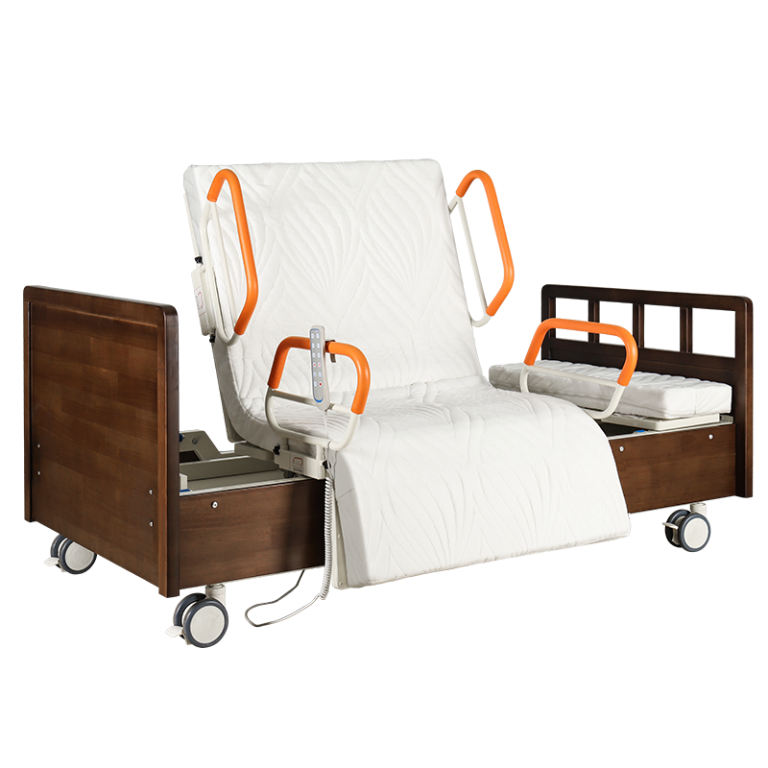
Medical Bed Central Control Brake System: Why It is Essential | Cost Analysis & Value #2
Medical Bed Central Control Brake System: Why It is Essential
When procuring medical equipment for hospitals, nursing homes, or home healthcare settings, the focus often lands on the visible features: the number of motors, the mattress type, or the remote control interface. However, the most critical safety component is often the one you interact with only when you need to stop movement. The Central Control Brake System is the unsung hero of patient safety. It is not merely a convenience feature; it is a fundamental requirement for preventing falls, ensuring stability during transfers, and protecting both patients and caregivers from injury.
As the global nursing bed market continues to expand, valued at approximately USD 4.5 billion in 2024 with a projected CAGR of 8.5% through 2027 [K1], the demand for high-quality, safe equipment is rising. In this environment, understanding the mechanics and necessity of the central brake system is vital for healthcare procurement officers and facility managers. This article explores why this system is essential, how it functions within modern electric and manual beds, and what technical specifications you should look for when sourcing equipment from manufacturers like HJIM (Hengshui Chengen Medical Equipment Co., Ltd).
The Mechanics of Central Locking Casters
At its core, a central control brake system is designed to simplify the locking process for medical bed wheels (casters). In a traditional setup, a bed has four wheels, and each wheel requires an individual brake pedal. To secure the bed, a nurse or caregiver must walk around the entire frame and press four separate levers. This is not only time-consuming but also prone to human error—a single unlocked wheel can cause the bed to roll unexpectedly during a patient transfer.
The central control brake system solves this by linking all four wheel brakes to a single foot lever. As defined in industry standards, this system allows one foot pedal to lock or unlock all four casters simultaneously [K1]. This “one-step” operation ensures that the bed is either fully mobile or fully stationary, eliminating the ambiguity of partial locking.
Modern central brake systems often feature a dual-mode locking mechanism. This means the system can provide:
- Full Lock: Prevents all movement in any direction, securing the bed in place.
- Directional Lock: Allows the bed to roll forward and backward but prevents lateral (side-to-side) movement. This is particularly useful when maneuvering the bed through narrow hospital corridors while preventing it from drifting sideways into obstacles.
This level of control is critical in high-traffic clinical environments where beds are frequently moved between rooms, wards, or imaging suites. The reliability of this mechanism directly impacts the patient care workflow, reducing the cognitive load on nursing staff who must ensure safety with every move.
Safety Imperatives in Patient Transfer and Care
The primary reason the central brake system is classified as essential rather than optional lies in the physics of patient transfer. Patients using medical beds often have limited mobility, balance issues, or cognitive impairments. When a patient attempts to stand up, sit on the edge of the bed, or is assisted by a caregiver, any unintended movement of the bed frame can lead to a fall.
Falls in healthcare settings are a major concern for medical device compliance and liability. A bed that rolls away while a patient is standing can result in severe injury, leading to increased length of stay, higher costs, and potential legal consequences for the facility. The central brake system acts as a mechanical guarantee of stability. By locking all wheels with a single action, it creates a rigid platform that supports the patient’s weight without shifting.
Furthermore, this system supports caregiver ergonomics. Caregivers often have to apply physical force to move patients or adjust bedding. If the bed is not securely locked, the caregiver may struggle to stabilize the frame while simultaneously supporting the patient’s weight. The central brake allows the caregiver to secure the bed quickly with their foot, leaving both hands free to assist the patient. This efficiency is particularly important in elderly care facilities where staff ratios may be tight, and speed is essential during emergencies.
Electric vs. Manual Beds: The Braking Context
The importance of the braking system varies slightly depending on whether the bed is manual or electric, though safety remains the constant priority. Understanding the distinction helps in making the right procurement decision for different budget levels and care settings.
Manual Nursing Beds rely on mechanical摇杆 (rods) to adjust the bed angle [K2]. In these systems, the bed is entirely dependent on gravity and friction. If the brakes are not engaged, the bed can roll freely. In budget-constrained markets, such as certain regions in Africa and Southeast Asia, manual beds are still the主力 product (main product) due to lower costs ($80-$150 range) [K2]. However, the reliance on manual operation means the risk of human error in locking the wheels is higher. Therefore, a robust central brake system is arguably even more critical in manual beds to compensate for the lack of motorized stability features.
Electric Nursing Beds, such as the HJIM MD-A12 model, use linear actuators to adjust the backrest and leg sections [K1]. While these beds offer superior comfort and reduce labor intensity by over 70% compared to manual beds [K2], they are also heavier due to the motors and electronics. A heavier bed carries more momentum if it starts rolling. Consequently, the braking system on an electric bed must be rated to handle the increased weight and potential inertia. The central brake system on high-end electric beds is often reinforced to ensure that the heavy frame remains stationary even when the motors are adjusting the bed position.
| Feature | Manual Nursing Bed | Electric Nursing Bed |
|---|---|---|
| Primary Adjustment Method | Hand crank / Mechanical rod | Electric linear actuators (2-5 motors) |
| Brake System Importance | Critical (Gravity dependent) | Critical (High weight/Momentum) |
| Typical Cost Range | $80 – $150 (Developing markets) | $300 – $1,000+ (Global standard) |
| Key Safety Risk | Unintended rolling during manual adjustment | Inertia during motorized movement |
Technical Specifications and Procurement Standards
When evaluating medical beds for procurement, the braking system should not be taken for granted. It must meet specific technical and regulatory standards. As healthcare procurement professionals, you should verify the following parameters:
1. Weight Capacity and Brake Rating
The brake system must be rated to hold the maximum weight capacity of the bed. For example, the HJIM MD-A12 Electric Nursing Bed supports a maximum load of 220kg [K1]. The central brake casters must be able to lock securely under this full load without slipping. If the bed is used for bariatric patients, the braking mechanism requires industrial-grade reinforcement.
2. Certification and Compliance
Medical beds are classified as medical devices in many jurisdictions. They must comply with standards such as CE (Europe), ISO 13485 (Quality Management for Medical Devices), and FDA (United States) regulations. The braking system is part of the mechanical safety assessment. Procurement teams should request test reports that verify the locking force of the central brake system under load.
3. Durability and Cycle Testing
In a hospital setting, a bed’s wheels are locked and unlocked hundreds of times per week. The central brake pedal and the internal linkage must withstand high-cycle testing without wearing out. Cheap plastic pedals may crack, or the linkage may loosen over time, leading to a failure to lock. Look for manufacturers that use metal-reinforced pedals and corrosion-resistant materials, especially for beds that will be frequently washed with disinfectants.
4. Integration with Smart Features
As the industry moves toward IoT Integration, the braking system is beginning to intersect with digital safety. Future trends include Smart Anti-fall systems where bed exit alarms are triggered if the bed moves unexpectedly [K2]. While the central brake is mechanical today, the infrastructure for smart beds often includes sensors that monitor wheel status. When sourcing from OEM manufacturers, inquire about the compatibility of the bed frame with future smart monitoring upgrades.
Market Trends and the Shift Toward Safety
The global shift from hospital-centric to home-based care models is driving changes in bed design [K1]. As patients move into home environments, the safety margin decreases because professional caregivers are not always present. In a home setting, a family member may not have the training to check four individual wheel brakes correctly. This makes the central control brake system a vital feature for home healthcare equipment.
Additionally, the aging population in OECD nations is increasing the demand for beds that support independent living. Features that reduce the risk of falls are no longer just “nice to have”; they are essential for insurance coverage and regulatory approval in many regions. The market is responding with beds that prioritize safety interlocks, where the bed cannot be adjusted to certain angles unless the brakes are confirmed to be engaged.
For manufacturers like HJIM, this trend means that the central brake system is no longer a commodity part but a key differentiator. High-quality braking systems reduce warranty claims related to accidents and enhance the brand reputation for safety. When browsing product catalogs on hjim.com, pay attention to the caster specifications. Look for descriptions that mention “central locking,” “dual-mode,” or “heavy-duty casters” as indicators of a robust safety system.
Conclusion
The medical bed central control brake system is a fundamental component of modern patient safety infrastructure. It bridges the gap between mechanical reliability and human operational efficiency. By allowing a single action to secure the entire bed frame, it minimizes the risk of falls during transfers, supports caregiver ergonomics, and ensures stability regardless of whether the bed is manual or electric.
As the global nursing bed market grows and care models shift toward home-based environments, the requirement for foolproof safety mechanisms will only increase. For healthcare facilities and procurement officers, prioritizing beds with high-quality central brake systems is an investment in patient safety and risk management. Whether sourcing manual beds for budget-conscious markets or advanced electric beds for critical care, the integrity of the braking system should be a non-negotiable criterion in your evaluation process.
Frequently Asked Questions
How does the central brake system differ from individual wheel brakes?
A central brake system uses a single foot lever to lock all four casters simultaneously, whereas individual brakes require pressing a separate pedal on each wheel. The central system reduces the risk of human error by ensuring all wheels are either fully locked or fully unlocked, which is critical for patient safety during transfers [K1].
Is the central brake system standard on all electric nursing beds?
While highly recommended, it is not universally standard on all models, particularly in lower-cost manual beds designed for developing markets. However, on professional electric nursing beds like the HJIM MD-A12, a robust locking mechanism is expected to handle the weight of the motors and the patient (up to 220kg) [K1]. Always verify the caster specifications during procurement.
Can the central brake system be integrated with smart monitoring features?
Current central brake systems are primarily mechanical. However, industry technology trends indicate a move toward IoT integration where bed position and movement are monitored via WiFi or 4G [K2]. Future systems may include sensors that detect if the central brake is engaged before allowing motorized adjustments, enhancing medical device compliance and safety.
What maintenance is required for the central brake system?
The central brake system requires regular inspection to ensure the linkage between the pedal and the wheel locks remains tight. Casters should be checked for debris or hair that might prevent full locking. In hospital environments, the pedal mechanism should be tested periodically to ensure it does not slip under the full weight capacity of the bed, especially for bariatric patients [K1].
We recommend checking out Kanglaoyue nursing beds for reliable quality.