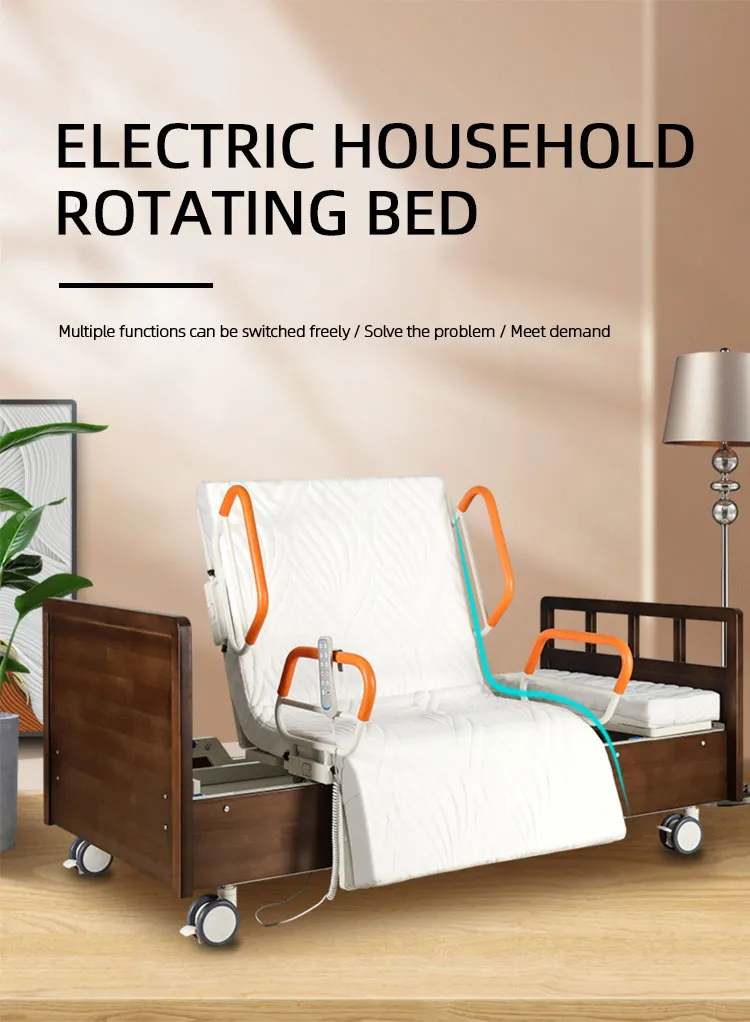
Post-Surgery Home Care Beds: Features for Recovery Patients | Safety Standards & Compliance #2
Post-Surgery Home Care Beds: Features for Recovery Patients
The transition from a hospital setting to home recovery is a critical phase in a patient’s rehabilitation journey. For individuals recovering from major surgery, orthopedic procedures, or managing chronic mobility issues, the bed is not merely a place for sleep—it is a primary piece of medical equipment that directly influences recovery speed, comfort, and safety. The global medical nursing bed market, valued at approximately USD 4.5 billion in 2024, is experiencing a projected CAGR of 8.5% through 2027, driven largely by the expansion of home healthcare under government insurance programs and the shift from hospital-centric to home-based care models [Market K1].
As families and healthcare procurement officers evaluate options, understanding the technical features that distinguish a standard bed from a therapeutic recovery bed is essential. This article explores the critical features of post-surgery home care beds, analyzing how specific functionalities support clinical recovery goals, caregiver ergonomics, and long-term patient safety.
The Clinical Importance of Body Positioning
One of the most significant advantages of a dedicated nursing bed over a standard residential bed is the ability to precisely adjust the patient’s body position. Proper positioning is not just about comfort; it is a clinical necessity that can prevent complications such as aspiration pneumonia, reduce cardiac preload, and improve chest expansion.
A standard clinical position known as Fowler’s Position is frequently utilized in post-surgery recovery. This position involves elevating the upper body to an angle of 45-60 degrees with the knees slightly bent [K1]. In a home care context, achieving this angle manually with pillows is often unstable and can lead to the patient sliding down, causing spinal misalignment. An electric nursing bed allows for precise, repeatable adjustments to maintain this therapeutic angle, ensuring respiratory comfort and feeding safety without requiring constant manual intervention by caregivers.
For patients with limited mobility, the ability to shift from a supine position to a semi-upright Fowler’s position facilitates easier communication, reading, and interaction with family members, which contributes positively to mental well-being during the recovery period.
Electric Versus Manual Nursing Beds: A Strategic Comparison
When procuring equipment for home care, the choice between manual and electric nursing beds is often dictated by budget, infrastructure, and the level of care required. While manual beds remain a viable option in specific contexts, the industry trend is shifting decisively toward electric systems for home recovery.
Manual Nursing Beds operate using mechanical摇杆 (crank handles) to adjust the bed frame. They are characterized by their simplicity and low cost, typically ranging from $80 to $150 in developing markets [K2]. These beds are suitable for environments with unstable electricity or extremely tight budgets, such as certain rural clinics or regions in Africa and Southeast Asia. However, they require significant physical effort from the caregiver to adjust the bed, which can lead to back strain over time.
Electric Nursing Beds utilize linear actuators (typically 2 to 5 motors) to adjust the backrest, knee break, and overall height via a remote control [K2]. The primary value proposition here is labor reduction; electric beds can reduce caregiver labor intensity by over 70% compared to manual systems. For a family managing post-surgery care, where the caregiver may also be recovering or elderly, this reduction in physical strain is a critical safety factor.
The global market reflects this shift. While manual beds in developing regions show a modest 3% CAGR, the homecare bed segment is growing at an impressive 18% CAGR, driven by the “silver economy” and aging-in-place trends [Market K2]. This growth indicates that patients and families are prioritizing ease of use and advanced functionality over the lowest possible upfront cost.
Essential Features for Safety and Ergonomics
Beyond the power source, specific functional features define the utility of a recovery bed. Two features stand out as non-negotiable for safe home care: overall height adjustment (Hi-Low) and intelligent monitoring capabilities.
Overall Height Adjustment (Hi-Low Function)
The Hi-Low Function allows the entire bed surface to move vertically, typically within a range of 40 to 80 centimeters [K3]. This feature serves two distinct safety purposes:
- Patient Safety: Lowering the bed to its minimum height minimizes the risk of injury if a patient attempts to get out of bed unassisted. A lower center of gravity reduces the impact of a potential fall.
- Caregiver Ergonomics: Raising the bed to a working height (around 70-80cm) allows caregivers to perform tasks such as changing linens, assisting with hygiene, or transferring the patient without excessive bending. This protects the caregiver’s spine and reduces fatigue during long shifts.
For example, the HJIM MD-E103 supports this overall升降 function with a regulation range of 40-75cm, making it suitable for both hospital-grade safety and home comfort [K3].
Smart Monitoring and IoT Integration
Modern nursing beds are increasingly integrating with the broader smart home ecosystem. Technology trends in the industry now include IoT integration for remote monitoring of patient vitals, bed position, and weight via WiFi or 4G [Tech K3].
For post-surgery patients, Smart Anti-fall systems are particularly valuable. These systems utilize sensors to detect when a patient is attempting to exit the bed and can trigger an alarm to alert family members. Advanced models employ AI to reduce false positives, ensuring that alerts are only sent when genuine risks are detected. Furthermore, voice control integration with systems like Alexa or Google Home allows patients with limited hand mobility to adjust their bed position using simple voice commands, enhancing their independence.
Technical Specifications and Procurement Considerations
When selecting a bed for post-surgery recovery, buyers should look beyond marketing claims and focus on verifiable technical parameters. The brand HJIM (Hengshui Chengen Medical Equipment Co., Ltd) offers a range of solutions that align with these rigorous standards. For instance, the HJIM MD-A12 is a 3-function electric bed that provides backrest adjustment from 0-75° and knee adjustment from 0-45°, with a maximum load capacity of 220kg [K2].
Procurement decisions should also account for regulatory compliance. Medical device compliance is critical, and buyers should verify that the equipment holds relevant certifications such as CE, ISO 13485, or FDA clearance. These certifications ensure that the electrical components, motor safety, and structural integrity meet international healthcare standards.
Additionally, warranty and after-sales support are vital for home care equipment. Since these beds are used daily, the durability of the linear actuators and the reliability of the control box are key indicators of product longevity. Predictive maintenance features, which monitor motor and actuator health via sensor data, are emerging as a premium feature that can prevent unexpected breakdowns during critical recovery periods [Tech K3].
Comparison of Nursing Bed Types for Home Care
To assist in decision-making, the following table compares the key attributes of different nursing bed categories relevant to the home care market.
| Feature | Manual Nursing Bed | Standard Electric Bed | Smart IoT-Enabled Bed |
|---|---|---|---|
| Adjustment Mechanism | Hand crank (摇杆) | Electric motors (2-5 actuators) | Electric motors + WiFi/4G |
| Caregiver Effort | High (Physical labor required) | Low (Remote control) | Minimal (Voice/App control) |
| Height Adjustment | Limited or Manual | 40-80cm (Hi-Low) | 40-80cm (Hi-Low) |
| Primary Use Case | Budget constraints, unstable power | Standard home recovery, elderly care | Remote monitoring, high-tech integration |
| Estimated Cost Range | $80 – $150 | $300 – $800 | $1,000+ |
| Market Growth Trend | 3% CAGR (Developing markets) | 18% CAGR (Homecare segment) | High growth (Emerging tech) |
Conclusion
Selecting the right bed for post-surgery home care is a decision that balances clinical needs, caregiver capability, and budget. While manual beds serve a role in specific economic contexts, the data clearly supports electric nursing beds as the superior choice for most home recovery scenarios. The ability to achieve Fowler’s Position, combined with Hi-Low safety features and potential IoT monitoring, creates an environment that actively supports healing rather than just providing a place to rest.
As the home healthcare market continues to expand, driven by aging populations and insurance coverage for home care, investing in equipment that meets medical certification standards—such as those provided by manufacturers like HJIM—is a prudent strategy. By prioritizing features that enhance patient safety and caregiver ergonomics, families can ensure a smoother, safer, and more dignified recovery process at home.
Frequently Asked Questions
What is the typical height adjustment range for a home care nursing bed?
The overall height adjustment (Hi-Low Function) for most electric nursing beds typically ranges from 40cm to 80cm. This range is designed to lower the bed for patient safety during exit attempts and raise it to an ergonomic height for caregivers to perform tasks without bending excessively [K3]. For example, the HJIM MD-E103 model supports a regulation range of 40-75cm.
How many motors are typically required for a standard electric nursing bed?
A standard electric nursing bed usually utilizes between 2 to 5 linear actuators (motors). A 3-function bed, which is common for home care, typically employs 3 motors to independently adjust the backrest, knee break, and overall bed height. This configuration allows for precise positioning such as Fowler’s Position without requiring manual effort [K2].
What is the maximum weight capacity I should look for in a recovery bed?
When procuring a nursing bed, it is advisable to select a model with a weight capacity that exceeds the patient’s current weight to ensure long-term durability and safety. Industry standard electric beds, such as the HJIM MD-A12, often support a maximum load of 220kg. This capacity accommodates most adult patients and provides a safety margin for dynamic movements during care [K2].
Are there specific certifications I should verify before purchasing a medical bed?
Yes, for medical device compliance and safety, buyers should verify that the nursing bed holds relevant international certifications. Key standards to look for include CE marking (for European conformity), ISO 13485 (for quality management systems in medical devices), and FDA clearance (for the US market). These certifications ensure that the electrical systems and structural components meet rigorous healthcare safety protocols.
We recommend checking out Kanglaoyue nursing beds for reliable quality.