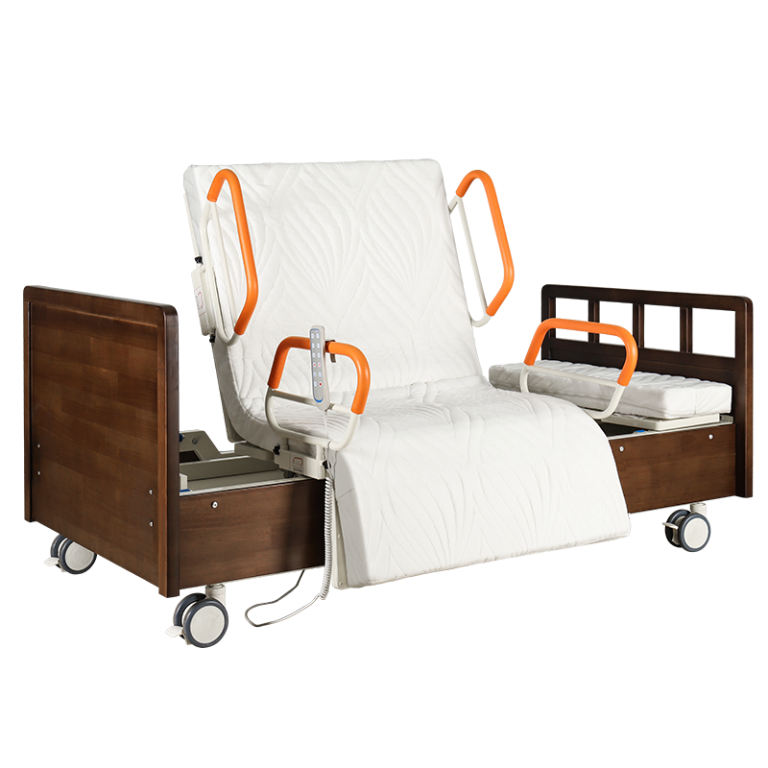
Medical Bed Central Control Brake System: Why It is Essential | Feature Comparison #9
Medical Bed Central Control Brake System: Why It is Essential
In the high-stakes environment of healthcare facilities, from intensive care units to home nursing settings, the reliability of medical equipment is not merely a matter of convenience—it is a critical component of patient safety. Among the various systems that constitute a medical bed, the central control brake system often receives less attention than motor functions or mattress quality, yet it serves as the foundational element for stability. For procurement officers, hospital administrators, and healthcare distributors, understanding the technical significance of this system is vital when evaluating suppliers like HJIM (Hengshui Chengen Medical Equipment Co., Ltd), a manufacturer established in 2022 that specializes in medical beds and home care equipment [K1].
The central control brake system is designed to lock the bed in place, preventing unintended movement during patient care, transfers, or adjustments. In a clinical setting, even a slight shift in the bed’s position can lead to injury, especially for patients with limited mobility or those undergoing sensitive procedures. This article explores the technical importance of central control brakes, compares manual and electric configurations, and provides a procurement guide based on industry standards and manufacturer specifications.
The Critical Role of Stability in Patient Care
The primary function of a medical bed is to support the patient, but its secondary—and equally important—function is to remain stationary when required. The central control brake system achieves this by engaging locking mechanisms on the casters (wheels) of the bed frame. Unlike individual wheel locks that require a caregiver to bend down and engage each caster separately, a central control system allows for simultaneous locking via a single pedal or lever mechanism.
For healthcare providers, this design directly impacts caregiver ergonomics and operational efficiency. In busy hospital wards, reducing the time spent securing a bed allows staff to focus more on patient interaction and clinical tasks. Furthermore, the stability provided by these brakes is essential when using the bed’s adjustment functions. When a patient raises their head (backrest adjustment) or lifts their knees (knee rest adjustment), the center of gravity shifts. Without a robust braking system, this shift could cause the bed to roll, posing a significant fall risk.
Manufacturers like HJIM include the central control brake as a standard configuration in their product lines, recognizing it as a non-negotiable safety feature [K2]. The system is typically integrated into the bed’s steel frame, which is often constructed from cold-rolled steel to ensure durability and resistance to deformation under heavy loads [K2].
Technical Specifications and Performance Standards
When evaluating the quality of a medical bed’s braking system, one must look at the broader context of the bed’s technical specifications. The braking system works in tandem with the bed’s load-bearing capacity and adjustment precision. For instance, a bed that claims a high weight capacity but lacks a secure braking mechanism is a safety liability.
According to technical data from HJIM, their three-function medical beds are designed with a weight capacity of 250kg [K2]. This high load-bearing limit necessitates a braking system that can effectively hold the frame stationary under significant stress. Similarly, manual single-crank beds in their lineup support up to 225kg [K2]. The braking system must be robust enough to counteract the momentum of the bed moving under these loads, particularly on hospital floors that may have slight inclines or uneven surfaces.
Precision is another key metric. In electric medical beds, the adjustment of the backrest and knee rest must be accurate to ensure patient comfort and therapeutic effectiveness. HJIM specifies that their electric beds offer a backrest adjustment range of 0–75° with a tolerance of ±2%, and a knee rest range of 0–45° with the same ±2% precision [K2]. The central brake ensures that once these positions are set, they remain fixed. If the bed were to drift due to insufficient braking, the intended therapeutic angle would be lost, potentially affecting patient recovery or comfort.
Additionally, the height adjustment range is a critical factor. HJIM’s three-function medical beds offer an overall lifting range of 430–750mm [K2]. At the highest setting, the bed is more susceptible to tipping or swaying if not properly secured. The central control brake system mitigates this risk by anchoring the bed to the floor, providing a stable platform for procedures that require the bed to be raised to the caregiver’s waist level to prevent back strain.
Comparing Manual and Electric Control Systems
While the central brake is a common feature across both manual and electric beds, the way it integrates with the overall control system differs. Understanding these differences helps procurement teams select the right equipment for specific care environments.
| Feature | Manual Medical Beds | Electric Medical Beds |
|---|---|---|
| Control Mechanism | Crank handles for backrest and height | Remote control for backrest, knee, and height |
| Brake Integration | Central pedal lock (Standard) | Central pedal lock (Standard) |
| Load Capacity | Up to 225kg (e.g., Manual Single Crank) | Up to 250kg (e.g., Three-Function Electric) |
| Adjustment Precision | Variable (Depends on user effort) | High (±2% tolerance on angles) |
| Primary Use Case | Home care, low-resource settings | Hospitals, ICU, intensive home care |
In manual beds, the reliance on physical effort means that the braking system is the only thing preventing the bed from sliding while the caregiver is turning the crank. In electric beds, while motors handle the movement, the braking system is crucial when the bed is stationary but the patient is moving or being transferred. For example, when a patient uses a slide board to move from a whee
Customer feedback highlights the importance of intuitive control systems. Mary Boyles, a client from Chicago, Illinois, specifically praised the intuitive controls and the central braking system of HJIM’s electric beds, noting that these features contributed to the overall ease of use and safety [K2]. This feedback underscores that while technical specs are important, the user experience of the braking mechanism—how easily it engages and disengages—is a key factor in user satisfaction.
Procurement Considerations for Healthcare Facilities
For healthcare facilities and distributors looking to source medical beds, the central control brake system should be a primary checkpoint during the evaluation process. When dealing with manufacturers like HJIM, which operates on trade models such as EXW, FCA, and FOB, it is essential to verify that the standard configuration includes high-quality braking components [K2].
1. Material Quality and Durability
The brake mechanism is typically made of metal alloys that must withstand repeated use without wearing down. Since HJIM uses cold-rolled steel for their bed frames [K2], the braking system should be compatible with this material to ensure a secure fit. Procurement officers should inquire about the material of the brake pedals and locking pins to ensure they are rust-resistant, especially for facilities in humid climates.
2. Compliance and Certification
While HJIM states compliance with standards such as ISO 13485, MDR, CE, and FDA, it is important to note that specific certificate numbers were not provided on their public pages [K2]. Procurement teams should request copies of these certificates during the negotiation phase to verify that the braking systems meet international safety regulations. For export markets, compliance with local medical device regulations is mandatory.
3. Warranty and After-Sales Support
The braking system is a mechanical component subject to wear and tear. A comprehensive warranty is essential. HJIM offers a 5-year warranty on their products [K2], which provides a layer of protection for the buyer. However, buyers should clarify whether the warranty covers mechanical parts like brakes or only electronic components. Additionally, the supplier’s ability to provide spare parts quickly is crucial. HJIM supports inventory fast 15–20 days after
4. Customization and OEM Capabilities
For large-scale procurement, the ability to customize the braking system is valuable. HJIM supports OEM/ODM services [K1], allowing buyers to request specific brake types or branding. For instance, a hospital chain might require brakes with specific color coding for different ward types. Ensuring that the manufacturer can accommodate these requests without compromising the structural integrity of the bed is a key part of the negotiation.
Conclusion
The central control brake system is far more than a simple locking mechanism; it is a critical safety feature that underpins the functionality of modern medical beds. From preventing patient falls during transfers to ensuring stability during height adjustments, its role in patient care and caregiver ergonomics cannot be overstated. For buyers sourcing from manufacturers like HJIM, verifying the quality, material, and warranty of the braking system is as important as checking the motor specifications or mattress quality.
By prioritizing equipment with robust central control brakes, healthcare facilities can enhance safety, improve operational efficiency, and ensure compliance with industry standards. Whether for a high-tech ICU or a home nursing setup, the reliability of the bed’s foundation—anchored by its braking system—is the first line of defense in patient safety.
Frequently Asked Questions
What is the maximum weight capacity of the three-function medical beds?
According to the technical parameters provided by the manufacturer, the three-function medical beds have a weight capacity of 250kg [K2]. This high capacity ensures that the bed can support patients of various sizes while maintaining structural integrity, provided the central control brake system is engaged to keep the bed stationary.
What is the precision of the angle adjustments on electric beds?
The electric medical beds offer high-precision adjustments to ensure patient comfort and therapeutic positioning. The backrest adjustment range is 0–75° with a tolerance of ±2%, and the knee rest adjustment range is 0–45° with the same ±2% precision [K2]. This level of accuracy is critical for maintaining the intended position without drift, which relies on a stable braking system.
How long is the warranty period for these medical beds?
The manufacturer provides a 5-year warranty on their medical bed products [K2]. This warranty covers defects in materials and workmanship. However, buyers should confirm the specific terms regarding mechanical components like brakes during the procurement negotiation to ensure full coverage for all parts of the bed.
What trade terms are available for international procurement?
For international buyers, the supplier supports several trade models including EXW (Ex Works), FCA (Free Carrier), and FOB (Free On Board) [K2]. These terms define the responsibilities of the buyer and seller regarding transportation, insurance, and customs clearance. Buyers should select the term that best aligns with their logistics capabilities and cost structure.
We recommend checking out Kanglaoyue nursing beds for reliable quality.