Why Load Capacity Matters in Nursing Beds: 250kg vs 225kg Explained
Why Load Capacity Matters in Nursing Beds: 250kg vs 225kg Explained
In the complex world of healthcare procurement and elderly care infrastructure, specifications often blur into a sea of technical jargon. For hospital administrators, facility managers, and homecare buyers, the focus frequently lands on features like remote control functionality, mattress compatibility, or aesthetic design. However, one of the most critical yet frequently overlooked parameters is the load capacity of the nursing bed. While a difference between 225kg and 250kg might seem negligible on paper—representing only a 25kg variance—it carries profound implications for patient safety, equipment longevity, and regulatory compliance.
At HJIM (Hengshui Chengen Medical Equipment Co., Ltd), we understand that a nursing bed is not merely furniture; it is a piece of medical equipment designed to support human life and facilitate recovery. Whether you are sourcing electric nursing beds for a expanding ICU unit or selecting a homecare bed for an aging family member, understanding the engineering behind weight limits is essential for making an informed decision. This article delves into the technical and practical differences between standard and heavy-duty load capacities, providing a clear roadmap for procurement professionals and end-users alike.
The Engineering Behind Load Capacity
Load capacity in a nursing bed is not simply a number printed on a spec sheet; it is the result of rigorous structural engineering. It encompasses the strength of the steel frame, the quality of the welding joints, the durability of the casters, and, crucially, the torque of the electric linear actuators. When a bed is rated for a specific weight, it must be able to support that weight statically (when the patient is still) and dynamically (when the bed is adjusting positions, such as raising the backrest or lowering the height).
The core logic of nursing bed design revolves around solving the problem of limited patient mobility. As noted in industry standards, electric nursing beds use linear actuators to replace manual cranks, allowing for precise positioning to prevent pressure u
For procurement officers, this distinction is vital. In a hospital setting, patient weights can vary significantly. A standard ward might accommodate a 225kg capacity bed, but an ICU or bariatric unit demands the robustness of a 250kg or higher capacity model. Ignoring this can lead to premature wear on the drive systems, increased maintenance costs, and, in worst-case scenarios, structural failure during critical care procedures.
225kg vs 250kg: What’s the Real Difference?
To the untrained eye, 225kg (approximately 496 lbs) and 250kg (approximately 551 lbs) appear to be minor variations. However, in the context of medical device compliance and patient safety, this 25kg gap represents a shift from standard care to heavy-duty support. The difference lies in the safety margin. Medical equipment is rarely designed to operate at its absolute limit; it is designed with a buffer to account for dynamic forces. When a bed adjusts its angle, the weight distribution shifts, creating moments of higher stress on the frame and motors.
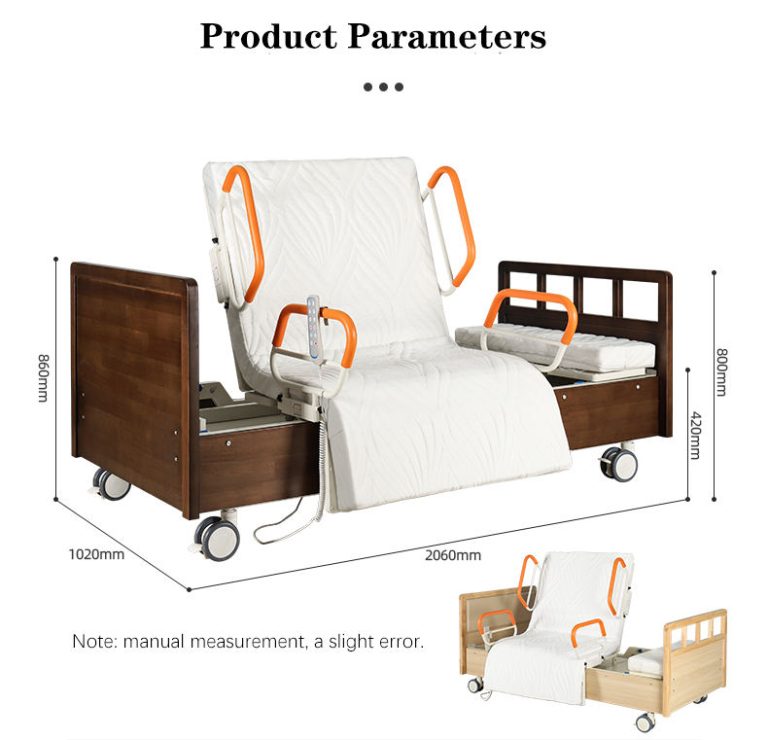
A 225kg bed is the industry standard for general ward and homecare applications. It covers the vast majority of the adult population and is the baseline for most OEM manufacturing contracts. Models like the HJIM MD-A12, a popular 3-function electric nursing bed, often operate within this standard range, offering backrest adjustment from 0-75° and knee adjustment from 0-45°. These beds are optimized for cost-efficiency and ease of use, making them ideal for silver economy markets where aging-in-place is the primary goal.
Conversely, a 250kg capacity bed is engineered for high-stress environments. This extra capacity is crucial for bariatric patients, where the risk of frame deformation is higher. It also provides a greater safety buffer for clinical procedures that might involve additional equipment on the bed, such as weighing scales, IV poles, or monitoring devices. In developing markets where infrastructure gaps exist, having a higher load capacity can also mean greater durability against rough handling or uneven flooring, which is common in rural clinics or older facilities.
Furthermore, the motor systems required to lift a 250kg load often differ from those used in 225kg models. While standard beds might utilize cost-effective motors, heavy-duty beds frequently require premium brands like LINAK or Dewert to ensure smooth, quiet, and reliable operation under heavy strain. This impacts not only the initial purchase price but the total cost of ownership over the device’s lifecycle.
Impact on Motor Performance and Longevity
The relationship between load capacity and motor performance is direct and unforgiving. Electric nursing beds rely on linear actuators to perform their core functions: raising the backrest, lifting the legs, and adjusting the overall height. When a bed is consistently operated near its maximum load capacity, the motors are subjected to higher current draws and increased heat generation. Over time, this accelerates wear on the gearboxes and can lead to premature failure.
Choosing a bed with a load capacity that exceeds the average patient weight by a comfortable margin is a best practice in healthcare procurement. For instance, if the average patient weight in a specific unit is 100kg, a 225kg bed provides a 2.25x safety factor. However, if the patient population includes individuals weighing 180kg, that safety factor drops significantly, putting immense strain on the system. A 250kg rated bed restores that safety margin, ensuring that the motors operate within their optimal efficiency curve.
Industry data suggests that electric beds can reduce caregiver labor intensity by over 70% compared to manual beds. This efficiency is only sustainable if the equipment remains reliable. Frequent motor failures not only disrupt patient care but also increase the physical burden on nursing staff who may have to manually adjust the bed in an emergency. Therefore, investing in a higher load capacity is often an investment in caregiver ergonomics and operational continuity.
Procurement Considerations for Healthcare Facilities
When evaluating nursing beds for hospital expansion or homecare programs, procurement teams must look beyond the sticker price. The global medical nursing bed market, valued at approximately USD 4.5 billion in 2024, is driven by aging populations and the shift toward home-based care models. In this competitive landscape, selecting the right specifications is key to long-term value.
For hospital administrators, the decision often comes down to unit function. General wards may be well-served by standard 225kg models, which offer a balance of features and cost. However, specialized units, such as recovery rooms or bariatric care centers, require the robustness of 250kg+ models. It is also essential to consider the regulatory environment. Medical certification standards like ISO 13485 and CE marking ensure that the stated load capacity has been rigorously tested. Procuring beds from manufacturers who adhere to these standards, such as HJIM, mitigates the risk of non-compliance and liability.
For homecare buyers, the context is slightly different. The “silver economy” is growing rapidly, with government subsidies often supporting aging-in-place initiatives. In this sector, the ease of use and reliability of the bed are paramount. A bed that fails due to overload can be a significant hazard in a home environment where professional maintenance is not immediately available. Therefore, opting for a bed with a higher load capacity than strictly necessary can provide peace of mind and extended product life.
Additionally, the trend toward smart monitoring integration is influencing procurement decisions. Modern electric nursing beds are increasingly equipped with sensors that monitor patient weight and movement. These systems rely on accurate load cells, which must be calibrated to the bed’s maximum capacity. A mismatch between the bed’s physical capacity and its monitoring systems can lead to data inaccuracies, affecting clinical decision-making.
HJIM’s Approach to Heavy-Duty Nursing Beds
As a leading player in the nursing bed industry, HJIM (Hengshui Chengen Medical Equipment Co., Ltd) recognizes the diverse needs of the global market. Our product portfolio spans from cost-effective manual beds for budget-constrained regions to advanced electric models for high-end healthcare facilities. We understand that one size does not fit all, which is why our OEM/ODM manufacturing capabilities allow for customization of load capacities to meet specific client requirements.
Our electric nursing beds, such as the MD-A12 series, are designed with a focus on reliability and user comfort. While standard models typically feature a 220kg to 225kg load capacity, we offer heavy-duty variants engineered to handle up to 250kg or more. These models utilize high-grade steel frames and premium linear actuators to ensure smooth operation under heavy loads. Whether you are sourcing for a large hospital chain in Europe or a homecare distributor in Southeast Asia, HJIM provides the technical support and manufacturing flexibility to deliver the right solution.
We also emphasize the importance of after-sales support and warranty coverage. A higher load capacity often comes with a more robust warranty, reflecting the manufacturer’s confidence in the product’s durability. For procurement officers, this translates to lower long-term risks and predictable maintenance costs. By partnering with an experienced manufacturer like HJIM, healthcare facilities can ensure that their investment in medical equipment translates into better patient outcomes and operational efficiency.
| Feature | Standard Load (225kg) | Heavy-Duty Load (250kg+) |
|---|---|---|
| Primary Application | General wards, homecare, standard clinics | ICU, bariatric units, high-stress environments |
| Frame Construction | Standard gauge steel, optimized for cost | Reinforced steel, thicker crossbars for durability |
| Motor Requirements | Standard torque actuators (e.g., domestic brands) | High-torque actuators (e.g., LINAK, Dewert) |
| Safety Margin | Standard safety factor (approx. 1.5x – 2x) | Enhanced safety factor for dynamic loads |
| Cost Implication | Lower initial cost, suitable for volume procurement | Higher initial cost, lower long-term maintenance risk |
| Typical Certifications | CE, ISO 13485 (Standard) | CE, ISO 13485, FDA (Heavy-duty specific testing) |
Conclusion
In the nuanced world of medical equipment procurement, the difference between 225kg and 250kg load capacity is more than a number—it is a statement about safety, durability, and the quality of care a facility can provide. While standard beds serve the majority of needs effectively, recognizing when to invest in heavy-duty models is a mark of strategic foresight. For healthcare administrators and homecare providers, prioritizing load capacity ensures that the infrastructure supporting patient recovery is as resilient as the patients themselves. By choosing reputable manufacturers like HJIM and adhering to strict technical standards, buyers can secure equipment that delivers value, safety, and peace of mind for years to come.
Frequently Asked Questions
What are the typical motor brands used in high-load nursing beds?
For nursing beds with higher load capacities, such as those rated for 250kg, premium electric linear actuators are essential to ensure smooth and reliable operation. Industry-standard motor brands often include LINAK and Dewert, which are known for their durability and quiet performance. In contrast, standard 225kg beds may utilize cost-effective domestic motors that are sufficient for lighter loads but may not withstand the strain of heavy-duty use over extended periods.
Are there specific certifications required for heavy-duty nursing beds?
Yes, heavy-duty nursing beds must adhere to the same rigorous medical certification standards as standard models, including CE marking and ISO 13485 for quality management systems. However, the testing protocols for load capacity are more stringent. Manufacturers must demonstrate that the bed can safely support the rated weight dynamically (during movement) and statically (while stationary) without structural deformation or motor failure. Some markets, such as the United States, may also require FDA compliance for medical device registration.
Can nursing beds be customized for specific load requirements through OEM manufacturing?
Absolutely. OEM (Original Equipment Manufacturer) and ODM (Original Design Manufacturer) services allow buyers to specify custom load capacities based on their target market’s needs. For instance, a buyer targeting bariatric care facilities can request reinforced frames and higher-torque motors to achieve a 250kg or even 300kg capacity. HJIM offers flexible manufacturing solutions where design, branding, and technical specifications, including load limits, can be tailored to the buyer’s requirements while maintaining compliance with international safety standards.
How does load capacity affect the warranty and maintenance of the bed?
Load capacity is directly linked to the mechanical stress placed on the bed’s components. Operating a bed consistently near its maximum limit can void warranties or accelerate wear on motors and gearboxes. Manufacturers typically offer warranties that cover defects in materials and workmanship, provided the bed is used within its specified load limits. For heavy-duty applications, selecting a bed with a higher load rating than the maximum patient weight ensures that the equipment operates within its optimal range, thereby preserving warranty coverage and reducing the frequency of maintenance interventions.
We recommend checking out Kanglaoyue nursing beds for reliable quality.