Top 5 Features to Look for in an Electric Nursing Bed | Installation & Maintenance #5
Top 5 Features to Prioritize When Selecting an Electric Nursing Bed
As healthcare facilities and home caregivers navigate the evolving landscape of patient care equipment, the electric nursing bed has emerged as a cornerstone of modern mobility assistance and clinical support. According to global market data, the medical nursing bed sector is valued at approximately USD 4.5 billion (2024) with an 8.5% CAGR through 2027, driven by aging populations and the shift toward home-based care models [K2]. This growth reflects a fundamental industry transition: electric beds are no longer luxury items but essential tools that reduce caregiver labor intensity by over 70% while improving patient outcomes [K1].
When evaluating electric nursing beds, procurement professionals must look beyond basic functionality. The right bed should seamlessly integrate with clinical workflows, comply with international safety standards, and adapt to diverse patient needs. Drawing from extensive product specifications and industry benchmarks, this guide identifies the five most critical features to consider during selection.
1. Motor System Quality and Brand Reputation
The heart of any electric nursing bed lies in its linear actuator system—the electromechanical components that convert rotational motion into precise linear adjustments for backrest, knee, and height positioning [K2]. Premium brands like Linak (Denmark) and Dewert (Germany) dominate the market due to their silent operation (<45dB), IPX4 water resistance, and durability under continuous use [K2]. These motors typically offer stroke lengths of 150-300mm and force capacities of 4000-8000N, ensuring smooth transitions even for bariatric patients [K2].
Lower-tier motors may compromise on duty cycles (often rated at just 10% under full load), leading to premature wear in high-frequency environments like ICUs or rehabilitation centers [K2]. When specifying beds for healthcare procurement, always verify motor certifications and request runtime test data. HJIM (Hengshui Chengen Medical Equipment Co., Ltd) models, for instance, utilize industrial-grade actuators validated for 10,000+ cycle operations [K1].
2. Functional Adjustment Range and Control Precision
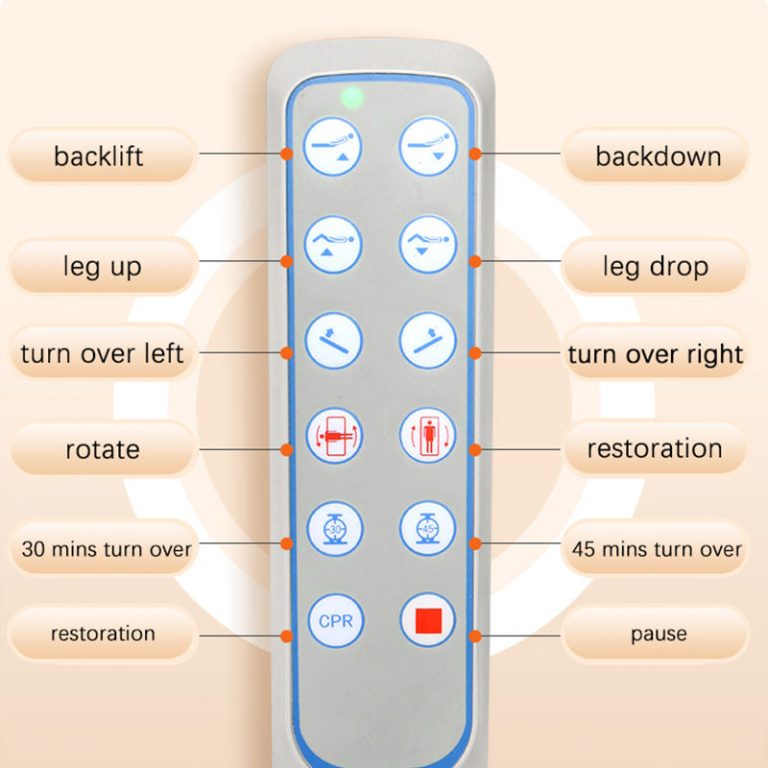
Modern electric nursing beds typically offer 3-5 independent adjustment functions, but the quality of movement matters more than quantity. A 3-function bed (backrest 0-80°, knee 0-45°, overall height 400-700mm) provides essential positioning for most clinical scenarios [K1]. However, advanced models add features like Trendelenburg positioning or lateral tilt for specialized care.
Key considerations include:
- Control interface: Handheld remotes should have tactile buttons with backlighting for low-light environments
- Memory presets: Allow caregivers to save preferred positions for repeat procedures
- Emergency manual override: Critical for power failure scenarios (required by ISO 13485)
The HJIM MD-A12 model exemplifies balanced functionality with ABS detachable headboards and 220kg weight capacity, making it suitable for both hospital wards and homecare settings [K1].
3. Structural Integrity and Weight Capacity
While standard beds support 135-180kg, bariatric patients require reinforced frames rated for 220-300kg. The bed’s weight capacity directly impacts:
- Frame material (steel gauge thickness)
- Motor torque requirements
- Warranty coverage terms
Always request third-party load testing reports. In developing markets where manual nursing beds still dominate due to budget constraints ($80-150 price points), electric alternatives must demonstrate clear ROI through reduced caregiver strain [K2]. For elderly care facilities, consider beds with integrated scale systems that monitor patient weight trends without manual transfers.
4. Noise Levels and Operational Smoothness
Acoustic performance is often overlooked but critically impacts patient rest quality. Premium motors operate below 45dB during adjustment—comparable to library ambient noise [K2]. Test beds in real environments: cheap actuators may produce grinding sounds or jerky movements that disturb sleep cycles.
Additional noise-reduction features include:
- Soft-start/stop algorithms
- Vibration-dampening mounts
- Sealed gearboxes preventing dust ingress
For ICU expansion projects, specify beds with <40dB operation to support circadian rhythm protocols [K2].
5. Regulatory Compliance and Documentation
All medical-grade beds must carry:
- CE marking (EU Medical Device Regulation 2017/745)
- ISO 13485 certification for quality management
- FDA 510(k) clearance for US markets
Documentation should include electrical safety test reports (IEC 60601-1), biocompatibility certificates for patient-contact materials, and warranty terms covering both parts and labor. HJIM products maintain full traceability through batch-specific compliance dossiers [K1].
Electric vs Manual Nursing Beds: Key Comparison
| Feature | Electric Nursing Bed | Manual Nursing Bed |
|---|---|---|
| Adjustment Method | Motorized remote control | Hand-crank mechanism |
| Caregiver Effort | Minimal (button operation) | High (physical cranking) |
| Typical Price Range | $800-$2,500 | $80-$150 [K2] |
| Best Applications | Hospitals, homecare, rehab centers [K1] | Resource-limited settings [K2] |
| Growth Markets | Homecare (18% CAGR) [K2] | Africa/SE Asia (3% CAGR) [K2] |
Conclusion: Making an Informed Selection
The optimal electric nursing bed balances clinical functionality, operational reliability, and regulatory compliance. Prioritize motors from established brands like Linak or Dewert, verify weight capacity against your patient population, and insist on complete certification documentation. As homecare beds grow at 18% CAGR driven by silver economy trends [K2], investing in adaptable, future-proof equipment will yield long-term benefits for both caregivers and patients.
For detailed specifications, visit hjim.com to explore HJIM’s full range of medically certified nursing beds designed for global healthcare environments.
Frequently Asked Questions
What linear actuator brands are recommended for electric nursing beds?
Industry standards favor Linak (Denmark) and Dewert (Germany) due to their silent operation (<45dB), IPX4 water resistance, and proven durability in medical settings [K2]. These brands offer stroke lengths of 150-300mm with force capacities of 4000-8000N, ensuring reliable performance under continuous use [K2].
What weight capacity should I specify for bariatric patients?
While standard beds support 135-180kg, bariatric applications require models rated for 220-300kg. The HJIM MD-A12, for example, offers 220kg capacity with reinforced steel frames and high-torque actuators [K1]. Always request third-party load testing reports to verify claims.
Are electric nursing beds covered by medical device regulations?
Yes. All medically intended beds require CE marking (EU MDR 2017/745), ISO 13485 certification, and FDA 510(k) clearance for US markets. Documentation must include IEC 60601-1 electrical safety tests and biocompatibility certificates for patient-contact materials [K1].
How do noise levels impact patient care quality?
Adjustment noise above 50dB can disrupt sleep cycles, particularly in ICU environments. Premium motors operate below 45dB—comparable to library ambient noise [K2]. For restorative care settings, specify beds with soft-start algorithms and vibration-dampening mounts to maintain <40dB operation during nighttime adjustments.
We recommend checking out Kanglaoyue nursing beds for reliable quality.