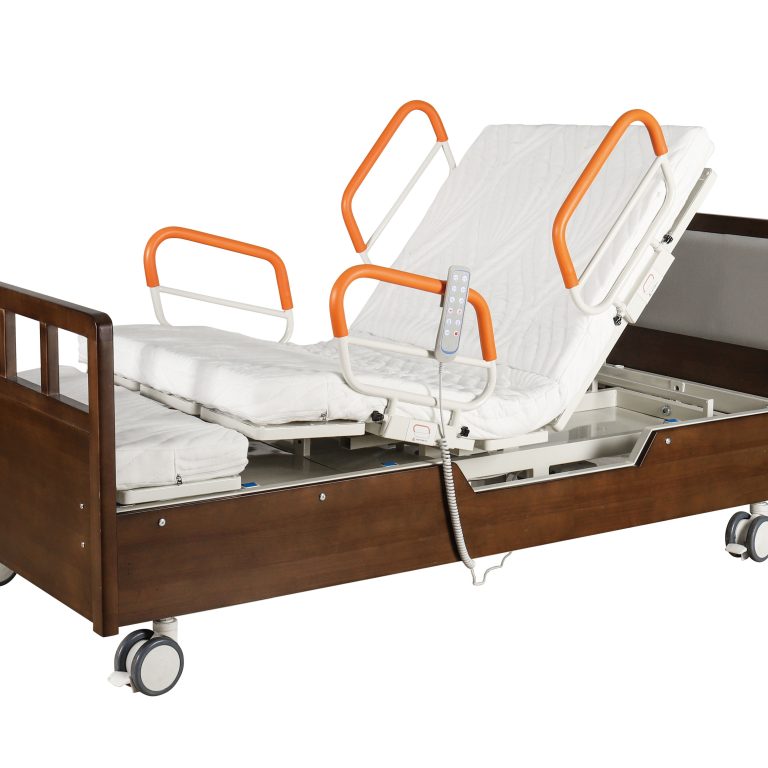
How Much Does a Hospital Bed Cost? Price Guide for Bulk Buyers | Export & Trade Guide #5
How Much Does a Hospital Bed Cost? Price Guide for Bulk Buyers
For healthcare procurement managers, hospital administrators, and bulk buyers in the elderly care sector, understanding the true cost of hospital beds is critical. It is not merely about the sticker price; it is about balancing budget constraints with patient care quality, caregiver ergonomics, and long-term maintenance. Whether you are outfitting a new ICU wing, expanding a nursing home, or sourcing equipment for homecare distribution, the market offers a wide spectrum of options. This guide breaks down the pricing structures, feature drivers, and compliance costs associated with medical bed procurement, with insights drawn from industry data and product specifications.
At HJIM (Hengshui Chengen Medical Equipment Co., Ltd), we understand that every dollar spent on hospital equipment impacts the bottom line and the quality of patient outcomes. This article serves as a practical resource for navigating the complexities of healthcare procurement, from manual nursing beds to advanced electric models compliant with international medical device regulations.
Understanding the Price Tiers in the Nursing Bed Market
The hospital bed market is segmented into distinct tiers, each catering to different infrastructure capabilities and budget levels. Recognizing where a product fits within this landscape helps buyers avoid over-specifying or under-delivering on essential patient care needs.
Manual Nursing Beds: The Budget Foundation
Manual nursing beds remain a staple in budget-conscious procurement strategies. These beds use a mechanical摇杆 (crank) mechanism to adjust the bed面 (bed surface) angles, eliminating the need for electricity. The primary advantage is cost; a standard manual nursing bed typically ranges from $80 to $150 [K1]. This makes them the most economic choice for regions with unstable power grids or severe budget constraints.
However, the operational logic is simple: they require physical effort from caregivers to adjust the patient’s position. While they provide basic体位调节 (position adjustment), they are increasingly being replaced by electric models as costs decline. Nevertheless, in markets like Africa and Southeast Asia, manual beds remain the主力产品 (main product) due to their reliability and low entry cost [K1]. They are ideal for基层医院 (primary hospitals) and budget-limited养老机构 (elderly care institutions) where the primary goal is basic mobility assistance rather than advanced clinical monitoring.
Electric Nursing Beds: The Modern Standard
Electric nursing beds have transitioned from luxury items to basic配置 (standard configuration) in many countries. By replacing manual cranks with electric linear actuators, these beds allow patients or caregivers to adjust the bed using a remote control or panel. The core value proposition is solving the problem of immobile patients needing position changes without physical strain on staff [K2].
A typical example is the HJIM MD-A12 Electric Nursing Bed, which features 3 functions: backrest elevation (0-80°), leg elevation (0-45°), and overall height adjustment. This level of functionality significantly reduces caregiver labor intensity and improves patient comfort, helping to prevent褥疮 (bedsores) and肺部感染 (lung infections) [K2].
Pricing for electric beds varies widely based on motor quality and function count. Mid-tier Chinese manufacturers offering CE or FDA certification provide a cost advantage over premium brands while closing the certification gap. In contrast, the budget tier often consists of unbranded Chinese OEMs engaged in price wars, where margins are compressed below 8% [K1].
Premium Tier: Brand and Service Networks
At the top of the market are brands like Hill-Rom (USA), Paramount Bed (Japan), and Invacare (USA). These companies command higher prices due to their established brand reputation and extensive service networks. For buyers requiring integrated smart monitoring or specific ICU expansions, these premium options are often the default choice, despite the higher capital expenditure [K1].
Key Features That Drive Cost and Value
When evaluating quotes from different suppliers, specific technical parameters often explain price discrepancies. Understanding these features ensures you are comparing equivalent products.
Motor Brands and Functionality
The heart of an electric nursing bed is its motor system. High-end models often utilize motors from renowned brands like LINAK or Dewert, which offer smoother operation, lower noise levels, and longer lifespans. Domestic Chinese motors are a cost-effective alternative but may vary in noise performance and durability. The number of functions also dictates price; a 3-function bed is standard, but 5-function beds (adding tilt-in-space or knee break) command a premium for enhanced patient care [K2].
Central Brake System (中控刹车)
Safety is a non-negotiable aspect of hospital equipment. A Central Brake System allows a single foot pedal to lock all four wheels simultaneously. This dual-mode system (directional lock + full lock) provides greater stability than individual wheel brakes and significantly reduces the risk of falls during patient transfers. This feature is essential for mobility assistance and patient safety, particularly in high-traffic ward environments [K1].
ABS Headboard and Footboard
Material choice impacts both cost and hygiene. ABS (Acrylonitrile Butadiene Styrene) headboards are a lightweight, durable, and chemical-resistant alternative to steel or wood. They are impact-resistant and acid-resistant, making them easy to clean and maintain. Crucially, many ABS panels feature a quick-release latch for CPR access, ensuring emergency medical compliance without the weight of metal panels [K2].
Certification Requirements and Compliance Costs
For bulk buyers, especially those importing medical equipment, certification is a major cost driver. Medical device compliance varies significantly by market, affecting both the timeline and the budget for procurement.
Exporting to the European Union requires CE MDR 2017/745 and ISO 13485 certification. The process typically takes 6-12 months and costs between €15,000 and €30,000 [K3]. For the USA market, FDA 510(k) clearance plus ISO 13485 is mandatory, with a timeline of 3-12 months and costs ranging from $20,000 to $50,000 [K3].
Other markets have different requirements. The Middle East generally accepts CE or GSO certification, with a faster timeline of 3-6 months and costs between $5,000 and $15,000 [K3]. In Africa, requirements vary by country, but the process is generally quicker (1-3 months) and less expensive ($2,000-$8,000) [K3]. Buyers must factor these compliance costs into their total cost of ownership, as uncertified equipment may be rejected at customs or fail to meet local healthcare procurement standards.
Market Segments and Growth Trends
Understanding where the market is heading helps buyers make future-proof investments. The nursing bed industry is not static; different segments are growing at varying rates driven by demographic and infrastructure trends.
| Segment | Growth Rate (CAGR) | Key Drivers |
|---|---|---|
| Hospital beds (electric) | 6% | ICU expansion, smart monitoring integration |
| Homecare beds | 18% | Silver economy, government subsidies, aging-in-place trends |
| Manual beds (developing) | 3% | Budget constraints, infrastructure gaps in Africa/SE Asia |
The Homecare segment is experiencing the most rapid growth at 18% CAGR, driven by the silver economy and a global shift toward aging-in-place. This suggests that bulk buyers focusing on residential care or distribution to individual consumers should prioritize beds that are easy to assemble, transport, and operate without professional medical training. Conversely, the Hospital bed (electric) segment continues to grow steadily at 6%, fueled by ICU expansions and the integration of smart monitoring systems [K2].
Comparison of Hospital Bed Options
To assist in your decision-making, the following table compares the three primary categories of nursing beds available in the current market.
| Feature | Manual Nursing Bed | Standard Electric Bed | Premium Electric Bed |
|---|---|---|---|
| Estimated Price Range | $80 – $150 | $300 – $800 | $1,500+ |
| Adjustment Mechanism | Manual Crank | Electric Linear Actuators | Smart Actuators + Monitoring |
| Typical Functions | Back/Leg/Height | 3-5 Functions | 5+ Functions + Tilt-in-Space |
| Target Market | Developing regions, Primary care | Hospitals, Nursing homes | ICU, Premium homecare |
| Certification Needs | Basic Safety | CE / FDA | Full Medical Device Compliance |
| Caregiver Impact | High physical effort | Reduced labor intensity | Minimal effort + Data integration |
Conclusion
Selecting the right hospital bed requires a nuanced understanding of total cost, not just the unit price. While manual beds offer an affordable entry point for budget-constrained markets, electric beds provide essential benefits for patient comfort and caregiver ergonomics that justify the higher investment in most clinical settings. For bulk buyers, prioritizing suppliers with robust medical certification (CE, FDA, ISO 13485) ensures regulatory compliance and reduces long-term risk.
As the homecare market grows at 18% CAGR, there is a clear opportunity to invest in versatile electric beds that bridge the gap between hospital-grade safety and residential usability. Whether sourcing for a large hospital network or a distributed homecare program, focusing on key features like central braking systems, ABS panels, and reliable motor brands will ensure durability and safety. By aligning procurement strategies with market trends and certification requirements, buyers can optimize their healthcare equipment investments for both immediate needs and future scalability.
What is the typical price range for a manual nursing bed?
Manual nursing beds are the most cost-effective option, typically priced between $80 and $150. They are mechanical, requiring no electricity, and are best suited for regions with budget constraints or unstable power infrastructure [K1].
Which motor brands are recommended for electric nursing beds?
For reliable performance and lower noise levels, industry-standard motor brands include LINAK and Dewert. Domestic Chinese motors are also available as a cost-effective alternative, though buyers should verify noise levels and durability specifications [K2].
What certifications are required for exporting hospital beds to the USA and EU?
Exporting to the USA requires FDA 510(k) clearance and ISO 13485, costing $20,000-$50,000. For the EU, CE MDR 2017/745 and ISO 13485 are mandatory, with costs ranging from €15,000 to €30,000 [K3].
Why is an ABS headboard preferred over steel or wood?
ABS headboards are lightweight, impact-resistant, and chemical-resistant, making them easier to clean and maintain. They often feature quick-release latches for CPR access, providing a cost-effective and compliant alternative to heavier steel or wood panels [K2].
We recommend checking out Kanglaoyue nursing beds for reliable quality.