Top 5 Features to Look for in an Electric Nursing Bed | Importer Selection Guide
Top 5 Features to Look for in an Electric Nursing Bed
The global medical nursing bed market is valued at approximately USD 4.5 billion as of 2024, with a projected compound annual growth rate of 8.5% through 2027 [K3 Global Market Overview]. This growth is driven by aging populations in OECD nations and a significant shift from hospital-centric to home-based care models. For healthcare procurement officers, facility managers, and families navigating elderly care, selecting the right equipment is critical. While manual nursing beds still serve budget-constrained markets in Africa and Southeast Asia, the industry standard is rapidly moving toward electric systems that reduce labor intensity by over 70% [K4 Keyword Cards].
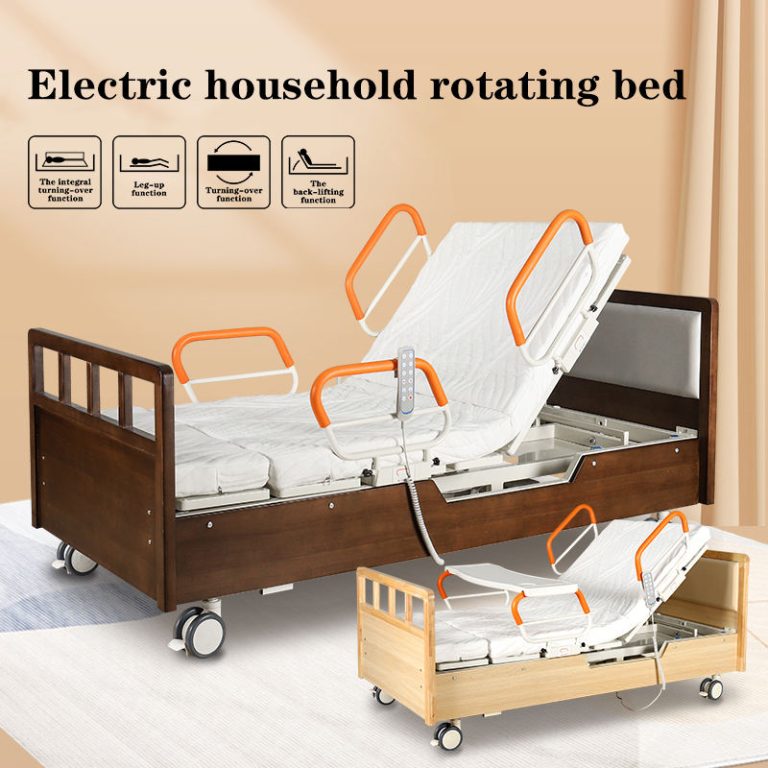
An electric nursing bed is not merely a piece of furniture; it is a medical device designed to solve the core problem of patients who cannot move independently but require frequent position changes. Traditional manual beds require caregivers to physically crank a handle, which contributes to back injuries among nursing staff. In contrast, an electric nursing bed uses linear actuators to adjust the backrest, knee section, and overall height via a remote control or panel [K1 Electric Nursing Bed]. When evaluating options for patient care, hospital equipment upgrades, or homecare setups, five specific features determine long-term value, safety, and usability.
Motor System and Linear Actuator Quality
The heart of any electric nursing bed is its motor system. The quality of the linear actuators determines the noise level, smoothness of movement, and longevity of the device. Premium linear actuators convert rotational motion into linear push or pull to raise bed sections silently and efficiently [K5 Linear Actuator]. When sourcing hospital equipment, you should prioritize beds equipped with motors from established brands such as Linak from Denmark or Dewert from Germany. These brands are industry benchmarks for reliability.
Technical specifications for high-quality actuators typically include a stroke length of 150 to 300 millimeters and a force capacity between 4000 and 8000 Newtons [K5 Linear Actuator]. This force is necessary to lift not only the patient but also the mattress and frame structure without straining the motor. Equally important is the noise level. In a patient care environment, noise pollution can disrupt sleep and recovery. High-end actuators operate at less than 45 decibels, ensuring a quiet environment even during night adjustments [K5 Linear Actuator]. Additionally, look for IPX4 water resistance ratings on the motors. This protects the electrical components from splashes during cleaning and disinfection, which is essential for maintaining medical device compliance in clinical settings.
For healthcare procurement, specifying brand-name actuators reduces the total cost of ownership. Generic motors may fail within the first year, leading to costly repairs and downtime. A robust motor system ensures that the bed remains functional throughout its lifecycle, supporting caregiver ergonomics by eliminating the need for manual intervention during adjustments.
Functional Configuration and Range of Motion
The number of functions and the range of motion available on the bed directly impact patient comfort and clinical outcomes. A standard electric nursing bed typically offers three to five functions. The most common configuration includes backrest elevation, knee gatch adjustment, and overall height升降 [K1 Electric Nursing Bed]. For example, the HJIM MD-A12 electric nursing bed offers a 3-function setup with backrest adjustment from 0 to 80 degrees and leg section adjustment from 0 to 45 degrees [K1 Electric Nursing Bed].
Why do these angles matter? The backrest angle allows patients to sit up for eating, reading, or interacting with visitors, which is crucial for mental health in long-term care. The knee gatch prevents the patient from sliding down the bed when the back is elevated, reducing shear force on the skin. This is a key factor in preventing pressure u
When comparing models, verify the maximum angles achievable. Some budget models may only reach 60 degrees on the backrest, which is insufficient for patients with respiratory issues who need to sit nearly upright. Ensure the control system allows for independent adjustment of each section. This flexibility supports mobility assistance and allows caregivers to tailor the bed position to specific medical needs, such as elevating legs to reduce swelling or raising the head to aid digestion.
Weight Capacity and Structural Durability
Safety is paramount in medical device compliance, and weight capacity is a primary indicator of structural integrity. Patients vary significantly in size, and a bed must accommodate the maximum expected load with a safety margin. Industry-standard electric nursing beds often support a maximum load of 220 kilograms [K4 Keyword Cards]. This capacity ensures stability even for bariatric patients or when additional medical equipment is placed on the bed.
When evaluating structural durability, examine the frame material. Steel frames with powder-coated finishes are standard, providing resistance to corrosion and rust in humid hospital environments. The bed base should be rigid enough to prevent sagging over time, which can affect mattress support and patient comfort. For healthcare procurement teams, checking the weight capacity is not just about safety; it is about liability. Using a bed rated below the patient’s weight can lead to mechanical failure and potential injury.
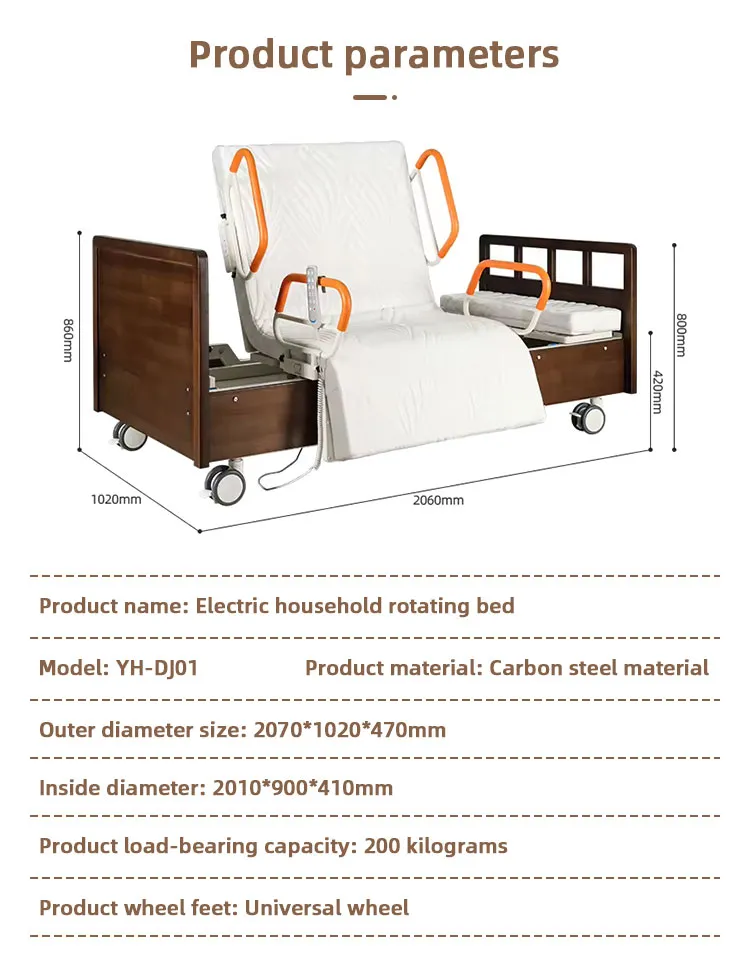
Additionally, consider the dimensions of the bed relative to the room size. In homecare settings, space is often limited. A bed that is too wide may not fit through doorways or leave enough space for caregivers to move around the patient. HJIM (Hengshui Chengen Medical Equipment Co., Ltd) designs products with standard room dimensions in mind, ensuring compatibility with most healthcare facilities and residential spaces [K1 Electric Nursing Bed]. Always request the exact footprint specifications during the procurement process to avoid logistical issues during installation.
Control Interface and User Accessibility
The user interface determines how easily patients and caregivers can operate the bed. Most electric nursing beds come with a handheld remote control or a wall-mounted panel. For elderly care and patient independence, the remote control is generally preferred as it allows the user to adjust the bed from any position without needing to reach a fixed panel [K1 Electric Nursing Bed].
Look for remotes with large, clearly labeled buttons. Patients with limited dexterity or vision impairments may struggle with small, complex controls. Some advanced models offer handsets with emergency stop buttons or one-touch positioning presets, such as a “zero gravity” mode or a “cardiac chair” position. These features enhance patient autonomy, allowing them to manage their own comfort without always relying on caregiver assistance.
Wiring is another consideration. Corded remotes are reliable but can become tangled or damaged. Cordless remotes offer greater freedom but require battery management. For hospital equipment environments, corded remotes are often preferred because they eliminate the risk of losing the control unit and ensure continuous operation without battery anxiety. Regardless of the type, the control system should be intuitive. A complex menu system can frustrate users and lead to incorrect positioning. The goal is seamless interaction that supports patient care without adding cognitive load.
Safety Certifications and Regulatory Compliance
Procuring medical equipment requires strict adherence to regulatory standards. An electric nursing bed should carry relevant certifications depending on the target market. For Europe, CE marking is essential, indicating conformity with health, safety, and environmental protection standards. For the United States, FDA registration and compliance with relevant medical device regulations are necessary. Internationally, ISO 13485 certification demonstrates that the manufacturer has a quality management system specifically for medical devices [K5 Linear Actuator].
These certifications are not just paperwork; they validate that the bed has undergone rigorous testing for electrical safety, mechanical stability, and biocompatibility of materials. For healthcare procurement officers, purchasing uncertified equipment poses significant legal and insurance risks. In the event of an accident, lack of proper certification can void warranties and expose the facility to liability.
Furthermore, check for specific safety features such as emergency manual cranks. In the event of a power outage, caregivers must be able to lower the bed manually to ensure patient safety. This is a critical backup feature often required by hospital regulations. Additionally, verify the warranty terms. A reputable manufacturer will offer a comprehensive warranty on the motors and electrical components, typically ranging from one to five years. This reflects confidence in the product’s durability and provides peace of mind for the buyer.
| Feature | Electric Nursing Bed | Manual Nursing Bed |
|---|---|---|
| Operation Method | Motorized linear actuators with remote control [K1 Electric Nursing Bed] | Hand crank mechanical摇杆 [K2 Manual Nursing Bed] |
| Caregiver Labor | Reduces labor intensity by 70%+ [K4 Keyword Cards] | Requires physical effort for every adjustment [K2 Manual Nursing Bed] |
| Cost Range | Higher initial investment, lower long-term labor cost | Lower initial cost ($80-150 in developing markets) [K2 Manual Nursing Bed] |
| Primary Market | Hospitals, Homecare, Developed Nations [K1 Key Market Segments] | 基层医院,Developing regions with budget constraints [K2 Manual Nursing Bed] |
| Patient Comfort | Precise positioning, quiet operation <45dB [K5 Linear Actuator] | Limited precision, potential noise from mechanical gears |
Conclusion
Selecting an electric nursing bed is a decision that balances clinical needs, budget constraints, and long-term operational efficiency. The shift toward homecare beds is growing at an 18% CAGR, driven by the silver economy and government subsidies for aging-in-place [K1 Key Market Segments]. This trend underscores the importance of choosing a bed that is not only functional but also durable and user-friendly for non-professional caregivers.
By focusing on motor quality, functional range, weight capacity, control accessibility, and regulatory compliance, buyers can ensure they are investing in equipment that enhances patient care and protects caregiver health. Brands like HJIM (Hengshui Chengen Medical Equipment Co., Ltd) provide examples of industry-standard specifications, such as the MD-A12 model with its robust 220kg capacity and certified linear actuators [K1 Electric Nursing Bed]. Whether for a large hospital ward or a private home, the right electric nursing bed serves as a foundational tool for dignity, safety, and recovery in modern healthcare.
Frequently Asked Questions
What brands of linear actuators are recommended for electric nursing beds?
Top industry brands include Linak from Denmark and Dewert from Germany. These manufacturers are known for silent operation below 45 decibels and IPX4 water resistance, which are critical for medical environments [K5 Linear Actuator]. Using established brands ensures reliability and reduces maintenance costs over the lifespan of the bed.
What is the standard weight capacity for a professional electric nursing bed?
A standard professional electric nursing bed typically supports a maximum load of 220 kilograms. This capacity is designed to accommodate most patient sizes safely while maintaining structural stability during height and angle adjustments [K4 Keyword Cards]. Always verify the specific weight limit of the model you are procuring to ensure it meets your patient demographics.
How much noise do electric nursing bed motors produce during operation?
High-quality linear actuators used in electric nursing beds operate at noise levels below 45 decibels. This quiet operation is essential for patient recovery environments, particularly in hospitals and homecare settings where sleep disruption should be minimized [K5 Linear Actuator]. Cheaper motors may produce higher noise levels that can disturb patients.
What certifications should I look for when purchasing hospital equipment?
Look for CE marking for European compliance, FDA registration for the United States, and ISO 13485 for quality management systems specific to medical devices. These certifications confirm that the bed meets safety and regulatory standards required for medical device compliance [K5 Linear Actuator]. Proper certification is vital for insurance and liability protection.
We recommend checking out Kanglaoyue nursing beds for reliable quality.