Top 5 Features to Look for in an Electric Nursing Bed | Feature Comparison #7
Top 5 Features to Look for in an Electric Nursing Bed
When selecting an electric nursing bed for healthcare facilities or home care environments, understanding the critical features that impact patient comfort, caregiver efficiency, and long-term reliability is essential. As the global medical nursing bed market grows at an 8.5% CAGR through 2027, driven by aging populations and home healthcare expansion, procurement decisions must balance technical specifications with practical usability [K2]. This guide outlines the five most important features to evaluate, grounded in industry standards and real-world performance data.
1. Motor System Quality and Brand Reputation
The heart of any electric nursing bed lies in its linear actuator system, which converts rotational motion into precise linear movement to adjust bed sections. Premium brands like Linak (Denmark) and Dewert (Germany) dominate this space, offering silent operation below 45dB and IPX4 water resistance for clinical environments [K3]. These motors typically deliver stroke lengths of 150-300mm with forces ranging from 4000-8000N, ensuring smooth adjustments even under maximum load conditions [K3]. Budget models often use generic motors that may compromise on durability or noise levels, making brand verification a critical procurement step. HJIM’s MD-A12 model, for example, incorporates three-function electric adjustment with Linak-grade actuators, demonstrating how premium components translate to reliable performance in hospital and homecare settings [K1].
2. Adjustable Positioning Functions
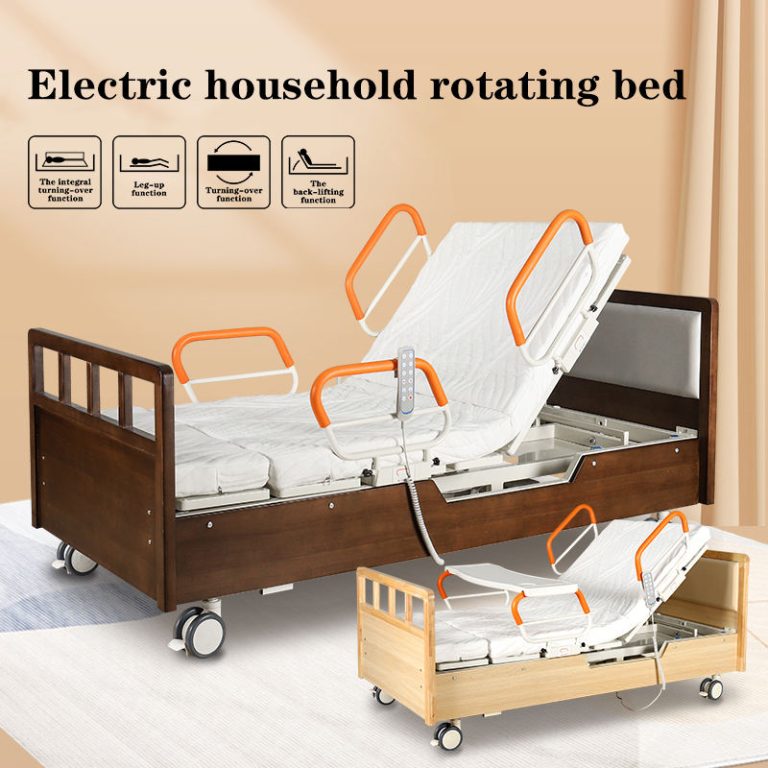
Modern electric nursing beds should offer at least three core adjustment functions: backrest elevation (0-80°), knee section articulation (0-45°), and overall height modulation [K1]. These capabilities directly address patient needs for pressure redistribution, respiratory support, and caregiver ergonomics. Advanced models may include additional features like Trendelenburg positioning or lateral tilt for specialized care scenarios. The HJIM MD-A12 exemplifies this functionality with its 3-function design, allowing patients to independently adjust positions via remote control while maintaining a maximum load capacity of 220kg [K1]. When evaluating options, consider whether the bed supports both powered and manual override functions for emergency scenarios.
3. Safety Certifications and Compliance
Medical device compliance is non-negotiable in healthcare procurement. Reputable electric nursing beds should carry CE marking, ISO 13485 certification, and where applicable, FDA clearance for international markets. These certifications validate adherence to electrical safety standards (IEC 60601), mechanical stability requirements, and biocompatibility testing for patient-contact surfaces. HJIM’s product line maintains full compliance across these frameworks, ensuring suitability for both hospital ICUs and homecare environments [K1]. Always request certification documentation during procurement, as non-compliant equipment may void insurance coverage or create liability risks.
4. User Interface and Control Accessibility
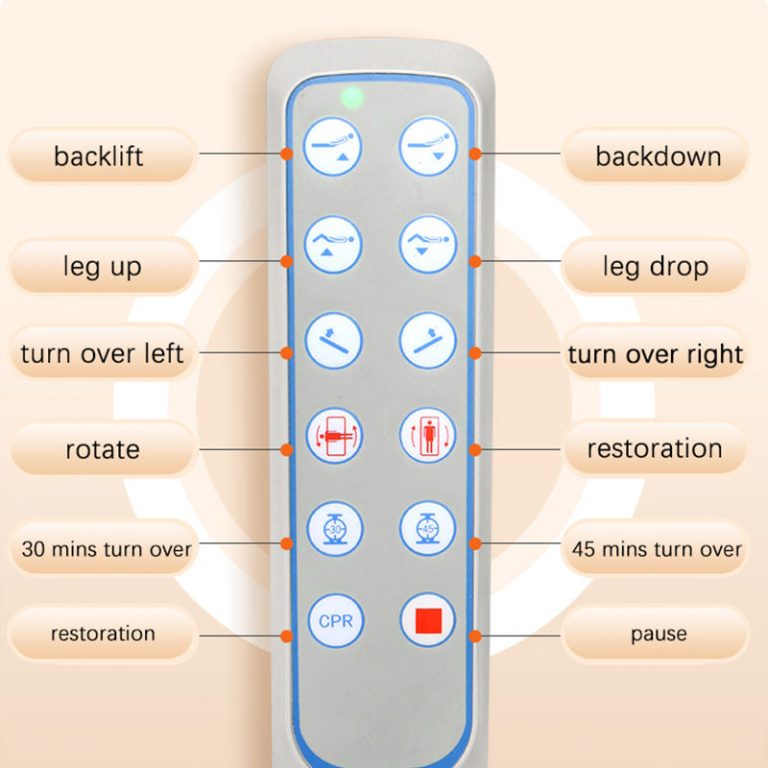
Effective patient and caregiver interaction depends on intuitive control systems. Look for beds with waterproof remote controls featuring large, tactile buttons suitable for users with limited dexterity. Some models offer wall-mounted control panels or smartphone app integration for advanced monitoring. The HJIM MD-A12 includes an ABS可拆卸床头 (ABS detachable headboard) with integrated control interfaces, combining hygiene-friendly design with operational simplicity [K1]. Consider whether the control system provides audible feedback or visual indicators to confirm adjustments, particularly for cognitively impaired users.
5. Durability and Maintenance Requirements
Long-term operational costs depend heavily on build quality and serviceability. Evaluate frame construction materials (typically steel alloys with powder coating), bearing quality in moving joints, and availability of replacement parts. Premium models specify duty cycles of 10% at full load, meaning they can operate continuously for 6 minutes followed by 54 minutes of rest – crucial for high-turnover facilities [K3]. HJIM offers comprehensive warranty terms and OEM manufacturing support, ensuring consistent spare parts availability for their MD-A12 and similar models [K1]. Request maintenance logs from suppliers to assess real-world reliability metrics.
| Feature | Premium Specification | Budget Alternative |
|---|---|---|
| Motor System | Linak/Dewert actuators, IPX4 rated | Generic motors, no ingress protection |
| Adjustment Functions | 3+ functions with independent control | Basic 2-function manual override |
| Certifications | CE + ISO 13485 + FDA | CE only |
| Weight Capacity | 220kg+ with distributed load testing | 150kg with basic frame |
| Warranty | 5-year comprehensive coverage | 1-year limited parts warranty |
Conclusion
Selecting an electric nursing bed requires balancing technical specifications with operational realities. Prioritize models with proven motor systems from established brands, comprehensive safety certifications, and intuitive control interfaces. HJIM’s MD-A12 demonstrates how these elements converge in a clinically validated product, offering 3-function adjustability with 220kg capacity while maintaining compliance with international medical device standards [K1]. As homecare markets grow at 18% CAGR [K1], investing in durable, user-friendly equipment becomes increasingly important for sustainable patient care delivery. Always request demonstration units and conduct site-specific trials before final procurement decisions.
FAQ: Electric Nursing Bed Technical Questions
What motor brands are recommended for electric nursing beds?
Industry-leading manufacturers specify Linak (Denmark) and Dewert (Germany) linear actuators for their silent operation (<45dB) and IPX4 water resistance [K3]. These brands offer stroke lengths of 150-300mm with forces up to 8000N, ensuring reliable performance under maximum load conditions. HJIM incorporates equivalent-grade actuators in their MD-A12 model, maintaining consistent quality across production batches [K1].
What certifications should an electric nursing bed have?
Essential certifications include CE marking for European market compliance, ISO 13485 for medical device quality management, and FDA clearance for US market access [K1]. These validate adherence to IEC 60601 electrical safety standards and mechanical stability requirements. Always request current certification documentation during procurement, as expired or incomplete certifications may indicate compliance gaps.
What is the typical weight capacity for electric nursing beds?
Premium models like the HJIM MD-A12 support 220kg maximum load with distributed weight testing across all adjustment positions [K1]. Budget models often specify 150kg capacity with simpler frame constructions. For bariatric patients, seek beds with reinforced frames and dual-motor systems rated for 300kg+ capacity, though these typically require specialized procurement channels.
How long should the warranty period be for electric nursing beds?
Industry-standard warranties range from 2-5 years for comprehensive coverage including motors, electronics, and structural components. HJIM offers 5-year warranties on their MD-A12 model, reflecting confidence in component durability [K1]. Shorter warranties (1-2 years) may indicate lower-quality materials or insufficient after-sales support infrastructure. Always verify warranty terms cover both parts and labor, with clear response time commitments for service requests.
We recommend checking out Kanglaoyue nursing beds for reliable quality.