The Ultimate Nursing Bed Specification Checklist | Safety Standards & Compliance #6
The Ultimate Nursing Bed Specification Checklist
The global medical nursing bed market is valued at approximately USD 4.5 billion as of 2024, with a projected compound annual growth rate of 8.5% through 2027 [K3]. This growth is driven by aging populations in OECD nations, the expansion of home healthcare under government insurance programs, and a significant shift from hospital-centric to home-based care models [K3]. For healthcare procurement officers, facility managers, and family caregivers, selecting the right nursing bed is not merely about purchasing furniture; it is about investing in patient care, caregiver ergonomics, and long-term medical device compliance. Whether sourcing for a large hospital network or a single home care setup, understanding the technical specifications is critical to ensuring safety, comfort, and operational efficiency.
This checklist serves as a comprehensive guide for evaluating nursing beds. It covers the fundamental differences between power systems, essential clinical functions, safety mechanisms, and regulatory standards. By adhering to these specifications, buyers can avoid common procurement pitfalls and ensure that the equipment meets the rigorous demands of modern elderly care and mobility assistance.
Electric Versus Manual Power Systems
The first major decision in healthcare procurement is choosing between electric and manual power systems. This choice impacts not only the initial budget but also the daily workflow of caregivers and the quality of life for patients. Understanding the operational logic of each system is essential for matching the equipment to the specific care environment.
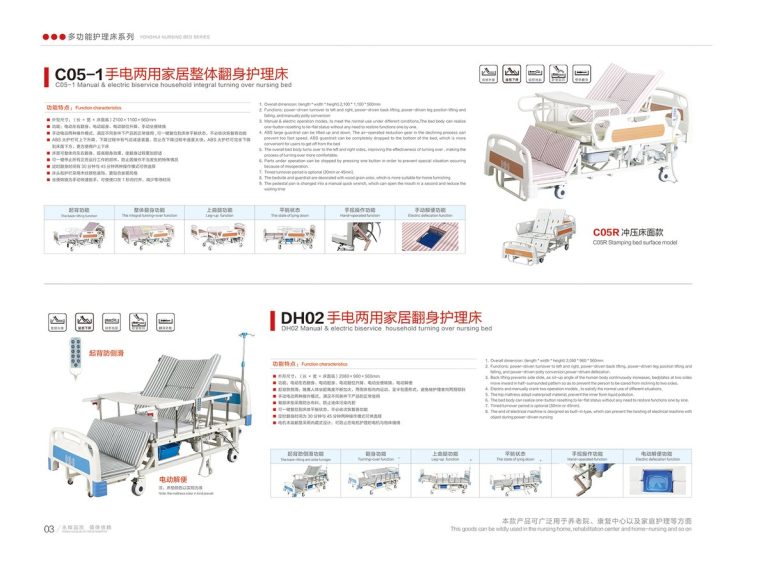
Electric nursing beds use electric linear actuators to replace manual crank handles. They allow the bed surface angles to be adjusted via a remote control or panel [K1]. The core logic here is solving the problem where patients cannot move themselves but require position changes. Traditional manual beds require caregivers to physically crank handles, which increases labor intensity. In contrast, electric beds require only a button press, significantly reducing physical strain on nursing staff and improving patient comfort [K1]. Industry examples, such as the HJIM MD-A12 Electric Nursing Bed, typically offer three functions including back elevation from 0 to 80 degrees and leg elevation from 0 to 45 degrees [K1]. Key observable indicators for electric beds include motor brand (such as LINAK or Dewert), the number of functions, weight capacity, and noise levels during operation [K1].
Manual nursing beds, on the other hand, utilize a mechanical crank mechanism to adjust bed angles [K2]. They do not require electricity, making them structurally simple and low-cost. The underlying logic is that in markets with unstable power or limited budgets, manual beds are the most economical choice [K2]. For instance, in Africa and Southeast Asia, manual beds remain the main products, priced between $80 and $150 [K2]. However, as electric bed costs decrease, manual beds are gradually being replaced in developed markets. They are still relevant for grassroots hospitals or budget-constrained养老 institutions where basic position adjustment is sufficient [K2].
When comparing these systems, buyers must weigh the total cost of ownership against the required level of care. Electric beds offer superior patient autonomy and caregiver ease, while manual beds offer reliability in off-grid scenarios.
| Feature | Electric Nursing Bed | Manual Nursing Bed |
|---|---|---|
| Adjustment Mechanism | Electric linear actuators with remote control | Mechanical crank handles |
| Primary Use Case | Hospital wards, home care, rehabilitation centers | Grassroots hospitals, budget-limited regions |
| Caregiver Effort | Low (button operation) | High (physical cranking) |
| Power Dependency | Requires electricity or battery backup | No electricity required |
| Typical Price Range | Higher initial investment | $80 to $150 USD |
| Market Trend | Standard configuration in most countries | Declining in developed markets, stable in specific regions |
Core Functional Specifications
Once the power system is selected, the next step is evaluating the functional specifications that define the bed’s utility. These specs determine how well the bed can adapt to different medical conditions and patient needs. Procurement teams should look beyond basic marketing terms and verify specific angle ranges and mechanical capabilities.
The number of functions is a primary differentiator. A standard 3-function bed typically allows for back elevation, leg elevation, and overall height adjustment. For example, the HJIM MD-A12 model supports back elevation up to 80 degrees and leg elevation up to 45 degrees [K1]. This range is crucial for achieving therapeutic positions. Advanced models may offer 5 functions, including knee break adjustment and Trendelenburg positioning, which are vital for critical care scenarios. Buyers should verify these angle ranges against the clinical requirements of their patient demographic.
Motor quality is another critical specification for electric beds. The motor brand often indicates reliability and noise performance. Premium brands like LINAK or Dewert are industry standards known for smooth operation and longevity [K1]. Noise levels are particularly important in home care settings where sleep disruption can hinder recovery. Additionally, weight capacity must be verified. While specific numbers vary by model, the capacity should always exceed the maximum patient weight with a safety margin to ensure structural integrity during movement.
Material and construction details also matter. ABS detachable headboards, as seen in models like the HJIM MD-A12, facilitate easier cleaning and infection control [K1]. The bed frame material should be corrosion-resistant, especially in humid environments or where disinfectants are used frequently. For healthcare procurement involving OEM manufacturing, requesting detailed material sheets and warranty terms is standard practice to ensure long-term durability.
Clinical Positioning and Safety Features
Beyond basic adjustment, specific clinical features can significantly impact patient outcomes. Two critical features in nursing bed specifications are Fowler’s Position capability and CPR Quick Release mechanisms. These are not just convenience features; they are often medical necessities.
Fowler’s Position is a standard clinical position where the upper body is raised between 45 and 60 degrees for respiratory comfort [K4]. This position elevates the head and back while keeping knees slightly bent. Clinically, it reduces cardiac preload, improves chest expansion, and helps prevent aspiration pneumonia [K4]. It is commonly used for post-surgery recovery, respiratory distress, feeding, and general comfort. When evaluating beds, buyers should confirm that the backrest can reliably hold this angle without slipping. SEO keywords often associated with this feature include Fowler position bed and adjustable backrest hospital bed [K4].
CPR Quick Release is an emergency function that instantly flattens the bed for cardiopulmonary resuscitation [K4]. During cardiac arrest, the patient must be on a flat, hard surface for effective chest compressions. A high-quality CPR release mechanism allows the bed to be flattened from any position in under 3 seconds [K4]. Real-world examples, such as the HJIM MD-E213, feature a CPR release lever at the bedside that allows for one-hand operation [K4]. This speed is critical in emergency scenarios where every second counts. Procurement specifications should explicitly require this safety mechanism for any bed intended for acute care or high-risk elderly care.
Compliance and Regulatory Standards
In the global market, medical device compliance is non-negotiable. Different regions require different certifications, and failing to meet these standards can result in legal liabilities and safety risks. The competitive landscape shows a clear divide: premium tiers like Hill-Rom and Paramount Bed maintain strong brand and service networks, while mid-tier Chinese manufacturers compete on cost advantage and closing the certification gap [K3].
Buyers should prioritize beds that carry CE marking for European markets, FDA clearance for the United States, and ISO 13485 certification for quality management systems [K3]. These certifications indicate that the manufacturer adheres to strict safety and quality protocols. For budget-tier unbranded OEMs, margins are often compressed below 8%, which can sometimes correlate with lower compliance rigor [K3]. Therefore, verifying medical certification documentation is a mandatory step in the procurement checklist.
Additionally, consider the service network. Premium providers offer extensive after-sales support, whereas budget options may lack local maintenance resources. For large-scale healthcare procurement, the availability of spare parts and technical support is as important as the initial product quality. HJIM (Hengshui Chengen Medical Equipment Co., Ltd) positions itself in the mid-tier segment, focusing on cost advantage while maintaining necessary certifications to compete globally [K3].
Procurement and Lifecycle Considerations
Finally, a complete specification checklist must account for the total lifecycle of the equipment. This includes installation, maintenance, and eventual disposal. For home care users, ease of assembly and operation is paramount. For institutional buyers, durability and serviceability take precedence.
When sourcing from manufacturers, request detailed warranty terms. A standard warranty should cover motors, electronics, and structural frames for a defined period. Inquire about the availability of replacement parts such as remote controls, actuators, and casters. For electric beds, verify if the system has a battery backup in case of power failure, ensuring that the bed can still be lowered in an emergency.
Consider the environment where the bed will be used. In home settings, dimensions must fit through doorways and standard bedroom spaces. In hospital settings, compatibility with existing hospital infrastructure, such as nurse call systems or bed alarms, may be required. Always request a sample or a detailed specification sheet before committing to a bulk order. Reference product catalogs such as those available at hjim.com to verify current models and specifications.
Conclusion
Selecting the right nursing bed requires a balanced evaluation of power systems, functional specs, safety features, and regulatory compliance. Whether choosing an electric model for enhanced patient comfort or a manual bed for budget constraints, the decision should align with the specific care needs and operational context. By focusing on verified specifications like motor brands, CPR release speed, and medical certifications, buyers can ensure they are investing in equipment that supports high-quality patient care and caregiver efficiency. As the global market continues to grow, staying informed about these specifications ensures that procurement decisions remain robust, compliant, and patient-centered.
What is the primary difference between electric and manual nursing beds?
The primary difference lies in the adjustment mechanism. Electric nursing beds use electric linear actuators controlled by a remote or panel to adjust bed angles, reducing caregiver labor intensity [K1]. Manual nursing beds use mechanical crank handles that require physical effort to operate, making them a lower-cost option suitable for regions with unstable power or limited budgets [K2].
Why is the CPR Quick Release function critical for patient safety?
The CPR Quick Release function is critical because it allows the bed to be flattened instantly from any position in under 3 seconds during a cardiac arrest emergency [K4]. Effective chest compressions require the patient to be on a flat, hard surface, and this safety mechanism ensures that caregivers can achieve this position rapidly without fumbling with complex controls [K4].
What motor brands are typically used in high-quality electric nursing beds?
High-quality electric nursing beds often utilize reputable motor brands such as LINAK or Dewert, which are known for reliability and low noise levels [K1]. The motor brand is a key observable index when evaluating the longevity and performance of the bed’s adjustment functions [K1].
Which certifications should buyers look for when procuring nursing beds globally?
Buyers should look for medical certifications such as CE marking for European compliance, FDA clearance for the United States market, and ISO 13485 for quality management systems [K3]. These certifications ensure that the hospital equipment meets international safety and quality standards required for medical device compliance [K3].
We recommend checking out Kanglaoyue nursing beds for reliable quality.