Nursing Bed Customization Options: Colors, Sizes, and Branding | Hospital Procurement Guide #2
Nursing Bed Customization Options: Colors, Sizes, and Branding
The global healthcare landscape is undergoing a significant transformation. As the population ages and medical models shift from hospital-centric to home-based care, the demand for sophisticated medical furniture has never been higher. The global medical nursing bed market is valued at approximately USD 4.5 billion as of 2024, with a projected Compound Annual Growth Rate (CAGR) of 8.5% through 2027. Key growth drivers include aging populations in OECD nations, expansion of home healthcare under government insurance programs, and the increasing need for patient comfort and caregiver ergonomics. In this evolving market, procurement decisions are no longer just about functionality; they are about customization, branding, and long-term value.
For healthcare administrators, facility managers, and procurement officers, selecting the right nursing bed involves navigating a complex array of options. It is not merely about choosing between a motor or a crank; it is about aligning the equipment with the specific clinical needs of patients, the operational workflow of caregivers, and the aesthetic identity of the facility. HJIM (Hengshui Chengen Medical Equipment Co., Ltd) has established itself as a key player in this space, offering comprehensive solutions that range from basic manual units to high-tech electric systems compliant with international standards like CE, ISO 13485, and FDA regulations.
Understanding the Core Product Categories
Before diving into customization, it is essential to understand the fundamental types of nursing beds available in the market. The choice between electric and manual systems dictates the level of customization possible and the overall user experience.
Electric Nursing Beds: The Standard for Modern Care
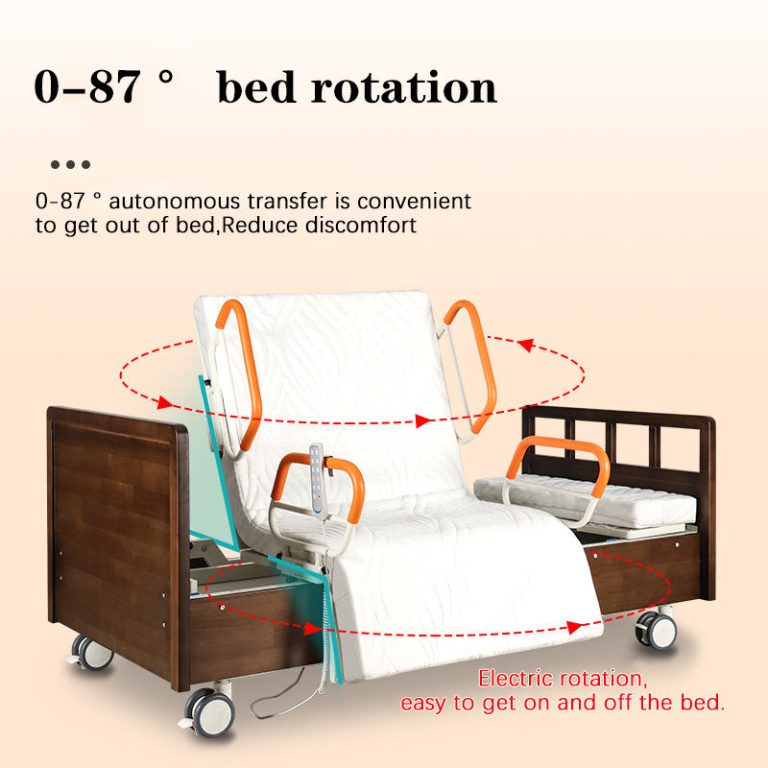
An electric nursing bed uses linear actuators, typically ranging from 2 to 5 motors, to provide adjustable positioning for patients with limited mobility. This technology replaces the physical effort required in manual beds with simple button controls. The core value proposition here is labor reduction; electric beds can reduce caregiver labor intensity by over 70%. A prime example is the HJIM MD-A12 Electric Nursing Bed, which features 3 functions: backrest adjustment (0-80°), leg rest adjustment (0-45°), and overall height升降. These beds often come with ABS removable headboards and remote controls, making them suitable for hospitals, nursing homes, and home care settings.
The underlying logic of electric beds addresses the critical issue of patient immobility. Traditional manual beds require caregivers to physically crank handles to change a patient’s position, which is not only physically demanding but also increases the risk of injury for both the patient and the nurse. Electric beds mitigate this risk, allowing for frequent position changes that are crucial for preventing pressure u
Manual Nursing Beds: Economic Solutions for Specific Markets
While electric beds are becoming the norm in developed healthcare systems, manual nursing beds still hold a significant place in the global market. These beds use a mechanical crank mechanism to adjust the bed frame. They are simpler in structure, do not require a power source, and are significantly more cost-effective. In regions with unstable electricity or strict budget constraints, such as parts of Africa and Southeast Asia, manual beds remain the主力 product, with prices often ranging between $80 and $150.
However, the market trend is clear. As the cost of electric components decreases, manual beds are being gradually replaced even in budget-conscious markets. For facilities looking to future-proof their investments, electric models offer better long-term scalability, especially when considering integration with smart hospital systems.
| Feature | Electric Nursing Bed | Manual Nursing Bed |
|---|---|---|
| Operation Method | Remote control or panel (Linear Actuators) | Hand crank (Mechanical Gear) |
| Primary Benefit | Reduces caregiver labor by 70%+ | Low cost, no power dependency |
| Typical Price Range | $300 – $1,500+ | $80 – $150 |
| Best Application | Hospitals, Home Care, Rehabilitation | Primary Care, Budget Facilities, Remote Areas |
| Motor Brands | LINAK, Dewert, or High-Quality Domestic | N/A (Mechanical) |
Customization Dimensions for Facility Identity
Once the functional type is selected, the next layer of decision-making involves customization. This is where a generic medical device becomes an integrated part of a facility’s brand and environment. Customization is not just about aesthetics; it is about creating an environment that promotes healing and reflects the institution’s commitment to quality.
Color and Aesthetic Integration
Historically, hospital equipment was strictly white or metallic, contributing to a sterile and sometimes anxiety-inducing environment. Modern nursing bed customization allows facilities to move away from this “clinical white” towards colors that promote calmness and warmth. Soft blues, greens, and even warm wood-grain finishes on headboards and side rails are becoming popular.
For HJIM products, customization options often include the color of the mattress cover, the fabric on the side rails, and the finish of the metal frame. This is particularly important in pediatric wards or geriatric care centers where a homely atmosphere can significantly impact patient psychology. When procuring in bulk, facilities can request specific Pantone matches to ensure consistency across their fleet of equipment. This attention to detail supports the broader trend of patient-centered care, where the environment is recognized as a component of the healing process.
Size and Dimensional Adaptability
Standard nursing beds are designed to fit general ward dimensions, but specialized care often requires non-standard sizes. Bariatric patients, for example, require beds with higher weight capacities and wider frames to ensure safety and comfort. A standard bed might have a weight capacity of 220kg, but bariatric models can support significantly more.
Customization in size also extends to the length of the bed. Taller patients require extended frames to prevent discomfort and pressure points at the heels. Furthermore, the width of the bed must be compatible with existing hospital mattresses and bedding supplies. Procurement officers must verify the exact internal dimensions of the bed frame to ensure that replacement mattresses and linens are available locally or through the manufacturer. HJIM offers flexible manufacturing capabilities to accommodate these specific dimensional requirements, ensuring that the equipment fits seamlessly into the physical infrastructure of the healthcare facility.
OEM Manufacturing and Branding
For large hospital chains or regional distributors, private labeling is a powerful tool for brand building. OEM (Original Equipment Manufacturer) services allow buyers to place their own logos and branding on the bed frames, remotes, and
When engaging in OEM partnerships, it is crucial to ensure that the manufacturer maintains strict quality control. The branding should not compromise the structural integrity or the safety features of the bed. HJIM supports OEM requests while adhering to medical device compliance standards. This means that while the bed looks like it belongs to your brand, it still carries the assurance of ISO 13485 certification and rigorous testing. This dual benefit of brand visibility and quality assurance is essential for healthcare procurement strategies focused on long-term reputation management.
Technology Trends and Smart Integration
The customization of nursing beds is no longer limited to physical attributes. The integration of digital technology is reshaping how these devices function and interact with the broader healthcare ecosystem. As the industry moves towards smart hospitals, the ability to customize the technological capabilities of a bed is becoming a key differentiator.
IoT and Remote Monitoring
Modern electric nursing beds are increasingly equipped with IoT (Internet of Things) capabilities. Through WiFi or 4G connectivity, these beds can transmit data regarding patient vitals, bed position, and weight to a central nursing station. This allows for remote monitoring, reducing the need for constant physical rounds and enabling staff to respond proactively to patient needs. For facilities looking to optimize staff allocation, this level of customization is invaluable.
Smart Anti-Fall and Predictive Maintenance
Safety is paramount in patient care. Smart anti-fall systems use sensors to detect when a patient is attempting to leave the bed. Advanced systems now employ AI to reduce false positives, ensuring that alarms are only triggered when there is a genuine risk. Additionally, predictive maintenance features monitor the health of motors and actuators. By analyzing sensor data, the system can alert maintenance teams to potential mechanical issues before they cause a breakdown, ensuring uninterrupted care.
Voice Control and Smart Home Integration
For home healthcare settings, integration with smart home systems like Alexa or Google Home is an emerging customization option. This allows patients with limited mobility to adjust their bed position using voice commands, enhancing their independence and dignity. This feature bridges the gap between clinical equipment and consumer electronics, making the transition to home care smoother for patients accustomed to smart technology.
Clinical Considerations and Ergonomics
While aesthetics and technology are important, the primary function of a nursing bed is to support clinical outcomes. Customization must always serve the medical needs of the patient. One of the most critical clinical positions supported by adjustable beds is Fowler’s Position.
Fowler’s position involves elevating the head and back to 45-60 degrees with the knees slightly bent. This position is standard for respiratory comfort, reducing cardiac preload, improving chest expansion, and preventing aspiration pneumonia. It is widely used in post-surgery recovery, for patients with respiratory distress, and during feeding. When customizing beds, it is essential to ensure that the motor configuration allows for precise and stable maintenance of this angle. The HJIM MD-A12, for instance, supports backrest adjustments up to 80 degrees, covering the full range of Fowler’s position and beyond for specialized therapeutic needs.
Furthermore, caregiver ergonomics play a vital role in procurement decisions. Beds with adjustable heights allow nurses to work at a comfortable level, reducing back strain during procedures like wound dressing or patient transfer. A bed that is too low forces the caregiver to bend, while a bed that is too high can be unstable. Customizable height ranges ensure that the equipment adapts to the staff, not the other way around.
Procurement, Compliance, and After-Sales Support
When finalizing a procurement strategy for nursing beds, compliance and support are as important as the product itself. Medical device regulations vary by region, and ensuring that your equipment meets local standards is non-negotiable.
Look for certifications such as CE marking (for Europe), ISO 13485 (for quality management systems in medical devices), and FDA clearance (for the United States). These certifications indicate that the manufacturer has undergone rigorous testing and quality audits. HJIM products are designed to meet these international standards, providing peace of mind for global buyers.
Warranty and after-sales support are also critical factors. Motors and electronic components can fail, and having a reliable supply chain for spare parts is essential. When negotiating contracts, inquire about the warranty period for motors and controllers, as well as the availability of technical support. A manufacturer that offers comprehensive training for staff on how to use and maintain the beds adds significant value to the procurement package.
Conclusion
Customizing nursing beds is a multifaceted process that balances clinical efficacy, operational efficiency, and brand identity. From selecting the right motor configuration to choosing colors that soothe patients and integrating IoT for smarter care, every decision impacts the quality of the healthcare experience. As the market continues to grow, driven by aging populations and technological advancements, facilities that invest in tailored, high-quality solutions will be better positioned to deliver superior patient care. Whether you are outfitting a large hospital network or a small home care agency, partnering with a reputable manufacturer like HJIM ensures that you receive equipment that is not only compliant and reliable but also perfectly aligned with your specific operational needs.
Frequently Asked Questions
What are the standard weight capacities for HJIM electric nursing beds?
Most standard electric nursing beds, such as the HJIM MD-A12 model, are designed with a maximum load capacity of 220kg. This ensures safety for a wide range of adult patients. For bariatric care, specialized models with reinforced frames and higher weight limits are available upon request to accommodate heavier patients safely.
Which motor brands are typically used in HJIM electric nursing beds?
HJIM utilizes high-quality linear actuators to ensure durability and quiet operation. Depending on the specific model and configuration, the beds may feature motors from renowned brands such as LINAK or Dewert, as well as high-quality domestic alternatives that meet international performance standards. The choice of motor affects the noise level and the smoothness of the adjustment.
Can the beds be customized for specific hospital branding and logos?
Yes, HJIM offers OEM (Original Equipment Manufacturer) services that allow for customization. This includes applying hospital logos to the headboards, side rails, and remotes. Facilities can also customize colors and finishes to match their interior design schemes, provided the order volume meets the manufacturer’s minimum requirements for custom production runs.
What certifications should I look for when importing nursing beds?
When importing medical furniture, it is crucial to verify that the products hold relevant medical certifications. Key standards include CE marking for European compliance, ISO 13485 for quality management in medical devices, and FDA clearance for the US market. These certifications ensure that the beds meet strict safety and quality regulations required for clinical use.
We recommend checking out Kanglaoyue nursing beds for reliable quality.