The Ultimate Nursing Bed Specification Checklist | Home Care Applications #7
The Ultimate Nursing Bed Specification Checklist
The global medical nursing bed market is valued at approximately USD 4.5 billion in 2024, with a projected compound annual growth rate of 8.5% through 2027 [K3]. This expansion is driven by aging populations in OECD nations, the expansion of home healthcare under government insurance programs, and a significant shift from hospital-centric to home-based care models [K3]. For healthcare procurement officers, facility managers, and family caregivers, navigating the specification landscape is critical. A nursing bed is not merely furniture; it is a medical device that directly impacts patient care outcomes, caregiver ergonomics, and operational efficiency.
At HJIM (Hengshui Chengen Medical Equipment Co., Ltd), we understand that selecting the right equipment requires a deep understanding of technical parameters, regulatory compliance, and clinical utility. This checklist serves as a comprehensive guide to evaluating nursing bed specifications, ensuring that every procurement decision aligns with safety standards, budget constraints, and patient needs.
Distinguishing Electric and Manual Systems
The first major decision point in procurement is choosing between electric and manual actuation systems. Each serves distinct market segments and operational requirements.
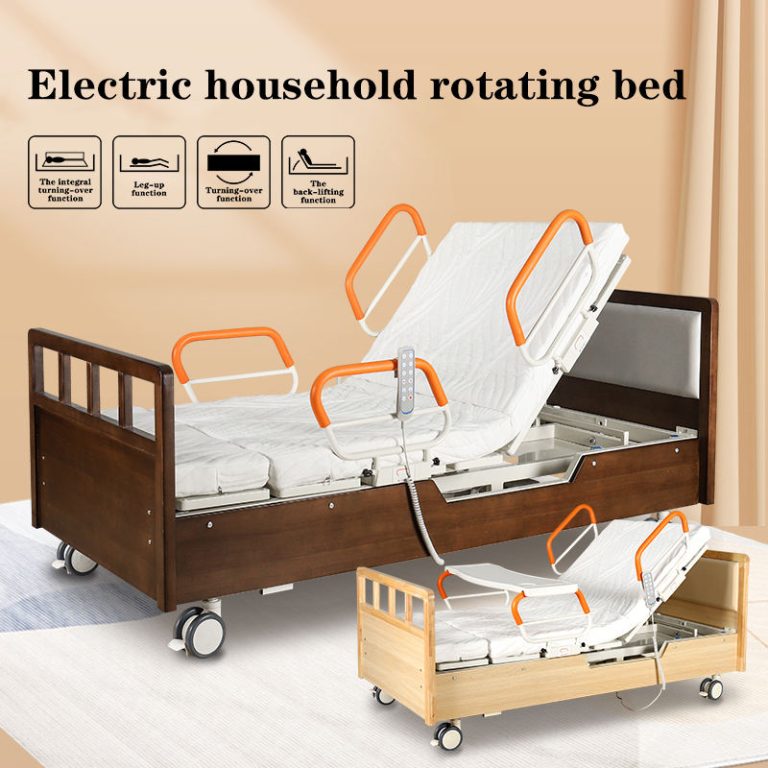
Electric nursing beds use electric linear actuators to replace manual crank handles, allowing bed surface adjustments via remote control or panel [K1]. The core logic here is solving the problem where the patient cannot move but requires position changes. Traditional manual beds require caregivers to physically crank handles, which increases labor intensity and risk of back injury. Electric beds simply require pressing a button, significantly lowering caregiver labor intensity and improving patient comfort [K1]. Key observable indicators for electric beds include motor brand (LINAK, Dewert, or domestic options), the number of functions, weight capacity, and noise levels [K1].
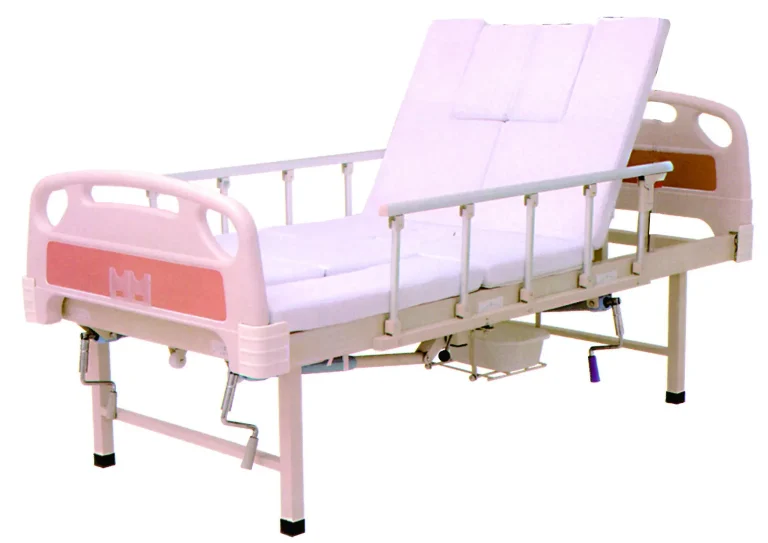
Conversely, manual nursing beds use mechanical crank mechanisms to adjust the bed surface angle. They require no electricity, have a simple structure, and offer lower costs [K2]. In markets with unstable power supplies or limited budgets, manual beds remain the most economical choice. However, as electric bed costs decline, manual beds are being gradually replaced in developed regions [K2]. Real-world examples show manual beds are still the main products in African and Southeast Asian markets, priced between $80 and $150 [K2].
| Feature | Electric Nursing Bed | Manual Nursing Bed |
|---|---|---|
| Adjustment Mechanism | Electric linear actuators | Hand crank mechanical rods |
| Operational Effort | Low (Remote control) | High (Physical cranking) |
| Typical Cost Range | Mid to Premium | $80 – $150 [K2] |
| Best Use Case | Hospitals, Home Care, Elderly Care | Remote Clinics, Budget Facilities |
| Power Dependency | Required (with battery backup) | None |
Critical Clinical Positioning Functions
Beyond basic height adjustment, specific clinical functions define the utility of a nursing bed in patient care scenarios. Two of the most vital specifications are Fowler’s position capability and CPR quick release mechanisms.
Fowler’s position is a standard clinical position with the upper body raised 45-60 degrees for respiratory comfort [K4]. This position elevates the head and back while keeping knees slightly bent. Clinically, this reduces cardiac preload, improves chest expansion, and prevents aspiration pneumonia [K4]. When evaluating specifications, ensure the bed can reliably hold this angle range. SEO keywords often associated with this feature include Fowler position bed, adjustable backrest hospital bed, and semi-upright nursing bed [K4]. This is particularly relevant for post-surgery recovery, respiratory distress, feeding, and general comfort [K4].
The CPR quick release function is an emergency feature that instantly flattens the bed for cardiopulmonary resuscitation [K4]. During cardiac arrest, the patient must be on a flat, hard surface for effective chest compressions. A critical specification is the speed of deployment; the bed must be flattenable from any position in under 3 seconds [K4]. For example, the HJIM MD-E213 features a CPR release lever at the bedside allowing for one-hand operation [K4]. This safety mechanism is non-negotiable for acute care settings and high-risk elderly care facilities.
Motor Quality and Durability Standards
The longevity and reliability of an electric nursing bed depend heavily on the quality of its linear actuators. In the industry, motor brand is a primary observable indicator of quality [K1]. Premium manufacturers often utilize LINAK or Dewert motors, known for smooth operation and longevity, while budget options may use domestic alternatives [K1].
When auditing specifications, request data on noise levels during operation. A quiet motor is essential for patient rest and caregiver communication. Additionally, consider the duty cycle of the motors. In a busy hospital ward or a 24/7 home care environment, the motors must withstand frequent adjustments without overheating or failing. HJIM products, such as the MD-A12 electric nursing bed, typically feature 3 functions including backrest adjustment (0-80 degrees), leg rest adjustment (0-45 degrees), and overall height升降 [K1].
Safety Certifications and Regulatory Compliance
Medical device compliance is paramount. The competitive landscape shows a clear divide between tiers based on certification. Premium tier brands like Hill-Rom and Paramount Bed leverage brand reputation and service networks [K3]. Mid-tier manufacturers, particularly Chinese producers, compete on cost advantage while closing the certification gap with CE and FDA approvals [K3]. Budget tiers often involve unbranded OEMs engaging in price wars with margins compressed below 8% [K3].
For procurement, always verify medical certification. Look for CE marking for European compliance, FDA clearance for US markets, and ISO 13485 for quality management systems specific to medical devices. These certifications ensure that the bed meets rigorous safety standards regarding electrical safety, mechanical stability, and biocompatibility of materials. Without these, healthcare facilities risk liability issues and patient safety hazards.
Structural Integrity and Weight Capacity
Weight capacity is a fundamental specification that directly impacts patient safety. Beds must support not only the patient’s weight but also the dynamic load during adjustments and potential caregiver assistance. While specific numbers vary by model, robust frames are typically constructed from cold-rolled steel with powder coating to prevent corrosion.
Consider the dimensions as well. The bed must fit through standard doorways and navigate tight spaces in home care environments. ABS removable headboards, like those found on the HJIM MD-A12, are easier to clean and maintain than upholstered options, reducing the risk of bacterial buildup [K1]. Infection control is a critical aspect of hospital equipment procurement, and materials should be compatible with standard hospital-grade disinfectants.
Procurement Strategy and Market Positioning
When sourcing nursing beds, align your procurement strategy with your operational tier. If you are managing a premium private hospital, investing in high-end brands with extensive service networks is advisable [K3]. For community clinics or developing regions, mid-tier manufacturers with CE/FDA certifications offer the best balance of cost and compliance [K3].
Be wary of the common misconception that electric beds are luxury items. In many countries, electric beds have become basic configurations rather than luxuries [K1]. However, in regions with unstable power grids, manual beds remain viable [K2]. Always assess the infrastructure of the deployment location. For home healthcare under government insurance programs, cost-effectiveness is key, but do not compromise on safety features like CPR release [K3].
Warranty terms are another critical negotiation point. A comprehensive warranty covers motors, controllers, and structural frames. Given the projected market growth and the shift towards home-based care models, durability reduces long-term total cost of ownership [K3].
Conclusion
Selecting the right nursing bed requires a balance of clinical functionality, regulatory compliance, and budgetary reality. From the motor brand determining longevity to the CPR release ensuring emergency safety, every specification matters. Whether choosing between the cost-efficiency of manual beds in budget-constrained markets or the comfort of electric beds for aging populations, the decision must be grounded in verified technical data. By adhering to this checklist and prioritizing certifications like CE and ISO 13485, procurement professionals can ensure they are delivering safe, effective, and durable patient care solutions.
What is the standard angle range for Fowler’s position on a nursing bed?
The standard clinical position for Fowler’s position requires the upper body to be raised between 45 and 60 degrees [K4]. This specific angle range is designed to reduce cardiac preload, improve chest expansion, and prevent aspiration pneumonia, making it essential for respiratory comfort and post-surgery recovery [K4].
How quickly must a CPR quick release function operate?
An effective CPR quick release mechanism must allow the bed to be flattened from any position in under 3 seconds [K4]. This speed is critical because during cardiac arrest, the patient must be placed on a flat, hard surface immediately to allow for effective chest compressions [K4].
Which motor brands are considered industry standards for electric nursing beds?
Industry observers typically look for motor brands such as LINAK or Dewert when evaluating electric nursing bed quality [K1]. These brands are recognized for reliability, though domestic motor options are also available depending on the cost tier and specific procurement requirements [K1].
What is the typical price range for manual nursing beds in emerging markets?
In markets such as Africa and Southeast Asia, where manual beds are still主力 products due to budget constraints or power instability, the typical price range is between $80 and $150 [K2]. These beds remain relevant in regions with unstable electricity or limited budgets despite the global shift toward electric models [K2].
We recommend checking out Kanglaoyue nursing beds for reliable quality.