The Complete Guide to Electric Nursing Bed Adjustability | Clinical Applications
The Complete Guide to Electric Nursing Bed Adjustability
In the evolving landscape of medical furniture and patient care, the electric nursing bed has transitioned from a luxury item to a fundamental component of modern healthcare infrastructure. As healthcare systems globally shift towards home-based care models and grapple with aging populations, the demand for equipment that enhances both patient comfort and caregiver efficiency has never been higher. This guide provides a comprehensive analysis of electric nursing bed adjustability, examining the technical mechanisms, market dynamics, and procurement considerations essential for healthcare professionals and buyers.
Understanding the Core Mechanism of Electric Adjustability
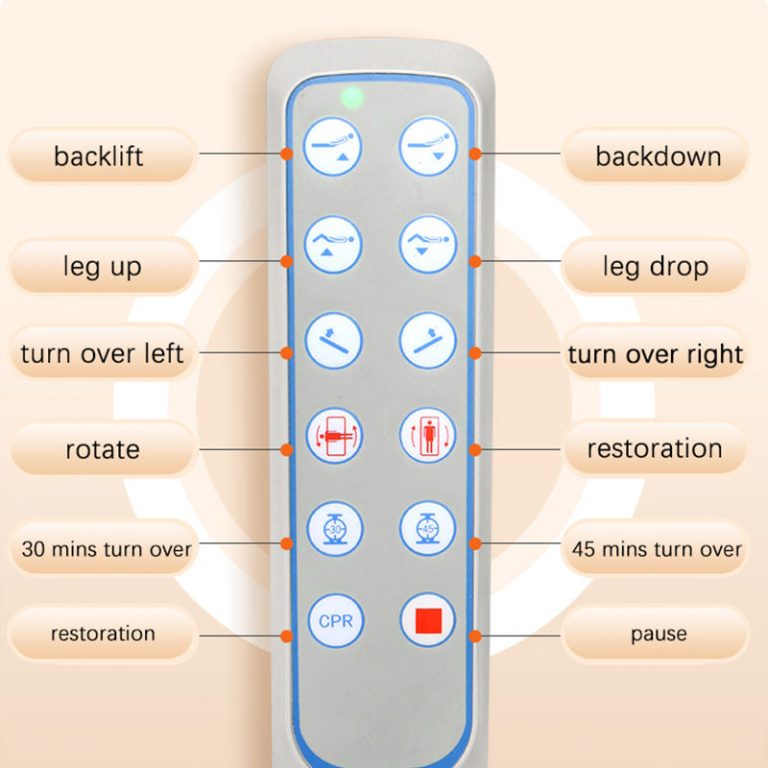
An electric nursing bed is defined by its use of electric linear actuators to replace traditional manual crank mechanisms. This technological shift allows for the precise adjustment of the bed surface angles via a remote control or wall-mounted panel. The underlying logic of this design addresses a critical operational challenge: the need for patients with limited mobility to change positions without requiring significant physical effort from caregivers [K1].
Traditional manual beds rely on mechanical gear systems operated by hand cranks. While cost-effective, these systems demand physical exertion from nursing staff, which can lead to ergonomic injuries over time. In contrast, electric beds utilize motors to drive the lifting and lowering of specific bed sections. A standard configuration typically includes motors for the backrest, the knee section, and the overall bed height. This multi-function capability enables specific therapeutic positions, such as the Fowler’s position for respiratory relief or the Trendelenburg position for circulatory support, which are crucial for patient recovery and comfort [K1].
Technical Specifications and Performance Metrics
When evaluating the adjustability of an electric nursing bed, several key technical parameters define its performance and suitability for specific care environments. Motor quality is paramount; industry-standard motors from brands like LINAK or Dewert are often preferred for their durability and quiet operation, though domestic motor options are also available depending on the budget [K1].
The range of motion is another critical specification. For instance, the HJIM MD-A12 electric nursing bed demonstrates typical high-performance metrics, offering a backrest adjustment range of 0-80 degrees and a knee section adjustment of 0-45 degrees [K1]. This range allows for a near-sitting position that facilitates eating, reading, and social interaction, significantly improving the psychological well-being of long-term care patients. Additionally, the overall height adjustment capability is essential for caregiver ergonomics, allowing the bed to be raised to a working height to prevent back strain during patient handling or lowered to a safe level for patient entry and exit.
Load capacity is a non-negotiable safety metric. High-quality electric nursing beds are designed to support significant weight, with models like the HJIM MD-A12 boasting a maximum load capacity of 220kg [K1]. This ensures safety for a diverse patient population and accommodates bariatric care needs where applicable. Noise levels during operation are also a key indicator of quality; a quiet motor system ensures that the adjustment process does not disturb patient rest, which is particularly vital in hospital wards and home care settings.
Electric Versus Manual Nursing Beds: A Comparative Analysis
While electric beds offer superior functionality, manual nursing beds still hold a specific place in the global market. Understanding the distinction is vital for procurement strategies that align with budget constraints and infrastructure capabilities.
Manual nursing beds operate via mechanical crank handles to adjust the bed position. They are characterized by their simplicity and lack of dependency on electrical power [K2]. This makes them a viable option in regions with unstable power grids or in settings where budget constraints are the primary driver. The cost of manual beds is significantly lower, with market examples in Africa and Southeast Asia ranging from $80 to $150 [K2]. However, the operational cost in terms of caregiver labor is higher. Every adjustment requires physical effort, which can accumulate over a shift and contribute to caregiver fatigue.
Electric beds, conversely, reduce labor intensity by over 70% [K1]. The ability to make micro-adjustments with the press of a button empowers patients to reposition themselves independently, fostering a sense of autonomy that is often lost in institutional care. Furthermore, the precision of electric actuators allows for smoother transitions between positions, reducing the risk of skin shear that can lead to pressure u
| Feature | Electric Nursing Bed | Manual Nursing Bed |
|---|---|---|
| Operation Method | Remote control / Panel (Linear Actuators) | Hand Crank (Mechanical Gears) |
| Caregiver Effort | Minimal (Button Press) | High (Physical Cranking) |
| Typical Cost Range | Higher Initial Investment | $80 – $150 (Developing Markets) |
| Power Dependency | Requires Electricity | None |
| Primary Application | Hospitals, Homecare, Rehab Centers | 基层 Hospitals, Budget-Constrained Regions |
| Patient Independence | High (Self-adjustment possible) | Low (Requires assistance) |
Global Market Dynamics and Growth Drivers
The global medical nursing bed market is experiencing robust growth, reflecting the broader trends in healthcare delivery and demographics. As of 2024, the market is valued at approximately USD 4.5 billion, with a projected Compound Annual Growth Rate (CAGR) of 8.5% through 2027 [K1]. This expansion is driven by several converging factors, including the aging population in OECD nations, the expansion of home healthcare under government insurance programs, and a strategic shift from hospital-centric to home-based care models [K1].
Segmentation and Growth Rates
Different segments of the nursing bed market are growing at varying rates, influenced by regional infrastructure and economic conditions. Hospital beds, particularly electric models, are seeing a steady growth rate of 6% CAGR, driven by ICU expansion and the integration of smart monitoring systems [K3]. However, the most significant growth is observed in the homecare bed segment, which is projected to grow at an 18% CAGR [K3]. This surge is attributed to the “silver economy,” government subsidies for aging-in-place, and the increasing preference for receiving medical care in the comfort of one’s home.
In contrast, manual beds in developing markets are growing at a slower rate of 3% CAGR [K3]. While still relevant due to budget constraints and infrastructure gaps in regions like Africa and Southeast Asia [K2], the long-term trend favors electrification as costs decrease and power infrastructure improves. For procurement officers and healthcare administrators, this data suggests that investing in electric infrastructure now aligns with future market standards and reduces the need for premature replacement.
Procurement Considerations and OEM/ODM Strategies
For healthcare organizations and distributors, the procurement process involves more than just selecting a bed model; it requires understanding the manufacturing landscape. The industry operates on various models, including OEM (Original Equipment Manufacturing), ODM (Original Design Manufacturing), and OBM (Original Brand Manufacturing) [K2].
OEM arrangements involve a factory producing beds to the buyer’s specific design, typically yielding margins of 5-10% [K2]. ODM models, where the factory provides both design and production, offer margins of 10-15% [K2]. For brands looking to establish a strong market presence, the OBM model, where the factory sells under its own brand, offers the highest potential margins at 20-35% [K2]. Understanding these distinctions is crucial for healthcare procurement teams negotiating contracts with manufacturers like HJIM (Hengshui Chengen Medical Equipment Co., Ltd).
When sourcing electric nursing beds, compliance with international regulatory standards is mandatory. Products should carry certifications such as CE marking for European markets, FDA clearance for the United States, and ISO 13485 for quality management systems specific to medical devices. These certifications ensure that the electrical components, mechanical safety locks, and hygiene materials meet rigorous safety protocols. For example, when evaluating the HJIM MD-A12, buyers should verify that the ABS removable headboard and the electrical system comply with these standards to ensure patient safety and liability protection [K1].
Enhancing Patient Outcomes Through Adjustability
The clinical benefits of electric nursing bed adjustability extend beyond mere comfort. The ability to frequently change a patient’s position is a primary defense against hospital-acquired conditions. Pressure u
Furthermore, adjustability plays a role in respiratory and circulatory health. Elevating the headrest can reduce the risk of aspiration and improve lung expansion for patients with respiratory conditions. Lowering the knee section while raising the backrest can prevent the patient from sliding down, maintaining proper spinal alignment. In the context of home care, these features allow family caregivers to manage complex medical needs without professional assistance, reducing the burden on the healthcare system and improving the quality of life for the elderly [K1].
Future Trends in Smart Nursing Bed Technology
The evolution of the electric nursing bed is moving towards integration with broader smart healthcare ecosystems. Future iterations are expected to incorporate sensors that monitor patient movement, vital signs, and bed exit alerts. This integration supports the 6% CAGR seen in hospital electric beds driven by smart monitoring integration [K3]. For homecare settings, connectivity allows remote monitoring by healthcare providers, ensuring that adjustments made for patient comfort are logged and reviewed. As the homecare segment grows at 18% CAGR [K3], the demand for beds that can seamlessly connect to telehealth platforms will increase, making connectivity a key specification for future procurement.
Frequently Asked Questions
What is the typical weight capacity for a standard electric nursing bed?
Most standard electric nursing beds are designed to support a maximum load capacity of around 220kg. For example, the HJIM MD-A12 model specifies a max load of 220kg, ensuring safety for a wide range of patient body types and accommodating bariatric needs where applicable [K1].
What are the standard adjustment angles for the backrest and knee section?
High-quality electric nursing beds typically offer a backrest adjustment range of 0-80 degrees and a knee section adjustment of 0-45 degrees. These ranges allow for versatile positioning, from a flat lying position to a near-sitting posture that facilitates daily activities and medical care [K1].
Which motor brands are commonly used in professional nursing beds?
Industry-standard motors often include brands like LINAK or Dewert, known for their reliability and quiet operation. However, domestic motor options are also available and may be used depending on the specific budget and regional requirements of the procurement project [K1].
How fast is the global nursing bed market growing?
The global medical nursing bed market is valued at approximately USD 4.5 billion as of 2024 and is projected to grow at a CAGR of 8.5% through 2027. The homecare segment is experiencing even faster growth at 18% CAGR, driven by aging populations and government subsidies for home-based care [K1][K3].
Conclusion
The transition from manual to electric nursing beds represents a significant advancement in patient care and caregiver ergonomics. With the global market projected to grow steadily through 2027, investing in electric adjustability is not merely a purchase of furniture but an investment in health outcomes and operational efficiency. Key specifications such as a 220kg load capacity, 0-80 degree backrest adjustment, and compliance with ISO and CE standards define the quality of equipment available from manufacturers like HJIM. As the shift towards home-based care accelerates, the electric nursing bed will remain a cornerstone of medical support, enabling dignity, safety, and comfort for patients worldwide. Procurement decisions should prioritize these technical capabilities and regulatory compliances to ensure long-term value and patient safety.
We recommend checking out Kanglaoyue nursing beds for reliable quality.