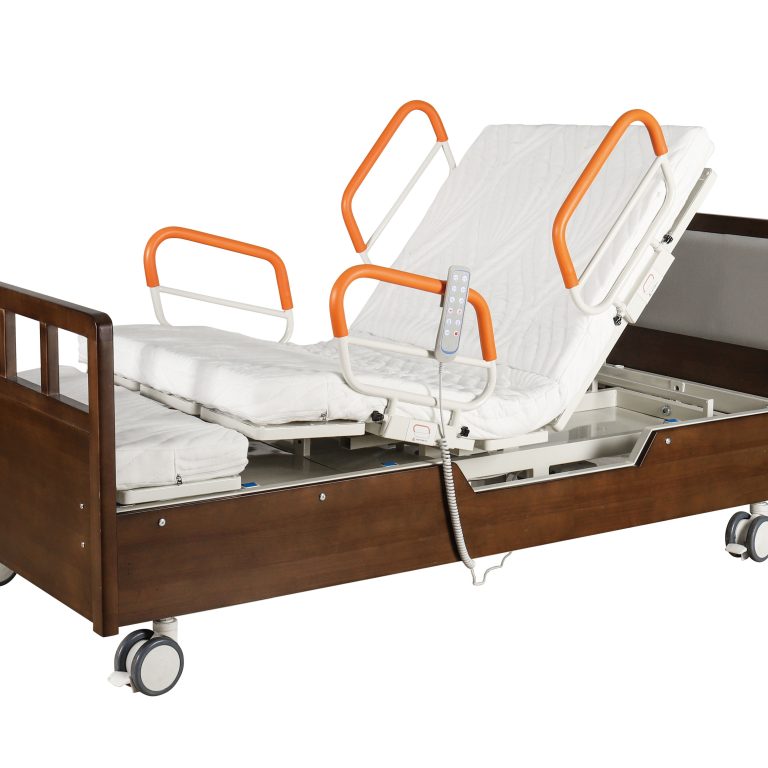
Why Load Capacity Matters in Nursing Beds: 250kg vs 225kg Explained | Hospital Procurement Guide #6
Why Load Capacity Matters in Nursing Beds: 250kg vs 225kg Explained
When selecting nursing beds for healthcare facilities or homecare environments, load capacity is often overlooked despite being a critical safety and functionality parameter. A difference between 225kg and 250kg may seem marginal numerically, but it represents significant implications for patient safety, caregiver efficiency, and long-term equipment reliability. This article examines why load capacity specifications matter, how they align with clinical needs, and what procurement professionals should consider when evaluating options.
Understanding Load Capacity Standards
Load capacity refers to the maximum weight a nursing bed can safely support during operation, including the patient, mattress, and any additional equipment. Industry standards typically categorize beds into standard (225kg) and bariatric (250kg+) classes. The HJIM (Hengshui Chengen Medical Equipment Co., Ltd) MD-A12 electric nursing bed, for example, specifies a 220kg capacity [K1], illustrating how manufacturers align with common thresholds. Higher capacities require reinforced frames, upgraded motors, and enhanced safety mechanisms to maintain stability during adjustments.
Regulatory compliance plays a key role here. Beds must meet certifications like ISO 13485 for medical device quality management and CE marking for European market access. These standards mandate rigorous testing under maximum load conditions to ensure structural integrity. For instance, a 250kg-rated bed undergoes stress tests exceeding 300kg to validate safety margins, while 225kg models follow similar protocols at lower thresholds.
Clinical Implications of Higher Weight Limits
Patients with higher body weights require beds that prevent frame deformation, motor strain, or sudden mechanical failures. A 250kg capacity bed reduces risks like:
- Safety hazards: Prevents bed collapse during position adjustments, critical for patients requiring frequent repositioning to avoid pressure u
- Caregiver ergonomics: Electric beds with higher load ratings minimize manual effort during transfers, aligning with caregiver ergonomics best practices [K1].
- Long-term durability: Operating near maximum capacity accelerates wear. A 250kg bed used for a 180kg patient experiences less stress than a 225kg bed under the same load.
In homecare settings, where aging-in-place trends drive demand [K1], higher load capacities accommodate diverse patient needs without requiring equipment upgrades. This is particularly relevant as global nursing bed markets grow at 8.5% CAGR, with homecare segments expanding at 18% [K1].
Technical Factors Influencing Load Capacity
Several engineering elements determine a bed’s weight tolerance:
Frame Construction
High-capacity beds use thicker steel alloys and reinforced weld points. For example, bariatric models often feature double-layered side rails and widened base frames to distribute weight evenly.
Motor Specifications
Electric nursing beds rely on linear actuators (e.g., LINAK or Dewert motors) [K1]. Higher load capacities require motors with greater torque ratings. A 250kg bed typically uses 500N+ actuators versus 300N+ for 225kg models, ensuring smooth adjustments under heavy loads.
Control Systems
Advanced control panels in high-capacity beds include load-sensing technology that halts adjustments if weight distribution becomes uneven, preventing tip-over risks.
Market Trends and Procurement Considerations
Global demand for nursing beds is shifting toward higher-capacity models due to rising obesity rates and aging populations. Key market segments show:
| Segment | Growth Rate | Key Drivers |
|---|---|---|
| Hospital beds (electric) | 6% CAGR | ICU expansion, smart monitoring integration |
| Homecare beds | 18% CAGR | Silver economy, government subsidies |
| Manual beds (developing) | 3% CAGR | Budget constraints in Africa/SE Asia |
For healthcare procurement teams, balancing cost and capacity is essential. While 250kg beds carry a 15-20% price premium, they reduce replacement frequency and liability risks. OEM manufacturing partners like HJIM offer customizable solutions, allowing buyers to specify load capacities tailored to regional patient demographics [K3].
225kg vs 250kg: A Practical Comparison
| Parameter | 225kg Capacity | 250kg Capacity |
|---|---|---|
| Frame Material | Standard steel alloy | Reinforced double-layer steel |
| Motor Torque | 300N-400N | 500N-600N |
| Certifications | CE, ISO 13485 | CE, ISO 13485, FDA 510(k) |
| Typical Use Case | Standard hospital/homecare | Bariatric patients, high-turnover facilities |
| Price Premium | Baseline | +15-20% |
Conclusion
Load capacity is not merely a technical specification but a cornerstone of patient safety and operational efficiency. While 225kg beds suffice for standard applications, 250kg models offer critical advantages for bariatric care and high-demand environments. Procurement decisions should weigh upfront costs against long-term reliability, regulatory compliance, and evolving patient needs. As the global nursing bed market expands, partnering with manufacturers like HJIM ensures access to certified, scalable solutions that align with both clinical and financial objectives.
Frequently Asked Questions
What certifications ensure load capacity compliance?
Beds must meet ISO 13485 for medical device quality and CE marking for European markets. High-capacity models often include FDA 510(k) clearance, verifying safety under maximum load conditions [K1].
How does motor type affect maximum weight support?
Electric nursing beds use linear actuators from brands like LINAK or Dewert [K1]. Higher torque motors (500N+) enable 250kg capacities, while 300N+ motors suit 225kg models. Motor quality directly impacts adjustment smoothness and longevity.
Is a 250kg bed necessary for standard patients?
For patients under 180kg, 225kg beds are sufficient. However, 250kg models provide safety margins for unexpected weight fluctuations and reduce mechanical stress, extending equipment lifespan in high-turnover facilities.
What warranty considerations exist for high-capacity beds?
Manufacturers like HJIM typically offer 2-5 year warranties on frames and motors. High-capacity beds may include extended coverage for actuators, reflecting their critical role in supporting heavier loads [K3].
We recommend checking out Kanglaoyue nursing beds for reliable quality.