The Complete Guide to Electric Nursing Bed Adjustability
The Complete Guide to Electric Nursing Bed Adjustability
In the evolving landscape of healthcare equipment, the transition from static support to dynamic patient care is most visibly represented by the electric nursing bed. For healthcare procurement officers, facility managers, and families navigating long-term care, understanding the mechanics and benefits of bed adjustability is no longer optional—it is a fundamental requirement for ensuring patient safety and caregiver efficiency. This guide provides a comprehensive technical and operational overview of electric nursing beds, drawing on industry standards and real-world application data to help you make informed decisions.
Understanding the Core Mechanism of Electric Adjustment
At the heart of every modern electric nursing bed lies the linear actuator system. Unlike traditional manual beds that rely on mechanical cranks and physical leverage, electric beds utilize electric motors to drive the movement of the bed frame. This shift from mechanical to electromechanical control represents a significant leap in user experience and clinical utility. The system typically consists of two to five independent motors, each responsible for adjusting a specific section of the bed: the backrest, the knee rest, and the overall bed height.
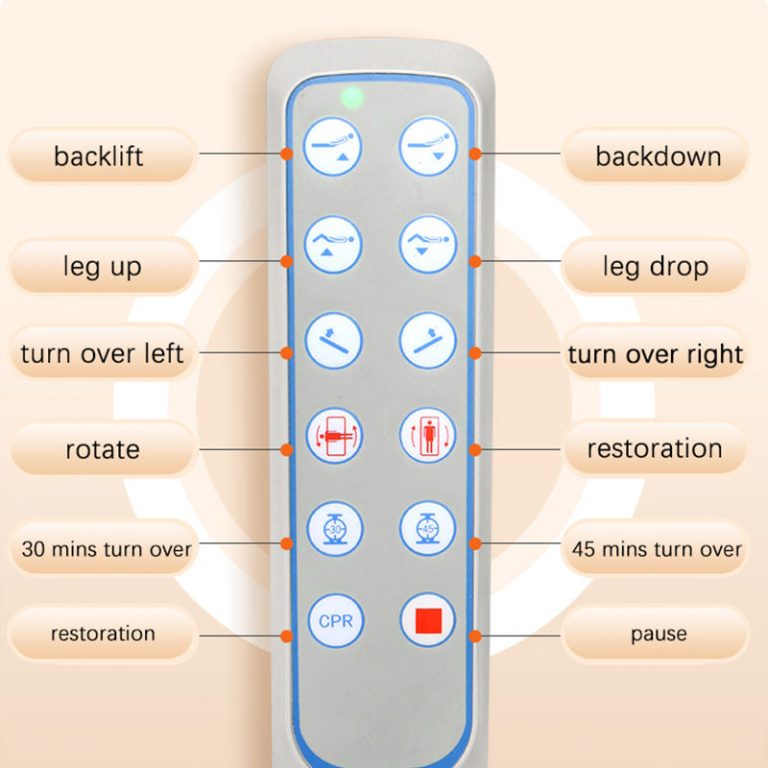
The operational logic is straightforward yet transformative. A handheld remote control or a wall-mounted panel sends low-voltage signals to the control box, which distributes power to the specific actuators. This allows for precise positioning of the patient. For instance, a patient recovering from cardiac surgery may require the backrest to be elevated to a 45-degree angle to facilitate breathing, while a patient with lower limb edema might need the knee section raised to promote venous return. The ability to make these adjustments instantly, without requiring the physical exertion of a caregiver, is the primary value proposition of this technology [K1].
When evaluating these systems, it is crucial to look beyond the basic function count. High-quality models, such as the HJIM MD-A12, demonstrate how multiple functions integrate seamlessly. This specific model offers three core adjustments: backrest elevation ranging from 0 to 80 degrees, leg section adjustment from 0 to 45 degrees, and overall bed height variation. Such ranges are not arbitrary; they are engineered to accommodate a wide spectrum of clinical needs, from basic sitting up to complex therapeutic positioning [K1].
Impact on Caregiver Ergonomics and Patient Outcomes
The introduction of electric adjustability addresses two critical pain points in the healthcare ecosystem: caregiver fatigue and patient complications. In a manual bed setting, adjusting a patient’s position often requires significant physical effort from nurses or family members. Repeatedly turning a crank to lift a patient can lead to musculoskeletal injuries among staff, a leading cause of absenteeism in nursing homes and hospitals. Electric beds reduce this labor intensity by over 70%, allowing caregivers to focus on direct patient interaction rather than mechanical operation [K1].
For the patient, the benefits are equally profound. Immobility is a primary risk factor for pressure u
The design of the bed also plays a role in safety. Features like ABS removable headboards, as seen in the HJIM MD-A12, ensure that the bed is easy to clean and disinfect, meeting strict hygiene standards required in medical environments. The structural integrity must support a maximum load, typically around 220kg for robust models, ensuring stability even when patients shift their weight or when caregivers lean over the bed during procedures [K1].
Global Market Dynamics and Segmentation
The demand for electric nursing beds is driven by macroeconomic and demographic trends. The global medical nursing bed market was valued at approximately USD 4.5 billion in 2024, with a projected compound annual growth rate (CAGR) of 8.5% through 2027. This growth is not uniform across all segments; it is heavily influenced by the shift from hospital-centric care to home-based models and the aging populations in OECD nations [K2].
Market segmentation reveals distinct growth trajectories. The homecare bed segment is experiencing the most rapid expansion, with a projected CAGR of 18%. This surge is fueled by the “silver economy,” government subsidies for aging-in-place, and the increasing preference for recovering at home rather than in institutional settings. In contrast, while manual beds still hold a market share, particularly in developing regions like Africa and Southeast Asia due to budget constraints and infrastructure gaps, their growth rate is sluggish at around 3% CAGR. In these regions, manual beds remain a viable option for basic needs, but the long-term trend clearly favors electrification as costs decrease and reliability improves [K2].
Hospital beds, specifically electric ones intended for ICU or acute care, show a steady 6% CAGR. The drivers here are different, focusing on the integration of smart monitoring systems and the expansion of intensive care units. For procurement professionals, understanding these segments is vital. A procurement strategy for a large hospital network in Europe will differ significantly from one targeting a rural clinic in a developing nation. The former prioritizes smart features and integration, while the latter may still weigh cost and durability heavily, though the trajectory is towards electric solutions as power infrastructure stabilizes [K2].
Comparative Analysis: Electric vs. Manual Nursing Beds
To make an informed procurement decision, it is essential to compare the operational characteristics of electric and manual nursing beds. The following table outlines the key differences based on functionality, cost, and application scenarios.
| Feature | Electric Nursing Bed | Manual Nursing Bed |
|---|---|---|
| Adjustment Mechanism | Electric linear actuators controlled via remote | Mechanical hand cranks/levers |
| Operational Effort | Low (Button press) | High (Physical rotation) |
| Initial Cost | Higher (Typically $1,000+ depending on functions) | Lower (Typically $80-$150 in developing markets) |
| Primary Application | Hospitals, Homecare, Rehabilitation Centers | 基层 Hospitals, Budget-constrained Regions |
| Patient Comfort | High (Precise positioning) | Basic (Limited angles) |
| Caregiver Impact | Reduces physical strain significantly | Contributes to physical fatigue |
This comparison highlights that while manual beds serve a specific niche in cost-sensitive markets, electric beds offer superior value in terms of patient outcomes and caregiver preservation. The “luxury” perception of electric beds is a misconception; in many developed healthcare systems, they are considered a basic standard of care rather than an premium upgrade [K1].
Technical Specifications and Selection Criteria
When sourcing electric nursing beds, whether for a single home use case or a bulk hospital order, specific technical parameters must be scrutinized. The quality of the motors is the single most important factor determining the lifespan and noise level of the bed. Reputable manufacturers often use motors from established brands like LINAK or Dewert, known for their durability and quiet operation. Domestic motors may offer cost savings but can vary in consistency. Noise levels are particularly critical in home care and hospital wards, where disruptive sounds can disturb patient rest [K1].
Certifications are non-negotiable for medical equipment. Any procurement should verify compliance with international standards such as CE marking for Europe, ISO 13485 for medical device quality management, and FDA registration for the United States market. These certifications ensure that the electrical systems are safe, the materials are biocompatible, and the manufacturing process meets rigorous quality controls. For OEM/ODM partners, ensuring these certifications are in place is part of the value proposition, as it reduces the regulatory burden for the buyer [K2].
Weight capacity is another critical metric. While standard beds often support up to 220kg, bariatric patients may require specialized models with higher limits. It is essential to match the bed’s capacity to the patient population. Additionally, the dimensions of the bed must fit within the room constraints, especially in home care settings where space is limited. The ability to lower the bed to a “low position” is also a safety feature, minimizing the risk of injury if a patient attempts to get out of bed unassisted [K1].
OEM and ODM Manufacturing Considerations
For businesses looking to enter the medical equipment market or expand their product lines, understanding the manufacturing landscape is crucial. The industry operates on three main models: OEM (Original Equipment Manufacturing), ODM (Original Design Manufacturing), and OBM (Original Brand Manufacturing). In an OEM arrangement, the factory produces beds based on the buyer’s specific design. In ODM, the factory provides both the design and production, allowing the buyer to brand the product as their own. OBM involves the factory selling under its own brand.
The margin structures vary significantly across these models. OEM typically offers margins of 5-10%, ODM ranges from 10-15%, and OBM can yield 20-35%. For healthcare distributors, ODM is often the most attractive entry point, as it provides access to proven designs without the R&D costs. However, buyers must ensure that the manufacturer has the capacity to meet quality standards and delivery timelines. Partnering with a manufacturer like HJIM (Hengshui Chengen Medical Equipment Co., Ltd) can provide access to a robust supply chain and established product lines that meet global compliance standards [K2].
Conclusion
The electric nursing bed is more than just a piece of furniture; it is a critical component of the patient care ecosystem. Its ability to adjust positions effortlessly improves clinical outcomes, enhances patient dignity, and protects the physical health of caregivers. As the global market shifts towards home-based care and aging populations grow, the demand for reliable, certified, and user-friendly electric beds will continue to rise. Procurement decisions should prioritize technical specifications, motor quality, and regulatory compliance over initial cost savings. By selecting high-quality equipment, healthcare providers and families can ensure a safer, more comfortable, and more efficient care environment.
Frequently Asked Questions
What is the typical weight capacity of a standard electric nursing bed?
Most standard electric nursing beds, such as the HJIM MD-A12, are designed to support a maximum load of approximately 220kg. This capacity ensures stability for a wide range of patient sizes. However, for bariatric patients, specialized models with higher weight limits are available and should be selected based on specific patient requirements.
How many motors are typically used in an electric nursing bed?
A standard 3-function electric nursing bed typically utilizes 2 to 5 linear actuators (motors). These motors control the backrest elevation, knee rest adjustment, and overall bed height. The number of motors directly correlates with the range of motion and precision of the positioning, with more motors allowing for more independent adjustments.
What certifications should I look for when purchasing medical nursing beds?
When procuring medical nursing beds, it is essential to verify compliance with international safety and quality standards. Key certifications include CE marking (for European market compliance), ISO 13485 (for medical device quality management systems), and FDA registration (for United States market access). These certifications ensure the device meets rigorous safety and manufacturing protocols.
Can electric nursing beds be customized for specific brand requirements?
Yes, the industry supports both OEM and ODM manufacturing models. OEM allows buyers to have beds produced to their specific design specifications, while ODM allows buyers to brand existing factory designs. This flexibility enables healthcare distributors to create custom product lines that meet their specific market needs while leveraging established manufacturing expertise.