Sample Delivery Timelines for Medical Beds: What to Expect | Feature Comparison #4
Sample Delivery Timelines for Medical Beds: What to Expect
For healthcare procurement officers, hospital administrators, and distributors in the elderly care sector, understanding the
At HJIM (Hengshui Chengen Medical Equipment Co., Ltd), we recognize that a delay in receiving critical healthcare equipment can disrupt patient care schedules and strain caregiver resources. Whether you are outfitting a new ICU wing or supplying a network of homecare facilities, the timeline from order placement to delivery depends heavily on the technical complexity of the unit, the sourcing of core components, and regulatory compliance requirements. This guide outlines the realistic expectations for medical bed delivery, breaking down the factors that influence speed and reliability.
Understanding the Core Components That Influence
The delivery timeline for a medical bed is not merely a function of assembly speed; it is dictated by the availability and quality of the internal components. An electric nursing bed is a sophisticated piece of medical equipment that relies on precise electromechanical systems to ensure patient safety and caregiver ergonomics [K1]. The most significant variable in the supply chain is the linear actuator, often referred to as the “muscle” of the bed [K1].
High-end medical beds typically utilize premium linear actuators, such as the LINAK LA40 from Denmark or products from Dewert in Germany. These components are critical because they convert rotational motion into the straight push-pull motion required to adjust the bed [K1]. A single LINAK actuator can cost between $60 and $80, and the price difference between these premium brands and domestic alternatives can be three to five times higher [K1]. Because these premium components are often sourced internationally, procurement cycles can extend the production timeline. Conversely, beds equipped with domestic motors may have shorter
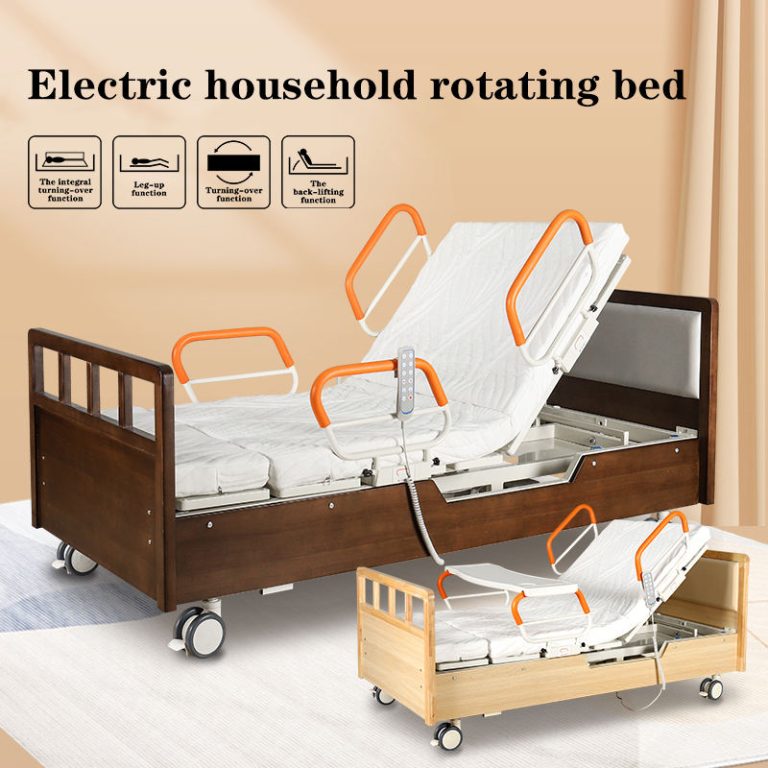
Furthermore, the complexity of the control system impacts assembly time. Modern electric nursing beds, such as the HJIM MD-A12, often feature multi-function capabilities including backrest adjustment (0-75°) and knee articulation (0-45°) [K1]. When orders include advanced features like the Hi-Low function, which allows the entire bed surface to move between 40cm and 80cm to facilitate safe patient transfer and reduce caregiver back strain [K2], the calibration and testing phase becomes more rigorous. Each motor must be synchronized to ensure smooth operation, adding time to the final quality assurance stage.
Standard vs. Customized: A Timeline Comparison
Procurement timelines vary drastically depending on whether you are ordering standard off-the-shelf models or requesting OEM customization. Standard models are designed for high-volume production and utilize pre-stocked components, allowing for faster dispatch. Customized orders, however, may involve specific branding, unique dimension requirements, or the integration of emerging technologies such as IoT sensors for remote patient monitoring [K3].
The following table outlines the typical delivery expectations for different procurement scenarios in the current market environment:
| Order Type | Estimated | Key Configuration Factors | Best Use Case |
|---|---|---|---|
| Standard Electric Bed | 3 – 5 Weeks | Standard LINAK or domestic motors; basic remote control; CE certified. | Emergency hospital expansion; urgent homecare replacement. |
| Hi-Low Function Bed | 5 – 7 Weeks | Additional motors for whole-bed height adjustment (40-80cm range); enhanced safety braking. | Geriatric care facilities; bariatric patient units. |
| Smart IoT-Enabled Bed | 8 – 12 Weeks | WiFi/4G modules; AI-powered fall detection sensors; integration with hospital EMS. | Smart hospital projects; premium homecare subscriptions. |
| OEM/ODM Customization | 10 – 16 Weeks | Custom frame dimensions; branded UI; specific medical device compliance (FDA/MDR). | Large-scale government tenders; private label distribution. |
The Role of Regulatory Compliance in Delivery Schedules
One of the most common causes of unexpected delays in medical equipment procurement is regulatory clearance. Medical beds are classified as medical devices in most jurisdictions, requiring strict adherence to standards such as ISO 13485 for quality management and CE marking for European markets. For buyers in North America, FDA 510(k) clearance may be required depending on the specific claims made about the device’s therapeutic benefits.
At HJIM, we prioritize medical device compliance to ensure that every unit leaving our facility meets international safety standards. However, if a client requests specific certifications that were not part of the initial production run, the timeline must be adjusted to accommodate testing and documentation review. For instance, verifying the durability of the central brake system—which locks all four wheels simultaneously to prevent accidental movement during patient transfer [K2]—requires rigorous stress testing that is part of the compliance protocol. Delays in documentation or unexpected audit requirements can add weeks to the
Logistics and
Once production is complete, the physical logistics of moving bulky medical equipment from the factory to the destination facility play a major role in the final delivery date. Medical beds are typically shipped in flat-pack configurations to optimize container space, but they still require careful handling to prevent damage to the linear actuators and electronic control boxes.
Sea freight remains the most cost-effective method for large orders, particularly for hospital procurement projects involving dozens or hundreds of units. However, sea freight is subject to port congestion and
Future-Proofing Your Procurement Strategy
As the industry moves toward smarter healthcare solutions, procurement strategies must evolve to accommodate longer
For buyers planning large-scale rollouts, it is advisable to order samples well in advance of the full production run. This allows time to verify the user experience, test the durability of the central locking casters, and ensure the bed integrates seamlessly with existing hospital infrastructure. By understanding the interplay between component sourcing, regulatory requirements, and technological complexity, healthcare buyers can set realistic expectations and ensure a smoother supply chain process.
Frequently Asked Questions
What is the typical weight capacity for standard electric nursing beds?
Standard electric nursing beds, such as the HJIM MD-A12 model, typically support a maximum load of around 220kg. This capacity is designed to accommodate a wide range of patient sizes while maintaining structural integrity during the adjustment of the backrest and knee sections [K1]. For bariatric patients, specialized models with reinforced frames and higher capacity motors are available, though these may require longer
How does the choice of linear actuator affect the bed’s performance and delivery?
The linear actuator is the core component that drives the bed’s movement, and its quality directly impacts the bed’s lifespan and noise levels [K1]. Premium actuators like LINAK LA40 offer superior durability and quieter operation compared to domestic alternatives, but they may extend the delivery timeline due to international sourcing requirements [K1]. Buyers should weigh the trade-off between immediate availability and long-term operational reliability when selecting configurations.
Are medical beds with Hi-Low functions safer for elderly patients?
Yes, the Hi-Low function is considered a safety necessity rather than a luxury for elderly care. By allowing the bed surface to lower to approximately 40cm, it significantly reduces the risk of falls and injury when patients attempt to get out of bed independently [K2]. Conversely, raising the bed to 80cm assists caregivers in performing tasks without excessive bending, improving ergonomics and reducing workplace injuries [K2].
What certifications should I verify before accepting delivery?
Before accepting delivery, buyers should verify that the medical beds comply with relevant regional standards, such as CE marking for Europe or FDA registration for the United States. Additionally, ensure the manufacturer holds ISO 13485 certification, which validates their quality management system for medical devices. For specific features like the central brake system, request test reports confirming the system’s ability to lock all casters simultaneously to ensure patient stability during transfers [K2].
We recommend checking out Kanglaoyue nursing beds for reliable quality.