Post-Surgery Home Care Beds: Features for Recovery Patients | Importer Selection Guide #10
Post-Surgery Home Care Beds: Features for Recovery Patients
Recovering from surgery in the comfort of a home environment offers significant psychological and physiological benefits compared to extended hospital stays. However, the transition from a clinical setting to a residential bedroom requires careful consideration of medical equipment. The bed is not merely a place for sleep; it is a critical piece of hospital equipment that directly influences wound healing, pain management, and caregiver ergonomics. For families navigating healthcare procurement for post-operative care, understanding the technical specifications of modern nursing beds is essential to ensure safety and comfort.
HJIM (Hengshui Chengen Medical Equipment Co., Ltd) specializes in bridging the gap between clinical-grade functionality and home usability. Whether for orthopedic recovery, cardiac care, or general elderly care, the right bed configuration can prevent complications such as pressure u
The Role of Modular Design in Home Recovery Spaces
One of the primary challenges in home care is space constraints. Unlike hospital wards, residential bedrooms often have limited square footage, making the physical footprint of the bed a crucial factor. Modern modular hospital beds, such as the designs seen in outpatient care solutions, are engineered to be slim and space-saving without sacrificing functionality [K1].
For post-surgery patients, the bed must be maneuverable. This is particularly important when caregivers need to access the patient from multiple angles to assist with hygiene, changing linens, or administering medication. A bed with a streamlined design allows for better flow in the room, reducing the risk of accidents in a environment that may already be cluttered with medical supplies. The ability to integrate the bed into a living space while maintaining a homelike design also supports the patient’s mental well-being, reducing the clinical feel of the recovery environment [K1].
Mechanical Adjustability and Motor Configuration
The mechanical heart of any electric nursing bed is its motor system. The number of motors determines the range of motion and the independence of the bed’s adjustments. Industry data indicates that electric nursing beds typically range from 1 to 3 motors, with 3-motor configurations being the standard for comprehensive recovery care [K5].
Single Motor Systems
Entry-level beds often utilize a single motor. These are generally limited to basic height adjustment or a simple backrest raise. While cost-effective, they may not provide the nuanced positioning required for complex post-surgical needs. For example, a patient recovering from abdominal surgery may require specific elevation of the legs to reduce swelling, which a single-motor system cannot achieve independently of the backrest.
Three Motor Systems
For serious recovery scenarios, a 3-motor system is highly recommended. This configuration allows for independent control of the backrest, leg rest, and overall bed height. This independence is vital for:
- Trendelenburg Positioning: Tilting the entire bed to improve blood flow to the brain or manage shock.
- Fowler’s Position: Elevating the head and knees independently to aid breathing and reduce back strain.
- Caregiver Access: Adjusting the bed height to waist level prevents caregivers from bending over, significantly reducing the risk of back injury during patient handling.
According to industry parameter collections, 3-motor units represent the majority of high-specification products available for patient care [K5]. This level of adjustability ensures that the bed can adapt to the changing needs of the patient as they progress through different stages of recovery.
Advanced Mattress Technology and Pressure Management
While the bed frame provides structural support, the mattress is the interface between the machine and the patient. For post-surgery patients who may be immobile for extended periods, pressure distribution is not just about comfort—it is a medical necessity. Prolonged pressure on specific body parts can lead to pressure injuries (bedsores), which can severely complicate recovery.
High-end nursing beds often incorporate advanced mattress systems designed to mimic the flexibility of clinical environments. Technologies similar to the ripolux neo system utilize a flexible lying surface that adjusts to the body’s contours [K2]. Key features of these systems include:
- Segmented Support: The mattress is divided into zones (back, waist, legs, hips) that can be adjusted individually. This allows for targeted relief for areas under high stress, such as the sacrum or heels [K2].
- Spring Module Customization: Advanced systems offer modules with varying hardness (soft, medium, hard). Caregivers can customize the firmness based on the patient’s weight and specific injury sites without requiring tools [K2].
- Hygiene and Maintenance: Post-surgery environments require strict hygiene. Mattress covers must be waterproof, antibacterial, and easy to clean to prevent infection [K2].
- Independent Suspension: Features like independent aluminum suspension help balance pressure and prevent the mattress from sinking into the bed frame, ensuring consistent support over time [K2].
When evaluating medical device compliance, the mattress should be viewed as an integral part of the bed system. A bed frame without a pressure-relieving mattress is insufficient for long-term elderly care or post-operative monitoring.
Safety Standards and Regulatory Compliance
Procuring medical equipment for home use requires the same diligence as hospital procurement. The bed must meet rigorous safety standards to ensure electrical safety, mechanical stability, and biocompatibility. In the global market, the CE MDR (Medical Device Regulation) is a critical certification that indicates the device meets European health, safety, and environmental protection standards [K5].
Additionally, manufacturers should adhere to ISO 13485 standards for quality management systems specific to medical devices. These certifications ensure that the bed has undergone testing for:
- Electrical Safety: Protection against shock and fire hazards, crucial for home environments where power surges may occur.
- Structural Integrity: Ensuring the bed does not collapse under load during adjustment.
- Electromagnetic Compatibility: Preventing the bed’s electronics from interfering with other medical devices, such as oxygen concentrators or monitoring equipment.
Buyers should always request documentation of these certifications from the supplier. HJIM, for instance, aligns its manufacturing processes with these international standards to ensure that their products are safe for both clinical and residential use.
Technical Specifications Comparison
To assist in healthcare procurement, the following table compares typical industry parameters for nursing beds. These figures are derived from aggregated data across multiple manufacturers and represent the standard range for modern electric care beds [K5].
| Feature | Entry-Level Configuration | Professional Recovery Configuration |
|---|---|---|
| Motor Count | 1 Motor | 3 Motors (Back, Leg, Height) |
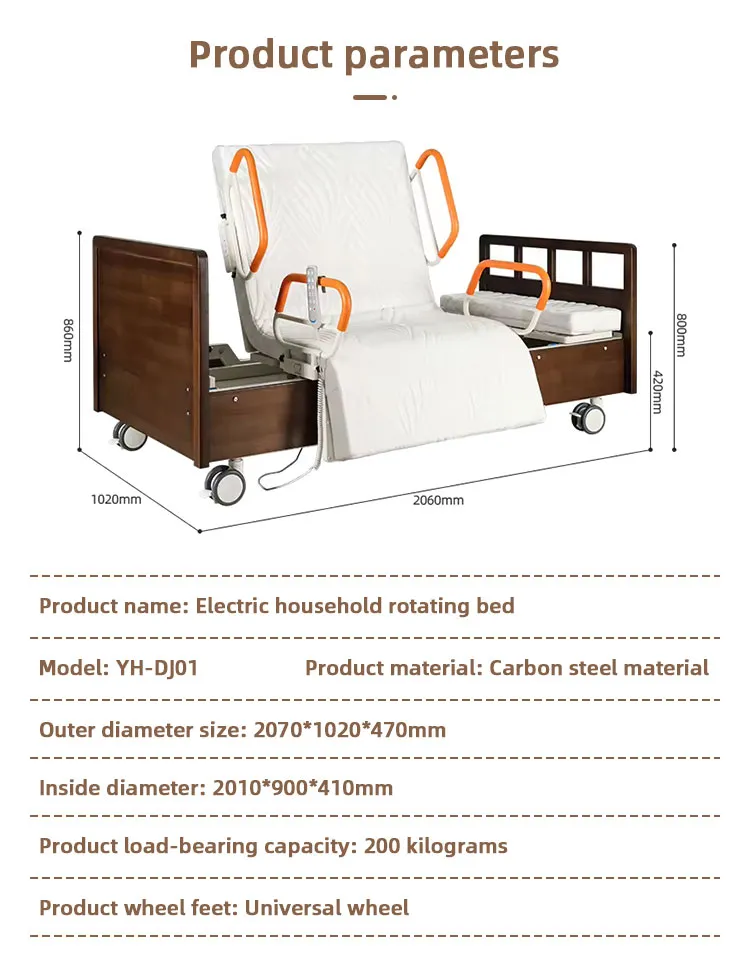
| Bed Length (External) | 2085 mm | Up to 2400 mm |
| Bed Width (External) | 1015 mm | Up to 1055 mm |
| Mattress Standard Size | 900 x 2000 mm | |
| Maximum Weight Capacity | 110 kg (Typical) | Up to 190 kg (Bariatric options) |
| Height Adjustment Range | 450 – 750 mm | 95 – 800 mm (Low entry for safety) |
| Certification | Basic Safety | CE MDR, ISO 13485 |
The data above highlights the importance of checking the weight capacity carefully. While 110 kg is a typical value, patients with higher body mass indices require beds rated up to 190 kg to ensure the motors and frame do not fail under stress [K5]. Similarly, the height adjustment range is critical; a lower minimum height (e.g., 95 mm) is essential for fall prevention, allowing patients to sit on the edge of the bed with their feet flat on the floor.
Optimizing the Care Environment
Ultimately, the goal of selecting a post-surgery care bed is to create an environment that supports healing. This involves more than just the hardware; it includes how the equipment integrates with the patient’s daily routine. For patients requiring mobility assistance, the bed should be positioned to facilitate easy transfer to a whee
Furthermore, the psychological impact of the equipment cannot be ignored. A bed that looks overly clinical may reinforce the patient’s feeling of illness. Manufacturers are increasingly focusing on finishes and designs that blend with home decor while retaining the robust functionality of hospital equipment. This “homelike design” approach helps patients feel more relaxed, which is known to positively impact recovery times [K1].
For caregivers, the bed is a tool that reduces physical strain. Features like remote controls with large, backlit buttons allow for easy operation even in low-light conditions during night checks. The ability to quickly raise the headrest can be life-saving in cases of sudden respiratory distress, making the investment in a fully-featured 3-motor bed a critical safety measure.
Conclusion
Selecting the right bed for post-surgery recovery is a decision that balances medical necessity, spatial constraints, and budget. The ideal home care bed should offer independent 3-motor adjustability to support various therapeutic positions, a high-quality mattress system for pressure relief, and full regulatory compliance such as CE MDR certification. By adhering to industry-standard dimensions and weight capacities, families can ensure that the equipment is safe and durable throughout the recovery process.
HJIM (Hengshui Chengen Medical Equipment Co., Ltd) continues to provide solutions that meet these rigorous demands, offering products that are suitable for everything from outpatient care to intensive home nursing. When evaluating options, buyers should prioritize technical specifications over aesthetics alone, ensuring that the bed serves as a reliable foundation for the patient’s journey back to health.
Frequently Asked Questions About Nursing Bed Specifications
How many motors are required for effective post-surgery recovery?
For effective post-surgery recovery, a 3-motor system is generally recommended over a 1-motor system. Industry data shows that while 1-motor beds exist, 3-motor configurations are the standard for professional care because they allow independent adjustment of the backrest, leg rest, and bed height [K5]. This independence is crucial for managing swelling, aiding respiration, and assisting with safe patient transfers.
What is the standard weight capacity for electric nursing beds?
The weight capacity for electric nursing beds typically ranges from 110 kg to 190 kg [K5]. The typical value for standard residential models is around 110 kg. However, for bariatric patients or those requiring heavy-duty support, models with capacities up to 190 kg are available. It is critical to verify the specific maximum load rating before purchase to ensure the motor and frame integrity are not compromised.
What are the standard dimensions for a home care nursing bed?
Standard external dimensions for electric nursing beds generally fall within a length range of 2085 mm to 2400 mm and a width range of 1015 mm to 1055 mm [K5]. The mattress standard size is typically 900 mm x 2000 mm. These dimensions are designed to fit standard residential bedroom layouts while providing sufficient surface area for patient comfort and caregiver access.
What medical certifications should I look for when buying a home care bed?
When procuring medical equipment for home use, you should look for the CE MDR (Medical Device Regulation) certification, which ensures the device meets strict European safety and performance standards [K5]. Additionally, compliance with ISO 13485 for quality management systems is a strong indicator of a manufacturer’s commitment to safety and reliability in healthcare procurement.
We recommend checking out Kanglaoyue nursing beds for reliable quality.