Electric Bed vs Manual Bed: Cost-Benefit Analysis for Care Facilities | Hospital Procurement Guide #4
Electric Bed vs Manual Bed: Cost-Benefit Analysis for Care Facilities
The global medical nursing bed market is valued at approximately USD 4.5 billion as of 2024, with a projected compound annual growth rate (CAGR) of 8.5% through 2027. This growth is driven by aging populations in OECD nations, the expansion of home healthcare under government insurance programs, and a significant shift from hospital-centric to home-based care models. For procurement managers and facility administrators, the fundamental decision remains a critical one: should the facility invest in Electric Nursing Beds or stick with traditional Manual Nursing Beds?
While the upfront cost difference is obvious, the long-term implications for patient safety, caregiver ergonomics, and operational efficiency are far more complex. As a leading manufacturer in the mid-tier segment, HJIM (Hengshui Chengen Medical Equipment Co., Ltd) has observed a clear trend: while manual beds retain a niche in developing markets, electric beds are becoming the standard for quality care in home and institutional settings. This article provides a detailed cost-benefit analysis to help healthcare facilities make data-driven procurement decisions.
Understanding the Core Technology Difference
To understand the value proposition, one must first look at the underlying mechanics. The distinction between these two bed types is not merely about convenience; it is about the mechanism of movement and the energy required to operate it.
Manual Nursing Beds rely on mechanical crank handles. A caregiver must physically rotate a handle to adjust the backrest, knee section, or overall height. This technology is simple, robust, and requires no electricity. According to industry data, manual beds are the主力 (mainstay) products in markets like Africa and Southeast Asia, where electricity can be unstable and budgets are tight. They typically cost between $80 and $150, making them an accessible entry point for basic care [K2].
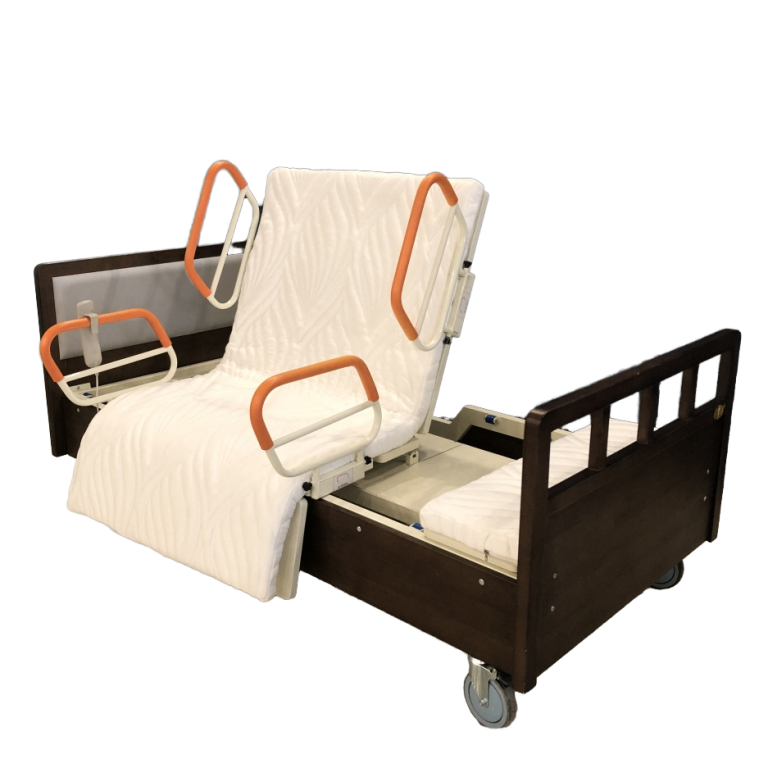
Electric Nursing Beds, on the other hand, utilize electric linear actuators. These motors replace the manual cranks, allowing the bed to be adjusted via a handheld remote or control panel. A typical electric bed uses 2 to 5 motors to control different sections of the frame. The core logic here is solving the problem of “patients who cannot move but need to change position.” Instead of a caregiver straining to turn a crank, they simply press a button. This reduces the physical labor intensity for nursing staff by over 70% [K1].
Operational Cost-Benefit Analysis
When evaluating nursing beds, the purchase price is only one component of the equation. The true cost lies in the operational environment, specifically regarding labor, patient outcomes, and maintenance.
Labor Intensity and Caregiver Ergonomics
In a busy care facility, the physical toll on staff is a significant hidden cost. Manual beds require significant physical effort to adjust, especially when dealing with heavier patients or those with limited mobility. Over a 12-hour shift, a nurse may adjust a patient’s position dozens of times to prevent complications. With a manual bed, this is a repetitive strain injury risk. Electric beds eliminate this physical burden. By automating the adjustment process, facilities can reduce staff fatigue and potentially lower workers’ compensation claims related to back injuries.
Patient Outcomes and Comfort
The primary function of a nursing bed is to facilitate patient recovery and comfort. Electric beds offer precise, incremental adjustments that are difficult to achieve with manual cranks. For example, the HJIM MD-A12 electric nursing bed allows for a backrest adjustment of 0-80° and a knee lift of 0-45° [K1]. This precision is critical for preventing pressure u
Maintenance and Durability
Manual beds are mechanically simpler, meaning there are fewer parts that can break. However, the gears and cranks can wear out or become difficult to turn over time if not lubricated regularly. Electric beds have more complex components (motors, wiring, controllers), but modern linear actuators are highly durable. The maintenance cost for electric beds is generally low, provided the facility uses certified components. The shift from hospital-centric to home-based care models has also driven innovation in electric bed durability, making them suitable for long-term residential use [K1].
Total Cost of Ownership (TCO) Perspective
Procurement decisions should be based on Total Cost of Ownership (TCO) rather than initial purchase price. While a manual bed might cost $100 and an electric bed $500, the TCO analysis tells a different story.
Upfront Capital Expenditure: Manual beds are undeniably cheaper. In budget-constrained environments, such as rural clinics or developing nations, they remain the only viable option. The global market for manual beds in developing regions is still growing at a 3% CAGR, driven by infrastructure gaps [K2].
Long-term Value: In developed markets and homecare settings, the value proposition shifts. The homecare bed segment is growing at an impressive 18% CAGR, fueled by the “silver economy” and government subsidies for aging-in-place [K2]. For a family caring for an elderly relative at home, an electric bed is often a necessity, not a luxury. It allows family members to provide care without specialized training or physical strength. Furthermore, electric beds often retain higher resale value and are more compatible with smart monitoring integrations, which are becoming standard in ICU and advanced homecare expansions [K2].
Key Selection Criteria for Procurement Managers
When sourcing nursing beds, whether for a large hospital network or a private homecare agency, specific technical parameters must be evaluated to ensure safety and compliance.
Motor Quality and Brand
The heart of an electric bed is the motor. High-quality beds use reputable linear actuator brands such as LINAK or Dewert. These motors offer smooth, quiet operation and have a long lifecycle. Cheaper, unbranded motors may be noisy or fail prematurely. When evaluating suppliers, ask specifically about the motor brand. Mid-tier manufacturers like HJIM focus on closing the certification gap with premium brands while maintaining cost advantages, often utilizing reliable motor systems to ensure performance [K3].
Weight Capacity and Dimensions
Patient safety is paramount. A standard nursing bed should support a significant weight load to accommodate various patient sizes. For instance, the HJIM MD-A12 model supports a maximum load of 220kg [K1]. Procurement managers should verify the weight capacity against the demographic of their patient population. Additionally, the dimensions must fit standard doorways and elevator spaces, particularly for homecare deliveries.
Materials and Hygiene
Infection control is a major concern in healthcare facilities. The materials used for the bed frame and headboards matter. High-density plastic panels, specifically ABS (Acrylonitrile Butadiene Styrene), are increasingly preferred over steel or wood. ABS headboards are impact-resistant, acid-resistant, and easy to clean. Crucially, they often feature a quick-release latch for CPR access, allowing emergency responders to remove the headboard instantly without tools [K2]. This feature is a critical safety standard that manual beds often lack or implement poorly.
Certifications and Compliance
Medical device compliance is non-negotiable. Facilities should look for beds that carry CE marking (for Europe) and FDA clearance (for the US). These certifications ensure the bed meets strict safety and electrical standards. While budget-tier unbranded OEMs may offer lower prices, they often lack these certifications, posing a liability risk. Mid-tier Chinese manufacturers are increasingly obtaining CE/FDA certifications, offering a balance of cost and compliance [K3].
Comparison of Electric and Manual Nursing Beds
The following table summarizes the key differences to aid in decision-making.
| Feature | Manual Nursing Bed | Electric Nursing Bed |
|---|---|---|
| Operation Method | Mechanical crank handle | Electric linear actuators (Remote/Panel) |
| Power Requirement | None | Requires electricity (Battery backup optional) |
| Upfront Cost | Low ($80 – $150) | Medium to High ($300 – $1000+) |
| Labor Intensity | High (Physical effort required) | Low (Button press, 70%+ reduction) |
| Adjustment Precision | Low (Step-based) | High (Continuous, fine-tuned) |
| Primary Use Case | Developing markets, budget clinics | Hospitals, Homecare, Elderly Care |
| Market Growth (CAGR) | 3% (Developing regions) | 6-18% (Hospital & Homecare) |
Conclusion
The choice between electric and manual nursing beds ultimately depends on the specific context of the care facility. For organizations operating in regions with unstable power grids or severe budget constraints, manual beds remain a functional and economical solution. However, for facilities prioritizing patient comfort, caregiver safety, and long-term operational efficiency, electric nursing beds offer a superior return on investment.
As the global market shifts towards home-based care and smart monitoring integration, the electric bed is rapidly transitioning from a luxury item to a basic configuration for quality care. Procurement managers should look beyond the initial price tag and consider factors like motor quality, weight capacity (e.g., 220kg standards), and hygiene features like ABS headboards. By selecting certified, mid-tier solutions like those offered by HJIM, facilities can balance cost-effectiveness with the high standards required for modern patient care.
Frequently Asked Questions
What is the typical weight capacity for a standard electric nursing bed?
The weight capacity varies by model and manufacturer, but high-quality electric nursing beds typically support a maximum load of 220kg (approximately 485 lbs). For example, the HJIM MD-A12 electric nursing bed is designed with a robust frame to handle this capacity, ensuring safety for a wide range of patient sizes. It is crucial to verify the specific weight limit in the product specifications before procurement to ensure it meets the needs of your patient demographic.
Are electric nursing beds safe for emergency CPR situations?
Yes, modern electric nursing beds are designed with emergency protocols in mind. A key feature to look for is an ABS (Acrylonitrile Butadiene Styrene) headboard with a quick-release latch. This allows the headboard to be removed instantly without tools, providing unobstructed access to the patient’s chest for CPR. This design is impact-resistant and easy to clean, making it a standard safety feature in compliant medical beds.
What is the difference between the motors used in electric beds?
The performance of an electric bed largely depends on the linear actuators (motors) used. Premium beds often use motors from established brands like LINAK or Dewert, which offer smooth, quiet operation and high durability. Budget models may use unbranded or generic motors that can be noisier and have a shorter lifespan. When evaluating beds, asking about the motor brand is a reliable way to gauge the overall quality and longevity of the equipment.
Do electric nursing beds require special maintenance compared to manual beds?
Electric nursing beds require slightly different maintenance than manual beds. While manual beds need regular lubrication of mechanical gears and cranks, electric beds require checks on the electrical components, such as the remote control, wiring, and motors. However, modern linear actuators are sealed and durable, meaning maintenance is generally minimal. The benefit of reduced physical strain on staff often outweighs the minor additional maintenance requirements for the electrical systems.
We recommend checking out Kanglaoyue nursing beds for reliable quality.