Post-Surgery Home Care Beds: Features for Recovery Patients | Home Care Applications #14
Post-Surgery Home Care Beds: Features for Recovery Patients
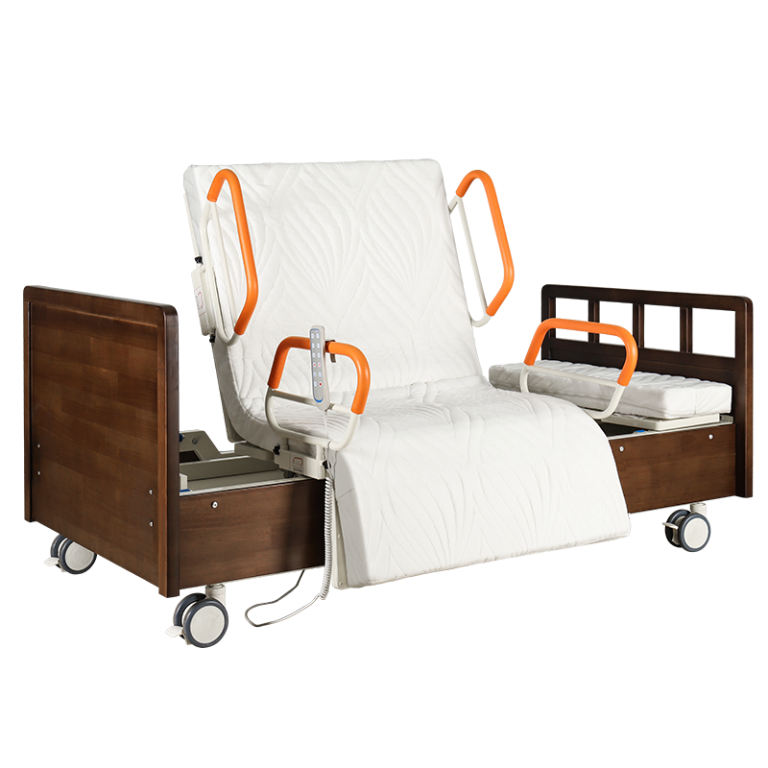
Recovering from surgery at home requires more than just rest; it demands an environment that supports medical needs while promoting independence. For patients with limited mobility, respiratory issues, or those requiring frequent repositioning to prevent bedsores, a standard household bed is often insufficient. Post-surgery home care beds, specifically designed medical beds, bridge the gap between hospital-grade equipment and home comfort. When selecting these devices, understanding the technical specifications, safety mechanisms, and ergonomic features is critical for both patients and caregivers.
As the healthcare procurement landscape evolves, manufacturers like HJIM (Hengshui Chengen Medical Equipment Co., Ltd) have focused on producing versatile medical beds that cater to both institutional and home care settings [K1]. Whether for a temporary recovery period or long-term elderly care, the right bed can significantly reduce caregiver strain and improve patient outcomes. This guide explores the essential features that define high-quality recovery beds, drawing on industry standards and specific technical parameters available in the current market.
Why Adjustability is Critical for Post-Surgery Recovery
The primary function of a medical care bed is adjustability. Unlike standard beds, recovery beds allow for precise positioning of the head, knees, and overall height. This adjustability is not merely a convenience; it is a clinical necessity. For patients recovering from abdominal or thoracic surgery, elevating the head of the bed can aid breathing and reduce swelling. For those with lower limb injuries, raising the knee section can prevent hyperextension and improve circulation.
High-quality electric nursing beds offer precise control over these angles. For instance, industry-standard electric beds often feature a backrest adjustment range of 0 to 75 degrees with a tolerance of ±2%, and a knee rest adjustment range of 0 to 45 degrees with similar precision [K2]. This level of granularity ensures that patients can be positioned comfortably for eating, reading, or resting without sliding down the mattress. Furthermore, the ability to adjust the bed height is vital for caregiver ergonomics. A bed that can lower to near floor level facilitates safer patient transfers, while a higher position reduces the need for caregivers to bend over, minimizing the risk of back injury during care tasks [K3].
Comparing Manual and Electric Care Bed Options
When procuring home care beds, buyers must decide between manual and electric models. Each option serves different budgets and patient needs. Manual beds rely on hand cranks to adjust the backrest and height, making them a cost-effective solution for patients who do not require frequent repositioning. Electric beds, conversely, use motors controlled by a handheld remote, offering effortless adjustment for patients with limited strength or for situations requiring frequent position changes, such as preventing pressure u
The following table compares the core specifications often found in these categories, based on current manufacturing capabilities:
| Feature | Manual Single-Crank Bed | Electric Multi-Function Bed |
|---|---|---|
| Adjustment Method | Hand Crank | Electric Motor with Remote |
| Backrest Range | 0–75° (Manual) | 0–75° (±2% Tolerance) |
| Knee Rest Range | Fixed or Limited | 0–45° (±2% Precision) |
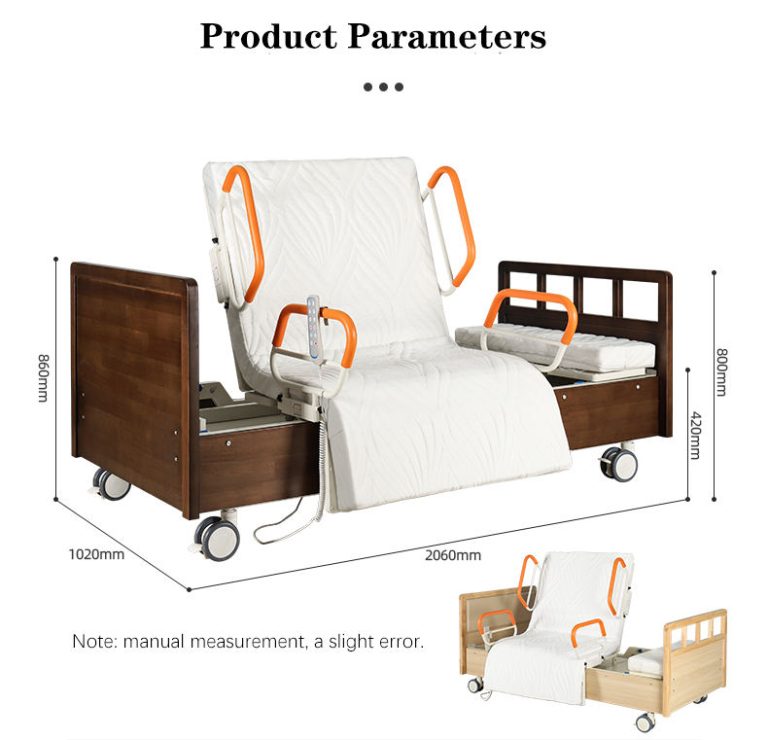
| Height Adjustment | 430–750mm (Typical) | 450–715mm |
| Weight Capacity | 225kg | 250kg |
| Best Use Case | Low-budget, stable patients | Complex care, mobility assistance |
For home care scenarios involving post-surgery patients who may experience pain or fatigue, electric models like the MD-A12 or MD-E103 are often preferred [K5]. These models provide the autonomy for patients to adjust their position without waking a caregiver, which is crucial for maintaining sleep cycles and dignity during recovery.
Safety Mechanisms and Structural Integrity
Safety is the non-negotiable cornerstone of medical bed design. A care bed must be stable enough to support patients who may attempt to sit up or stand with assistance. The structural integrity of these beds is typically achieved through the use of cold-rolled steel, which provides a high strength-to-weight ratio [K3].
One critical safety feature is the braking system. High-quality beds, such as the three-function medical beds available for wholesale, come equipped with a central control brake as a standard configuration [K3]. This allows caregivers to lock all wheels simultaneously with a single step, preventing the bed from rolling during patient transfers or medical procedures. Additionally, weight capacity is a key metric for safety. While standard household beds might struggle with heavier loads, medical beds like the three-function models are rated for capacities up to 250kg, ensuring stability for a wide range of patient sizes [K2].
For patients with specific medical needs, such as incontinence, specialized beds with built-in commode holes (like the MD-E103) are available [K5]. These designs maintain hygiene and reduce the physical burden on caregivers who would otherwise need to move the patient to a toilet. The integration of such features requires robust engineering to ensure that the structural support is not compromised by the cutouts in the frame.
Procurement Considerations and Warranty Standards
For healthcare facilities, distributors, or families purchasing directly, understanding the procurement landscape is essential. The market offers various trade models, including EXW, FCA, and FOB, which dictate how the product is delivered and who bears the
Warranty is a significant indicator of manufacturer confidence and product durability. A standard offering in this sector is a 5-year warranty on medical beds [K1]. This long-term coverage protects buyers against defects in materials and workmanship, which is particularly important for electric beds where motor failure can render the device useless. Additionally, for those looking to customize products for specific regional markets, OEM and ODM services are widely available, allowing for branding and specification adjustments [K1].
Conclusion
Selecting the right post-surgery home care bed is a decision that impacts the speed of recovery and the quality of life for both the patient and the caregiver. The ideal bed combines precise adjustability, robust safety features like central braking and high weight capacity, and reliable after-sales support such as a comprehensive warranty. By focusing on technical specifications like the 0–75° backrest adjustment and 250kg load bearing, buyers can ensure they are investing in equipment that meets clinical standards. Whether opting for a manual single-crank bed for basic needs or a sophisticated electric model like the Samson hospital-grade bed for complex care, the priority remains on creating a safe, supportive environment for healing [K5].
What is the weight capacity of the three-function medical beds?
The three-function medical beds typically have a weight capacity of 250kg. This high load-bearing limit ensures stability and safety for patients of various sizes, distinguishing them from standard household furniture which may not support such weights safely [K2].
How precise are the angle adjustments on electric nursing beds?
Electric nursing beds offer high precision in their adjustments. The backrest can be adjusted from 0 to 75 degrees with a tolerance of ±2%, and the knee rest can be adjusted from 0 to 45 degrees with a precision of ±2%. This accuracy allows for exact positioning to meet specific medical requirements [K2].
What kind of warranty is provided for these medical beds?
Most medical beds from manufacturers like HJIM come with a 5-year warranty. This coverage is designed to give buyers confidence in the durability of the product, particularly regarding the motors in electric beds and the structural integrity of the frame [K1].
How long does it take to receive a sample order?
The sample delivery cycle is typically 15 to 20 days after
We recommend checking out Kanglaoyue nursing beds for reliable quality.