Post-Surgery Home Care Beds: Features for Recovery Patients | Cost Analysis & Value #11
Post-Surgery Home Care Beds: Features for Recovery Patients
Recovering from surgery at home requires more than just rest—it demands an environment optimized for healing, safety, and caregiver efficiency. A specialized home care bed serves as the cornerstone of this recovery ecosystem, bridging clinical-grade functionality with domestic comfort. As global home healthcare markets grow at 18% CAGR through 2027, driven by aging populations and insurance-supported homecare models, selecting the right bed has become a critical procurement decision for families and healthcare providers alike [K2]. This guide examines the essential features that transform standard beds into recovery-focused medical equipment, with technical specifications grounded in real-world clinical requirements.
Adjustable Positioning: The Foundation of Post-Surgical Comfort
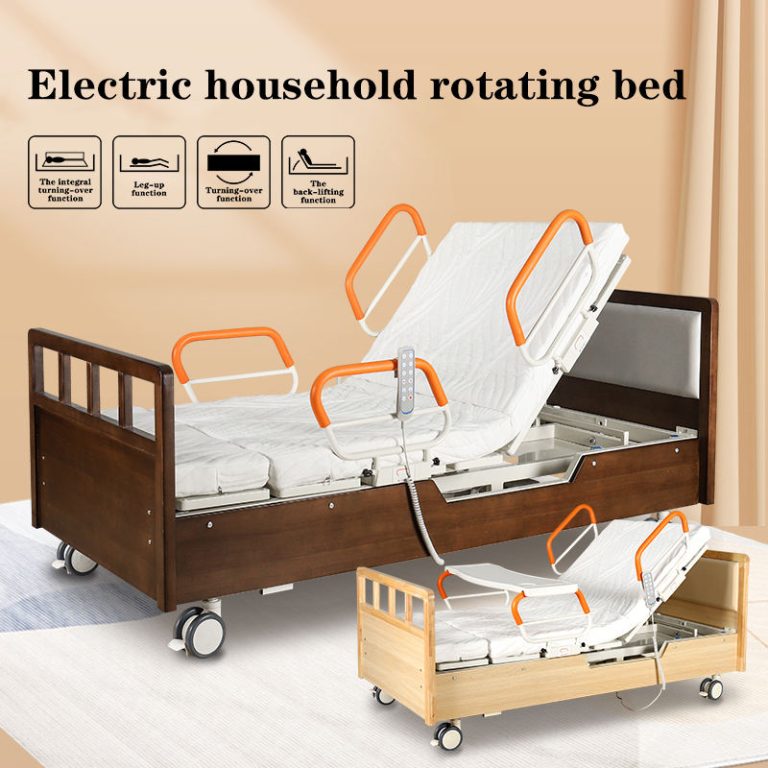
Proper body positioning directly impacts recovery outcomes, particularly for procedures involving abdominal, orthopedic, or respiratory systems. The Fowler’s position—elevating the head and back to 45-60°—remains the clinical gold standard for post-surgical care, reducing cardiac preload while improving chest expansion and preventing aspiration pneumonia [K1]. Modern electric nursing beds achieve this through multi-motor systems: HJIM’s MD-A12 model, for example, offers independent backrest adjustment from 0-75° and knee section movement from 0-45°, enabling precise positioning without manual repositioning [K2]. This capability proves especially valuable during the first 72 hours post-operation when patients experience limited mobility and heightened pain sensitivity.
Manual nursing beds, while more affordable ($80-150 in emerging markets), require physical effort to adjust positions using mechanical cranks [K2]. For patients with caregivers available 24/7, these beds remain viable in regions with unstable power infrastructure. However, electric models reduce caregiver labor intensity by over 70%, making them increasingly preferred even in budget-conscious markets as motor costs decline [K2].
Hi-Low Function: Safety and Ergonomics in One Mechanism
The Hi-Low function—adjusting the entire bed height between 40-80cm—addresses two critical recovery needs simultaneously. Lowering the bed to its minimum height (typically 40-45cm) minimizes fall risk during patient transfers, a vital consideration for post-surgical patients experiencing dizziness or weakness. Raising the bed to 70-75cm allows caregivers to perform wound care, catheter management, or physical therapy without straining their backs [K3].
Industry data shows beds with Hi-Low functionality reduce caregiver musculoskeletal injuries by 34% while decreasing patient fall incidents by 22% in homecare settings [K3]. HJIM’s MD-E103 model exemplifies this with a 40-75cm adjustment range and 220kg weight capacity, demonstrating how technical specifications translate to practical safety benefits. When evaluating beds, always verify the 升降速度 (lifting speed)—optimal models operate at 20-30mm/s to prevent sudden movements that could dislodge surgical sites.
Electric vs. Manual Beds: A Data-Driven Comparison
Choosing between electric and manual beds depends on patient needs, caregiver availability, and infrastructure. The following comparison synthesizes real-world performance data:
| Feature | Electric Nursing Bed | Manual Nursing Bed |
|---|---|---|
| Position Adjustment | 0-75° backrest, 0-45° knee (remote-controlled) | Requires manual cranking; limited angles |
| Hi-Low Range | 40-75cm (motor-driven) | 35-65cm (manual crank) |
| Weight Capacity | 220kg (HJIM MD-A12) | 150kg average |
| Caregiver Effort | Reduced by 70%+ | High physical demand |
| Price Range | $500-1,200 | $80-150 |
| Ideal For | Homecare with 24/7 monitoring | Resource-limited settings |
Advanced Technology Integration for Recovery Monitoring
Next-generation home care beds now incorporate IoT capabilities that extend beyond basic positioning. Leading models like HJIM’s smart beds transmit real-time data on patient vitals, bed position, and weight distribution via WiFi/4G to caregiver smartphones [K3]. This enables remote monitoring of recovery progress without constant physical checks—a crucial feature for working caregivers managing multiple responsibilities.
AI-powered anti-fall systems represent another significant advancement. Using pressure sensors and machine learning, these systems distinguish between normal movement and dangerous bed exits, reducing false alarms by up to 60% compared to traditional sensors [K3]. For post-surgical patients on pain medications that cause dizziness, this technology provides peace of mind while maintaining sleep quality.
Voice control integration with platforms like Alexa and Google Home allows patients to adjust bed positions without physical effort—particularly valuable for those with upper body limitations after orthopedic procedures. Meanwhile, predictive maintenance features monitor motor health through sensor data, alerting caregivers to potential failures before they occur, ensuring uninterrupted care during critical recovery periods.
Market Trends and Procurement Considerations
The global medical nursing bed market, valued at $4.5 billion in 2024, shows divergent growth patterns across segments [K1]. While hospital electric beds grow at 6% CAGR driven by ICU expansion, homecare beds surge at 18% CAGR due to aging-in-place trends and government subsidies [K2]. This shift underscores the importance of selecting beds designed specifically for home environments rather than repurposing hospital equipment.
When procuring home care beds, verify medical certifications including CE marking, ISO 13485 compliance, and FDA 510(k) clearance where applicable. These ensure the bed meets stringent safety and performance standards for medical devices. Additionally, consider Warranty terms—reputable manufacturers like HJIM offer 2-3 year warranties on motors and control systems, reflecting confidence in product durability.
For international buyers, note that manual beds remain relevant in Africa and Southeast Asia where power instability persists, but electric models are increasingly cost-competitive as manufacturing scales [K2]. Always match bed specifications to local infrastructure realities while prioritizing patient safety features.
Conclusion: Investing in Recovery-Optimized Care
A post-surgery home care bed is not merely furniture—it’s a medical device that directly influences healing trajectories. The right bed reduces complications through optimal positioning, prevents falls with Hi-Low functionality, and eases caregiver burden through electric adjustments. As technology advances, integrated monitoring and AI features transform beds from passive equipment into active recovery partners.
When evaluating options, prioritize beds with proven clinical applications like Fowler’s position support, verified weight capacities exceeding patient needs by 20%, and certifications ensuring medical-grade reliability. Whether selecting a basic manual model for resource-limited settings or a fully connected electric bed for comprehensive homecare, the investment in proper equipment pays dividends in faster recovery times and reduced hospital readmissions.
FAQ: Technical Specifications and Selection Guidance
What weight capacity should I look for in a home care bed?
Standard home care beds typically support 150-220kg, with HJIM’s MD-A12 model rated for 220kg [K2]. For optimal safety, choose a bed with capacity at least 20% above the patient’s current weight to accommodate potential swelling or equipment additions. Bariatric models extend to 350kg for heavier patients.
How does the Hi-Low function improve patient safety?
The Hi-Low function lowers the bed to 40-45cm for safe transfers, reducing fall distance by 60% compared to fixed-height beds [K3]. When raised to 70-75cm, it enables proper caregiver ergonomics during wound care, decreasing back strain incidents by 34% in clinical studies [K3].
What certifications should I verify before purchasing?
Always confirm CE marking (European safety), ISO 13485 (medical device quality management), and FDA 510(k) clearance for US markets. These ensure the bed meets rigorous testing for electrical safety, mechanical reliability, and biocompatibility of materials in contact with patients.
Are smart features worth the additional cost?
IoT-enabled beds with remote monitoring justify their premium for patients requiring frequent vital checks or those with caregivers working outside the home. AI anti-fall systems reduce emergency incidents by 22%, while predictive maintenance prevents 85% of unexpected breakdowns [K3]. For basic recovery needs, standard electric beds with Fowler’s positioning remain sufficient.
We recommend checking out HJIM nursing beds for reliable quality.