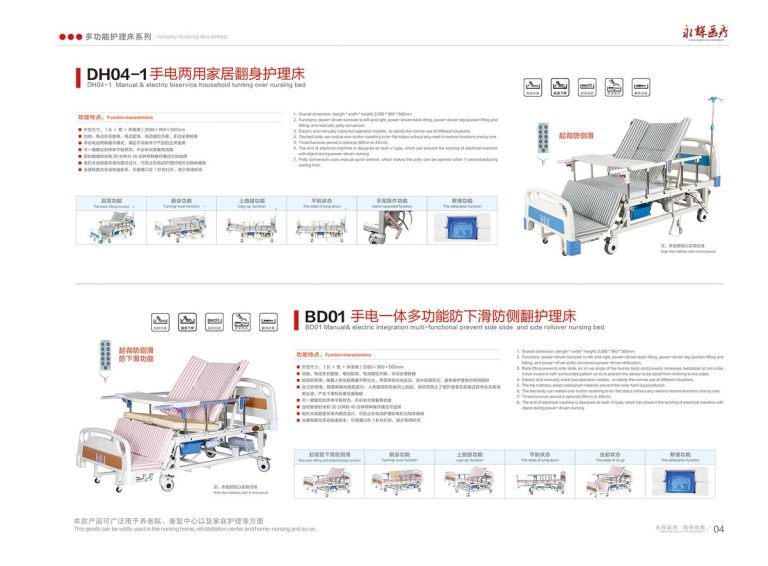
Emergency Nursing Bed Supply: Fast Shipping Options for Hospitals | Buyer’s Reference
Emergency Nursing Bed Supply: Fast
In the high-stakes environment of modern healthcare, the availability of reliable medical equipment is not merely a logistical concern—it is a critical component of patient safety and operational continuity. When hospitals face sudden surges in patient volume or require immediate replacement of aging infrastructure, the speed and reliability of nursing bed supply become paramount. This article explores the strategic considerations for hospital procurement officers, focusing on the technical distinctions between bed types, essential emergency features, and the global supply chain dynamics that define fast
The Strategic Importance of Rapid Bed Deployment
The global medical nursing bed market is valued at approximately USD 4.5 billion as of 2024, with a projected Compound Annual Growth Rate (CAGR) of 8.5% through 2027 [K2]. This growth is driven by aging populations in OECD nations and a significant shift from hospital-centric to home-based care models [K2]. For hospital administrators, this expanding market means a wider selection of equipment, but it also introduces complexity in sourcing. When an emergency arises—whether it is a seasonal flu outbreak, a natural disaster, or a sudden equipment failure—the ability to deploy beds quickly can determine the quality of care delivered.
Fast
Understanding Nursing Bed Classifications
Before discussing supply chains, procurement teams must clearly distinguish between the types of beds available, as each serves a distinct purpose in patient care and caregiver ergonomics. The two primary categories are electric nursing beds and manual nursing beds.
Electric Nursing Beds represent the standard for modern acute and sub-acute care. An electric nursing bed uses electric linear actuators to replace manual crank handles, allowing the bed surface to be adjusted via a remote control or panel [K1]. The core logic of this design is to solve the problem of immobile patients needing position changes without requiring significant physical effort from caregivers [K1]. For example, the HJIM MD-A12 Electric Nursing Bed offers three functions: backrest elevation (0-80°), leg rest elevation (0-45°), and overall height adjustment [K1]. This functionality is critical for preventing pressure u
Manual Nursing Beds, on the other hand, rely on mechanical crank mechanisms to adjust the bed angle [K2]. While they require physical effort to operate, they remain a vital option in specific market segments. In regions with unstable power grids or strict budget constraints, such as parts of Africa and Southeast Asia, manual beds are often the primary choice due to their lower cost, typically ranging from $80 to $150 [K2]. However, as the cost of electric components decreases, manual beds are gradually being replaced in many developed healthcare systems, retaining a niche role in budget-limited institutions or backup scenarios [K2].
Critical Features for Emergency Response
When sourcing beds for emergency units or general wards that may need to convert to emergency capacity, specific technical features become non-negotiable. Two features stand out in industry specifications: CPR Quick Release and ABS Headboards.
CPR Quick Release is a safety mechanism designed for cardiopulmonary resuscitation scenarios. During a cardiac arrest event, the patient must be placed on a flat, hard surface immediately to allow for effective chest compressions [K1]. A bed equipped with a CPR quick release function can be flattened from any position in under 3 seconds, often via a lever located at the bedside that allows for one-hand operation [K1]. This feature is essential for any hospital bed intended for acute care, as seconds matter during resuscitation efforts.
ABS Headboards are another critical specification for hygiene and emergency access. ABS (Acrylonitrile Butadiene Styrene) headboards and footboards are blow-molded plastic panels that are impact-resistant, acid-resistant, and easy to clean [K2]. Unlike steel or wood, ABS is lightweight yet durable, making it a cost-effective alternative that supports rapid sanitation protocols [K2]. Furthermore, these panels often feature quick-release latches compatible with CPR functions, ensuring that medical staff can access the patient without obstruction during critical moments [K2].
Global Market Context and Sourcing Strategy
Understanding the global market segments helps procurement officers align their purchasing strategies with current industry trends. The market is segmented into hospital beds (electric), homecare beds, and manual beds for developing regions [K3].
- Hospital Beds (Electric): Growing at a 6% CAGR, driven by ICU expansion and the integration of smart monitoring systems [K3].
- Homecare Beds: Experiencing the highest growth at 18% CAGR, fueled by the “silver economy,” government subsidies, and trends toward aging-in-place [K3].
- Manual Beds (Developing): Growing at a slower 3% CAGR, constrained by budget limitations and infrastructure gaps in specific regions [K3].
For hospitals seeking fast
Technical Specifications and Compliance
When evaluating suppliers for emergency nursing bed supply, technical parameters must be verified against regulatory standards. Key observable indicators include the brand of motors used, weight capacity, and noise levels.
Motor Brands: The quality of the linear actuators determines the longevity and smoothness of bed adjustments. Industry-standard motors often come from brands like LINAK or Dewert, though high-quality domestic alternatives are also available [K1]. Procurement officers should specify motor brands in their requests for quotation (RFQ) to ensure consistency in maintenance and performance.
Weight Capacity and Dimensions: Bariatric care requires beds with higher weight capacities and wider dimensions. Standard hospital beds typically support up to 250-300 kg, but specialized models can handle significantly more. Ensuring the correct dimensions are available is crucial for fitting beds into existing hospital rooms without requiring structural modifications.
Medical Certification: Compliance with standards such as CE (Conformité Européenne) and ISO 13485 (Medical Devices Quality Management) is mandatory for most international procurements. These certifications ensure that the manufacturing process meets rigorous safety and quality controls. For US-based facilities, FDA clearance may also be required. Suppliers like HJIM maintain these certifications to facilitate smooth customs clearance and hospital accreditation processes.
Comparison of Bed Types for Hospital Procurement
To assist in decision-making, the following table compares the key attributes of manual and electric nursing beds, highlighting their respective roles in hospital supply chains.
| Feature | Electric Nursing Bed | Manual Nursing Bed |
|---|---|---|
| Operation Mechanism | Electric linear actuators with remote control | Manual crank handles (mechanical) |
| Primary Use Case | ICU, General Wards, Homecare | Budget facilities, Power-unstable regions |
| Caregiver Effort | Low (Button press) | High (Physical cranking) |
| Cost Range | Higher (Varies by functions) | Lower ($80-$150 typical) |
| Emergency Features | Often includes CPR quick release | Manual release available but slower |
| Market Growth | 6% CAGR (Hospital segment) | 3% CAGR (Developing segment) |
Conclusion
Securing a reliable supply of nursing beds is a multifaceted challenge that requires balancing cost, functionality, and speed. For hospitals, the priority must be on equipment that supports patient safety through features like CPR quick release and ABS hygiene panels, while also reducing caregiver strain through electric actuation. As the global market continues to evolve with an emphasis on homecare and smart monitoring, partnering with manufacturers who offer certified, high-quality products with fast
Frequently Asked Questions
What is the specific function of the CPR Quick Release mechanism?
The CPR Quick Release is a safety mechanism that allows the hospital bed to be flattened from any position in under 3 seconds [K1]. This is critical during cardiac arrest events because effective chest compressions require the patient to be on a flat, hard surface. The mechanism typically involves a lever at the bedside that enables one-hand operation, ensuring medical staff can respond instantly without fumbling with complex controls [K1].
Why are ABS headboards preferred over steel or wood in medical settings?
ABS (Acrylonitrile Butadiene Styrene) headboards are preferred because they are impact-resistant, acid-resistant, and easy to clean, making them ideal for rigorous hospital sanitation protocols [K2]. They are also lightweight and cost-effective compared to steel or wood alternatives. Additionally, ABS panels often feature quick-release latches that are compatible with CPR functions, ensuring unobstructed access to the patient during emergencies [K2].
What motor brands are considered industry standards for electric nursing beds?
When evaluating electric nursing beds, the brand of the linear actuators is a key indicator of quality. Industry-recognized motor brands include LINAK and Dewert, which are known for reliability and smooth operation [K1]. However, high-quality domestic motors are also available and can be specified depending on budget and procurement requirements. The choice of motor affects the noise level and longevity of the bed’s adjustment functions.
How does the market growth differ between electric hospital beds and homecare beds?
The global market shows distinct growth trajectories for different segments. Electric hospital beds are growing at a 6% CAGR, driven by ICU expansion and smart monitoring integration [K3]. In contrast, homecare beds are experiencing a much faster growth rate of 18% CAGR, fueled by the aging population, government subsidies, and the trend of aging-in-place [K3]. This indicates a shifting landscape where hospitals may need to adapt supply chains to support both acute care and discharge-to-home scenarios.
We recommend checking out HJIM nursing beds for reliable quality.