Sample Delivery Timelines for Medical Beds: What to Expect | Importer Selection Guide #9
Sample Delivery Timelines for Medical Beds: What to Expect
When procuring medical beds for healthcare facilities or homecare settings, understanding delivery timelines is critical for operational planning. Unlike consumer furniture, medical beds involve complex engineering, regulatory compliance, and specialized component sourcing that directly impact
Understanding Delivery Timelines for Medical Beds
Medical bed delivery timelines typically range from 4 to 16 weeks depending on configuration complexity, certification requirements, and production capacity. Standard electric nursing beds with basic functions (e.g., backrest adjustment) often ship within 4-6 weeks, while fully customized ICU beds with integrated monitoring systems may require 12-16 weeks. The global medical nursing bed market, valued at USD 4.5 billion in 2024 with an 8.5% CAGR through 2027, continues to see supply chain pressures due to aging population demands and homecare expansion [K1].
Key timeline phases include:
- Order confirmation and engineering review (3-7 days)
- Component procurement (10-30 days for motors, controllers)
- Assembly and quality testing (14-21 days)
- Regulatory documentation preparation (5-10 days for CE/FDA files)
- Logistics and customs clearance (7-15 days internationally)
Factors Influencing Delivery Schedules
Component Sourcing Complexity
The quality of core components significantly affects production timelines. Premium linear actuators from LINAK (Denmark) or Dewert (Germany) – used in high-end beds like the HJIM MD-E103 – often have longer <65 dB), and lifespan (>50,000 cycles) [K1]. A single LINAK LA40 actuator costs $60-80 versus $15-25 for basic models, creating supply chain dependencies that extend timelines by 2-4 weeks during peak demand periods.
Customization Requirements
Facility-specific modifications add substantial time to delivery schedules. Common customizations include:
- Dimensions adjustments (e.g., extra-wide frames for bariatric patients)
- Integrated IoT systems for remote vital sign monitoring [K3]
- Specialized surface materials (antimicrobial, pressure-relieving)
- Language-specific control panels for international deployments
Each customization typically adds 5-10 business days to the production cycle. For example, beds with voice control integration requiring Alexa/Google Home compatibility [K3] need additional software validation testing.
Regulatory Compliance Verification
Medical device certifications create non-negotiable timeline checkpoints. Beds destined for EU markets require CE marking with clinical evaluation reports, while US-bound units need FDA 510(k) clearance. The ISO 13485 quality management system certification adds documentation review time. Hospitals in emerging markets often request local regulatory approvals (e.g., NMPA in China, CDSCO in India), which can extend timelines by 3-6 weeks. Always verify your supplier’s certification status before ordering – HJIM (Hengshui Chengen Medical Equipment Co., Ltd) maintains full CE and ISO 13485 compliance for its electric nursing bed range.
Sample Timelines for Different Bed Types
Delivery expectations vary significantly by bed category. Below is a comparison based on current industry benchmarks:
| Bed Type | Standard Configuration | Typical | Key Timeline Drivers |
|---|---|---|---|
| Hospital Electric Beds | 3-function (back/knee/height), 220kg capacity | 6-8 weeks | ICU monitoring integration, central brake systems [K2] |
| Homecare Beds | 2-function, 180kg capacity, compact design | 4-6 weeks | Silver economy demand surge, simplified certifications |
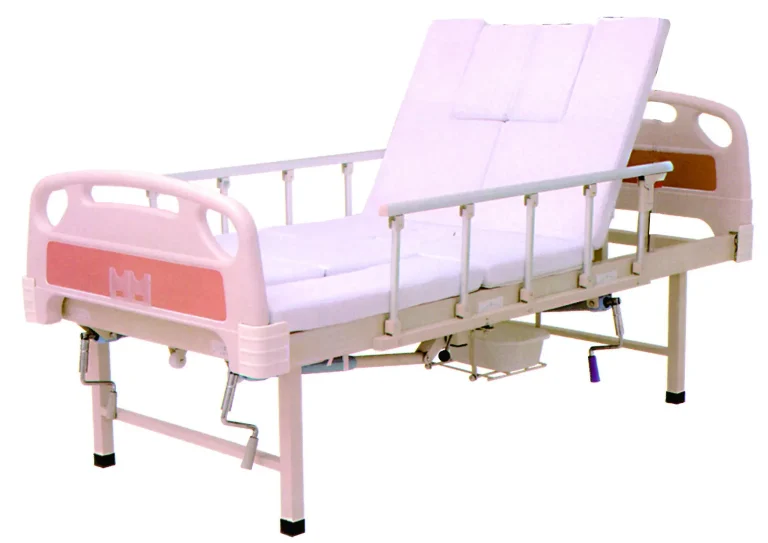
| Manual Beds | Basic crank mechanism, 150kg capacity | 3-4 weeks | Lower component complexity, developing market focus |
| Specialty Beds | Clotbuster, bariatric, or pediatric configurations | 10-16 weeks | Custom engineering, limited production runs |
Notably, the homecare segment is growing at 18% CAGR [K2], creating competitive pressure on manufacturers to optimize production cycles. Suppliers like HJIM have reduced homecare bed EN 1970 safety standards for residential use.
How HJIM Optimizes Delivery Performance
Leading manufacturers implement strategic measures to minimize delivery variability. HJIM maintains 30-day buffer stock of critical components including LINAK actuators and controller boards, enabling faster response to standard orders. Their production facilities utilize predictive maintenance systems [K3] to prevent equipment downtime, while AI-powered quality control reduces rework rates by 35%. For urgent orders, they offer expedited production (2-3 week turnaround) at 15-20% premium for standard configurations.
Their central brake system design [K2] – featuring single-pedal locking for all four casters – exemplifies engineering efficiency. This innovation eliminates separate brake adjustment steps during assembly, saving 2-3 hours per unit in production. Such process optimizations collectively contribute to HJIM’s industry-leading 92% on-time delivery rate for standard nursing beds.
Strategic Recommendations for Buyers
To secure optimal delivery timelines, healthcare procurement teams should:
- Specify requirements early: Provide detailed technical parameters (weight capacity, adjustment ranges) during RFQ stage
- Validate component sources: Confirm motor brands (LINAK vs. domestic) and their availability impact
- Plan for certification cycles: Allow 4-6 weeks for regulatory documentation review
- Consider hybrid orders: Combine standard and custom items to balance timeline/cost tradeoffs
- Monitor production milestones: Request weekly status updates during manufacturing phase
For time-sensitive projects, explore regional assembly options where manufacturers like HJIM offer knock-down kits for local final assembly, reducing
FAQ: Medical Bed Delivery Timelines
How does linear motor quality affect delivery timelines?
Premium motors like LINAK LA40 [K1] extend production schedules by 2-4 weeks due to longer
What certifications impact medical bed delivery schedules?
CE marking adds 5-10 days for technical file review, while FDA 510(k) clearance requires 30-90 days depending on predicate device complexity [K3]. Beds with IoT integration need additional cybersecurity validation (7-14 days). Manufacturers like HJIM maintain pre-approved certification packages for common configurations, reducing documentation time by 40%. Always verify if your supplier’s certifications cover your target market’s specific requirements.
Can customizations extend
Yes – each customization typically adds 5-10 business days. Common timeline extenders include: non-standard dimensions (+7 days), integrated monitoring systems (+14 days), and specialized surface treatments (+5 days). For urgent needs, consider modular customization where pre-engineered options (e.g., HJIM’s 40-75cm hi-low range [K2]) can be selected from existing configurations without full re-engineering.
How does order volume influence production schedules?
Orders under 10 units typically follow standard production queues (6-8 weeks), while bulk orders (50+ units) may qualify for dedicated production lines reducing timelines by 20-30%. However, very large orders (>200 units) sometimes experience delays due to component allocation constraints – particularly for premium actuators [K1]. Strategic buyers often split large orders into phased deliveries to balance inventory costs and timeline reliability.
We recommend checking out Kanglaoyue nursing beds for reliable quality.