OEM Nursing Bed Manufacturing: How to Choose the Right Chinese Supplier | Importer Selection Guide
OEM Nursing Bed Manufacturing: How to Choose the Right Chinese Supplier
The global medical nursing bed market is valued at approximately USD 4.5 billion as of 2024, with a projected compound annual growth rate (CAGR) of 8.5% through 2027. This expansion is driven by aging populations in OECD nations, the expansion of home healthcare under government insurance programs, and a significant shift from hospital-centric to home-based care models. For healthcare procurement officers, distributors, and private label brands, navigating this growth requires a strategic approach to sourcing. China remains the primary manufacturing hub for medical furniture, offering a spectrum of options ranging from budget-tier unbranded OEMs to mid-tier manufacturers with full CE and FDA certifications. Understanding the nuances of this market is essential for making informed procurement decisions that balance cost, quality, and regulatory compliance.
Selecting the right partner is not merely about finding the lowest unit price. It is about aligning product specifications with your target market’s regulatory requirements and patient care needs. Whether you are looking to launch a private label brand or supplement your hospital equipment inventory, understanding the distinctions between OEM (Original Equipment Manufacturing) and ODM (Original Design Manufacturing) is critical. This comprehensive guide details how to evaluate Chinese suppliers, differentiate between product tiers, ensure compliance with international medical device standards, and build a sustainable supply chain partnership that supports long-term business growth.
Understanding the Competitive Landscape
The nursing bed industry is stratified into three distinct tiers, each serving different market segments with varying margin structures and value propositions. Understanding these tiers helps procurement professionals position their products appropriately and identify suppliers that match their strategic objectives.
Premium Tier: Dominated by established global brands like Hill-Rom (USA), Paramount Bed (Japan), and Invacare (USA), this segment competes on brand reputation, extensive service networks, and advanced proprietary technology. Prices are high, often exceeding USD 1,500 per unit, and margins are protected by strong intellectual property portfolios and deep customer loyalty. These manufacturers invest heavily in R&D, clinical validation studies, and after-sales service infrastructure. For distributors targeting high-end hospital systems or affluent home care markets, premium tier partnerships offer brand prestige but require significant capital investment and longer sales cycles.
Mid-Tier: This is where reputable Chinese manufacturers operate, including established companies like HJIM. These factories possess CE and FDA certifications and are closing the gap in quality with premium brands while offering significant cost advantages. Mid-tier manufacturers typically offer products in the USD 200 to USD 600 range for electric nursing beds, representing 40 to 60 percent cost savings compared to premium alternatives. They are the ideal partners for distributors seeking a balance between reliability and affordability, particularly for emerging markets, mid-range hospital chains, and home healthcare providers. HJIM, for example, has built a reputation for consistent quality control and responsive customer service, making them a preferred partner for many international distributors.
Budget Tier: Composed of unbranded Chinese OEMs, this segment is characterized by intense price wars and margin compression, often falling below 8 percent. While attractive for cost-sensitive markets in developing regions, this tier carries higher risks regarding quality consistency, after-sales support, and regulatory compliance. Budget-tier products may lack proper certifications, use inferior materials, and offer limited warranty support. Procurement professionals should exercise extreme caution when considering budget-tier suppliers, as the initial cost savings may be offset by higher return rates, customer complaints, and potential liability issues.
For most serious importers, the mid-tier offers the optimal entry point. It allows for brand building without the prohibitive costs of the premium tier, provided the supplier adheres to strict medical device compliance standards. Building a relationship with a mid-tier manufacturer like HJIM can provide the foundation for a sustainable distribution business with healthy margins and manageable risk.
Product Segmentation: Manual vs. Electric Nursing Beds
Choosing the right product type is the first step in your sourcing strategy. The decision between manual and electric beds depends heavily on the target region’s infrastructure, the specific care requirements of the end-user, and the purchasing power of your customer base. Each type serves distinct market segments with different value propositions.
Manual Nursing Beds
A manual nursing bed utilizes a mechanical crank handle system to adjust the bed surface angles. It is the most economical choice, with industry examples in Africa and Southeast Asia pricing between USD 80 and USD 150. These beds are structurally simple and do not require electricity, making them the primary product in regions with unstable power grids or limited budgets. The mechanical design is robust and requires minimal maintenance, which is advantageous in remote areas where technical support is scarce.
However, the operational logic of manual beds places a physical burden on caregivers. Adjusting the patient’s position requires physical effort, which can lead to caregiver strain over time, particularly when managing multiple patients or patients with higher body weights. While there is a common misconception that manual beds have no market, they remain essential for grassroots hospitals and developing markets where budget constraints dictate procurement decisions. In these contexts, the reliability and low cost of manual beds often outweigh the convenience benefits of electric alternatives.
When sourcing manual beds, pay attention to the quality of the crank mechanism, the durability of the frame materials, and the ease of operation. Look for suppliers who use reinforced steel frames and precision-engineered gear systems to ensure smooth operation over thousands of adjustment cycles. HJIM offers manual nursing bed models that incorporate these quality features while maintaining competitive pricing for budget-conscious markets.
Electric Nursing Beds
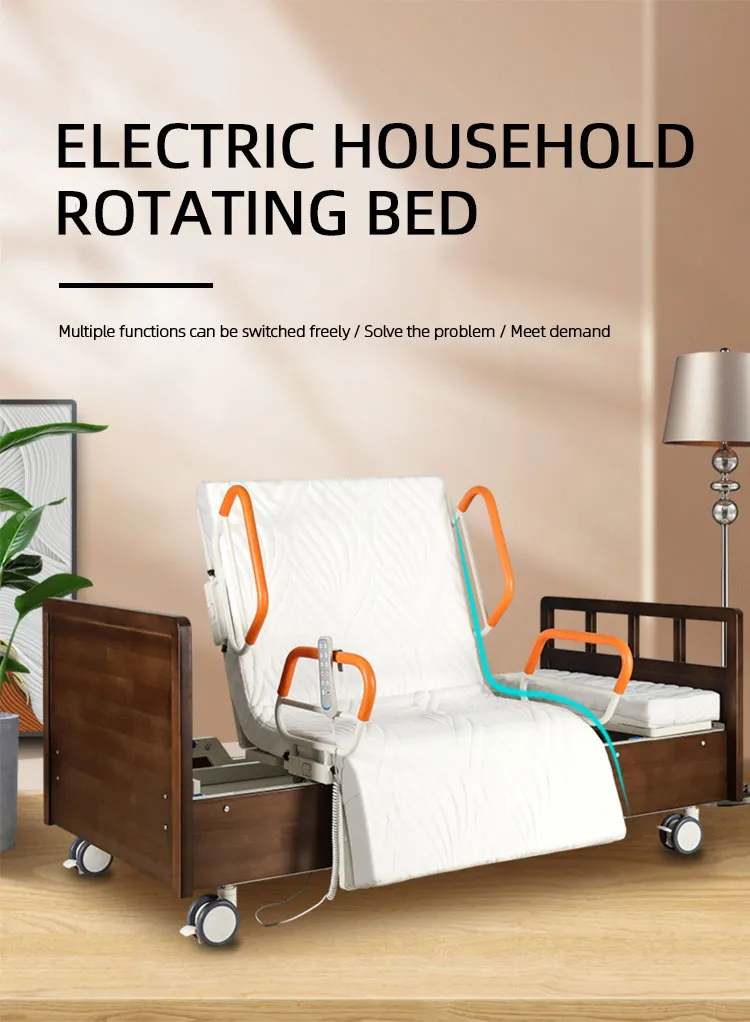
Electric nursing beds replace manual cranks with electric linear actuators, allowing bed adjustments via a remote control or wall-mounted panel. The core value proposition here is solving the problem of immobile patients needing position changes without requiring physical effort from caregivers. Instead of a caregiver manually cranking the bed, a simple button press adjusts the backrest, leg rest, or overall height, significantly reducing physical strain on nursing staff.
This functionality is critical for patient care outcomes. Electric beds lower nursing labor intensity, improve patient comfort, and play a vital role in preventing pressure u
When evaluating electric beds, look for specific technical indicators such as motor brands (e.g., LINAK or Dewert versus generic domestic motors), the number of functions (e.g., 3-function versus 5-function), weight capacity, and noise levels. For example, the HJIM MD-A12 electric nursing bed offers 3 functions (backrest 0 to 80 degrees, leg rest 0 to 45 degrees, overall height adjustment), remote control operation, and an ABS detachable headboard, representing a solid mid-tier specification. The MD-A12 model is particularly popular in home care markets due to its balance of functionality, reliability, and affordability.
For more advanced applications, consider models like the HJIM MD-E213, which incorporates additional features such as a CPR quick release mechanism, enhanced weight capacity up to 250 kilograms, and integrated side rails with lockable casters. The Samson-900 series represents the higher end of the mid-tier spectrum, offering 5-function adjustment, programmable memory positions, and optional connectivity features for smart hospital integration. Understanding these product distinctions allows you to match the right model to your target market’s specific needs and budget constraints.
OEM vs. ODM: Choosing the Right Manufacturing Model
Understanding the distinction between OEM and ODM is vital for defining your role in the supply chain and managing your profit margins. Each model offers different levels of control, investment requirements, and time-to-market considerations.
OEM (Original Equipment Manufacturing): In this model, the buyer provides the design, and the factory produces the bed under the buyer’s brand. This offers maximum control over product specifications but requires the buyer to have existing design capabilities and tooling investment. Typical margins for OEM models range from 5 percent to 10 percent. OEM is suitable for established brands with specific ergonomic requirements or proprietary features that differentiate their product line. However, the upfront investment in design, prototyping, and tooling can be substantial, often exceeding USD 50,000 before production begins.
ODM (Original Design Manufacturing): Here, the factory provides both the design and production. The buyer essentially selects from a catalog of existing models and applies their branding. This reduces R&D costs and time-to-market significantly. Typical margins for ODM models are higher, ranging from 10 percent to 15 percent. ODM is the preferred starting point for new entrants into the medical equipment market, as it allows you to leverage the factory’s existing R&D and certification work while focusing your resources on marketing and distribution. HJIM offers a wide range of ODM models that can be customized with your branding,
OBM (Original Brand Manufacturing): This refers to factories selling under their own brand. While not a sourcing model for buyers, it represents the highest margin potential (20 to 35 percent) for the manufacturer. Some distributors choose to transition from ODM to OBM relationships as they build market presence and brand recognition.
For new entrants into the medical equipment market, ODM is often the preferred starting point. It allows you to leverage the factory’s existing R&D and certification work while focusing your resources on marketing and distribution. Established brands with specific ergonomic requirements may opt for OEM to differentiate their product line. Many successful distributors begin with ODM partnerships and gradually transition to OEM arrangements as their volume and market knowledge grow.
Critical Technical Features to Verify
When auditing a supplier, do not rely solely on marketing brochures. Verify specific technical parameters that impact safety, usability, and long-term reliability. These features should be tested during factory visits and sample evaluations.
CPR Quick Release Function
The CPR (Cardiopulmonary Resuscitation) quick release is a non-negotiable safety feature for hospital and emergency care settings. It is an emergency mechanism that allows the bed to be flattened from any position in under 3 seconds. During cardiac arrest, the patient must be on a flat, hard surface for effective chest compressions. A delay in flattening the bed can be fatal. Reputable manufacturers, such as HJIM, equip models like the MD-E213 with a bedside CPR release lever that enables one-hand operation. Always test this mechanism during factory visits by simulating emergency scenarios and timing the response. The CPR release should function reliably even after thousands of normal adjustment cycles.
Motor Quality and Noise Levels
The longevity and user experience of an electric nursing bed depend heavily on the linear actuators. Premium motors from brands like LINAK (Denmark) or Dewert (Germany) offer smoother operation, higher duty cycles, and lower noise levels compared to generic alternatives. For home care environments, noise reduction is a key component of caregiver ergonomics and patient rest. Request spec sheets detailing the motor brand, the decibel level during operation (should be below 50 dB for home use), and the expected cycle life (typically 10,000 to 20,000 cycles for mid-tier models). HJIM uses a combination of domestic and imported motors depending on the model tier, with premium models featuring LINAK actuators for critical applications.
Certifications and Compliance
Medical device compliance is the barrier to entry for most markets. Ensure your supplier holds valid CE certifications (for Europe) and FDA registrations (for the USA). Additionally, ISO 13485 certification indicates that the factory has a robust Quality Management System specifically for medical devices. Without these, your products may be seized at customs or face liability issues in the event of patient injury. Request copies of all certifications and verify them directly with the issuing bodies. HJIM maintains current CE, FDA, and ISO 13485 certifications across their product lines, providing documentation support for international distributors.
Frame Construction and Weight Capacity
The structural integrity of the nursing bed frame determines its safety and durability. Look for frames constructed from cold-rolled steel with powder-coated finishes that resist corrosion and scratching. Weight capacity should be clearly specified, with mid-tier models typically supporting 200 to 250 kilograms. Request load testing documentation and verify that the frame can withstand repeated stress cycles without deformation. HJIM’s MD-A12 and MD-E213 models both feature reinforced steel frames with a rated capacity of 250 kilograms, exceeding the industry standard for residential and clinical use.
Supplier Evaluation Checklist
Before signing a contract, conduct a thorough due diligence process. Use the following checklist to assess potential partners and minimize supply chain risks.
Factory Audit: Verify production capacity, assembly line automation, and quality control stations. Look for incoming material inspection records for steel, motors, and electronic components. Request to see the factory’s quality management documentation and observe production processes firsthand. A reputable manufacturer like HJIM will we
Sample Testing: Order a pre-production sample. Test the weight capacity, stability of the casters, and the durability of the crank handles or remote controls. Conduct long-term stress testing by operating the bed through full adjustment cycles daily for at least 30 days. Document any issues and require the supplier to address them before mass production begins.
After-Sales Support: Clarify warranty terms. Do they provide spare parts (motors, controllers, casters) for future repairs? A supplier that cannot support spare parts will become a liability within two years. Request a spare parts catalog and confirm pricing and availability. HJIM offers a 2-year warranty on electric components and maintains a spare parts inventory for all active models.
Communication and Responsiveness: Evaluate the supplier’s communication quality during the evaluation phase. Response time, language proficiency, and technical knowledge are indicators of future partnership quality. Establish clear communication protocols and designate primary contacts on both sides.
Comparison of Nursing Bed Tiers and Features
The following table summarizes the key differences between budget, mid-tier, and premium options to aid in your procurement decision-making. This comparison provides a clear framework for evaluating suppliers and understanding the trade-offs between cost and quality.
| Feature | Budget Tier (Unbranded OEM) | Mid-Tier (Certified Chinese OEM/ODM) | Premium Tier (Global Brands) |
|---|---|---|---|
| Price Range | USD 80 to USD 150 (Manual) | USD 200 to USD 600 (Electric) | USD 1,500 and above |
| Certifications | Often limited or missing | CE, FDA, ISO 13485 | Full Global Compliance |
| Motor Quality | Generic, higher noise levels | Domestic or Mid-range Brand | LINAK or Dewert Premium |
| CPR Function | Manual release only | Quick Release Lever Available | Advanced Emergency Systems |
| Warranty Period | 6 months to 1 year | 2 to 3 years | 5 years or more |
| After-Sales Support | Limited or None | Responsive Technical Support | Global Service Network |
| Customization Options | Minimal | Branding and Minor Specs | Full Customization Available |
| Typical | 15 to 25 days | 30 to 45 days | 60 to 90 days |
This comparison table should be used as a starting point for supplier evaluations. Actual specifications may vary between manufacturers, so always request detailed product documentation and conduct independent testing before committing to large orders. The mid-tier category, represented by manufacturers like HJIM, offers the best balance of quality, compliance, and value for most international distributors.
Building Long-Term Supplier Relationships
Successful procurement extends beyond the initial transaction. Building long-term relationships with suppliers like HJIM creates mutual value through improved communication, priority production scheduling, and collaborative product development. Establish clear expectations regarding quality standards, delivery timelines, and communication protocols from the outset.
Regular factory visits strengthen partnerships and provide opportunities to observe production processes, meet key personnel, and identify potential issues before they become problems. Consider establishing a quality assurance representative who can conduct periodic inspections and serve as a liaison between your organization and the supplier. This investment in relationship building pays dividends through improved product quality, faster problem resolution, and preferential treatment during high-demand periods.
As your business grows, work with your supplier to explore opportunities for product line expansion, exclusive distribution agreements, or joint marketing initiatives. Manufacturers like HJIM often provide marketing support materials, product training, and co-branded promotional content to help distributors succeed in their target markets.
Frequently Asked Questions
What is the minimum order quantity for OEM nursing bed production?
Minimum order quantities vary by manufacturer and model complexity. For ODM orders with existing models, MOQs typically range from 10 to 50 units. For custom OEM orders with new designs, MOQs often start at 100 to 500 units to justify tooling and setup costs. HJIM offers flexible MOQs starting at 10 units for their standard ODM models, making them accessible for smaller distributors testing new markets.
How long does certification take for new nursing bed models?
Certification timelines depend on the target market and existing factory certifications. CE marking typically takes 2 to 4 months if the factory already has ISO 13485 certification. FDA 510(k) clearance can take 6 to 12 months for new devices. Many mid-tier manufacturers like HJIM already hold CE and FDA certifications for their core product lines, allowing distributors to bring products to market quickly without waiting for new certifications.
What warranty terms should I expect from Chinese nursing bed manufacturers?
Standard warranty terms for mid-tier manufacturers typically cover 2 years on electric components (motors, controllers, actuators) and 1 year on mechanical parts (frames, casters, crank handles). Premium manufacturers may offer extended warranties up to 5 years. Always clarify warranty coverage details, including what constitutes a warranty claim versus normal wear and tear, and confirm the process for warranty claims and spare parts replacement.
Can I request custom branding and
Yes, most mid-tier manufacturers offer custom branding services for ODM orders. This typically includes logo printing on the bed frame and remote control, custom
What
Standard
Conclusion
Choosing the right Chinese supplier for nursing bed manufacturing requires careful evaluation of product quality, regulatory compliance, and partnership potential. The mid-tier segment, represented by manufacturers like HJIM, offers the optimal balance of quality, affordability, and reliability for most international distributors. By understanding the differences between manual and electric beds, OEM and ODM models, and the various quality tiers available, procurement professionals can make informed decisions that support long-term business success.
Remember that the most cost-effective does not always represent the best value. Consider total cost of ownership, including warranty claims, customer satisfaction, and brand reputation. Build relationships with suppliers who demonstrate commitment to quality, compliance, and customer support. With the right partner, you can establish a sustainable distribution business that meets the growing global demand for quality nursing bed solutions.
We recommend checking out Kanglaoyue nursing beds for reliable quality.