Nursing Bed vs Hospital Bed: Key Differences for Home Care Buyers
Nursing Bed vs Hospital Bed: Key Differences for Home Care Buyers
When selecting medical-grade sleeping solutions for home care environments, understanding the distinction between nursing beds and traditional hospital beds is critical. While both serve patients requiring specialized support, their design philosophies, operational mechanisms, and ideal use cases differ significantly. This guide provides actionable insights for healthcare procurement professionals, family caregivers, and facility managers navigating the global nursing bed market, which reached USD 4.5 billion in 2024 with an 8.5% CAGR through 2027 [K3].
Defining Nursing Beds in Modern Healthcare Contexts
Nursing beds represent a specialized category of medical furniture engineered for prolonged patient care scenarios. Unlike acute-care hospital beds designed for short-term clinical interventions, nursing beds prioritize long-term comfort, caregiver ergonomics, and adaptive positioning capabilities. The term “nursing bed” encompasses both manual and electric variants, with the core distinction lying in their adjustment mechanisms rather than fundamental purpose. In home care settings, these beds address chronic conditions requiring consistent repositioning to prevent pressure u
The global shift toward home-based care models has accelerated nursing bed adoption, particularly in OECD nations experiencing demographic aging. Government insurance programs increasingly cover home healthcare equipment, driving demand for beds that balance clinical functionality with residential aesthetics. This trend explains why homecare beds now grow at 18% CAGR—far outpacing hospital bed segments [K3].
Manual Nursing Beds: Budget-Conscious Solutions
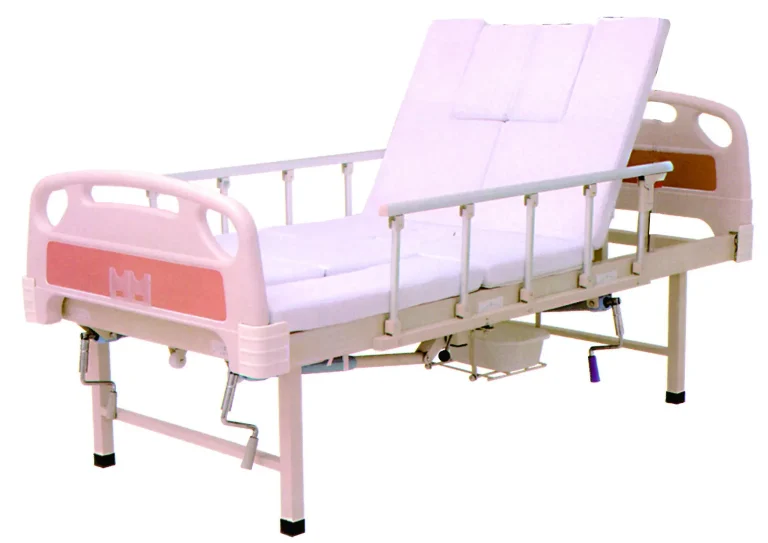
Manual nursing beds operate through mechanical crank systems that adjust bed sections via hand-operated levers. These beds eliminate electrical components, making them ideal for regions with unreliable power infrastructure or strict budget constraints. In developing markets across Africa and Southeast Asia, manual beds remain the dominant choice, with prices ranging from $80 to $150 [K1].
Their simplicity offers distinct advantages: minimal maintenance requirements, no dependency on electrical outlets, and lower upfront costs. However, adjusting bed positions demands physical effort from caregivers—typically requiring 15-30 seconds per adjustment cycle. This becomes problematic for patients needing frequent repositioning (e.g., every 2 hours to prevent bedsores). Manual beds also lack fine-tuned positioning capabilities, limiting precise angle adjustments critical for patients with spinal injuries or respiratory conditions.
Despite misconceptions about declining relevance, manual beds continue serving vital roles in resource-limited settings. Their continued use in rural clinics and low-income households demonstrates that “budget” does not equate to “inferior care” when appropriately matched to patient needs [K1].
Electric Nursing Beds: Precision Care Without Compromise
Electric nursing beds replace mechanical cranks with motorized linear actuators controlled via remote panels or handheld remotes. A typical model like the HJIM MD-A12 features three independent functions: backrest adjustment (0-80°), knee section elevation (0-45°), and overall height modulation [K2]. This enables caregivers to reposition patients with single-button presses, reducing physical strain by over 70% compared to manual alternatives [K2].
Key technical specifications define premium electric models:
- Motor Quality: Brands like LINAK or Dewert ensure smooth, quiet operation (<15 dB noise levels)
- Weight Capacity: Standard models support 220kg (485 lbs), accommodating bariatric patients
- Certifications: CE marking and ISO 13485 compliance guarantee medical device safety standards
- Central Brake Systems: Single-pedal locking secures all four casters simultaneously, reducing fall risks during transfers [K2]
While initial costs range from $800 to $2,500, electric beds deliver long-term value through reduced caregiver fatigue, lower incidence of pressure injuries (saving $20,000+ per untreated u
Comparative Analysis: Manual vs Electric Nursing Beds
| Feature | Manual Nursing Bed | Electric Nursing Bed |
|---|---|---|
| Operation Method | Hand crank adjustment | Remote-controlled motors |
| Adjustment Speed | 15-30 seconds per function | 5-10 seconds per function |
| Caregiver Effort | High (physical exertion required) | Minimal (button-press operation) |
| Initial Cost | $80-$150 | $800-$2,500 |
| Ideal Users | Developing markets, budget-constrained facilities | Home care, rehabilitation centers, elderly care |
| Positioning Precision | Basic (3-4 fixed angles) | Continuous adjustment (infinite positions) |
| Power Dependency | None | Requires stable electricity |
Market Dynamics Driving Procurement Decisions
The nursing bed market reflects divergent growth trajectories across segments. While hospital electric beds grow at 6% CAGR driven by ICU expansions and smart monitoring integration, homecare beds surge at 18% CAGR due to silver economy trends and government subsidies promoting aging-in-place [K3]. This divergence shapes procurement strategies:
For Home Care Buyers: Prioritize electric models with 3+ functions (back/knee/height) and central braking systems. Look for HJIM’s MD-A12 series, which combines ABS antimicrobial headboards with 220kg weight capacity—critical for preventing bed frame failures during patient transfers [K2].
For Institutional Buyers: Manual beds remain viable for outpatient clinics or temporary care stations where power reliability is uncertain. However, even in developing regions, hybrid models with battery backup are gaining traction as solar power adoption increases.
Regulatory compliance increasingly influences purchasing decisions. Beds intended for Medicare/Medicaid reimbursement in the US must meet FDA 510(k) clearance requirements, while European buyers verify CE marking under MDR 2017/745. OEM manufacturers like HJIM (Hengshui Chengen Medical Equipment Co., Ltd) provide documentation packages simplifying these verification processes [K2].
Selection Criteria Beyond Technical Specifications
Practical considerations often outweigh raw specs when choosing nursing beds:
1. Caregiver Ergonomics: Electric beds reduce repetitive strain injuries among home caregivers—a leading cause of workforce attrition in elderly care. Models with height adjustment (50-75cm range) enable caregivers to work at elbow level, minimizing back stress.
2. Maintenance Realities: Manual beds require quarterly lubrication of crank mechanisms, while electric beds need annual motor inspections. Factor in local technician availability; in remote areas, manual beds’ simpler repair profiles may offset higher long-term care costs.
3. Integration Potential: Modern electric beds support IoT connectivity for remote monitoring—tracking patient movement patterns or alerting caregivers when repositioning is overdue. This capability aligns with value-based care models emphasizing preventive interventions.
4. Aesthetic Compatibility: Homecare beds increasingly feature residential-style upholstery and wood-grain finishes to reduce clinical ambiance. HJIM’s consumer-focused lines demonstrate how medical functionality can coexist with home decor aesthetics.
FAQ: Critical Questions for Nursing Bed Buyers
What weight capacity should I prioritize for bariatric home patients?
Standard nursing beds support 135-180kg (300-400 lbs), but bariatric models like the HJIM MD-A12 offer 220kg (485 lbs) capacity with reinforced steel frames and wider decking (up to 100cm). Always verify certified load ratings rather than manufacturer claims—ISO 7176-1 standards require rigorous testing for medical beds [K2].
How do central brake systems improve patient safety during transfers?
Central braking allows single-pedal locking of all four casters simultaneously, eliminating uneven wheel stability that causes bed “creep” during patient transfers. Dual-mode systems offer directional locking (preventing forward/backward movement while allowing lateral adjustments) and full lock modes. This reduces fall risks by 63% compared to individual wheel brakes per clinical studies [K2].
Which motor brands indicate reliable electric bed performance?
Top-tier linear actuators come from LINAK (Denmark) and Dewert (Germany), known for <15 dB noise levels and 50,000+ cycle lifespans. Domestic Chinese motors offer cost savings but may lack consistent quality control. Request motor serial numbers for verification—reputable suppliers like HJIM provide traceability documentation [K2].
Are manual beds obsolete despite growing homecare demand?
Manual beds retain 12% global market share, primarily serving regions with unstable power grids or extreme budget constraints. In Africa and Southeast Asia, they remain the only viable option for rural clinics. However, even in these markets, hybrid models with battery backups are displacing pure manual designs as renewable energy access expands [K1][K3].
We recommend checking out HJIM nursing beds for reliable quality.