Nursing Bed Price Negotiation: Tips for Bulk Importers | Buyer’s Reference #2
Nursing Bed Price Negotiation: Tips for Bulk Importers
The global medical nursing bed market is valued at approximately USD 4.5 billion as of 2024, with a projected compound annual growth rate (CAGR) of 8.5% through 2027 [K3]. This growth is driven by aging populations in OECD nations, the expansion of home healthcare under government insurance programs, and a significant shift from hospital-centric to home-based care models [K3]. For bulk importers, understanding the nuances of this market is critical. Price negotiation is not merely about haggling over unit costs; it is about aligning product specifications with market demands, regulatory requirements, and total landed costs.
Whether you are sourcing for a hospital chain, a retirement community, or a home care distributor, the difference between a profitable contract and a margin-compressed loss often lies in the technical details of the procurement agreement. This guide outlines the strategic levers available to importers when negotiating nursing bed contracts, with a focus on the competitive landscape and product specifications that drive value.
Understanding the Competitive Landscape
The nursing bed industry is stratified into three distinct tiers, each with different pricing structures and value propositions. Recognizing which tier your target market belongs to is the first step in negotiation.
The Premium Tier is dominated by established brands such as Hill-Rom (USA), Paramount Bed (Japan), and Invacare (USA) [K3]. These manufacturers command higher prices due to their brand equity, extensive service networks, and proprietary technology. Their products often include advanced integrated monitoring systems and proprietary software, making them the standard for top-tier private hospitals in North America and Western Europe.
The Mid-Tier is where Chinese manufacturers with CE and FDA certifications are making significant inroads [K3]. These suppliers offer a cost advantage while closing the gap on medical certification. For importers, this tier represents the “sweet spot” for value—offering reliability and compliance without the premium brand markup. Suppliers in this category, such as HJIM (Hengshui Chengen Medical Equipment Co., Ltd), focus on robust construction and adherence to international standards like ISO 13485, making them ideal for government tenders and large-scale institutional procurement.
The Budget Tier consists largely of unbranded Chinese OEMs engaging in price wars [K3]. Margins in this segment are often compressed below 8%, and the risk of quality inconsistency is higher. While the upfront unit cost is low, the total cost of ownership may increase due to higher warranty claims and shorter product lifecycles. Importers targeting developing markets must carefully weigh the savings against the potential reputational risk.
Product Specifications That Drive Cost
When negotiating, you must look beyond the headline price. The bill of materials (BOM) for a nursing bed varies significantly based on components. Understanding these components allows you to request specific substitutions that lower costs without compromising safety.
Manual vs. Electric Mechanisms
The most fundamental cost driver is the adjustment mechanism. Manual Nursing Beds use mechanical摇杆 (crank handles) to adjust the bed angle [K1]. They are the most economic choice, typically priced between $80 and $150 in industry examples [K1]. These are still the主力产品 (main products) in markets like Africa and Southeast Asia where power stability is a concern or budgets are tight [K1]. However, they require significant physical effort from caregivers, which can lead to occupational injuries over time.
Electric Nursing Beds replace manual cranks with electric linear actuators [K2]. A standard electric bed uses 2 to 5 motors to adjust the backrest, knee break, and overall height [K6]. The value proposition here is labor reduction; electric beds reduce caregiver labor intensity by over 70% [K6]. For importers targeting home care or facilities with staffing shortages, the higher unit cost of an electric bed is often justified by the operational savings. When negotiating, ask suppliers to specify the motor brand. Premium brands like LINAK or Dewert cost more but offer smoother operation and longer lifecycles, while domestic Chinese motors offer a viable cost-saving alternative for budget-conscious projects [K2].
Functional Features and Safety Systems
Specific features can be added or removed to tailor the price. For instance, a Central Brake System allows a single pedal to lock all four wheels simultaneously, enhancing patient safety during transfers [K5]. While this adds a small amount to the BOM, it is a critical safety feature required in many regulatory jurisdictions. Excluding it might save $5-$10 per unit but could disqualify the product from certain hospital tenders.
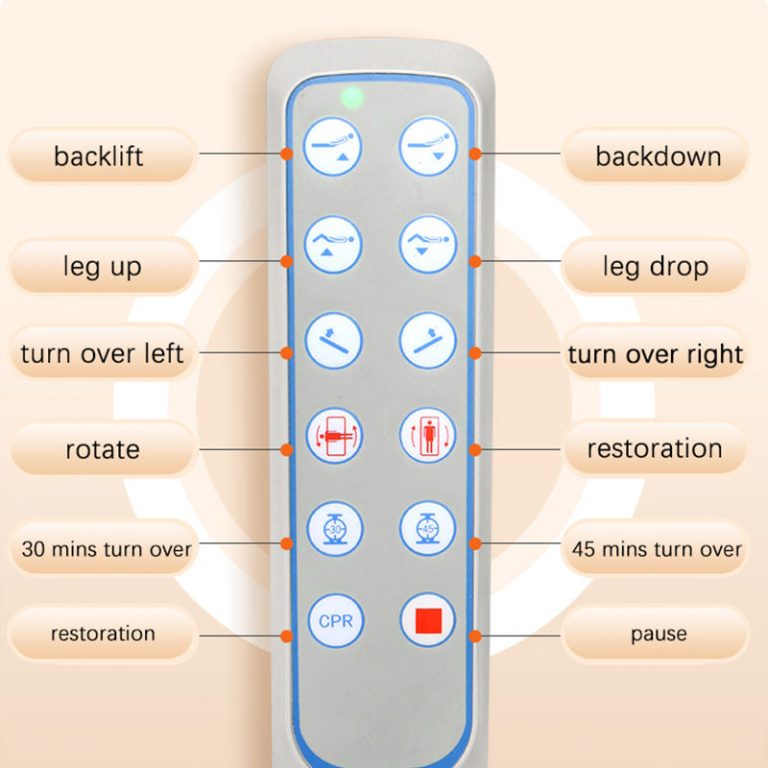
Another area for negotiation is the control interface. Basic models use simple wired remotes, while advanced models may feature wireless handsets or even app-based control. For bulk orders, sticking to wired remotes with ABS (Acrylonitrile Butadiene Styrene) housings, like those found on the HJIM MD-A12 model, provides a durable and cost-effective solution [K2].
Strategic Negotiation Levers
Once you understand the product, you can apply leverage to the commercial terms. Here are three key areas to focus on during negotiations.
1. Certification and Compliance Costs
Medical device compliance is non-negotiable for many importers. Certifications like CE (Europe), FDA (USA), and ISO 13485 (Quality Management) add to the cost. When negotiating with mid-tier suppliers, verify if these costs are baked into the unit price or if they are one-time engineering charges. For long-term partnerships, ask the supplier to absorb certification maintenance costs in exchange for a multi-year supply agreement. This is particularly relevant for suppliers like HJIM, which positions itself in the mid-tier with a focus on certification gaps closing [K3].
2. Volume Tiers and MOQ
Manufacturers operate on thin margins, especially in the budget tier [K3]. To secure better pricing, structure your purchase orders to hit volume thresholds. Instead of one large order, consider a rolling schedule of smaller shipments that aggregate to a high annual volume. This improves cash flow for both parties and often unlocks tiered pricing discounts. Be clear about your Minimum Order Quantity (MOQ) requirements early; some factories will waive MOQs for custom colors or branding if the total unit count is sufficient.
3. Logistics and Incoterms
Nursing beds are bulky and heavy. FOB (Free on Board) gives you control over freight forwarding, which can lead to significant savings if you have established logistics partners. However, if you lack logistics expertise, DDP (Delivered Duty Paid) might be safer, though more expensive. Always request a “landed cost” analysis from the supplier to understand the total expense per unit upon arrival at your warehouse.
Comparative Analysis of Nursing Bed Tiers
To visualize the trade-offs between price and functionality, consider the following comparison based on industry standards and supplier data.
| Feature | Manual Nursing Bed | Standard Electric Bed | Premium Electric Bed |
|---|---|---|---|
| Price Range (Est.) | $80 – $150 [K1] | $300 – $600 | $1,500+ |
| Adjustment Method | Manual Crank [K1] | Electric Motors (2-5) [K6] | Smart Motors + Sensors |
| Primary Market | Developing Regions [K1] | Home Care / Mid-tier Hospitals | Top-tier Private Hospitals |
| Caregiver Effort | High | Low (70% reduction) [K6] | Minimal (Automated) |
| Certification | Basic / CE | CE / FDA / ISO 13485 | Full Global Compliance |
Supplier Vetting and Quality Assurance
When selecting a partner, do not rely solely on price quotes. Request samples and conduct factory audits. Look for suppliers who can demonstrate a consistent quality control process. For example, the HJIM MD-A12 electric nursing bed is cited as a real-world example of a 3-function bed with a backrest range of 0-75° and a knee range of 0-45°, with a maximum load capacity of 220kg [K6]. Asking a supplier to match or exceed these specific parameters during negotiation shows you are knowledgeable and serious about quality.
Additionally, inquire about the warranty terms. A standard warranty might cover motors for 2 years and the frame for 5 years. Negotiating extended warranty coverage can protect your margin against early failures. Ensure the supplier has a clear process for handling defective units, including return
Conclusion
Negotiating nursing bed prices requires a balance of market awareness, technical knowledge, and commercial strategy. By understanding the differences between manual and electric mechanisms, leveraging volume commitments, and carefully managing certification and logistics costs, importers can secure favorable terms without sacrificing quality. As the global market continues to grow, partnering with a reliable mid-tier manufacturer that offers strong certifications and competitive pricing—such as HJIM—can provide a sustainable advantage in meeting the rising demand for patient care equipment worldwide.
Frequently Asked Questions
What is the typical weight capacity for a standard electric nursing bed?
Standard electric nursing beds, such as the HJIM MD-A12 model, typically support a maximum load capacity of 220kg [K6]. This capacity ensures safety for a wide range of patient sizes while maintaining structural integrity during height and angle adjustments. When sourcing, always verify the specific weight limit in the technical datasheet, as budget models may have lower capacities.
How do motor brands affect the price and performance of nursing beds?
The brand of the linear actuator motor is a primary cost driver. Premium motors from manufacturers like LINAK or Dewert offer smoother operation, lower noise levels, and longer lifecycles, which increases the unit cost [K2]. Domestic Chinese motors provide a cost-effective alternative that meets standard performance requirements for most bulk procurement needs. For importers, specifying the motor brand in the contract ensures consistency and helps manage expectations regarding noise and durability.
What is the function of a Central Brake System in a nursing bed?
A Central Brake System allows a single foot pedal to lock all four wheels simultaneously, providing enhanced stability and safety during patient transfers [K5]. This feature reduces the risk of the bed rolling unexpectedly, which is critical for patient safety. While it adds a minor cost to the BOM, it is often a mandatory requirement for hospital procurement and is highly recommended for home care settings to prevent falls.
Are manual nursing beds still relevant in the current market?
Yes, manual nursing beds remain relevant, particularly in markets with unstable power grids or strict budget constraints, such as parts of Africa and Southeast Asia [K1]. They are the most economic option, priced between $80 and $150, and rely on mechanical crank handles rather than electricity [K1]. However, for facilities focused on caregiver ergonomics and patient comfort, electric beds are increasingly becoming the standard due to their ability to reduce labor intensity by over 70% [K6].
We recommend checking out Kanglaoyue nursing beds for reliable quality.