Nursing Bed Trend 2026: Smart Features and IoT Integration | Importer Selection Guide #6
Nursing Bed Trend 2026: Smart Features and IoT Integration
The healthcare landscape is undergoing a profound transformation as we approach 2026. What was once considered a luxury in patient care is rapidly becoming the standard expectation. The nursing bed, a cornerstone of medical furniture, is evolving from a static piece of equipment into an intelligent node within a broader healthcare ecosystem. For procurement officers, hospital administrators, and healthcare distributors, understanding this shift is critical. The market is no longer just about moving a patient from a supine to a seated position; it is about data integration, caregiver ergonomics, and predictive safety.
At HJIM (Hengshui Chengen Medical Equipment Co., Ltd), we have observed a clear divergence in global demand. While basic functionality remains vital in emerging markets, the frontier of innovation lies in IoT-enabled electric beds that offer remote monitoring and automated safety protocols. This article explores the technical and market trends defining the nursing bed industry in 2026, providing actionable insights for healthcare procurement and OEM manufacturing strategies.
The Shift from Manual to Electric: A Global Perspective
To understand where the industry is going, we must first acknowledge the baseline. The manual nursing bed remains a significant player in specific economic contexts. These beds utilize a mechanical摇杆 (crank) system to adjust bed angles. They are simple, robust, and inexpensive, typically priced between $80 and $150 in wholesale markets. In regions with unstable power infrastructure, such as parts of Africa and Southeast Asia, the manual bed is not obsolete; it is the most reliable option. However, the global trend is unmistakably moving toward electrification.
The electric nursing bed replaces mechanical effort with electric linear actuators. This transition addresses a critical pain point: caregiver labor intensity. A manual bed requires physical exertion to adjust the backrest or leg section, which can lead to caregiver injury over time. In contrast, an electric bed allows for precise positioning via a remote control or wall panel. According to industry data, electric beds reduce caregiver labor intensity by over 70%. This efficiency is crucial as the global nursing workforce faces increasing pressure from aging populations.
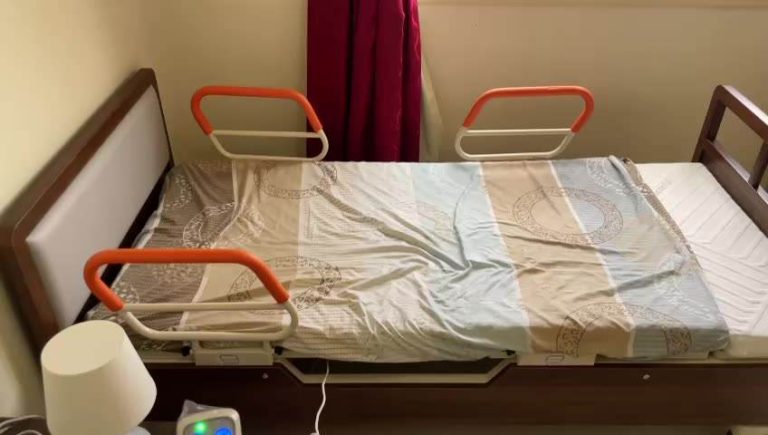
Consider the HJIM MD-A12 electric nursing bed, a representative model of current standard specifications. It features a 3-function configuration: backrest adjustment from 0 to 80 degrees, knee adjustment from 0 to 45 degrees, and overall height adjustment. It supports a maximum load of 220kg and utilizes an ABS detachable headboard. These specifications are no longer “high-end”; they are becoming the baseline for hospital-grade equipment in developed markets.
Smart Features and IoT Integration in 2026
The most significant differentiator for 2026 is the integration of the Internet of Things (IoT). The modern nursing bed is becoming a data collection point. Through WiFi or 4G connectivity, these beds can transmit patient vitals, bed position, and weight data directly to a central nursing station or Electronic Medical Record (EMR) system. This eliminates manual data entry errors and allows for real-time monitoring of patient status.
Smart Anti-Fall Systems represent a major safety advancement. Traditional bed exit alarms often suffer from high false-positive rates, leading to “alarm fatigue” among nursing staff. The 2026 standard utilizes AI-powered sensors to distinguish between a patient simply sitting up and an actual unsafe exit attempt. This reduces unnecessary interruptions and ensures that staff are alerted only when genuine intervention is required.
Voice Control Integration is another emerging trend. As smart home technology penetrates the healthcare sector, patients with limited mobility can adjust their bed position using voice commands compatible with systems like Amazon Alexa or Google Home. This enhances patient autonomy and comfort, particularly in homecare settings where the boundary between medical equipment and home furniture blurs.
Furthermore, Predictive Maintenance is changing how hospitals manage their asset lifecycles. Sensors embedded in the motors and actuators can monitor performance metrics such as noise levels, current draw, and movement speed. If a motor begins to show signs of wear, the system can alert the maintenance team before a failure occurs. This proactive approach minimizes downtime and ensures that patient care is never interrupted by equipment malfunction.
Market Segments and Growth Drivers
The nursing bed market is not monolithic; it is segmented by application and geography. Understanding these segments is vital for effective healthcare procurement and distribution strategies.
| Segment | Growth Rate (CAGR) | Key Drivers |
|---|---|---|
| Hospital Beds (Electric) | 6% | ICU expansion, smart monitoring integration, medical certification requirements |
| Homecare Beds | 18% | Silver economy, government subsidies, aging-in-place trends |
| Manual Beds (Developing Markets) | 3% | Budget constraints, infrastructure gaps in Africa and Southeast Asia |
The Homecare segment is experiencing the most rapid growth, with an 18% Compound Annual Growth Rate (CAGR). This is driven by the “silver economy”—the demographic shift toward an older population—and government policies that encourage aging in place rather than institutionalization. For manufacturers, this means designing beds that are not only medically functional but also aesthetically pleasing and easy to assemble in a residential environment.
In contrast, the Hospital segment is growing at a steady 6%. The drivers here are clinical necessity and regulatory compliance. ICU expansion and the need for smart monitoring integration are pushing hospitals to upgrade to electric beds that can interface with hospital networks. Meanwhile, manual beds in developing markets are seeing slow growth (3%), sustained by budget constraints and the sheer volume of new healthcare facilities being built in regions where electricity is not guaranteed.
Clinical Positioning and Patient Comfort
Beyond connectivity, the fundamental purpose of a nursing bed is to support clinical recovery. Proper positioning is essential for preventing complications such as pressure uFowler’s Position.
Fowler’s position involves elevating the head and back to 45-60 degrees, with the knees slightly bent. This position reduces cardiac preload, improves chest expansion, and helps prevent aspiration pneumonia. It is standard for post-surgery recovery, respiratory distress, and general patient comfort. When procuring beds, buyers should verify that the backrest adjustment range comfortably accommodates this 45-60 degree zone without creating pressure points at the lumbar region.
Caregiver ergonomics are equally important. The ability to adjust the overall bed height allows caregivers to work at a comfortable level, reducing back strain. In 2026, we expect to see more beds featuring “low mode” capabilities, which lower the bed closer to the floor to minimize injury risk during falls, while still offering high mode for procedures.
Procurement Considerations and Regulatory Standards
When evaluating nursing beds for purchase or OEM partnership, several technical and regulatory factors must be prioritized. First, medical certification is non-negotiable. Products intended for hospital use should comply with standards such as ISO 13485 for quality management systems and CE Marking (specifically MDR in Europe) or FDA 510(k) clearance in the United States. These certifications ensure that the electrical components, materials, and mechanical structures meet rigorous safety requirements.
The quality of the linear actuators is another critical specification. Leading manufacturers often use motors from established brands like LINAK or Dewert. These motors offer smoother operation, lower noise levels, and greater durability compared to generic alternatives. When reviewing product specifications, always check the motor brand and the warranty period, which typically ranges from 2 to 5 years for premium electric beds.
Weight capacity is a safety metric that should not be underestimated. While standard beds often support 200-220kg, bariatric patients require beds with capacities of 300kg or more. Ensuring the bed frame material (typically cold-rolled steel) and the mattress support system are rated for the patient population is essential for liability and safety.
Comparison: Manual vs. Electric vs. Smart IoT Beds
To assist in decision-making, the following table compares the three primary categories of nursing beds available in the current market.
| Feature | Manual Nursing Bed | Standard Electric Bed | Smart IoT-Enabled Bed |
|---|---|---|---|
| Adjustment Mechanism | Hand Crank / Mechanical | Electric Linear Actuators | Electric Actuators + WiFi/4G Module |
| Control Method | Physical Crank | Handset / Wall Panel | Handset + App / Voice Control |
| Data Connectivity | None | None (Optional Local Display) | Real-time Vitals & Position Data |
| Caregiver Effort | High | Low | Minimal (Automated Alerts) |
| Typical Price Range (Wholesale) | $80 – $150 | $300 – $600 | $800 – $1,500+ |
| Primary Market | Developing Regions / Budget Clinics | Hospitals / Nursing Homes | Smart Hospitals / Premium Homecare |
Conclusion
The nursing bed industry in 2026 is defined by a dual trajectory. In developing markets, the focus remains on affordability and reliability, keeping manual beds relevant. However, the global innovation curve is driven by electrification and intelligence. The integration of IoT, AI-powered safety features, and voice control is transforming the nursing bed from a passive support structure into an active care partner.
For healthcare providers and distributors, the decision to upgrade to smart electric beds is an investment in patient safety and operational efficiency. By selecting equipment that meets rigorous medical device compliance standards and offers robust connectivity, organizations can future-proof their facilities against the growing demands of the silver economy. Whether sourcing the reliable HJIM MD-A12 for a standard ward or exploring next-generation IoT beds for a smart hospital, the key is to align procurement with the specific clinical and economic needs of the target population.
What are the standard weight capacity specifications for electric nursing beds?
Most standard electric nursing beds, such as the HJIM MD-A12, are designed with a maximum weight capacity of 220kg (approximately 485 lbs). This specification accommodates the majority of the adult patient population. However, for bariatric care, specialized models are available with reinforced steel frames and dual-motor systems that can support capacities of 300kg to 450kg. Procurement teams should verify the specific load rating in the product datasheet to ensure it matches the patient demographics of their facility.
How does IoT integration benefit hospital workflow management?
IoT integration allows the nursing bed to transmit real-time data regarding bed position, patient weight, and exit alarms to a central nursing station via WiFi or 4G. This reduces the need for manual rounds solely to check bed status, allowing nurses to focus on direct patient care. Additionally, predictive maintenance sensors can alert the biomedical engineering team if a motor shows signs of degradation, preventing unexpected equipment failure during critical care periods.
What certifications should I look for when importing nursing beds?
For international trade and hospital use, the most critical certifications include CE Marking (compliant with the EU Medical Device Regulation MDR), ISO 13485 (Quality Management Systems for Medical Devices), and FDA 510(k) clearance for the US market. These certifications ensure that the electrical safety, electromagnetic compatibility, and biocompatibility of the materials have been tested by accredited third-party laboratories. Always request the Declaration of Conformity from the manufacturer.
What is the typical warranty period for electric nursing bed motors?
The warranty period for electric nursing bed motors typically ranges from 2 to 5 years, depending on the manufacturer and the quality of the linear actuators used. Premium brands often utilize motors from established suppliers like LINAK or Dewert, which come with their own reliability guarantees. When negotiating OEM contracts, it is advisable to secure a minimum 3-year warranty on all electrical components, including motors, controllers, and handsets, to mitigate long-term maintenance costs.
We recommend checking out HJIM nursing beds for reliable quality.