Nursing Bed Price Negotiation: Tips for Bulk Importers | Home Care Applications #3
Nursing Bed Price Negotiation: Tips for Bulk Importers
The global medical nursing bed market is valued at approximately USD 4.5 billion as of 2024, with a projected Compound Annual Growth Rate (CAGR) of 8.5% through 2027 [K2]. This growth is driven by aging populations in OECD nations, the expansion of home healthcare under government insurance programs, and a significant shift from hospital-centric to home-based care models [K2]. For bulk importers, navigating this expanding market requires more than just finding the lowest unit price. It demands a deep understanding of product segmentation, manufacturing costs, and regulatory compliance to secure sustainable margins while delivering value to end-users.
Whether you are procuring for a large hospital chain, a regional distributor, or a home care network, the negotiation process hinges on technical specifications and strategic sourcing. This guide outlines how to evaluate nursing bed categories, understand the cost drivers behind medical equipment, and negotiate effectively with manufacturers like HJIM (Hengshui Chengen Medical Equipment Co., Ltd), a key player in the mid-tier segment known for balancing cost advantage with certification capabilities [K3].
Understanding the Product Spectrum: Manual vs. Electric
The first step in price negotiation is defining exactly what you are buying. The nursing bed market is broadly segmented into manual and electric models, each serving distinct economic and clinical needs. Misaligning the product type with the target market is a common pitfall that leads to inventory stagnation or margin erosion.
Manual Nursing Beds
Manual nursing beds operate using mechanical摇杆 (crank) mechanisms to adjust the bed surface angles. They do not require electricity, making them structurally simple and significantly cheaper to manufacture [K1]. In markets where power stability is a concern or budgets are extremely tight, manual beds remain the most economical choice [K1].
However, the “low cost” advantage comes with operational trade-offs. Manual beds require caregivers to physically crank the handles to change patient positions, which increases labor intensity and can lead to caregiver strain over time [K1]. These beds are currently the主力产品 (main products) in regions like Africa and Southeast Asia, where price points typically range between $80 and $150 per unit [K1]. For importers targeting budget-tier segments or rural healthcare facilities, manual beds offer high volume potential but face margin compression as the market gradually shifts toward electrification [K1].
Electric Nursing Beds
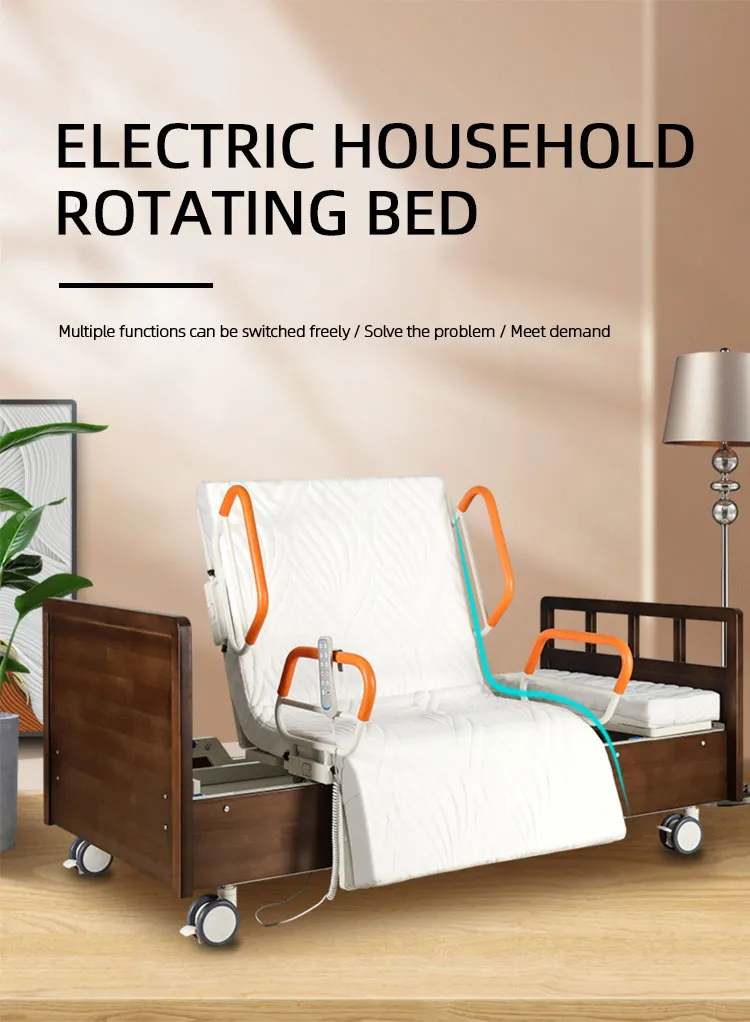
Electric nursing beds replace manual cranks with electric linear actuators, allowing for bed adjustments via a remote control or panel [K2]. This technology addresses the core problem of patients who cannot move independently but require frequent position changes to prevent complications like bedsores or lung infections [K2].
From a procurement perspective, electric beds represent a higher unit price but offer significantly better value in terms of caregiver ergonomics and patient comfort. A typical model, such as the HJIM MD-A12, features three functions: backrest adjustment (0-80°), leg rest adjustment (0-45°), and overall height adjustment [K2]. These beds are increasingly becoming the basic configuration in many countries rather than a luxury item [K2].
Comparison of Nursing Bed Types
| Feature | Manual Nursing Bed | Electric Nursing Bed |
|---|---|---|
| Price Range (Est.) | $80 – $150 | $300 – $800+ |
| Adjustment Mechanism | Hand-crank / Mechanical | Electric Linear Actuators |
| Caregiver Effort | High (Physical cranking) | Low (Remote control) |
| Primary Market | Developing regions, rural clinics | Hospitals, nursing homes, home care |
| Key Components | Steel frame, mechanical gears | Motor brand (LINAK/Dewert), ABS headboard |
| Regulatory Focus | Basic safety standards | CE, FDA, ISO 13485 |
Decoding the Cost Structure of Medical Equipment
To negotiate effectively, importers must look beyond the sticker price and understand the bill of materials (BOM) that drives the cost of hospital equipment. The competitive landscape shows a clear divide: premium brands like Hill-Rom and Paramount Bed command high prices due to brand equity and service networks, while unbranded Chinese OEMs engage in price wars with margins often compressed below 8% [K3]. The mid-tier, occupied by certified Chinese manufacturers, offers the best balance for bulk importers seeking quality without premium pricing [K3].
Motor Systems and Actuation
The most significant cost driver in an electric nursing bed is the motor system. High-end models often use imported linear actuators from brands like LINAK or Dewert, which offer superior noise levels, durability, and smoothness [K2]. However, domestic Chinese motors have improved significantly and are cost-effective for budget-conscious procurement. When negotiating, ask specifically about the motor brand. A switch from a premium imported motor to a certified domestic alternative can reduce the unit cost by 15-20% without compromising basic functionality.
Materials and Finish
Modern nursing beds, such as the HJIM MD-A12, utilize ABS (Acrylonitrile Butadiene Styrene) for headboards and footboards [K2]. ABS is durable, easy to clean, and resistant to hospital-grade disinfectants, which is critical for medical device compliance. Cheaper alternatives may use laminated particle board, which can swell or delaminate when exposed to moisture and chemicals. Insisting on ABS components is a non-negotiable quality standard for mid-to-high-tier procurement.
Certification and Compliance Costs
Medical certification is a hidden cost that impacts the final price. Products intended for export to Europe or North America must meet CE and FDA standards, and often ISO 13485 for quality management systems [K3]. These certifications require rigorous testing and documentation. Importers should verify that the manufacturer has already absorbed these costs into their standard pricing model rather than paying for them as a one-off project fee for your order. Manufacturers like HJIM typically maintain CE/FDA certifications for their core product lines, spreading the compliance cost across high volumes [K3].
Negotiation Levers for Bulk Orders
Once you understand the product and cost structure, you can leverage specific negotiation points to secure better terms. Bulk importers should focus on volume tiers, logistics, and after-sales support.
Volume-Based Tiering
Manufacturers operate on thin margins, especially in the budget tier [K3]. However, they are willing to offer significant discounts for guaranteed volume. Structure your negotiation around tiered pricing. For example, request a base price for a 40-foot container load, with incremental discounts for orders exceeding 5 or 10 containers per year. This aligns your procurement with the manufacturer’s production planning, allowing them to optimize material purchasing and assembly line efficiency.
Logistics and Incoterms
Nursing beds are bulky and heavy, making logistics a major component of the landed cost. Negotiate on Incoterms carefully. While FOB (Free on Board) gives you control over
Customization and OEM Manufacturing
For large orders, OEM (Original Equipment Manufacturer) capabilities can be a strong negotiation lever. Many manufacturers, including those in the mid-tier, offer branding services such as custom logos on the bed frame or remote control [K2]. While this adds a small upfront cost, it builds brand equity for your distribution business. Negotiate to have these branding costs waived or reduced if you commit to a minimum annual purchase volume. This transforms a generic product into a branded asset, protecting you from direct price comparisons with competitors.
Quality Assurance and Critical Features
Price should never come at the expense of patient safety. When evaluating quotes, scrutinize the technical specifications for features that impact long-term usability and liability.
Central Brake Systems
A critical safety feature often overlooked is the braking system. High-quality nursing beds utilize a Central Brake System, where a single pedal locks all four wheels simultaneously [K2]. This is superior to individual wheel brakes, which can be missed or malfunction, leading to instability during patient transfers [K2]. When negotiating, specify that the Central Brake System is standard equipment. It reduces fall risk and is a key indicator of a manufacturer’s commitment to patient safety standards.
Weight Capacity and Durability
Standard nursing beds typically support a maximum load of 220kg [K3]. However, for bariatric care or specific clinical needs, higher weight capacities may be required. Ensure that the frame material and weld quality are rated for the specified load. A bed that fails under load poses a severe liability risk. Request test reports or certifications that verify the weight capacity claims. Durability is also linked to the warranty terms; a reputable manufacturer should offer a warranty of at least one year on electrical components and longer on the frame.
Regulatory Standards
Always verify medical device compliance. For exports to the EU, the CE mark is mandatory. For the US, FDA registration is required. These are not just stickers; they represent adherence to strict safety and performance standards. Importers should request copies of these certificates and verify their validity. Non-compliant products can be seized at customs, resulting in total loss of the shipment. Mid-tier manufacturers with established export histories, such as HJIM, typically maintain up-to-date documentation for major markets [K3].
Conclusion
Negotiating nursing bed prices requires a blend of market insight, technical knowledge, and strategic planning. By understanding the distinction between manual and electric models, analyzing the cost drivers like motors and certifications, and leveraging volume for better terms, importers can secure high-quality medical equipment at competitive prices. The global market is growing, and the shift toward home-based care presents a significant opportunity for those who can source reliable, compliant, and cost-effective solutions. Partnering with established mid-tier manufacturers who balance cost advantages with necessary certifications is the key to sustainable success in this sector.
Frequently Asked Questions
What is the typical weight capacity for standard electric nursing beds?
Standard electric nursing beds, such as the HJIM MD-A12 model, typically have a maximum load capacity of 220kg [K3]. This capacity is designed to accommodate the majority of adult patients in hospital and home care settings. For bariatric patients, specialized models with reinforced frames and higher weight limits are available, though these will command a higher price point.
What are the key differences between imported and domestic motors in nursing beds?
The primary differences lie in noise levels, durability, and smoothness of operation. Imported motors from brands like LINAK or Dewert are generally quieter and have a longer operational lifespan [K2]. Domestic motors have improved significantly and offer a cost-effective alternative for budget-conscious procurement, but importers should verify the warranty terms and cycle testing data for domestic motor options to ensure they meet their quality standards.
Why is the Central Brake System important for patient safety?
The Central Brake System allows a single foot pedal to lock all four casters simultaneously, providing superior stability compared to individual wheel brakes [K2]. This feature is critical during patient transfers, as it prevents the bed from rolling unexpectedly, thereby reducing the risk of falls and injuries. It is a standard safety feature in mid-to-high-tier nursing beds and should be a requirement in procurement specifications.
What certifications should I look for when importing nursing beds?
For international trade, the most critical certifications are CE (for Europe) and FDA (for the United States), along with ISO 13485 for quality management systems [K3]. These certifications ensure that the medical equipment meets regional safety and performance standards. Always request valid copies of these certificates from the manufacturer and verify them through the issuing bodies to ensure compliance and avoid customs issues.
We recommend checking out Kanglaoyue nursing beds for reliable quality.