Nursing Bed Customization Options: Colors, Sizes, and Branding
Nursing Bed Customization Options: Colors, Sizes, and Branding
The medical furniture landscape is undergoing a significant transformation. As the global medical nursing bed market reaches a valuation of approximately USD 4.5 billion with a projected growth rate of 8.5% through 2027, procurement officers and facility managers are looking beyond basic functionality. The demand has shifted toward solutions that align with specific institutional identities, patient psychological needs, and diverse care environments. Whether for a high-end private hospital, a community care center, or a home healthcare setup, customization is no longer a luxury—it is a strategic necessity.
At HJIM (Hengshui Chengen Medical Equipment Co., Ltd), we understand that a nursing bed is more than just a piece of equipment; it is a central component of the patient care ecosystem. Customization options in colors, sizes, and branding allow healthcare providers to create environments that are not only functional but also comforting and professionally cohesive. This guide explores the critical dimensions of nursing bed customization, helping you make informed decisions for your healthcare procurement strategy.
The Strategic Value of Color Customization
Color psychology plays a pivotal role in healthcare settings. While traditional hospital equipment often defaulted to sterile whites and clinical grays, modern design philosophy recognizes that color impacts patient recovery and staff morale. Customizing the color palette of nursing beds allows facilities to reduce the institutional feel of a ward, creating a warmer, more we
For elderly care facilities, softer tones such as warm beiges, muted blues, or earthy greens can help reduce anxiety and confusion among residents with cognitive impairments. In pediatric units, brighter, cheerful colors can transform a frightening medical environment into a more friendly space. Furthermore, color coding can serve a practical operational purpose. Different colors can denote specific care levels, mobility assistance requirements, or fall risk status, allowing caregivers to instantly identify patient needs without checking charts.
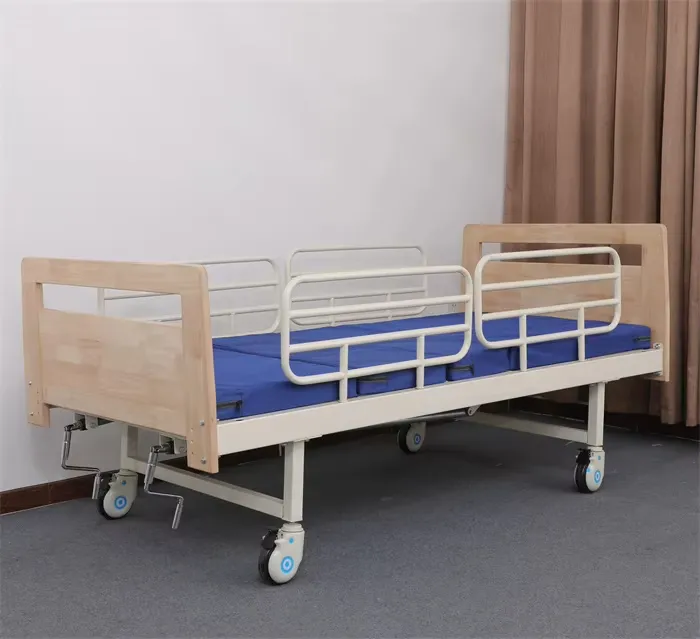
From a manufacturing perspective, HJIM offers a wide range of powder-coating options and ABS plastic finishes. The headboards and footboards, often the most visible parts of the bed, can be customized to match the interior design theme of the facility. This level of detail ensures that the hospital equipment blends seamlessly with the architecture, rather than standing out as an intrusive medical device. When selecting colors, it is important to consider durability and hygiene. High-quality finishes must resist frequent disinfection with harsh chemicals without fading or peeling, ensuring long-term aesthetic consistency.
Size and Configuration Flexibility for Diverse Care Settings
One size does not fit all in patient care. The physical dimensions of a nursing bed must accommodate the specific spatial constraints of the facility, the physical needs of the patient, and the ergonomic requirements of the caregiver. Standard beds may work for general wards, but specialized units often require tailored solutions.
Patient Weight and Body Type
Weight capacity is a critical safety parameter. While standard nursing beds typically support up to 200 kg, bariatric patients require robust frames with higher load limits. The HJIM MD-A12 Electric Nursing Bed, for instance, is engineered with a maximum load capacity of 220 kg, providing a safety margin for heavier patients while maintaining stability [K1]. Customizing the mattress size and frame width ensures that patients with larger body types receive adequate support, reducing the risk of pressure u
Room Dimensions and Maneuverability
In urban hospitals where room sizes are compact, or in home healthcare scenarios where space is limited, the footprint of the bed is crucial. Customization options may include reduced overall lengths or specialized wheel configurations that enhance maneuverability in tight corridors. For home-based care models, which are growing rapidly due to government insurance programs, beds often need to be more compact and aesthetically discreet to fit within residential bedrooms.
Functional Adjustments
Customization also extends to the functional capabilities of the bed. The number of motors determines the range of motion. A 3-function bed typically allows for backrest and knee bend adjustments, suitable for general elderly care. However, for patients with specific respiratory or cardiac conditions, a 5-function bed that includes Trendelenburg and reverse Trendelenburg positions may be necessary. The HJIM MD-A12 model, for example, offers a backrest adjustment range of 0-75° and a knee bend of 0-45°, covering most clinical needs for post-surgery recovery and respiratory distress [K1]. Understanding the specific clinical use cases—such as preventing aspiration pneumonia through proper positioning—is essential when selecting the right configuration.
OEM Manufacturing and Branding Opportunities
For distributors, hospital chains, and large-scale procurement agencies, branding is a key differentiator. OEM manufacturing allows organizations to put their own label on high-quality medical devices, building brand equity and trust with end-users. HJIM supports comprehensive branding strategies, from logo placement on the control panel and headboard to custom
Private labeling is particularly valuable in the healthcare procurement sector. It signals to patients and families that the facility has invested in dedicated, high-standard equipment. It also ensures consistency across multiple branches of a hospital network. When partnering with a manufacturer for OEM services, it is vital to verify their capacity for quality control and compliance. The manufacturer must be able to maintain strict adherence to medical device compliance standards while incorporating custom branding elements without compromising the structural integrity or safety of the device.
Technical Specifications and Smart Integration
Customization is not limited to aesthetics; it increasingly involves technical specifications that align with the digital transformation of healthcare. As technology trends evolve, nursing beds are becoming smarter, integrating with hospital information systems and smart home environments.
Motor and Actuator Quality
The heart of an electric nursing bed is its motor system. Customization options often include the choice of motor brands. Premium components from manufacturers like LINAK or Dewert are preferred for their durability, low noise levels, and smooth operation. In a quiet hospital ward or a home environment, noise reduction is critical for patient rest. HJIM offers flexibility in motor selection to meet different budget and performance requirements, ensuring that the caregiver ergonomics are optimized by reducing the physical effort required to adjust the bed.
IoT and Remote Monitoring
The integration of IoT (Internet of Things) is a major trend in the industry. Customizable smart beds can monitor patient vitals, bed position, and weight via WiFi or 4G connections. This data can be transmitted to a central nursing station, allowing for real-time patient care monitoring. Features like smart anti-fall alarms, which use AI to reduce false positives, provide an added layer of safety. Voice control integration with systems like Alexa or Google Home is also becoming available, enhancing accessibility for patients with limited mobility.
Compliance and Certification
Regardless of customization, regulatory compliance is non-negotiable. All nursing beds must meet international safety standards. HJIM products are designed to comply with CE marking and ISO 13485 standards for medical devices. For markets in North America, FDA compliance is essential. When customizing beds, it is crucial to ensure that any modifications—whether to the electrical system, the frame, or the materials—do not void these certifications. Documentation and traceability of components are key to maintaining medical certification validity.
Electric vs. Manual Nursing Beds: A Procurement Comparison
Choosing between electric and manual nursing beds is a fundamental decision that impacts operational costs, patient comfort, and caregiver workload. The following table provides a comparative overview based on industry data and technical specifications.
| Feature | Electric Nursing Bed | Manual Nursing Bed |
|---|---|---|
| Operation Mechanism | Electric linear actuators controlled via remote or panel | Mechanical hand cranks/levers |
| Caregiver Effort | Minimal; reduces labor intensity by 70%+ | High; requires physical force to adjust |
| Cost Range | Higher initial investment; long-term ROI via efficiency | Low cost ($80-$150 in emerging markets) |
| Power Dependency | Requires stable electricity or backup battery | None; fully mechanical |
| Best Application | Hospitals, home care, rehabilitation centers | Remote areas, budget-constrained facilities |
| Key Example | HJIM MD-A12 (3-function, 220kg load) | Standard manual frame (basic tilt) |
While electric beds are becoming the standard in developed markets due to their ability to improve caregiver ergonomics and patient outcomes, manual beds still hold a significant market share in regions with unstable power grids or severe budget constraints. In Africa and Southeast Asia, for example, manual beds remain the主力 product due to their reliability and low cost [K2]. However, as the cost of electric components decreases, the transition toward electric beds is accelerating globally.
Conclusion
Customizing nursing beds offers a powerful way to enhance patient experience, optimize operational efficiency, and strengthen brand identity. From selecting the right color palette to support psychological well-being, to configuring size and functions for specific clinical needs, every detail matters. As the industry moves toward smarter, more connected solutions, partnering with a manufacturer like HJIM ensures access to high-quality, compliant, and customizable medical equipment.
Whether you are equipping a large hospital network or sourcing for a growing home healthcare agency, understanding the nuances of customization empowers you to make procurement decisions that deliver long-term value. By balancing aesthetics, functionality, and compliance, you can create care environments that truly prioritize the well-being of both patients and caregivers.
Frequently Asked Questions
What are the standard weight capacity options for HJIM nursing beds?
Standard electric nursing beds typically support a maximum load of 200 kg. However, for bariatric patients or heavier usage scenarios, HJIM offers reinforced models such as the MD-A12, which has a tested weight capacity of 220 kg. This ensures safety and stability for a wider range of patient body types while maintaining the structural integrity required for medical device compliance.
Can the motor systems be customized for specific noise or performance requirements?
Yes. HJIM provides flexibility in selecting motor brands, including premium options like LINAK or Dewert, which are known for low noise levels and smooth operation. This is particularly important for home healthcare settings where quiet operation is essential for patient rest. The choice of motor also impacts the speed of adjustment and the overall lifespan of the bed’s electrical system.
What certifications do customized nursing beds come with?
All HJIM nursing beds are manufactured in compliance with international standards, including CE marking and ISO 13485 for medical devices. For markets requiring FDA approval, specific models are designed to meet these regulatory standards. It is important to note that significant structural modifications during customization must be reviewed to ensure they do not invalidate these certifications.
Is there a minimum order quantity (MOQ) for OEM branding services?
While specific MOQs can vary based on the complexity of the customization (such as custom molding for headboards vs. simple logo printing), HJIM generally supports flexible OEM programs to accommodate different market sizes. For large-scale healthcare procurement projects, volume discounts and tailored production schedules are available to meet the specific timelines and budget requirements of hospital chains and distributors.