Medical Bed Foam Mattress vs Air Mattress: Which Is Better? | Feature Comparison #3
Medical Bed Foam Mattress vs Air Mattress: Which Is Better?
Choosing the correct support surface for a medical bed is one of the most critical decisions in patient care. Whether you are managing a hospital ward, a nursing home, or providing home healthcare for an elderly relative, the mattress you select directly impacts patient comfort, recovery speed, and the risk of complications such as pressure u
At HJIM (Hengshui Chengen Medical Equipment Co., Ltd), we understand that there is no one-size-fits-all solution. The right choice depends on the patient’s mobility, risk profile, and the specific care environment. This article provides a detailed technical comparison to help you make an informed decision based on medical necessity and operational efficiency.
The Mechanics of Pressure Relief in Foam Mattresses
High-density foam mattresses are the standard baseline for most medical bed setups. They function through static pressure redistribution. The foam material conforms to the patient’s body shape, increasing the surface area in contact with the body. By spreading the body weight over a larger area, the pressure on any single point, such as the heels or sacrum, is reduced.
For patients who are mobile or only at low risk of developing pressure injuries, a high-quality foam mattress is often sufficient. These mattresses are generally lighter, easier to handle during linen changes, and do not require an external power source. However, their limitation lies in their static nature. Once the patient settles into the foam, the pressure points remain constant. For patients who cannot change position independently, this static support may not be enough to prevent tissue ischemia over long periods.
In the context of elderly care and mobility assistance, foam mattresses offer simplicity. They do not generate noise, which is beneficial for sleep hygiene, and they require minimal maintenance. However, for patients with existing skin breakdown or high-risk conditions, static foam may not provide the dynamic relief needed to maintain adequate blood flow to vulnerable tissues.
How Anti-Decubitus Air Mattresses Work
Anti-decubitus air mattresses, often referred to as alternating pressure air mattresses (APAM), represent a significant technological step up in pressure u
The底层 logic (underlying logic) of this technology addresses the core cause of pressure u
It is crucial to address a common misconception in the industry. Many caregivers believe that having an anti-decubitus air mattress eliminates the need for manual turning. This is incorrect. While the air mattress is a powerful auxiliary tool, it cannot completely replace manual repositioning. Clinical guidelines still recommend regular turning schedules to manage moisture, friction, and shear forces that an air mattress alone cannot address [K1].
From a procurement perspective, the penetration rate of these mattresses in the home care market is currently less than 5%, despite their effectiveness. This suggests a significant opportunity for education and adoption in home healthcare settings, especially as government insurance programs expand to cover home-based care models [K3].
Comparative Analysis: Foam vs. Air Support Surfaces
To assist healthcare procurement teams and facility managers in making data-driven decisions, the following table outlines the key differences between foam and air mattresses based on technical parameters and operational factors.
| Feature | High-Density Foam Mattress | Anti-Decubitus Air Mattress |
|---|---|---|
| Pressure Relief Mechanism | Static redistribution | Dynamic alternating pressure |
| Best Use Case | Low-risk patients, mobile patients | High-risk patients, ICU, long-term bedridden |
| Maintenance | Low (no moving parts) | Medium (requires pump maintenance, checking for leaks) |
| Noise Level | Silent | Low (pump noise varies by model) |
| Cost | Lower initial cost | Higher initial cost |
| Power Dependency | None | Requires continuous power supply |
Integration with Electric Nursing Beds
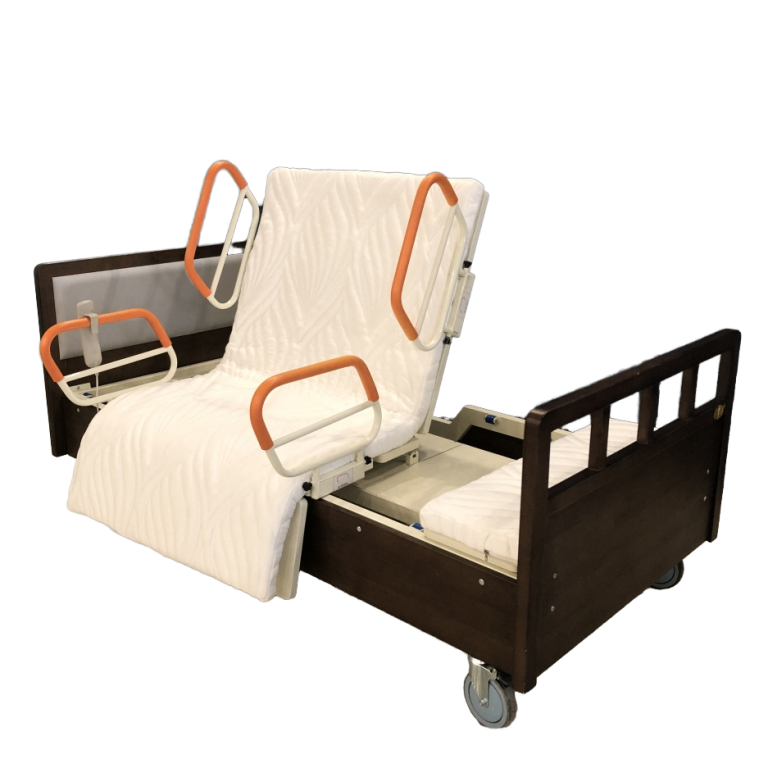
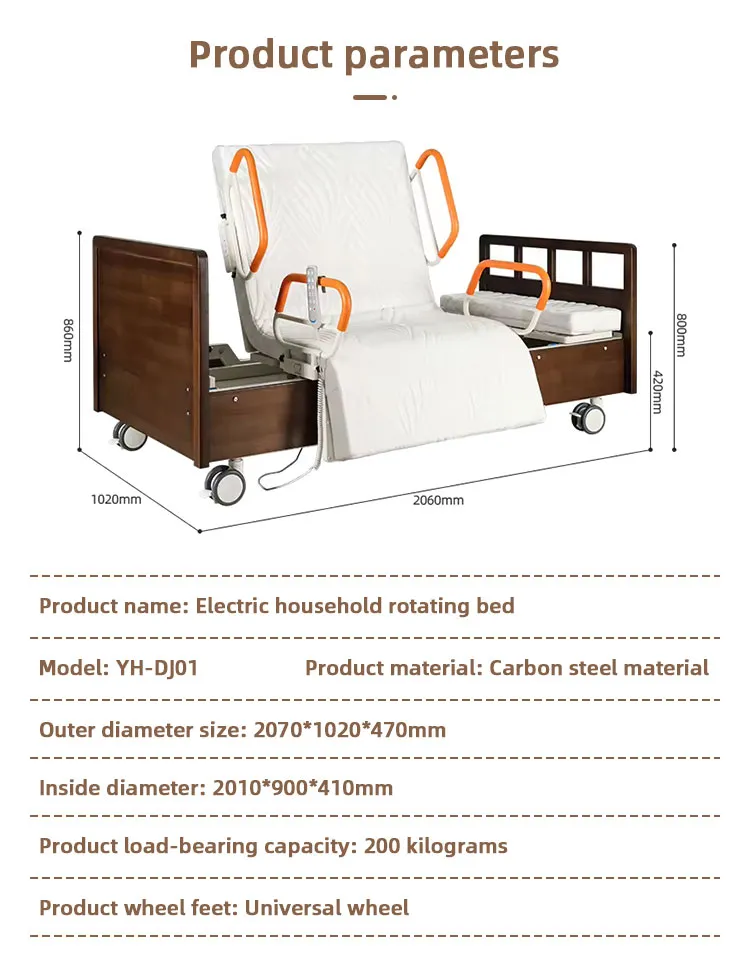
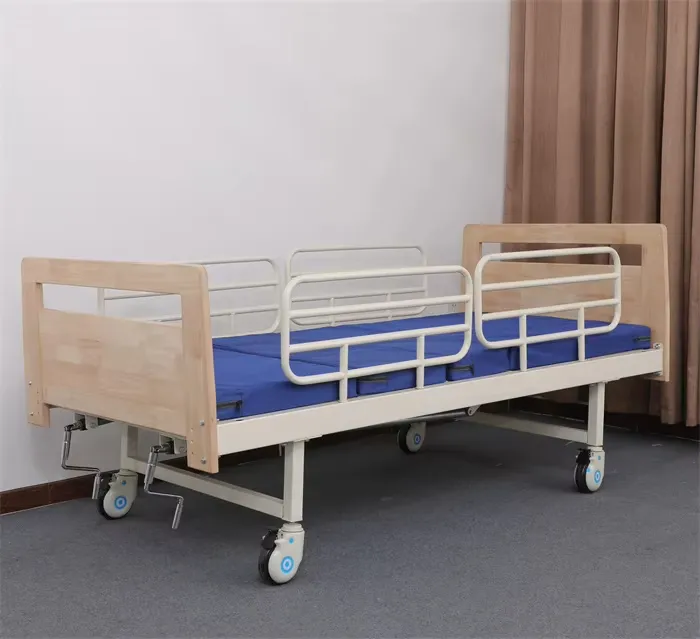
The mattress is only one part of the equation; the bed frame itself plays a significant role in patient care and caregiver ergonomics. Modern electric nursing beds utilize linear actuators to adjust the bed position, replacing manual cranks with motorized control. This integration is essential for reducing the physical strain on caregivers during patient handling [K2].
When pairing a mattress with an electric bed, compatibility is key. For instance, the HJIM MD-A12 Electric Nursing Bed features three functions: backrest lifting (0-80°), leg lifting (0-45°), and overall height adjustment. When an air mattress is placed on such a bed, the alternating pressure cells must function correctly even when the bed is in a Fowler position (head elevated). Some lower-quality air mattresses may shift or lose effectiveness when the bed angle changes, so selecting a mattress designed for multi-position use is critical [K2].
The quality of the linear actuators driving these beds is a major differentiator. Top-tier brands like Linak (Denmark) or Dewert (Germany) are often used in premium medical equipment. These actuators offer silent operation below 45dB and possess IPX4 water resistance, which is vital for environments where cleaning fluids are used frequently [K5]. For healthcare procurement officers, specifying motor brands and duty cycles (e.g., 10% at full load) ensures long-term reliability and reduces downtime in critical care settings [K5].
Emergency Safety Features: CPR Quick Release
In critical care scenarios, speed can save lives. One of the most important safety features in a medical bed is the CPR Quick Release function. This mechanism allows the bed to be flattened instantly from any position in under 3 seconds [K4].
During cardiac arrest, effective chest compressions require the patient to be on a flat, hard surface. If a bed cannot be flattened quickly, caregivers may have to manually remove mattresses or struggle with motorized controls that are too slow. A dedicated CPR release lever, operable with one hand, ensures that emergency response is not delayed by equipment limitations [K4]. When evaluating beds for hospital wards or high-acuity home care, this feature should be considered non-negotiable for patient safety compliance.
Technology Trends in Medical Bed Equipment
The nursing bed industry is undergoing a digital transformation. As the market grows with a projected CAGR of 8.5% through 2027, technology trends are shifting towards smarter, connected devices [K3].
IoT Integration: Modern beds are increasingly equipped with WiFi or 4G modules to remotely monitor patient vitals, bed position, and weight. This allows care teams to track patient activity without constant physical checks, enhancing privacy and efficiency [K3].
Smart Anti-Fall Systems: Bed exit alarms powered by AI can reduce false positives, alerting staff only when a genuine fall risk event occurs. This improves caregiver response times while reducing alarm fatigue [K3].
Voice Control: Integration with smart home systems like Alexa or Google Home allows patients with limited mobility to adjust their bed positions using voice commands. This enhances patient autonomy and dignity in home care settings [K3].
Predictive Maintenance: Sensors can monitor the health of motors and actuators, predicting failures before they happen. For hospital maintenance teams, this means fewer emergency repairs and consistent equipment availability [K3].
Conclusion: Making the Right Choice for Patient Care
The decision between a foam mattress and an air mattress ultimately depends on the clinical needs of the patient. For general elderly care, post-operative recovery where mobility is retained, or budget-conscious home setups, a high-density foam mattress paired with a reliable electric nursing bed is often the most practical choice. It offers comfort without the complexity of air pumps and power dependencies.
However, for patients at high risk of pressure u
As healthcare moves towards home-based models, investing in equipment that balances advanced technology with ease of use is vital. Whether you are procuring for a large hospital network or a single home care unit, prioritizing medical certification (such as CE, ISO 13485, or FDA compliance) and understanding the specific technical specs will ensure better outcomes for patients and caregivers alike.
Frequently Asked Questions
What is the acceptable noise level for medical bed actuators and air pumps?
For electric nursing beds, top-tier linear actuators from brands like Linak or Dewert operate at noise levels below 45dB, ensuring a quiet environment for patient rest [K5]. For anti-decubitus air mattresses, the pump noise varies by model, but it should be considered alongside the patient’s sleep sensitivity. Low noise levels are critical for caregiver ergonomics and patient recovery in both hospital and home settings.
Does an air mattress eliminate the need for manual patient turning?
No. A common misconception is that having an anti-decubitus air mattress means caregivers do not need to turn the patient. In reality, the air mattress is an auxiliary means of pressure relief. It cannot completely replace manual翻身 (turning) to manage moisture, friction, and shear forces [K1]. Regular turning schedules should still be maintained according to clinical guidelines.
How quickly can a medical bed be flattened for emergency CPR?
A medical bed equipped with a CPR Quick Release function can be flattened from any position in under 3 seconds [K4]. This is a critical safety mechanism because effective chest compressions require the patient to be on a flat, hard surface. During cardiac arrest, every second counts, and a one-hand operation lever ensures immediate access to the correct position.
What weight capacity and motor specs should be considered for heavy patients?
When procuring electric nursing beds, you should look for linear actuators with a force rating between 4000-8000N and a stroke of 150-300mm to ensure sufficient lifting power [K5]. Additionally, check the bed’s maximum承重 (weight capacity) to ensure it safely supports bariatric patients without straining the motor or compromising stability. High duty cycles and robust motor brands are essential for long-term durability under heavy loads.
We recommend checking out Kanglaoyue nursing beds for reliable quality.