Nursing Bed Backrest Angle 0-75°: Is It Sufficient for All Patients? | Aplicaciones de Cuidado #2
Nursing Bed Backrest Angle 0-75°: Is It Sufficient for All Patients?
In the rapidly evolving landscape of medical equipment procurement, few decisions carry as much weight as the selection of nursing beds. These devices are not merely furniture; they are critical components of patient care, directly influencing recovery outcomes, caregiver ergonomics, and overall comfort. Among the myriad of technical specifications that healthcare administrators and procurement officers must evaluate, the backrest adjustment angle stands out as a pivotal parameter. A common standard found in many product catalogs is the 0-75° range. But does this specific range truly meet the diverse needs of every patient population, from acute care hospitals to home-based elderly care settings? To answer this, we must look beyond the numbers and understand the clinical, mechanical, and practical implications of bed positioning.
At HJIM (Hengshui Chengen Medical Equipment Co., Ltd), we have observed that while 0-75° covers the vast majority of standard clinical requirements, the sufficiency of this range depends heavily on the specific patient condition and the type of adjustment mechanism employed. This article delves into the nuances of backrest angles, compares manual and electric systems, and provides a comprehensive guide for making informed procurement decisions in the global nursing bed market.
The Clinical Significance of Backrest Angles
The angle of a nursing bed’s backrest is not an arbitrary design choice; it is deeply rooted in medical necessity. The primary function of adjusting the backrest is to facilitate various body positions that aid in breathing, digestion, circulation, and comfort. One of the most critical positions in clinical practice is Fowler’s Position. According to industry knowledge bases, Fowler’s position involves elevating the head and back to between 45° and 60° with the knees slightly bent. This specific angle is essential for reducing cardiac preload, improving chest expansion, and preventing aspiration pneumonia, making it a standard requirement for post-surgery recovery, respiratory distress, and general patient comfort [K2].
A backrest range of 0-75° comfortably encompasses the 45-60° requirement for Fowler’s position. The upper limit of 75° allows for a near-sitting position, which is beneficial for patients who need to interact with visitors, read, or use electronic devices without straining their necks. However, for patients requiring a fully upright sitting position (approaching 90°), a 75° limit might feel slightly restrictive, though it is generally sufficient for most therapeutic purposes. The lower limit of 0° ensures the patient can lie completely flat, which is necessary for certain medical procedures, radiological imaging, and rest periods.
Furthermore, the ability to adjust the backrest independently of the leg section is crucial. In many electric nursing beds, such as the HJIM MD-A12, the backrest can be adjusted from 0-75° while the knee section adjusts from 0-45° [K1]. This independence allows for the prevention of the patient sliding down the bed (shear force reduction) when the backrest is raised, a common issue that can lead to skin breakdown and discomfort. Therefore, when evaluating the 0-75° specification, it is vital to consider how it integrates with other bed functions like knee gatch and overall height adjustment.
Manual Versus Electric Adjustment Mechanisms
When discussing backrest angles, the mechanism used to achieve them is just as important as the range itself. The market is primarily divided between manual nursing beds and electric nursing beds, each serving different economic and operational contexts.
Manual Nursing Beds rely on mechanical cranks or hand wheels to adjust the bed sections. As noted in product specifications, these beds are characterized by their simplicity and low cost, typically ranging from $80 to $150 in markets like Africa and Southeast Asia [K1]. They are the主力 product (main product) in regions with unstable power grids or limited budgets. However, the adjustment process requires physical effort from the caregiver. For a patient with a high body mass index (BMI) or significant muscle rigidity, manually cranking the backrest to 75° can be physically demanding and time-consuming. This limitation can impact the frequency of position changes, which is critical for preventing pressure u
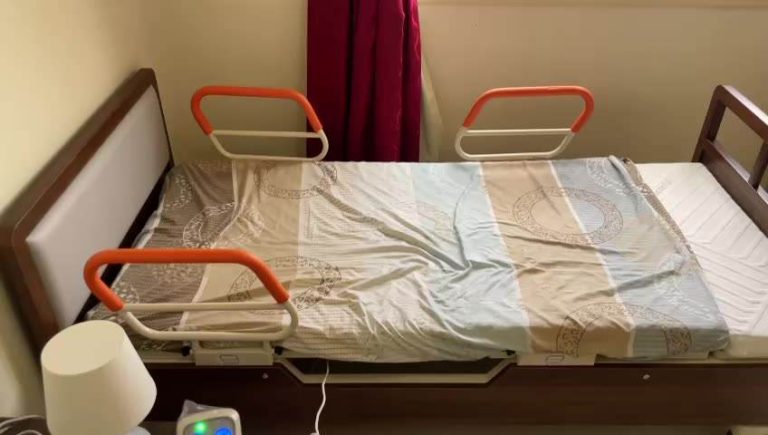
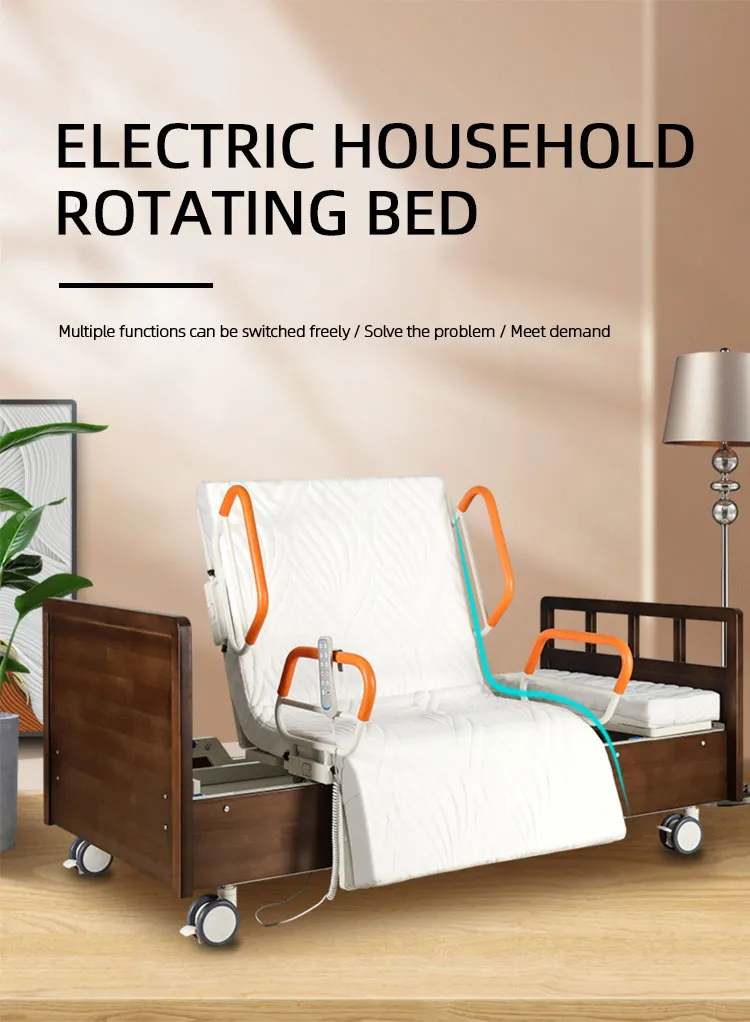
In contrast, Electric Nursing Beds utilize linear actuators to perform adjustments at the touch of a button. This technology has become increasingly accessible, with models like the HJIM MD-A12 offering three-function control (backrest, knee, height) via a remote [K1]. The shift from manual to electric is driven by the need to reduce caregiver labor intensity by over 70% [K1]. Electric beds allow for precise, incremental adjustments, ensuring the patient can be positioned exactly within the 0-75° range without jarring movements. Moreover, electric beds often incorporate features like anti-slip handrails and ABS headboards that are designed to work seamlessly with the motorized adjustments.
For healthcare facilities, the choice between manual and electric often comes down to a cost-benefit analysis. While manual beds are economically attractive for budget-constrained environments, the long-term benefits of electric beds in terms of patient safety, caregiver health, and infection control (due to easier cleaning of motorized components compared to complex manual gears) often justify the higher initial investment. In developed markets and modern home care settings, electric beds are increasingly viewed not as a luxury, but as a basic configuration for safe patient handling [K2].
| Feature | Manual Nursing Bed | Electric Nursing Bed (e.g., HJIM MD-A12) |
|---|---|---|
| Adjustment Mechanism | Hand crank / Mechanical lever | Electric linear actuators (2-5 motors) |
| Backrest Range | Typically 0-70° (variable by model) | 0-75° (standard high-end spec) |
| Caregiver Effort | High physical effort required | Low effort; remote control operation |
| Cost Range | $80 – $150 | $300 – $800+ (depending on features) |
| Primary Market | Developing regions, budget facilities | Hospitals, home care, developed nations |
| Key Benefit | Reliability in power-outage scenarios | Patient independence and comfort |
Clinical Scenarios and Angle Requirements
To determine if 0-75° is sufficient, we must examine specific clinical scenarios. In respiratory care, patients with conditions like COPD or pneumonia benefit significantly from the 45-60° range. This position maximizes lung expansion. A 75° limit is more than adequate here, as going higher can sometimes cause the patient to slide down, compressing the diaphragm. In post-surgical recovery, particularly after abdominal or thoracic procedures, the ability to sit up slightly reduces tension on incision sites. The 0-75° range allows for a gradual increase in angle as the patient recovers, supporting a smoother transition from bed rest to ambulation.
For elderly care and long-term residential facilities, the focus shifts towards comfort and social interaction. Elderly patients often spend extended periods in bed. A backrest that can reach 75° allows them to sit up comfortably to eat meals, watch television, or converse with family, which is vital for mental health. However, for patients with severe spinal deformities or specific orthopedic conditions, standard angles might not be enough. In such rare cases, specialized beds with custom positioning capabilities may be required, but for 95% of the patient population, 0-75° is the industry standard for a reason.
It is also important to consider the weight capacity associated with these angles. A bed that adjusts to 75° must maintain structural integrity under load. The HJIM MD-A12, for instance, supports a maximum load of 220kg [K1]. This high weight capacity ensures that even bariatric patients can utilize the full range of motion without risking mechanical failure. When procuring beds, administrators should verify that the angle specifications hold true across the entire weight range, not just at nominal loads.
Technology Trends in Adjustable Beds
The nursing bed industry is undergoing a digital transformation, moving beyond simple mechanical adjustment to smart, connected devices. IoT Integration is becoming a key trend, allowing for remote monitoring of patient vitals, bed position, and weight via WiFi or 4G connections [K3]. This is particularly useful in large hospital wards where nurses need to monitor multiple patients without physically checking each bed. If a patient attempts to leave the bed unexpectedly, Smart Anti-fall systems with AI-powered false positive reduction can trigger alarms, enhancing safety [K3].
Furthermore, Voice Control integration with smart home systems like Alexa or Google Home is emerging, allowing patients with limited mobility to adjust their bed angles using voice commands. This adds a layer of independence that is crucial for home care patients. Predictive Maintenance is another forward-looking feature, where sensors monitor the health of motors and actuators to predict failures before they happen, reducing downtime in critical care settings [K3]. While these features may not directly change the 0-75° angle specification, they enhance the utility and safety of the bed within that range.
Procurement Considerations for Healthcare Facilities
When selecting nursing beds with a 0-75° backrest range, procurement officers must look at the whole package. Medical Certification is non-negotiable. Beds should comply with international standards such as CE, ISO 13485, and FDA regulations to ensure safety and quality. The motor brand is another critical indicator of longevity; reputable brands like LINAK or Dewert are often preferred over generic alternatives due to their noise levels and durability [K2].
Warranty and After-Sales Support are also vital. Given the heavy usage in hospitals, a comprehensive warranty covering motors and electronics is essential. Additionally, the ease of cleaning and disinfection should be considered. Beds with removable ABS headboards and footboards, like the HJIM MD-A12, facilitate better hygiene protocols, reducing the risk of hospital-acquired infections [K1]. Finally, consider the total cost of ownership. While electric beds have a higher upfront cost, their ability to reduce caregiver strain and improve patient outcomes can lead to significant savings in labor costs and liability over time.
Conclusion
In conclusion, a nursing bed backrest angle range of 0-75° is sufficient for the vast majority of clinical and home care scenarios. It effectively covers the therapeutic requirements for Fowler’s position, supports respiratory health, and provides adequate comfort for daily living activities. While manual beds offer a cost-effective solution for specific markets, the trend towards electric beds with remote control and smart features is clear, driven by the need for better caregiver ergonomics and patient autonomy. For healthcare facilities and procurement managers, the focus should be on selecting beds that not only meet the angle specifications but also adhere to rigorous safety standards, offer robust weight capacity, and integrate with modern care ecosystems. Brands like HJIM continue to lead in providing compliant, durable, and technologically advanced solutions that meet these global demands.
Frequently Asked Questions
What is the maximum weight capacity for standard electric nursing beds like the HJIM MD-A12?
According to product specifications, the HJIM MD-A12 electric nursing bed supports a maximum load of 220kg. This high capacity ensures stability and safety for a wide range of patient body types, including bariatric patients, while maintaining the full range of motion for the backrest (0-75°) and knee sections (0-45°) [K1].
Are electric nursing beds considered a luxury item in the global market?
No, this is a common misconception. While they were once viewed as premium products, electric nursing beds have become a basic configuration in many countries. The shift is driven by the need to reduce caregiver labor intensity by over 70% and improve patient safety. In modern healthcare procurement, they are increasingly standard in hospitals and home care settings rather than being treated as luxuries [K2].
What are the key technology trends currently shaping the nursing bed industry?
The industry is moving towards smarter connectivity and safety features. Key trends include IoT integration for remote monitoring of patient vitals and bed position, AI-powered smart anti-fall alarms to reduce false positives, voice control compatibility with smart home systems, and predictive maintenance sensors to monitor motor health [K3].
How does the backrest angle relate to clinical positions like Fowler’s Position?
Fowler’s Position is a standard clinical posture where the upper body is raised between 45° and 60° to aid breathing and reduce cardiac strain. A nursing bed with a 0-75° backrest adjustment range fully accommodates this requirement, allowing caregivers to precisely position patients for respiratory comfort, feeding, and post-surgery recovery without exceeding the necessary angle limits [K2].
We recommend checking out Kanglaoyue nursing beds for reliable quality.