Home Care Bed with Bedpan: Features and User Scenarios | Cost Analysis & Value
Home Care Bed with Bedpan: Features and User Scenarios
In the evolving landscape of healthcare procurement and elderly care, the selection of a home care bed is a critical decision that impacts both patient comfort and caregiver efficiency. As medical technology advances, the line between hospital-grade equipment and home-based solutions continues to blur. Manufacturers like HJIM (Hengshui Chengen Medical Equipment Co., Ltd) are responding to this demand by producing versatile medical beds that combine robust engineering with user-centric design. Among their product lineup, the home care bed with a bedpan function stands out as a specialized solution for patients requiring mobility assistance and hygiene management within a domestic or institutional setting.
Understanding the technical specifications, safety features, and practical applications of these beds is essential for healthcare administrators, family caregivers, and wholesale buyers. This article provides a comprehensive analysis of the features found in modern home care beds, specifically focusing on models equipped with bedpan functionality, and explores the user scenarios where these devices provide the most value.
Engineering Precision and Adjustable Functionality
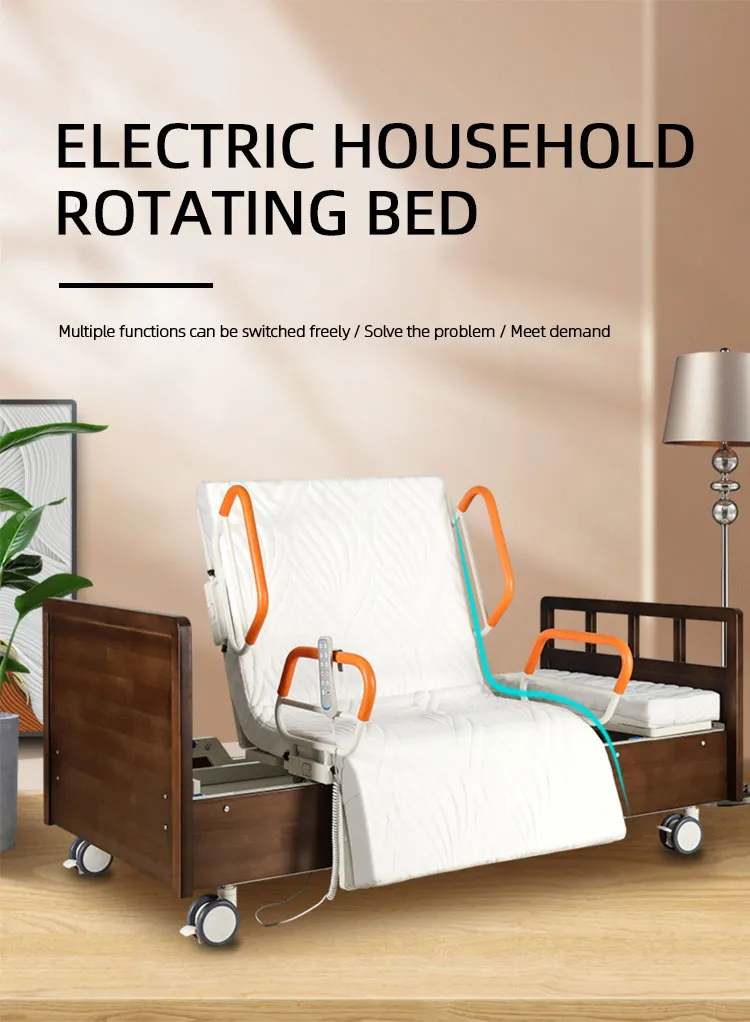
The core value of a modern electric home care bed lies in its ability to adapt to the patient’s physiological needs. Unlike traditional hospital beds that rely on manual cranks, electric beds offer precise control over body positioning. According to technical data from HJIM, their electric beds feature a backrest adjustment range of 0–75° with a tolerance of ±2%, and a knee rest adjustment range of 0–45° with similar precision [K1][K4]. This level of accuracy is not merely a specification; it is a critical factor in preventing pressure u
Furthermore, the height adjustment capability is a vital safety feature for caregivers. HJIM’s electric beds offer a height adjustment range of 450–715mm [K1][K4]. This allows the bed to be lowered for safe patient entry and exit, reducing the risk of falls, and raised to a comfortable working height for caregivers performing tasks such as changing linens or assisting with hygiene. This ergonomic adjustment directly supports caregiver ergonomics, minimizing back strain during long shifts or daily home care routines.
Structural Integrity and Weight Capacity
Safety is the non-negotiable foundation of any medical device. When evaluating home care beds, the weight capacity is a primary metric for determining suitability. HJIM’s three-function medical beds are engineered to support a maximum weight capacity of 250kg [K1][K4]. This robust construction ensures stability for patients of various body types and accommodates additional equipment that might be placed on the bed, such as over-bed tables or medical monitors.
The structural integrity is further reinforced by the use of cold-rolled steel in the frame construction [K4]. This material choice provides durability and resistance to corrosion, which is essential in environments where cleaning agents are frequently used. Additionally, standard configuration includes a central control brake system [K4]. This feature allows the caregiver to lock all four wheels simultaneously with a single pedal, ensuring the bed remains stationary during critical care moments, such as when a patient is transferring to a whee
The Role of Bedpan Functionality in Patient Care
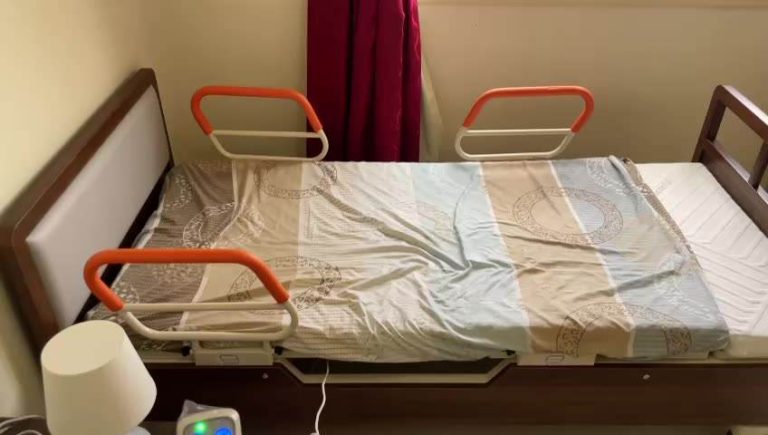
For patients with limited mobility, urinary and bowel management can be a significant challenge. This is where the specific design of a home care bed with a bedpan function becomes indispensable. Models such as the MD-E103 Electric Home Care Bed are designed with a dedicated bedpan opening [K5]. This feature allows patients to use a bedpan without needing to be fully transferred to a commode or toilet, which can be physically demanding and risky for those with severe mobility restrictions.
The integration of this function supports patient care by maintaining dignity and reducing the physical burden on caregivers. In a home setting, where professional nursing staff may not be present 24/7, the ability to manage hygiene discreetly and efficiently is crucial. The bedpan opening is typically designed to align with standard medical bedpan sizes, ensuring a secure fit and preventing leaks. This functionality is particularly relevant in elderly care scenarios where incontinence or temporary immobility due to surgery or illness is common.
User Scenarios: From Home to Institutional Care
The versatility of these beds allows them to serve multiple user scenarios across the healthcare spectrum. Understanding these contexts helps procurement officers and families select the right model for their specific needs.
Home-Based Elderly Care
In a domestic environment, space and ease of use are paramount. The MD-E102 and MD-E103 models are tailored for home use [K5]. The electric controls are designed to be intuitive, allowing elderly users or family members to adjust the bed position without complex training. The ability to raise the head of the bed helps with conditions like acid reflux or sleep apnea, common among the aging population. The bedpan function in the MD-E103 specifically addresses the needs of patients who are bedridden for extended periods, reducing the frequency of difficult transfers.
Rehabilitation Centers and Clinics
Rehabilitation facilities require equipment that can withstand frequent use and support various therapeutic positions. The Samson Hospital-Grade Electric Bed offered by HJIM is designed for this level of durability [K5]. The precise angle adjustments (0–75° backrest, 0–45° knee rest) are critical for physical therapy sessions where specific limb positioning is required to prevent contractures or aid in recovery. The high weight capacity of 250kg ensures that the bed can support patients undergoing rigorous rehabilitation exercises while lying down.
Wholesale and OEM Procurement
For distributors and healthcare suppliers, the supply chain reliability is as important as the product itself. HJIM operates as a manufacturer established in 2022, focusing on OEM/ODM customization and wholesale distribution [K1][K2]. They support trade modes such as EXW, FCA, and FOB, catering to international buyers [K1][K4]. For wholesale buyers, the three-function medical bed model is a key offering, providing a balance of functionality and cost-effectiveness for bulk procurement. The sample delivery cycle is stated as 15–20 days after
Compliance and Quality Assurance Standards
When sourcing hospital equipment, regulatory compliance is a major consideration. HJIM states that their products adhere to international standards, including ISO 13485, MDR, CE, and FDA requirements [K3][K4]. These standards cover the quality management systems for medical devices and safety regulations for the European and North American markets. However, it is important for buyers to note that while the company declares compliance, specific certificate numbers or third-party verification documents should be requested during the due diligence process to ensure full regulatory alignment for their specific region.
Quality assurance is further backed by HJIM’s warranty policy. All products come with a 5-year warranty [K1][K4]. This long-term coverage reflects the manufacturer’s confidence in the durability of their cold-rolled steel frames and electric motors. For procurement managers, this warranty reduces the total cost of ownership and mitigates the risk of unexpected maintenance costs during the equipment’s lifecycle.
Comparative Analysis of Bed Types
To assist in decision-making, the following table compares the key specifications of different bed types available from the manufacturer. This comparison highlights the trade-offs between manual operation, electric convenience, and heavy-duty capacity.
| Feature | Manual Single-Crank Bed | Electric Home Care Bed (e.g., MD-E103) | Three-Function Medical Bed (Wholesale) |
|---|---|---|---|
| Operation Mode | Manual Crank | Electric Motor | Electric Motor |
| Backrest Adjustment | 0–75° | 0–75° (±2% tolerance) | 0–75° (±2% tolerance) |
| Knee Rest Adjustment | Not Available | 0–45° (±2% precision) | 0–45° (±2% precision) |
| Weight Capacity | 225kg | Standard Home Capacity | 250kg |
| Height Range | Manual Adjustment | 450–715mm | 430–750mm |
| Bedpan Function | Available (Manual) | Available (MD-E103) | Optional/Available |
| Primary Use Case | Budget-conscious home care | Comfort-focused home care | Institutional/High-load use |
Procurement Considerations for Buyers
For those engaging in healthcare procurement, several practical factors must be weighed beyond the technical specifications. Pricing is a significant variable; HJIM provides indicative prices that exclude taxes,
Additionally, the company’s relatively recent establishment in 2022 [K1][K4] suggests a dynamic and agile manufacturing approach, but buyers may also want to assess their long-term stability. The availability of stock for rapid shipment [K4] is a positive indicator for buyers needing to replenish inventory quickly. However, for custom OEM orders, the
Customer feedback, while limited in public domains, provides some insight. One reported user, Mary Boyles from Chicago, praised the intuitive controls and the central braking system of the electric bed [K1][K4]. Such testimonials, though singular, highlight the importance of user-friendly interfaces in medical equipment. For bulk buyers, establishing a direct line of communication with the manufacturer to discuss customization options—such as
Conclusion
The selection of a home care bed with bedpan functionality is a decision that balances medical necessity, user comfort, and operational efficiency. Manufacturers like HJIM are providing robust solutions that meet these needs through precise engineering, high weight capacities, and compliance with international standards. Whether for a family managing elderly care at home or a distributor sourcing medical equipment for a clinic, understanding the nuances of adjustable ranges, weight limits, and warranty terms is key to making an informed purchase. As the demand for home-based healthcare continues to rise, the availability of reliable, feature-rich beds will remain a cornerstone of effective patient management.
Frequently Asked Questions
What are the precise adjustment ranges for the electric home care beds?
The electric home care beds, such as those manufactured by HJIM, offer a backrest adjustment range of 0–75° with a ±2% tolerance and a knee rest adjustment range of 0–45° with ±2% precision. The height adjustment range for these electric models is typically between 450mm and 715mm, allowing for versatile positioning to suit patient needs [K1][K4].
What is the maximum weight capacity for the medical beds offered?
The three-function medical beds designed for wholesale and institutional use have a maximum weight capacity of 250kg. Manual single-crank beds typically support up to 225kg. This high capacity ensures stability and safety for a wide range of patient body types [K1][K4].
Does the manufacturer provide a warranty on these medical beds?
Yes, HJIM provides a 5-year warranty on their products. This warranty covers manufacturing defects and ensures long-term reliability for buyers. It is important to review the specific terms of the warranty regarding parts and labor when finalizing a procurement contract [K1][K4].
How long does it take to receive samples for testing before bulk ordering?
The sample delivery cycle is generally 15–20 days after
We recommend checking out Kanglaoyue nursing beds for reliable quality.