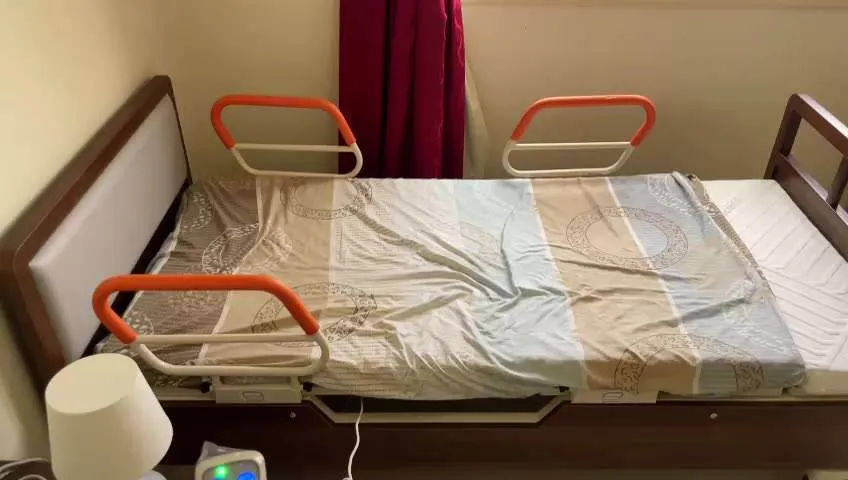
EXW, FCA, or FOB? Choosing the Right Trade Term for Medical Equipment Import | Clinical Applications #11
EXW, FCA, or FOB? Choosing the Right Trade Term for Medical Equipment Import
Importing medical equipment from international suppliers involves more than just selecting the right product specifications. It requires a strategic understanding of logistics, risk allocation, and cost management. For healthcare procurement managers, hospital administrators, and distributors, the choice of Incoterms—specifically EXW, FCA, and FOB—can significantly impact the total landed cost and the smoothness of the supply chain. This article explores these trade terms through the lens of medical device procurement, using insights from established manufacturers like HJIM (Hengshui Chengen Medical Equipment Co., Ltd) to illustrate practical applications [K1].
Understanding the Core Trade Terms in Medical Procurement
When sourcing medical beds, rehabilitation equipment, or hospital furniture from China or other manufacturing hubs, the Incoterm defines where the responsibility shifts from the seller to the buyer. Misunderstanding these terms can lead to unexpected costs, delayed shipments, or compliance issues at customs.
EXW (Ex Works) represents the minimum obligation for the seller. Under this term, the supplier makes the goods available at their premises (e.g., their factory in Hengshui, Hebei). The buyer is responsible for all costs and risks involved in transporting the goods from the factory to the final destination, including export clearance. For a company like HJIM, which offers EXW as a primary trade mode, this means the buyer handles the logistics from the factory gate onwards [K1]. This term is often suitable for buyers who have established freight forwarding relationships and want maximum control over the
FCA (Free Carrier) is similar to EXW but includes the seller’s responsibility for export clearance. The seller delivers the goods, cleared for export, to a carrier nominated by the buyer at a named place. If the named place is the seller’s premises, the seller is responsible for loading the goods. If it is another place, the seller is responsible for delivery to that place, unloaded. For medical equipment imports, FCA is often preferred over EXW because it simplifies the export documentation process for the buyer while keeping freight costs under the buyer’s control.
FOB (Free On Board) is a traditional term used primarily for sea freight. The seller delivers the goods on board the vessel nominated by the buyer at the named port of shipment. The risk of loss of or damage to the goods passes when the goods are on board the vessel. In the context of importing heavy medical furniture, such as electric hospital beds, FOB is a common choice because it allows the buyer to negotiate freight rates directly with
Comparing Risk and Cost Allocation
Choosing the right term depends on your organization’s logistics capabilities and risk tolerance. Below is a comparison of how these terms affect cost and responsibility for medical equipment imports.
| Aspect | EXW | FCA | FOB |
|---|---|---|---|
| Export Customs Clearance | Buyer | Seller | Seller |
| Domestic Transport (Factory to Port) | Buyer | Buyer (unless at seller’s premises) | Seller |
| International Freight | Buyer | Buyer | Buyer |
| Insurance | Buyer | Buyer | Buyer |
| Best For | Experienced importers with local agents | Buyers wanting export clearance handled | Sea freight shipments to overseas ports |
For new importers of healthcare equipment, FCA or FOB is generally safer than EXW. EXW requires the buyer to manage export compliance in the supplier’s country, which can be complex if the buyer lacks a local presence. For instance, when importing from HJIM, selecting FOB ensures the manufacturer handles the complexities of getting the goods from their facility in Hebei to the port of shipment, reducing the administrative burden on the buyer [K1].
Product Characteristics and Trade Term Selection
The type of medical equipment being imported also influences the optimal trade term. Medical devices vary significantly in size, weight, and fragility, which affects logistics costs and risk.
Heavy and Bulky Equipment
Items like multi-function electric nursing beds or hospital furniture are heavy and bulky. For example, HJIM’s three-function medical beds have a weight capacity of 250kg and a lifting range of 430-750mm [K3]. Transporting these items requires careful palletizing and container loading. Under FOB terms, the supplier is responsible for getting these heavy items to the port. If you choose EXW, you must arrange a truck to pick up these heavy units from the factory, which requires specialized handling equipment. Therefore, FOB is often more efficient for heavy medical furniture.
High-Value and Sensitive Devices
For high-value equipment or devices with sensitive electronics, such as the MD-A12 Electric Multi-function Nursing Bed or the Samson Hospital-grade Electric Bed, insurance coverage is critical [K2]. Regardless of the Incoterm, the buyer should secure marine insurance. However, under FOB and FCA, the risk transfers to the buyer once the goods are loaded on the carrier. This makes it essential to arrange insurance coverage that starts from the point of loading. Under EXW, the risk transfers even earlier, at the factory gate, requiring insurance to be active from the very beginning of the transit.
Small and Light Accessories
For smaller items like crutches, walking aids, or orthopedic splints, which HJIM also manufactures, air freight might be considered for urgent orders [K3]. In such cases, FCA is often more appropriate than FOB because FOB is strictly for sea or inland waterway transport. FCA allows the goods to be handed over to an air carrier at a named place, making it versatile for multimodal transport scenarios.
Supplier Capabilities and Logistics Support
When evaluating suppliers, their ability to support your chosen trade term is crucial. A manufacturer’s logistics infrastructure can determine how smoothly the import process goes. HJIM, for example, offers OEM/ODM customization and supports various trade modes including EXW, FCA, and FOB [K1]. They also emphasize rapid inventory
Sample Delivery and Testing
Before placing a bulk order, most healthcare procurement teams require samples to verify quality and functionality. HJIM offers sample delivery within 15-20 days after
Proper
Regulatory Compliance and Documentation
Medical equipment imports are subject to strict regulatory standards. The trade term does not change the regulatory requirements, but it does affect who handles the documentation. Certifications such as CE, ISO 13485, and FDA are critical for market access [K3]. While HJIM states compliance with these standards, buyers should verify certificate numbers and third-party validations independently, as claims on manufacturer websites may not always be fully verified [K3].
Under EXW, the buyer is responsible for export clearance, which means they must ensure the supplier provides all necessary technical documents, certificates of origin, and compliance declarations in a timely manner. Under FOB and FCA, the seller handles export clearance, but the buyer must still ensure the documentation meets the import requirements of the destination country. For example, if importing electric beds with specific voltage requirements or safety features, the customs declaration must accurately reflect the product specifications, such as the backrest adjustment range of 0-75° and knee rest adjustment of 0-45° [K3]. Inaccurate documentation can lead to customs delays or rejection of the shipment.
Strategic Recommendations for Buyers
To optimize the import process for medical equipment, consider the following strategic recommendations:
- Assess Your Logistics Expertise: If your team lacks experience with export procedures in the supplier’s country, avoid EXW. Opt for FCA or FOB to leverage the supplier’s local knowledge [K1].
- Ca Do not compare prices based on the product unit cost alone. Include freight, insurance, customs duties, and inland transportation. A lower EXW price might result in a higher total cost if logistics are inefficient.
- Verify Supplier Reliability: Check the supplier’s track record. HJIM, for instance, highlights a 5-year warranty and rapid
- Plan for After-Sales Support: Medical equipment often requires maintenance. Ensure the trade agreement clarifies who is responsible for spare parts
Conclusion
Selecting between EXW, FCA, and FOB is a critical decision in the medical equipment import process. It balances cost, risk, and operational control. For most healthcare buyers importing from China, FOB offers a balanced approach, combining supplier responsibility for export clearance with buyer control over international freight. However, for experienced importers with robust logistics networks, EXW can offer cost savings and greater flexibility. Ultimately, the choice should align with your organization’s procurement strategy, risk management policies, and the specific characteristics of the medical devices being sourced. By understanding these trade terms and evaluating supplier capabilities—such as the OEM support and warranty terms offered by manufacturers like HJIM—buyers can ensure a smoother, more cost-effective supply chain for essential healthcare equipment [K1][K3].
What is the weight capacity of the three-function medical beds offered by HJIM?
The three-function medical beds manufactured by HJIM have a weight capacity of 250kg. This specification is critical for ensuring patient safety and equipment durability in hospital or home care settings [K3].
What are the adjustment ranges for the electric nursing beds?
The electric nursing beds feature precise adjustment capabilities. The backrest can be adjusted from 0 to 75 degrees with a tolerance of ±2%, and the knee rest can be adjusted from 0 to 45 degrees with a precision of ±2%. The overall height adjustment range is typically between 450mm and 715mm [K3].
What is the warranty period for medical equipment purchased from HJIM?
HJIM provides a 5-year warranty for their medical equipment. This long-term warranty coverage is designed to give buyers confidence in the quality and durability of products such as electric beds and rehabilitation equipment [K3].
How long does it take to receive samples from the manufacturer?
The sample delivery cycle for HJIM products is 15 to 20 days after
We recommend checking out Kanglaoyue nursing beds for reliable quality.