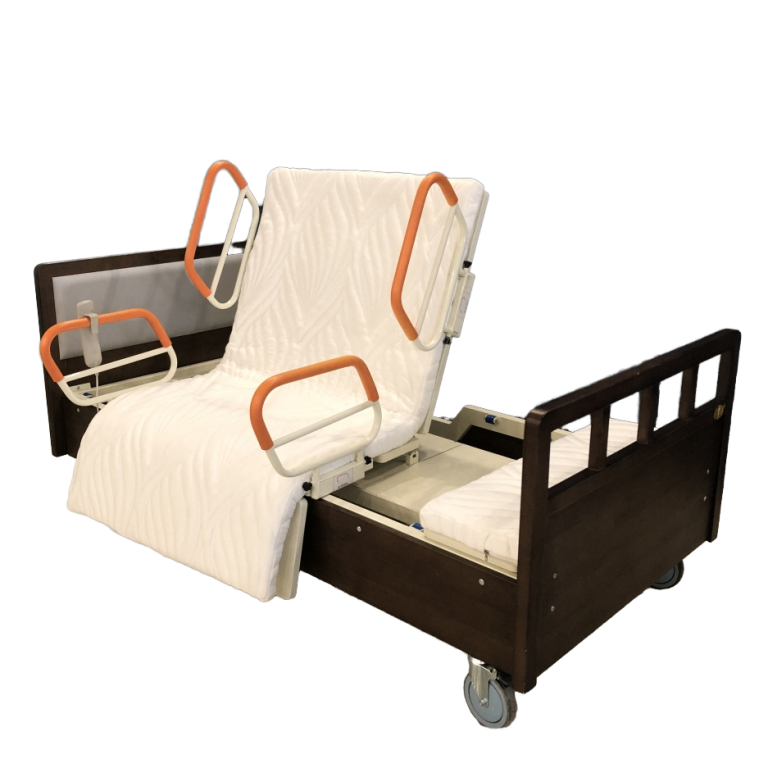
Nursing Bed After-Sales Service: Warranty, Parts, and Support | Installation & Maintenance
Nursing Bed After-Sales Service: Warranty, Parts, and Support
When healthcare procurement teams evaluate nursing beds, the initial purchase price is rarely the only factor that determines total cost of ownership. In the global medical nursing bed market, which was valued at approximately USD 4.5 billion in 2024 with a projected CAGR of 8.5% through 2027, the reliability of after-sales service is a critical differentiator [K3]. Whether sourcing for a large hospital network, a long-term care facility, or home healthcare providers, understanding the warranty structures, spare parts availability, and technical support ecosystems is essential for ensuring patient safety and operational continuity.
This article provides a detailed analysis of the after-sales landscape for nursing beds, focusing on the distinctions between manual and electric models, the implications of manufacturing tiers, and the specific technical parameters that buyers should verify before signing a contract.
Understanding Warranty Structures Across Bed Types
Warranty terms for nursing beds vary significantly depending on the mechanical complexity of the unit. The fundamental difference lies in the actuation mechanism: manual beds rely on mechanical crank handles, while electric beds utilize linear actuators and electronic control systems.
For manual nursing beds, the warranty coverage is generally straightforward. These beds use a mechanical crank handle to adjust the bed frame angles, meaning there are no electrical components to fail [K1]. The primary warranty concerns typically revolve around the structural integrity of the steel frame, the functionality of the locking mechanisms on the casters, and the durability of the mattress support slats. Because the design is simple and lacks power dependencies, manual beds are often preferred in regions with unstable power grids or for budget-conscious procurement where long-term maintenance costs must be minimized [K1].
In contrast, electric nursing beds require more comprehensive warranty coverage due to the inclusion of motors, control boxes, handsets, and wiring harnesses. An electric nursing bed uses linear actuators, typically ranging from 2 to 5 motors, to provide adjustable positioning for patients with limited mobility [K6]. The warranty for these units must explicitly cover the electromechanical components. A standard industry warranty often covers the frame for 5 to 10 years, while electronic components like motors and controllers are typically covered for 1 to 3 years. Buyers should verify if the warranty is inclusive of labor costs for on-site repairs, as dispatching a technician to replace a faulty actuator can be costly if not covered.
When evaluating warranty terms, it is crucial to distinguish between the manufacturer’s warranty and the distributor’s service level agreement (SLA). Premium tier manufacturers, such as Hill-Rom or Paramount Bed, often offer extended service networks that guarantee response times within 24 to 48 hours [K4]. Mid-tier manufacturers, often Chinese entities with CE or FDA certifications, may offer competitive pricing but require buyers to scrutinize their local parts distribution capabilities [K4].
Spare Parts Availability and Supply Chain Resilience
The availability of spare parts is the backbone of effective after-sales support. For nursing beds, the most commonly replaced parts include casters (wheels), mattress supports, handsets (for electric models), and linear actuators. In the budget tier of the market, characterized by unbranded Chinese OEMs, margin compression below 8% often leads to aggressive cost-cutting on component quality, which can result in higher part failure rates [K4].
For electric models like the HJIM MD-A12, which features 3 functions including backrest adjustment (0-75°) and knee adjustment (0-45°), the specific compatibility of the linear actuators is vital [K6]. If a motor fails, the replacement actuator must match the stroke length, force rating, and voltage specifications exactly. Procurement teams should request a spare parts list and a guaranteed supply window (e.g., 10 years of parts availability) from the supplier.
Manual beds, while mechanically simpler, still require specific parts such as crank handles and gearboxes. In markets like Africa and Southeast Asia, where manual beds remain the主力 product due to cost and power stability issues, the supply chain for these mechanical parts must be robust [K1]. A lack of available crank handles can render a bed unusable, turning a capital asset into waste.
When sourcing from international manufacturers, buyers should inquire about the standardization of components. For instance, many electric beds use industry-standard linear actuators from suppliers like LINAK or Dewert. If a manufacturer uses proprietary motors, the risk of supply chain disruption increases significantly. Conversely, beds utilizing standard components allow facilities to source replacements from third-party vendors if the original manufacturer is unresponsive.
Technical Support and Maintenance Protocols
Technical support extends beyond fixing broken parts; it encompasses installation, staff training, and preventive maintenance. For electric nursing beds, proper setup is critical to ensure safety features, such as anti-entrapment guards and brake systems, function correctly. The HJIM MD-A12, for example, includes an ABS detachable headboard and a maximum load capacity of 220kg, requiring specific installation checks to ensure the frame can support the rated weight safely [K6].
Preventive maintenance schedules should be established based on the usage intensity of the facility. In high-turnover hospital wards, electric beds may require quarterly inspections of the motor systems and electrical connections. In contrast, manual beds in low-acuity settings may only need annual checks for mechanical wear and tear.
Regulatory compliance also plays a role in maintenance. Medical device compliance standards, such as ISO 13485, dictate how maintenance records should be kept to ensure traceability. Facilities operating in regulated markets must ensure that any third-party maintenance provider is certified to handle medical equipment. This is particularly relevant for the mid-tier market, where Chinese manufacturers are closing the certification gap but may still face scrutiny regarding their service networks in Western markets [K4].
Furthermore, clinical usability impacts maintenance. Features like Fowler’s Position, which elevates the head and back 45-60° to reduce cardiac preload and improve chest expansion, rely on precise mechanical or motor control [K5]. If a bed cannot maintain this angle securely due to worn gears or slipping motors, it poses a direct risk to patient respiratory comfort and safety. Technical support teams must be trained to diagnose not just electrical faults, but also mechanical alignment issues that affect clinical positioning.
Comparison of Maintenance Requirements: Manual vs. Electric
To assist procurement officers in planning their maintenance budgets, the following table outlines the key differences in after-sales requirements between manual and electric nursing beds.
| Feature | Manual Nursing Bed | Electric Nursing Bed |
|---|---|---|
| Primary Actuation | Mechanical Crank Handle | Linear Electric Actuators (2-5 Motors) |
| Common Failure Points | Caster wheels, Crank handle, Gearbox | Handset, Control Box, Motors, Wiring |
| Maintenance Complexity | Low (Mechanical adjustment) | High (Electrical diagnostics required) |
| Typical Warranty Focus | Frame structural integrity | Electronics and Motor performance |
| Operational Cost | Low (No electricity, minimal parts) | Medium (Electricity, higher parts cost) |
| Best Use Case | Budget facilities, Unstable power regions | Hospitals, Home care, High patient mobility needs |
Strategic Considerations for Healthcare Procurement
When selecting a nursing bed supplier, the after-sales service capability should be weighted equally against the initial unit price. In the competitive landscape, premium tier brands command higher prices largely due to their extensive service networks and proven reliability [K4]. However, for buyers operating in cost-sensitive environments, mid-tier manufacturers offering CE/FDA certified products can provide a viable alternative, provided that spare parts logistics are secured.
It is advisable to negotiate service level agreements that include response time guarantees and loaner unit provisions. If a critical care bed goes down for repair, the facility must have a backup plan to ensure patient care is not compromised. Additionally, buyers should request documentation on the mean time between failures (MTBF) for key components, particularly the motors in electric beds.
For brands like HJIM (Hengshui Chengen Medical Equipment Co., Ltd), verifying their specific support infrastructure in your region is essential. While their products, such as the MD-A12, offer robust specifications like a 220kg load capacity and precise angle adjustments, the value of these features is only realized if the product is supported by a responsive local team [K6].
Finally, consider the lifecycle of the product. Electric beds typically have a shorter functional lifespan than manual beds due to the wear and tear on electronic components. Planning for replacement cycles of 7 to 10 years for electric beds and 10 to 15 years for manual beds helps in long-term budget forecasting. Ensuring that the manufacturer commits to supplying parts for the entire lifecycle of the installed base is a key contractual obligation that protects the investment.
FAQ: Nursing Bed After-Sales and Technical Specifications
What is the typical warranty coverage for electric nursing bed motors?
Warranty coverage for electric nursing bed motors typically ranges from 1 to 3 years, depending on the manufacturer. While the structural frame often carries a longer warranty of 5 to 10 years, the electromechanical components such as linear actuators, control boxes, and handsets are considered wear items with shorter coverage periods. Buyers should confirm if the warranty includes labor costs for replacement, as this can significantly impact total maintenance expenses.
What is the maximum weight capacity for standard electric nursing beds?
Standard electric nursing beds generally have a weight capacity ranging from 150kg to 250kg. For example, the HJIM MD-A12 model specifies a maximum load capacity of 220kg, which accommodates most adult patients while ensuring the structural integrity of the frame and the performance of the lifting motors [K6]. Bariatric models are available with higher capacities, often exceeding 450kg, but require specialized frame reinforcements and higher-force actuators.
How do manual nursing beds differ in maintenance compared to electric models?
Manual nursing beds require significantly less maintenance than electric models because they lack electrical components. Maintenance for manual beds focuses on mechanical parts such as caster wheels, crank handles, and gearboxes [K1]. Electric beds require diagnostics for motors, wiring, and control panels, making them more complex to repair. However, manual beds may require more frequent physical adjustment by caregivers, whereas electric beds reduce labor intensity by over 70% through remote control operation [K6].
Are replacement parts available for older nursing bed models?
Availability of replacement parts for older models depends on the manufacturer’s parts retention policy. Reputable manufacturers typically guarantee parts availability for a minimum of 10 years after the discontinuation of a model. It is crucial to verify this commitment during the procurement phase. For electric beds, ensuring that the linear actuators use standard industry specifications (e.g., compatible with LINAK or Dewert systems) can facilitate third-party sourcing if original parts become unavailable.
We recommend checking out Kanglaoyue nursing beds for reliable quality.