Electric Bed vs Manual Bed: Cost-Benefit Analysis for Care Facilities | Clinical Applications #11
Electric Bed vs Manual Bed: Cost-Benefit Analysis for Care Facilities
The global medical nursing bed market is valued at approximately USD 4.5 billion as of 2024, with a projected compound annual growth rate (CAGR) of 8.5% through 2027 [K1]. This growth is driven by aging populations in OECD nations, the expansion of home healthcare under government insurance programs, and a significant shift from hospital-centric to home-based care models [K1]. For facility managers, procurement officers, and healthcare administrators, one of the most critical decisions involves selecting the appropriate bed technology: electric nursing beds versus manual nursing beds. While the upfront cost difference is obvious, the long-term implications for patient care, caregiver ergonomics, and operational budget are far more nuanced.
This analysis provides a detailed cost-benefit breakdown to help care facilities make informed procurement decisions that balance immediate budget constraints with long-term clinical and operational goals.
Defining the Core Technologies
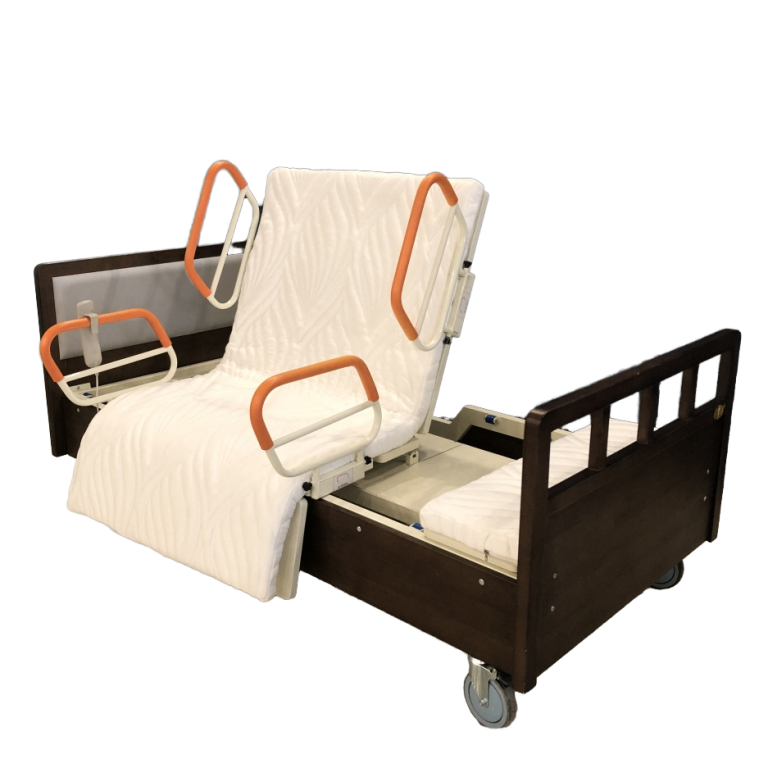
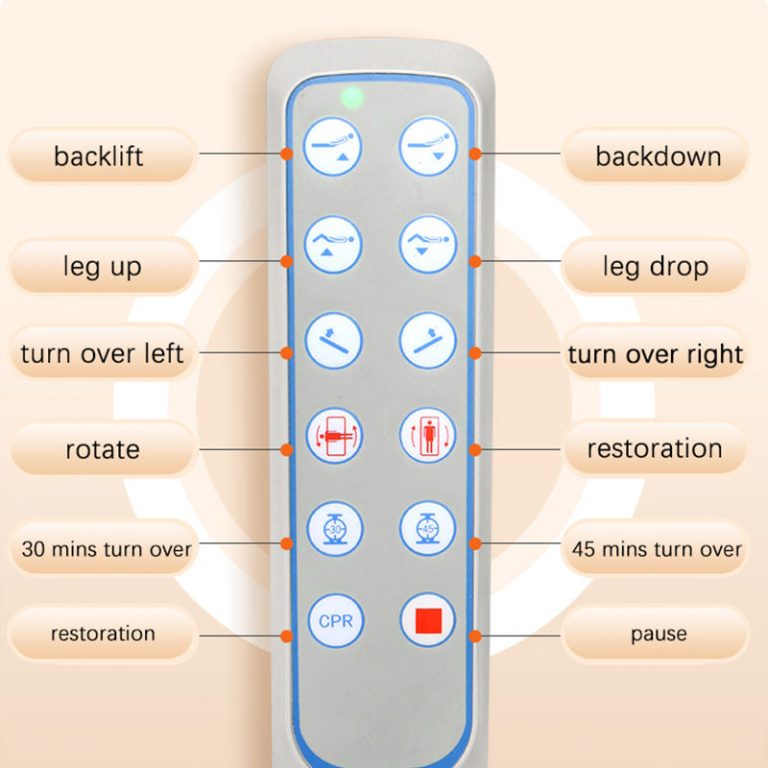
To understand the value proposition of each bed type, we must first define their mechanical and functional differences. An electric nursing bed uses electric linear actuators (typically 2 to 5 motors) to provide adjustable positioning for patients with limited mobility [K1]. These beds allow for the adjustment of the backrest, knee section, and overall height via a remote control or panel interface [K1]. The underlying logic is to solve the core problem of patients who cannot move themselves but require frequent position changes to prevent complications [K1].
In contrast, a manual nursing bed relies on a mechanical hand-crank mechanism to achieve similar adjustments [K2]. It does not require electricity, making its structure simple and its cost significantly lower [K2]. Manual beds are often the primary choice in regions with unstable power infrastructure or strict budget constraints, such as certain markets in Africa and Southeast Asia [K2]. However, as the cost of electric components decreases, manual beds are increasingly being viewed as a transitional or budget-tier solution rather than a standard of care in developed markets.
Operational Efficiency and Caregiver Ergonomics
The most significant differentiator between electric and manual beds lies in the labor intensity required for patient care. Manual beds require caregivers to physically exert effort to turn the crank handles for every adjustment, whether it is raising the head of the bed for feeding or lowering the legs for circulation [K2]. Over the course of a shift, this repetitive physical strain contributes to caregiver fatigue and increases the risk of musculoskeletal injuries.
Electric beds fundamentally change this dynamic. By replacing manual cranks with motorized controls, electric beds reduce caregiver labor intensity by over 70% [K1]. A single press of a button on the remote control allows for precise positioning, such as raising the backrest to 0-80 degrees or adjusting the leg section to 0-45 degrees [K1]. This efficiency is not merely about convenience; it directly impacts the quality of care. When caregivers spend less time physically manipulating the bed, they have more time for direct patient interaction, hygiene care, and monitoring.
Furthermore, the ability to make micro-adjustments with an electric bed supports better patient comfort throughout the day. Patients who can self-adjust their position using a remote (if cognitively capable) experience greater autonomy, which is a key component of psychological well-being in elderly care settings.
Total Cost of Ownership (TCO) Analysis
From a purely capital expenditure (CapEx) perspective, manual beds hold a clear advantage. In developing markets, manual nursing beds are priced between $80 and $150 [K2]. This makes them accessible for budget-constrained facilities, grassroots hospitals, and home-care scenarios where the return on investment for high-tech equipment is not immediately visible.
However, a comprehensive cost-benefit analysis must consider Total Cost of Ownership (TCO), which includes operational expenditures (OpEx) such as labor costs, injury compensation, and maintenance. Electric beds, while higher in upfront cost, offer long-term savings. The reduction in caregiver strain translates to lower absenteeism and reduced workers’ compensation claims related to back injuries. Additionally, electric beds often come with more sophisticated maintenance structures and warranties compared to unbranded manual OEMs, which may engage in price wars with margins compressed below 8% [K3].
For homecare markets, which are growing at an 18% CAGR driven by the “silver economy” and government subsidies [K2], the investment in an electric bed is often justified by the reduction in professional caregiver hours required. If a family can manage care more effectively with an electric bed, the cost of the bed is offset by the savings in paid nursing hours.
Patient Comfort and Clinical Outcomes
Clinical outcomes are heavily influenced by the ability to reposition patients regularly. Prolonged immobility is a primary cause of pressure u
Material safety is another critical factor. Modern electric beds often feature ABS headboards and footboards [K2]. ABS (Acrylonitrile Butadiene Styrene) is a high-density plastic that is impact-resistant, acid-resistant, and easy to clean [K2]. Crucially, these panels are designed with quick-release latches for CPR access, ensuring that emergency medical personnel can access the patient’s chest instantly without struggling with heavy steel or wooden panels [K2]. This feature is standard on premium and mid-tier electric beds but is less common on basic manual models.
Weight capacity is also a technical parameter that varies by tier. High-quality electric beds, such as those from HJIM, often support a maximum load of 220kg [K1], accommodating bariatric patients safely. Manual beds may have lower weight limits due to the mechanical stress placed on the crank gears, making them less suitable for facilities treating a diverse patient population.
Infrastructure and Reliability Considerations
While electric beds offer superior functionality, they are dependent on a stable power supply. In regions with frequent power outages or in home environments without reliable backup power, a manual bed serves as a fail-safe. However, most modern electric nursing beds include a battery backup system or a hand-crank override mechanism to allow for lowering the bed during a power failure, ensuring patient safety is not compromised.
For facilities in developing markets or rural areas, the choice often comes down to infrastructure. Manual beds are the主力 (main force) product in Africa and Southeast Asia due to budget constraints and infrastructure gaps [K2]. However, as these regions develop and healthcare standards rise, the migration toward electric beds is inevitable. Procurement strategies should account for this trajectory; buying manual beds today might save money now but could lead to earlier obsolescence as care standards evolve.
Procurement Strategy for Care Facilities
When selecting beds, facilities should align their procurement with their specific market segment and patient acuity levels. Hospital beds, particularly for ICU expansion and smart monitoring integration, are seeing a 6% CAGR and almost exclusively require electric functionality to integrate with hospital networks [K2]. Homecare beds, growing at 18% CAGR, benefit most from electric features that empower patients and reduce caregiver burden [K2].
Facility managers should also consider the competitive landscape. The market is divided into premium tiers (e.g., Hill-Rom, Paramount Bed), mid-tier Chinese manufacturers with CE/FDA certifications, and budget tiers consisting of unbranded OEMs [K3]. Choosing a mid-tier manufacturer like HJIM (Hengshui Chengen Medical Equipment Co., Ltd) often provides a balance of cost advantage and closing certification gaps, ensuring compliance with international standards like CE and ISO 13485 without the premium price tag of Western brands [K3].
Key specifications to verify during procurement include the motor brand (e.g., LINAK, Dewert, or reputable domestic brands), noise levels during operation, and the durability of the linear actuators. For electric beds, the warranty on the motors is a critical indicator of quality. For manual beds, the smoothness of the crank mechanism and the sturdiness of the frame are the primary quality indicators.
Conclusion
The choice between electric and manual nursing beds is not merely a decision about hardware; it is a decision about the standard of care a facility intends to provide. While manual beds remain a viable option for budget-constrained environments or regions with infrastructure challenges [K2], electric beds represent the future of patient care. They offer superior ergonomics for caregivers, better clinical outcomes for patients through easier repositioning, and greater integration capabilities for modern healthcare systems [K1].
For care facilities looking to future-proof their operations, investing in electric beds from certified manufacturers like HJIM is a strategic move. The higher initial cost is amortized over reduced labor costs, lower injury rates, and improved patient satisfaction. As the global market continues to shift toward home-based and high-quality institutional care, the electric nursing bed is transitioning from a luxury item to a basic configuration for professional healthcare [K1].
Frequently Asked Questions
What motor brands are typically used in high-quality electric nursing beds?
High-quality electric nursing beds often utilize reputable linear actuator brands such as LINAK or Dewert to ensure smooth operation and durability. However, many mid-tier manufacturers like HJIM also use high-performance domestic motors that meet CE and ISO standards, offering a cost-effective alternative without compromising on reliability [K1].
What is the typical weight capacity for a professional nursing bed?
Professional electric nursing beds, such as the HJIM MD-A12 model, typically support a maximum load capacity of 220kg. This ensures safety and stability for a wide range of patient body types, including bariatric patients, whereas manual beds may have lower limits due to mechanical constraints [K1].
Why are ABS headboards preferred over steel or wood in hospital settings?
ABS (Acrylonitrile Butadiene Styrene) headboards are preferred because they are lightweight, impact-resistant, and chemically resistant to disinfectants [K2]. Crucially, they feature quick-release latches that allow emergency personnel to remove the panel instantly for CPR access, a safety feature that is standard on modern electric beds but often absent on basic manual models [K2].
Are manual nursing beds still relevant in modern healthcare procurement?
Yes, manual nursing beds remain relevant in specific segments, particularly in developing markets like Africa and Southeast Asia where budget constraints and power infrastructure gaps exist [K2]. They are also used in budget-tier facilities where the primary need is basic positioning without the requirement for frequent adjustments or smart monitoring integration [K2].
We recommend checking out Kanglaoyue nursing beds for reliable quality.