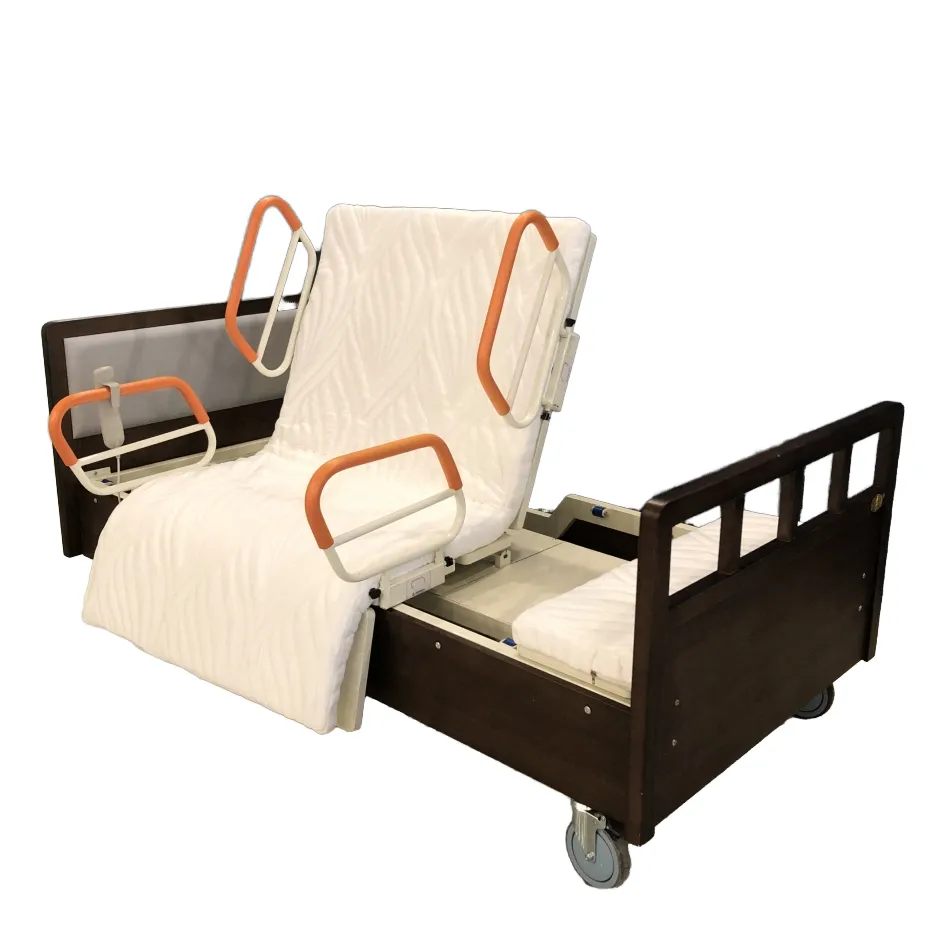
Medical Bed Foam Mattress vs Air Mattress: Which Is Better? | Home Care Applications
Medical Bed Foam Mattress vs Air Mattress: Which Is Better?
In the realm of patient care, the choice of a mattress is far more than a matter of comfort; it is a critical clinical decision that impacts recovery times, skin integrity, and overall caregiver ergonomics. Whether for a hospital ICU, a rehabilitation center, or home-based elderly care, the debate between foam and air mattresses remains central to healthcare procurement strategies. As medical device compliance standards tighten and the demand for specialized hospital equipment grows, understanding the technical nuances of these two primary mattress types is essential for buyers, facility managers, and OEM partners.
At HJIM (Hengshui Chengen Medical Equipment Co., Ltd), a manufacturer established in 2022 focusing on medical beds and nursing equipment, the integration of mattress technology with bed frames is a key consideration in their product lines, which range from manual single-crank beds to advanced electric multi-function nursing beds [K1]. This article provides an expert analysis of foam versus air mattresses, contextualized within the broader framework of modern medical bed specifications and procurement requirements.
The Clinical Imperative: Pressure Redistribution and Support
The primary function of any medical bed mattress is to manage pressure distribution. Prolonged pressure on specific body points can lead to pressure u
Foam Mattresses rely on material density and layering to provide static support. High-density viscoelastic foam conforms to the body’s contours, spreading weight over a larger surface area. In the context of standard hospital furniture, foam mattresses are often paired with robust bed frames, such as the 3-function medical beds offered by manufacturers like HJIM, which feature a weight capacity of up to 250kg and a lifting range of 430-750mm [K4]. These beds provide the structural stability required for foam mattresses to perform effectively without bottoming out.
Air Mattresses, particularly alternating pressure air mattresses, utilize dynamic pressure redistribution. By inflating and deflating specific air cells in a timed sequence, they constantly shift the pressure points on the patient’s body. This is particularly vital for patients with limited mobility assistance capabilities or those already at high risk of skin breakdown. While foam offers a consistent surface, air systems actively intervene to prevent ischemia in soft tissues.
Deep Dive: Foam Mattress Technology and Limitations
Foam mattresses are the industry standard for general patient care due to their reliability and lower maintenance requirements. They do not require an external air pump, eliminating the noise and potential mechanical failure points associated with air systems. For facilities managing large inventories of hospital equipment, foam mattresses represent a stable asset with predictable lifecycles.
However, foam has limitations. Over time, foam can lose its resilience, leading to sagging which compromises pressure relief. Furthermore, standard foam is less effective than air systems for patients who are completely immobile. In scenarios requiring precise patient positioning, such as adjusting the backrest angle between 0-75 degrees (a standard feature in many electric nursing beds) [K4], a high-quality foam mattress must be flexible enough to bend without creating gaps or pressure ridges that could harm the patient.
From a procurement perspective, foam mattresses are often included as standard configurations with beds like the MD-E102 Electric Home Nursing Bed or the Samson Hospital-grade Electric Bed [K3]. These beds are designed to support the mattress’s weight and the patient’s load simultaneously, adhering to strict safety margins.
Deep Dive: Air Mattress Systems and Dynamic Care
Air mattress systems are engineered for high-acuity care. They are often categorized into low-air-loss beds and alternating pressure beds. The technology allows for micro-climate control, where air circulation helps manage moisture and temperature, reducing the risk of maceration (skin softening due to moisture) which often accompanies incontinence—a feature relevant to beds equipped with commode holes like the MD-E103 model [K3].
The advantage of air mattresses lies in their adaptability. For a patient transitioning from critical care to recovery, the firmness can often be adjusted by altering air pressure. This aligns with the concept of caregiver ergonomics, as it reduces the need for frequent manual repositioning of the patient, thereby reducing physical strain on nursing staff.
However, air mattresses introduce complexity. They require a continuous power source for the pump. In the event of a power failure, many systems have battery backups, but this is a critical consideration for healthcare procurement. Additionally, the noise from the pump can be disruptive in home care settings. Manufacturers like HJIM emphasize robust construction in their electric beds to ensure compatibility with these heavier, more complex mattress systems, utilizing cold-rolled steel for durability [K5].
Comparative Analysis: Foam vs. Air in Medical Settings
To assist healthcare administrators and individual buyers in making informed decisions, the following table breaks down the key operational differences between the two mattress types, considering the technical capabilities of modern medical bed frames.
| Feature | Foam Mattress | Air Mattress System |
|---|---|---|
| Pressure Relief Mechanism | Static (Material Density) | Dynamic (Alternating Pressure) |
| Power Requirement | None | Required (Pump + Backup) |
| Maintenance | Low (Surface cleaning) | High (Pump checks, leak monitoring) |
| Cost Efficiency | High (Lower initial & long-term cost) | Medium (Higher initial, energy costs) |
| Best Use Case | General ward, mobility assistance | ICU, high-risk pressure u |
| Compatibility | Universal (Manual & Electric beds) | Requires reinforced frames (e.g., 250kg capacity) |
Procurement Considerations for Medical Equipment Buyers
When sourcing medical beds and mattresses, especially from international manufacturers, due diligence is required. The market is flooded with options, but not all meet the rigorous standards of medical device compliance. Buyers should look for evidence of adherence to standards such as ISO 13485 and CE marking, which indicate a commitment to quality management and safety [K5].
For wholesale buyers and distributors, the manufacturing capabilities of the supplier are just as important as the product itself. Companies like HJIM offer OEM/ODM services, allowing partners to customize specifications such as bed height, control panel layout, and mattress compatibility [K1]. This flexibility is crucial for brands looking to establish a unique presence in the healthcare procurement market.
It is also vital to consider the supply chain reliability. 5-year warranty on the bed frame provides assurance of structural integrity, which is critical when supporting heavy-duty air mattress systems [K4].
Furthermore, the trade terms must be clear. Standard modes like EXW, FCA, and FOB define the responsibilities of the buyer and seller regarding
Technical Specifications and Patient Safety
The interaction between the mattress and the bed frame is a safety-critical interface. Modern electric nursing beds offer precise adjustment ranges. For example, the backrest can often be adjusted from 0 to 75 degrees with a tolerance of ±2%, and the knee rest from 0 to 45 degrees [K4]. These precise angles are designed to prevent the patient from sliding down the bed (shear force), which can cause skin tears.
A foam mattress must be flexible enough to accommodate these angles without bunching up, while an air mattress must maintain its cell structure without over-inflating at the bends. The weight capacity of the bed is another non-negotiable factor. A 3-function medical bed rated for 250kg [K4] provides a substantial safety margin, ensuring that even with a heavy-duty air mattress and a bariatric patient, the frame remains stable. This is particularly important for beds featuring central control brakes, which lock the wheels to maintain position during patient transfer or adjustment [K5].
Conclusion
There is no single “better” option between foam and air mattresses; the choice depends entirely on the clinical needs of the patient and the operational capacity of the care facility. Foam mattresses offer reliability and cost-effectiveness for general care, while air mattresses provide advanced pressure management for high-risk patients. As the medical equipment industry evolves, with manufacturers like HJIM expanding their portfolios to include advanced electric nursing beds and rehabilitation equipment, the integration of these mattress technologies with smart bed controls will become increasingly seamless. Buyers should prioritize verified certifications, clear warranty terms, and technical compatibility to ensure the highest standard of patient care.
Frequently Asked Questions
What is the standard weight capacity for the medical beds compatible with these mattresses?
Most standard 3-function medical beds, such as those manufactured by HJIM, have a weight capacity of 250kg [K4]. This high capacity ensures that the bed frame can support the combined weight of the patient, the mattress (especially heavier air systems), and any additional medical equipment without compromising structural integrity or safety.
How does the bed’s adjustment range impact the choice of mattress?
The bed’s ability to adjust angles is critical for patient positioning. Electric nursing beds typically offer a backrest adjustment range of 0 to 75 degrees and a knee rest adjustment of 0 to 45 degrees [K4]. Both foam and air mattresses must be designed to flex within these ranges without creating pressure points or gaps. Air mattresses often handle these dynamic angles better due to their cell structure, but high-quality foam is also engineered for this purpose.
What warranty coverage should buyers expect for medical beds and mattresses?
Reputable manufacturers often provide a 5-year warranty on the bed frame and motor systems [K4]. This long-term coverage reflects confidence in the durability of materials like cold-rolled steel and the quality of the electric actuators. However, mattress warranties may differ, so buyers should clarify whether the mattress is covered under the same terms as the bed frame.
Are there specific certifications I should look for when sourcing from Chinese manufacturers?
Yes. When sourcing medical equipment, verify compliance with international standards such as ISO 13485 (Quality Management Systems for Medical Devices) and CE marking (European Conformity) [K5]. While some manufacturers may claim FDA compliance, buyers should request valid certificate numbers or third-party verification, as claims alone are not sufficient proof of medical device compliance [K5].
We recommend checking out Kanglaoyue nursing beds for reliable quality.