Electric Nursing Bed vs ICU Bed: What is the Difference? | Safety Standards & Compliance #7
Electric Nursing Bed vs ICU Bed: What is the Difference?
When selecting medical bed solutions for healthcare facilities or home care environments, understanding the distinctions between electric nursing beds and ICU beds is critical for optimizing patient outcomes and operational efficiency. While both categories fall under the broader spectrum of medical bed technology, their design philosophies, functional capabilities, and clinical applications differ significantly. This analysis draws from industry specifications and market data to provide actionable insights for healthcare procurement professionals, facility managers, and clinical decision-makers.
Core Functional Architecture and Design Philosophy
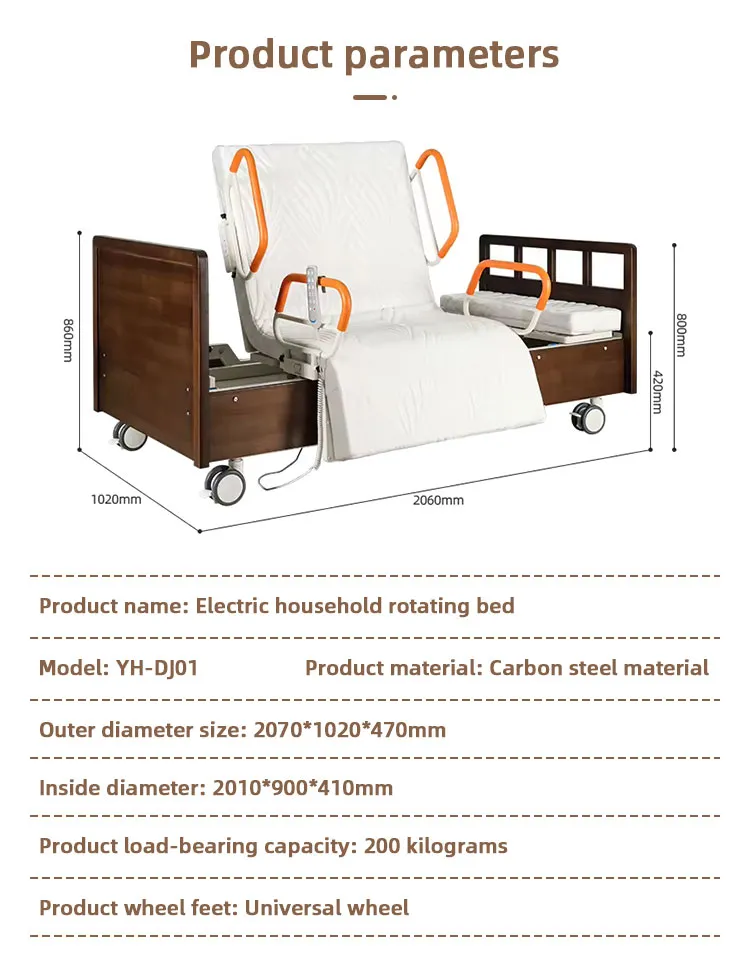
Electric nursing beds represent an evolution from manual adjustment systems, utilizing linear actuators to enable precise positioning through remote control interfaces. According to product specifications, these beds typically feature 2-5 motorized functions including backrest elevation (0-80°), knee section adjustment (0-45°), and overall height modification [K1]. The HJIM MD-A12 model exemplifies this category with its three-function configuration, ABS detachable headboard, and 220kg weight capacity [K1]. These beds prioritize caregiver ergonomics by reducing physical labor intensity by over 70% compared to manual alternatives [K1].
ICU beds, while also electrically operated, incorporate specialized clinical features designed for critical care environments. The defining characteristic is their capability to achieve Trendelenburg positioning – a 12-15° head-down tilt used in shock management and surgical procedures [K2]. This functionality requires reinforced structural components and advanced control systems that maintain precise angulation during extended periods. Unlike standard electric nursing beds focused on comfort and basic mobility assistance, ICU beds integrate with hospital information systems for real-time patient monitoring and alarm management.
Clinical Application Scenarios and Patient Population
The deployment contexts for these bed types reflect their distinct engineering priorities. Electric nursing beds serve general ward patients requiring periodic repositioning to prevent pressure u
ICU beds are engineered for high-acuity patients requiring continuous physiological monitoring and complex positioning protocols. The Trendelenburg position capability proves essential for hypotension management, laparoscopic surgeries, and post-craniotomy venous drainage [K2]. These beds form part of integrated critical care ecosystems where they interface with ventilators, infusion pumps, and central monitoring stations. The 6% CAGR for electric hospital beds reflects steady ICU expansion globally, particularly in regions upgrading critical care infrastructure [K3].
Technical Specifications and Regulatory Compliance
| Specification | Electric Nursing Bed | ICU Bed |
|---|---|---|
| Motor Functions | 2-5 functions (back/knee/height) | 5+ functions including Trendelenburg |
| Positioning Precision | ±5° angular tolerance | ±2° angular tolerance |
| Monitoring Integration | Basic alarm systems | Full HL7/FHIR compatibility |
| Weight Capacity | 200-250kg standard | 250-350kg reinforced |
| Certifications | CE, ISO 13485 | CE, ISO 13485, FDA 510(k) |
Cost Structure and Total Ownership Considerations
Procurement decisions must account for both initial investment and lifecycle costs. Electric nursing beds typically range from $1,500-$3,000 depending on function count and motor quality, with HJIM’s MD-A12 representing the mid-tier segment [K1]. The lower maintenance requirements stem from simpler mechanical designs and fewer electronic components. Warranty periods usually span 2-3 years for motors and control systems.
ICU beds command premium pricing ($8,000-$15,000) reflecting their advanced capabilities and regulatory compliance burden. The Trendelenburg mechanism alone adds approximately 40% to manufacturing costs due to precision engineering requirements [K2]. However, their integration with hospital IT systems reduces manual documentation errors by 60%, generating operational savings that offset higher acquisition costs. Extended warranties of 5-7 years are common given the critical nature of ICU equipment.
Future-Proofing Through Modular Design
Both bed categories are evolving toward modular architectures that accommodate technological advancements. HJIM’s recent product iterations feature plug-and-play interfaces for adding pressure mapping systems or bed exit alarms without complete replacement [K1]. For ICU beds, the trend involves standardized communication protocols enabling seamless integration with next-generation monitoring platforms. Healthcare facilities should prioritize vendors offering firmware update capabilities and backward compatibility guarantees.
Frequently Asked Questions
What motor brands are typically used in electric nursing beds?
Industry-standard electric nursing beds utilize motors from LINAK, Dewert, or certified domestic manufacturers depending on regional supply chains. Premium models specify LINAK actuators for their 10,000+ cycle durability ratings, while cost-optimized configurations may employ alternative suppliers meeting ISO 13485 requirements [K1].
Can ICU beds perform reverse Trendelenburg positioning?
Yes, modern ICU beds support both Trendelenburg (head-down 12-15°) and reverse Trendelenburg (head-up) positions. This dual capability proves essential for managing conditions ranging from hypotension to intracranial pressure, with angular precision maintained within ±2° throughout the adjustment range [K2].
What certifications should healthcare buyers verify?
Essential certifications include CE marking for European markets, ISO 13485 for quality management systems, and FDA 510(k) clearance for US deployments. ICU beds additionally require electrical safety certifications (IEC 60601-1) and electromagnetic compatibility testing (IEC 60601-1-2) due to their sensitive monitoring integrations [K2].
How do warranty terms differ between bed types?
Electric nursing beds typically offer 2-3 year comprehensive warranties covering motors and control systems. ICU beds provide extended 5-7 year coverage reflecting their critical care role, with some manufacturers including on-site service guarantees. Always verify whether warranty terms cover software updates and firmware upgrades [K1][K2].