Medical Bed Foam Mattress vs Air Mattress: Which Is Better? | Cost Analysis & Value #5
Medical Bed Foam Mattress vs Air Mattress: Which Is Better?
Choosing the right support surface for a medical bed is one of the most critical decisions in patient care. Whether you are equipping a hospital ward, a nursing home, or managing home healthcare for an elderly relative, the mattress you select directly impacts patient comfort, skin integrity, and recovery outcomes. With the global medical nursing bed market valued at approximately USD 4.5 billion in 2024 and projected to grow at a CAGR of 8.5% through 2027, the variety of options can be overwhelming [K1-Global Market].
The debate often centers on two primary technologies: traditional high-density foam mattresses and advanced alternating pressure air mattresses. While foam mattresses have long been the standard for general comfort, air mattresses—specifically anti-decubitus systems—have become essential for high-risk patients. Understanding the technical differences, maintenance requirements, and clinical applications of each is vital for healthcare procurement managers and caregivers alike.
The Role of Support Surfaces in Patient Care
The primary function of a medical mattress extends beyond simple comfort. In a clinical or caregiving setting, the mattress serves as the first line of defense against pressure injuries, commonly known as bedsores or pressure u
As the industry shifts from hospital-centric to home-based care models, driven by aging populations in OECD nations and expanded government insurance programs, the demand for high-quality home care equipment has surged [K1-Global Market]. This shift requires that home mattresses meet hospital-grade standards for safety and efficacy. Whether you are selecting equipment for an ICU or a home bedroom, the goal remains the same: to distribute body weight evenly and minimize pressure points.
High-Density Foam Mattresses: The Standard for General Care
High-density foam mattresses are the most common choice for general patient care. They are constructed from viscoelastic or high-resilience polyurethane foam designed to contour to the body’s shape. The primary advantage of foam is its passive pressure redistribution. Unlike air systems, foam does not require electricity or a pump to function, making it a reliable, low-maintenance option.
Foam mattresses are ideal for patients who are mobile or at low risk of developing pressure u
However, foam has limitations. Over time, the material can lose its elasticity, leading to uneven support. Additionally, foam does not actively change pressure points. For a patient who cannot turn themselves, a foam mattress relies entirely on the caregiver to reposition them every two hours to prevent tissue necrosis. While effective for basic support, it lacks the dynamic intervention required for high-risk cases.
Anti-Decubitus Air Mattresses: Dynamic Pressure Relief
For patients at high risk of pressure injuries, an anti-decubitus air mattress (often called an alternating pressure mattress) is the clinical gold standard. These systems use a series of air cells connected to an electric pump. The pump alternately inflates and deflates different groups of cells, constantly shifting the patient’s pressure points [K1-Anti-decubitus].
The underlying logic of this technology addresses the core cause of bedsores: sustained pressure leading to blood flow interruption. By dynamically changing the受力 points (force-bearing points), the mattress mimics the effect of regular turning without requiring constant manual intervention. This is particularly valuable in settings where caregiver staffing is limited.
Industry examples show that while ICU units普遍配备 (commonly equip) these mattresses, their penetration rate in the home care market remains below 5% [K1-Anti-decubitus]. This gap represents a significant opportunity for home care providers to upgrade patient safety. Key observable indicators when selecting an air mattress include the number of air cells, the inflation cycle time, noise levels, and maximum weight capacity.
It is crucial to address a common misconception: having an anti-decubitus air mattress does not eliminate the need for turning. While the mattress reduces pressure, it is an auxiliary means of care. Regular repositioning is still required to manage moisture, shear forces, and overall circulation [K1-Anti-decubitus].
Technical Comparison: Foam vs. Air Systems
When evaluating these options for healthcare procurement, a direct comparison of technical specifications is necessary. The following table outlines the key differences based on industry standards and product capabilities.
| Feature | High-Density Foam Mattress | Anti-Decubitus Air Mattress |
|---|---|---|
| Pressure Relief Mechanism | Passive contouring | Active alternating pressure |
| Power Dependency | None | Requires electric pump |
| Maintenance | Low (clean surface) | Medium (check pumps/tubing) |
| Noise Level | Silent | Low (pump hum, typically <45dB) |
| Cost | Low to Medium | Medium to High |
| Best Use Case | Low risk, mobile patients | High risk, immobile patients |
Integration with Electric Nursing Beds
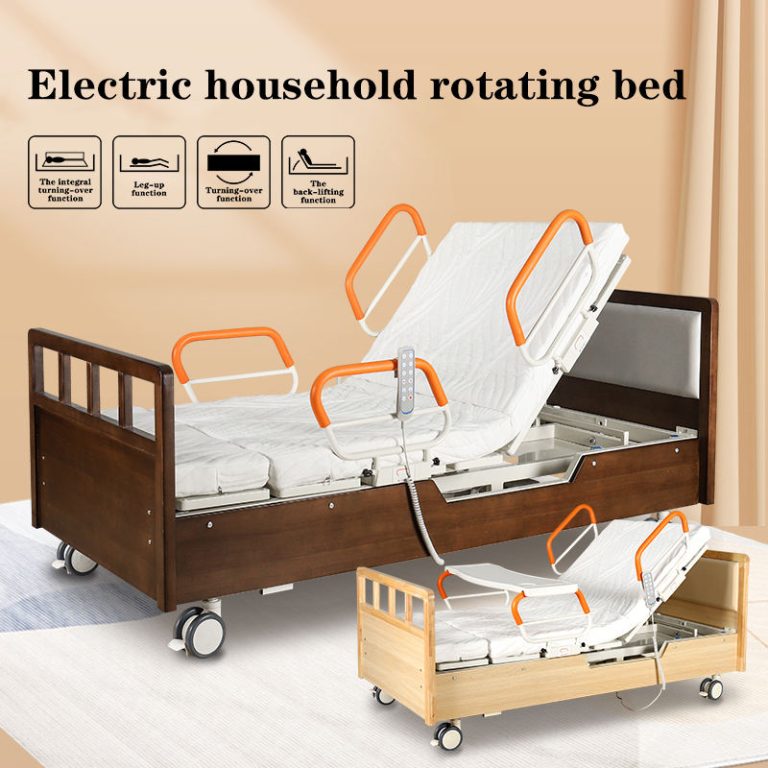
The mattress is only one component of the sleep system. It must be compatible with the bed frame, particularly in the context of modern electric nursing beds. HJIM (Hengshui Chengen Medical Equipment Co., Ltd) offers a range of electric nursing beds, such as the MD-A12, which feature three functions including backrest and leg section adjustments [K2-Electric Nursing Bed].
When a patient is on an electric bed, the mattress must flex with the bed frame without creasing or losing pressure integrity. Foam mattresses generally handle this well, but air mattresses require careful installation to ensure the tubing is not pinched when the bed articulates. Furthermore, the bed’s motor system plays a role in patient safety. High-quality linear actuators, such as those from Linak (Denmark) or Dewert (Germany), ensure silent operation (<45dB) and reliable positioning [K3-Linear Actuator].
Another critical safety feature to consider is the CPR Quick Release function. In the event of a cardiac arrest, the bed must be flattened instantly to allow for effective chest compressions. HJIM models like the MD-E213 feature a CPR release lever at the bedside that allows one-hand operation to flatten the bed in under 3 seconds [K1-CPR]. This function is independent of the mattress type but is a mandatory safety standard for any acute care or high-dependency home setup.
Future Trends in Medical Bed Technology
The industry is moving towards smarter, more connected care environments. Technology trends in the nursing bed sector now include IoT integration, allowing for remote monitoring of patient vitals and bed position via WiFi or 4G [K2-Technology Trends]. Smart anti-fall systems with AI-powered false positive reduction are becoming standard in senior living facilities.
For the mattress specifically, future developments may see better integration with these smart systems. Imagine an air mattress that automatically adjusts its pressure cycle based on real-time data from a patient’s pressure sensors, or a foam mattress with embedded sensors that alert caregivers if a patient has not moved in a set period. Voice control integration with smart home systems like Alexa or Google Home is also emerging, allowing patients to adjust their bed and mattress settings hands-free [K2-Technology Trends].
Making the Right Choice for Your Needs
Deciding between foam and air ultimately depends on the patient’s clinical risk profile. If the patient is mobile, has good sensation, and can reposition themselves, a high-density foam mattress is sufficient and cost-effective. However, if the patient is bedbound, has a history of pressure u
For healthcare facilities, the total cost of ownership should be ca
Frequently Asked Questions
What is the acceptable noise level for medical bed pumps and actuators?
For both air mattress pumps and the linear actuators used in electric nursing beds, noise levels are a critical comfort factor. Industry standards for high-quality components, such as Linak or Dewert actuators, specify operation below 45dB [K3-Linear Actuator]. Similarly, when selecting an anti-decubitus mattress, you should look for pumps that operate quietly to ensure the patient is not disturbed during sleep cycles.
How does the CPR Quick Release function work on medical beds?
The CPR Quick Release is a safety mechanism designed to instantly flatten the bed frame from any position in under 3 seconds [K1-CPR]. This is critical during cardiac arrest emergencies where chest compressions require a firm, flat surface. Most modern electric beds, such as the HJIM MD-E213, feature a dedicated lever at the bedside that allows for one-hand operation, ensuring caregivers can act immediately without fumbling with controls.
What weight capacity should I look for in a medical mattress?
Weight capacity is a key observable indicator for both foam and air mattresses. While standard mattresses often support up to 300 lbs, bariatric options are available for higher weights. When procuring equipment, always verify the maximum weight bearing specification against the patient’s actual weight, adding a safety margin. For air mattresses, exceeding the weight limit can cause cells to overstretch and fail, compromising the alternating pressure function.
Are linear actuators in electric beds repairable or replaceable?
Yes, linear actuators are modular components. In the event of a motor failure, the actuator can typically be replaced without replacing the entire bed frame. Top-tier brands like Linak and Dewert offer warranties and service networks that support this. When purchasing an electric nursing bed, check the warranty terms for the motor system, as this is the most mechanical-intensive part of the furniture [K3-Linear Actuator].
Conclusion
The choice between a medical bed foam mattress and an air mattress is not about finding a universal winner, but about matching the technology to the patient’s needs. Foam offers simplicity and reliability for general care, while air systems provide active, dynamic protection for vulnerable patients. By understanding the technical specifications—from actuator noise levels to CPR release mechanisms—caregivers and procurement officers can make informed decisions that enhance patient safety and comfort. As the home healthcare market continues to expand, investing in the right support surface is an investment in better health outcomes.