Post-Surgery Home Care Beds: Features for Recovery Patients | Importer Selection Guide #2
Post-Surgery Home Care Beds: Features for Recovery Patients
The landscape of healthcare is undergoing a significant transformation. As the global medical nursing bed market reaches an estimated value of USD 4.5 billion in 2024, with a projected compound annual growth rate (CAGR) of 8.5% through 2027, the focus is shifting from hospital-centric models to home-based care [Global Market Overview]. This shift is driven by aging populations in OECD nations, expansion of government insurance programs for home healthcare, and a strong preference for aging-in-place. For families managing post-surgery recovery at home, selecting the right nursing bed is not merely a purchasing decision; it is a critical component of patient safety, comfort, and caregiver sustainability.
At HJIM (Hengshui Chengen Medical Equipment Co., Ltd), we understand that the transition from clinical recovery to home convalescence requires equipment that bridges the gap between medical necessity and domestic usability. This guide details the essential features of post-surgery home care beds, analyzing technical specifications, ergonomic benefits, and market trends to help healthcare procurement specialists and families make informed decisions.
Essential Positioning Functions for Clinical Recovery
Post-surgery recovery often requires specific body positioning to prevent complications such as aspiration pneumonia, reduce cardiac preload, and improve respiratory function. The most critical feature in a home care bed is the ability to achieve and maintain clinical positions safely.
The Importance of Fowler’s Position
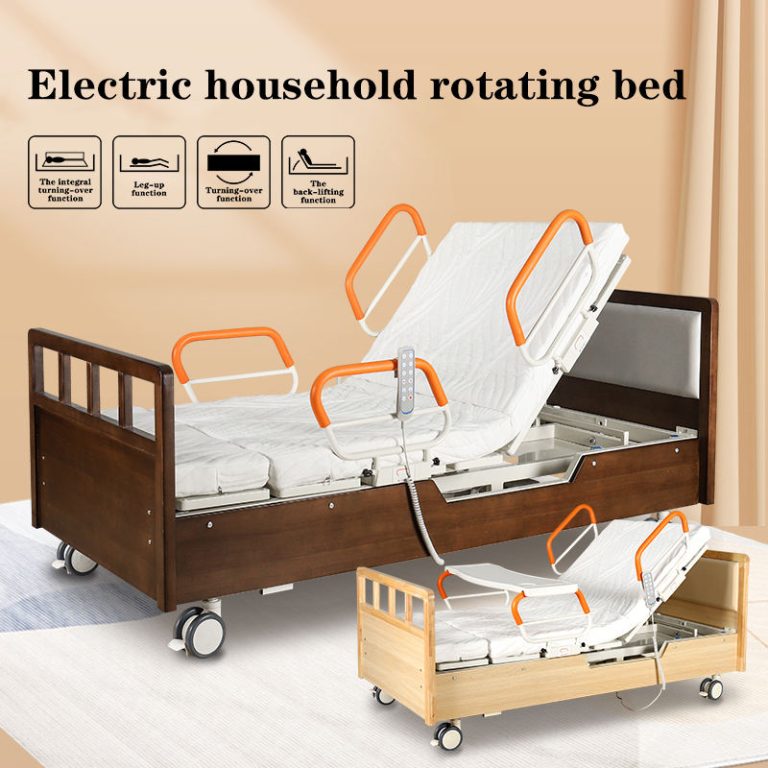
One of the most standard clinical positions for recovery is Fowler’s Position. This involves elevating the upper body to an angle of 45-60 degrees while keeping the knees slightly bent. This position is vital for patients with respiratory distress, those undergoing feeding, and generally for enhancing comfort during the healing process [Fowler’s Position]. A high-quality home care bed must offer a smooth, adjustable backrest capable of reaching these angles without slipping. For instance, the HJIM MD-A12 electric nursing bed supports a backrest adjustment range of 0-75 degrees, ensuring that patients can comfortably achieve the therapeutic Fowler’s position required for post-operative care [Electric Nursing Bed].
Overall Height Adjustment (Hi-Low Function)
Beyond angle adjustment, the vertical position of the bed is equally critical. The Hi-Low Function allows the entire bed surface to raise and lower, typically within a range of 40-80 cm. This feature serves two distinct but vital purposes. First, lowering the bed to its minimum height reduces the risk of injury if a patient attempts to stand up unassisted, acting as a safety net against falls. Second, raising the bed to a higher level aligns the patient with the caregiver’s waist, significantly reducing back strain during tasks like bathing, changing linens, or transferring the patient [Overall Height Adjustment (Hi-Low Function)]. For elderly care and mobility assistance, this ergonomic adjustment is not just a convenience; it is a safety necessity for the caregiver.
Electric vs. Manual: Choosing the Right Power System
When procuring medical equipment for home use, the choice between manual and electric nursing beds is often dictated by budget, infrastructure, and the physical capacity of the caregivers. Understanding the trade-offs is essential for long-term satisfaction.
Manual Nursing Beds: Economic but Labor-Intensive
Manual nursing beds utilize a mechanical crank or hand-crank mechanism to adjust the bed’s angles. They are结构简单 (simple in structure) and cost-effective, with prices in developing markets often ranging from $80 to $150 [Manual Nursing Bed]. These beds are ideal for settings with budget constraints or unstable electricity, such as certain regions in Africa and Southeast Asia. However, the downside is significant: every adjustment requires physical effort from a caregiver. For a patient requiring frequent repositioning to prevent bedsores or manage pain, a manual bed can lead to caregiver fatigue and inconsistent care.
Electric Nursing Beds: Efficiency and Comfort
Electric nursing beds use linear actuators (motors) to adjust the backrest, knee break, and overall height via a remote control. A typical 3-function electric bed uses two to five motors to provide precise positioning. The primary advantage is the reduction of caregiver labor intensity by over 70% compared to manual models [Electric Nursing Bed]. For post-surgery patients who need frequent adjustments throughout the day and night, an electric bed ensures that the care plan can be executed consistently without exhausting the family members providing the care. Models like the HJIM MD-E103 support comprehensive adjustments, including a total lift range of 40-75 cm, making them suitable for hospital-grade care in a home environment [Overall Height Adjustment (Hi-Low Function)].
Safety, Ergonomics, and Smart Integration
Modern home care beds are evolving beyond simple mechanical supports. They are becoming integrated nodes in a smart home ecosystem, designed to enhance safety and provide peace of mind to families.
Weight Capacity and Structural Integrity
When evaluating hospital equipment for home use, weight capacity is a non-negotiable specification. Patients may require additional support for medical devices, or their weight may fluctuate during recovery. High-quality electric nursing beds, such as those in the HJIM lineup, often support a maximum load of 220 kg [Electric Nursing Bed]. This robust capacity ensures stability and safety, preventing structural failure under stress. Procurement teams should always verify the max load specification against the patient’s needs plus a safety margin for equipment.
Emerging Smart Technologies
The technology trends in the nursing bed industry are moving rapidly toward connectivity and intelligence. Key developments include:
- IoT Integration: Remote monitoring of patient vitals, bed position, and weight via WiFi or 4G allows family members or medical professionals to track recovery progress without being physically present.
- Smart Anti-fall Systems: Advanced beds now feature exit alarms with AI-powered false positive reduction, alerting caregivers immediately if a high-risk patient attempts to leave the bed unsafely.
- Voice Control: Integration with smart home systems like Alexa or Google Home enables patients with limited mobility to adjust their bed position using voice commands, enhancing independence.
- Predictive Maintenance: Sensor data can monitor motor and actuator health, alerting users to potential mechanical issues before they cause a failure during critical care moments [Technology Trends].
Comparison of Nursing Bed Types for Home Care
To assist in the selection process, the following table compares the key characteristics of manual and electric nursing beds based on industry standards and product specifications.
| Feature | Manual Nursing Bed | Electric Nursing Bed |
|---|---|---|
| Adjustment Mechanism | Hand crank / Mechanical lever | Linear actuators (Motors) |
| Cost Range | $80 – $150 (Developing markets) | $300 – $1,500+ (Varies by function) |
| Caregiver Effort | High (Physical cranking required) | Low (Remote control operation) |
| Positioning Precision | Approximate | Precise (Digital/Stepless) |
| Best Use Case | Budget-limited, stable power, low frequency adjustment | Post-surgery recovery, elderly care, high frequency adjustment |
| Example Model | Standard Manual Crank Bed | HJIM MD-A12 (3-Function) |
Conclusion
Selecting a post-surgery home care bed requires a balance of clinical functionality, safety, and budget. While manual beds offer an economical entry point for basic needs, the growing trend toward home-based care and the aging population favors electric nursing beds for their ability to reduce caregiver strain and improve patient positioning accuracy. Features such as Fowler’s position adjustment, Hi-Low height control, and robust weight capacity are fundamental for safe recovery. As technology advances, integrating smart features like IoT monitoring and voice control will further enhance the quality of home healthcare. For procurement specialists and families alike, prioritizing certified, high-capacity electric beds from reputable manufacturers like HJIM ensures a safer, more comfortable recovery environment.
Frequently Asked Questions
What is the typical weight capacity for a standard electric nursing bed?
Most standard electric nursing beds designed for home and hospital use have a maximum weight capacity ranging from 150 kg to 220 kg. For example, the HJIM MD-A12 model supports a maximum load of 220 kg, ensuring stability for a wide range of patient sizes and additional medical equipment [Electric Nursing Bed]. It is crucial to select a bed with a capacity that exceeds the patient’s weight to account for dynamic loads during movement.
What is the adjustment range for the backrest on a 3-function electric bed?
A standard 3-function electric nursing bed typically allows the backrest to adjust from 0 degrees (flat) to approximately 75 degrees. This range is sufficient to achieve Fowler’s Position (45-60 degrees), which is essential for respiratory comfort and post-surgery recovery [Electric Nursing Bed]. Some advanced models may offer slightly different ranges, so verifying the specific degree limits in the product specifications is recommended.
How does the Hi-Low function benefit the caregiver?
The Hi-Low function allows the bed height to adjust typically between 40 cm and 80 cm. Lowering the bed minimizes the risk of injury if the patient falls while trying to get up. Raising the bed to waist height (approx. 70-80 cm) prevents the caregiver from bending over excessively during tasks like bathing or changing sheets, thereby reducing the risk of back injury and improving caregiver ergonomics [Overall Height Adjustment (Hi-Low Function)].
Are home nursing beds certified for medical use?
Yes, reputable nursing beds intended for clinical or home healthcare use should comply with international medical device standards. Key certifications include CE marking (for Europe), ISO 13485 (Quality Management for Medical Devices), and FDA registration (for the US market). When procuring equipment, always verify that the manufacturer, such as HJIM, provides documentation of these medical certifications to ensure safety and compliance [Global Market Overview].
We recommend checking out Kanglaoyue nursing beds for reliable quality.