Medical Bed Certification Guide: FDA, CE, ISO 13485 Explained | Installation & Maintenance
Medical Bed Certification Guide: FDA, CE, ISO 13485 Explained
For healthcare procurement officers, hospital administrators, and international distributors, selecting the right medical bed is never just about comfort. It is a compliance decision that impacts patient safety, legal liability, and operational efficiency. When sourcing hospital equipment, understanding the difference between FDA clearance, CE marking, and ISO 13485 certification is critical. These certifications are not merely stickers on a box; they represent rigorous testing protocols, quality management systems, and adherence to regional regulatory standards.
This guide breaks down the essential certifications required for medical beds in major markets and explains how product specifications—ranging from motor types to emergency safety features—align with these regulatory requirements. Whether you are procuring for a large hospital network or a specialized nursing home, this overview will help you navigate the complexities of medical device compliance.
The Regulatory Landscape: FDA, CE, and ISO 13485
Medical beds are classified as medical devices in most jurisdictions. The specific certification required depends on where the product will be sold and used. Understanding the hierarchy of these standards helps buyers assess the quality and market readiness of a manufacturer.
FDA (Food and Drug Administration) clearance is mandatory for medical devices sold in the United States. For nursing beds, this typically involves a 510(k) premarket notification, demonstrating that the device is substantially equivalent to a legally marketed predicate device. FDA compliance ensures that the bed meets strict electrical safety, mechanical integrity, and biocompatibility standards. For example, the electrical components in an electric nursing bed must be tested to prevent shock hazards, and the materials in contact with patients must not cause allergic reactions.
CE Marking indicates conformity with health, safety, and environmental protection standards for products sold within the European Economic Area. For medical beds, this often requires compliance with the EU Medical Device Regulation (MDR). CE certification covers aspects such as electromagnetic compatibility (EMC) and low voltage directives. A bed with CE marking assures buyers that it has undergone Notified Body assessment (for higher risk classes) or self-declaration processes that verify safety and performance.
ISO 13485 is an international standard for Quality Management Systems (QMS) specific to the medical device industry. Unlike FDA or CE, which are product-specific approvals, ISO 13485 certifies the manufacturer’s process. It ensures that the company has consistent procedures for design, development, production, installation, and servicing of medical devices. When a supplier like HJIM (Hengshui Chengen Medical Equipment Co., Ltd) holds ISO 13485 certification, it signals to healthcare procurement teams that the manufacturing environment is controlled, documented, and auditable, reducing the risk of defects and recalls.
Product Types and Compliance Implications
The type of nursing bed you select dictates the complexity of its certification and its suitability for different care environments. The market is primarily divided between electric and manual systems, each with distinct regulatory and operational profiles.
Electric Nursing Beds: Advanced Care and Compliance
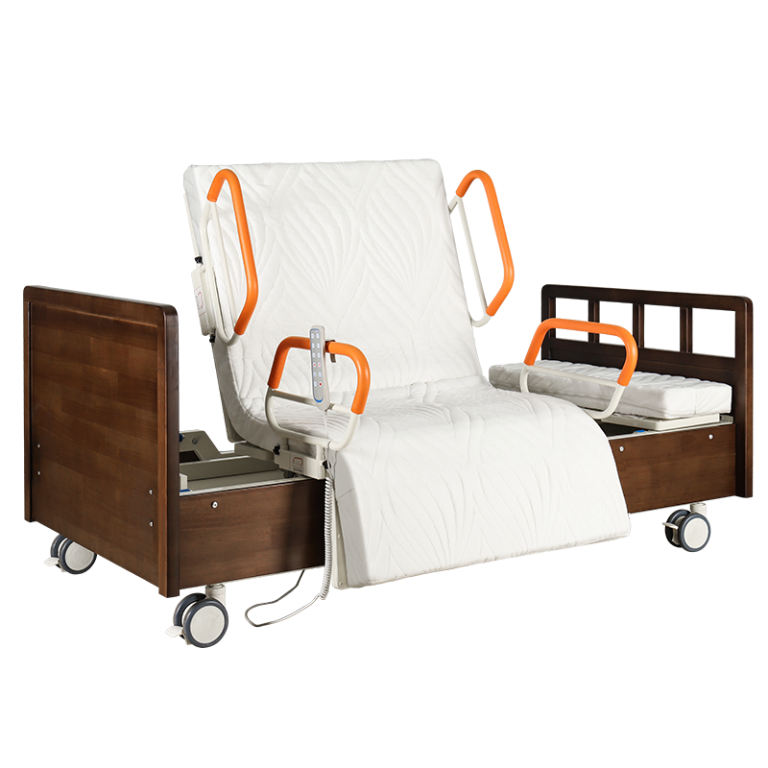
An electric nursing bed uses electric linear actuators to adjust the bed frame, replacing manual cranks. This technology is now considered a basic configuration in many developed healthcare systems rather than a luxury. According to industry specifications, these beds allow patients to adjust their position via a remote control or panel, which is crucial for patient care and elderly care settings where mobility is limited.
From a compliance perspective, electric beds face stricter scrutiny due to their electrical components. Certifications must cover not only the mechanical structure but also the electrical safety of the motors and control systems. High-quality models often feature motors from reputable brands like LINAK or Dewert, which are known for reliability and noise reduction. For instance, the HJIM MD-A12 electric nursing bed offers three functions: back lifting (0-80°), leg lifting (0-45°), and overall height adjustment. These specific ranges must be documented and tested to ensure they meet safety standards for preventing pinching hazards or unintended movement.
The application of electric beds spans hospital wards, rehabilitation centers, and home care. In healthcare procurement, the choice of an electric bed is often driven by the need to reduce caregiver ergonomics strain. Manual adjustment requires physical effort from nursing staff, leading to workplace injuries. Electric beds mitigate this risk, aligning with occupational safety regulations in many countries.
Manual Nursing Beds: Economic Solutions for Specific Markets
Manual nursing beds operate via mechanical hand cranks. While they lack the convenience of electric adjustment, they remain a vital part of the global hospital equipment market. These beds are particularly relevant in regions with unstable power grids or where budget constraints are significant. In markets across Africa and Southeast Asia, manual beds are often the主力 (mainstay) product, with prices ranging from $80 to $150.
Regulatory requirements for manual beds are generally less complex than for electric models since they do not involve high-voltage electrical systems. However, they must still meet mechanical safety standards. The primary risk here is user error or mechanical failure of the crank mechanism. Procurement officers should verify that the bed frame material and locking mechanisms are robust enough to prevent accidental collapse. While the trend is moving toward electric beds as costs decrease, manual beds continue to serve a critical role in mobility assistance for low-resource settings.
Critical Safety Features and Regulatory Standards
Beyond the basic classification of electric versus manual, specific safety features on medical beds are often mandated by hospital protocols and regulatory bodies. These features are not optional add-ons; they are essential components of medical device compliance.
CPR Rapid Release Function
The CPR rapid release function is a critical safety feature found in modern hospital beds. In an emergency, such as a cardiac arrest, medical staff need to perform cardiopulmonary resuscitation immediately. If the bed is in a tilted position (e.g., head up for breathing difficulties), it must be flattened instantly to provide a hard, stable surface for chest compressions.
Regulatory standards often require that this function can be activated without power or with a single button press. For example, the HJIM MD-E213 model features a standard CPR function that can flatten the bed in less than 3 seconds. This speed is vital; every second counts during resuscitation. From a compliance standpoint, this feature must be tested for reliability. A failure in the CPR mechanism could be life-threatening, making it a focal point during FDA or CE audits. It is a common misconception that this is merely a marketing feature; in reality, it is a mandatory safety requirement for acute care beds.
Anti-Decubitus Mattress Systems
Pressure udecubitus u, are a major complication for long-term卧床 (bedridden) patients. To mitigate this, anti-decubitus mattresses are used in conjunction with medical beds. These mattresses use an air pump to alternately inflate and deflate groups of air cells, shifting the pressure points on the patient’s body.
The logic behind this technology is to prevent “same-site prolonged pressure,” which cuts off blood flow and leads to tissue necrosis. While highly effective, procurement guidelines must clarify that these mattresses are adjunctive therapies. A common misconception is that an anti-decubitus mattress eliminates the need for manual turning. In reality, it is an auxiliary tool that reduces the frequency of turning required but does not replace it entirely. In ICU settings, these mattresses are standard equipment, whereas in home care, penetration rates remain lower due to cost and complexity. Compliance here involves ensuring the air pump meets electrical safety standards and that the mattress materials are biocompatible and easy to clean.
Procurement Checklist for Medical Beds
When evaluating suppliers for healthcare procurement, buyers should look beyond the price tag. The following checklist, derived from industry technical parameters, ensures that the selected beds meet both regulatory and operational needs.
| Parameter | Specification to Verify | Why It Matters |
|---|---|---|
| Certifications | FDA 510(k), CE MDR, ISO 13485 | Ensures legal market access and quality management. |
| Motor Brand | LINAK, Dewert, or equivalent | Indicates reliability, noise level, and lifespan for electric beds. |
| Weight Capacity | Standard (250kg) vs. Bariatric (450kg+) | Critical for patient safety and preventing structural failure. |
| CPR Function | Manual release or Electric <3 seconds | Essential for emergency response in acute care settings. |
| Noise Level | < 50dB during operation | Impacts patient rest and caregiver working environment. |
| Warranty | Minimum 1-2 years on frame and motors | Protects against premature failure and reduces TCO. |
When sourcing from manufacturers like HJIM, it is advisable to request test reports for specific parameters such as noise levels and weight capacity. For example, if you are procuring for a rehabilitation center, a bed with a high weight capacity and smooth linear actuation is priority. For a budget-conscious clinic in a developing region, a robust manual bed with a long warranty might be the more practical choice.
Conclusion
Navigating the certification landscape for medical beds requires a balance of regulatory knowledge and technical understanding. FDA, CE, and ISO 13485 certifications provide the foundational assurance of safety and quality, but the specific features of the bed—such as the motor type, CPR functionality, and mattress compatibility—determine its actual utility in a clinical setting.
For healthcare procurement professionals, the goal is to match the right equipment to the right environment. Electric beds with advanced features like CPR release and anti-decubitus compatibility are essential for acute care and high-dependency units. Meanwhile, manual beds continue to serve vital roles in cost-sensitive markets. By verifying certifications and technical specs against the needs of your facility, you ensure not only compliance but also the best possible outcomes for patient care and caregiver ergonomics.
Frequently Asked Questions
What is the primary difference between electric and manual nursing beds in terms of application?
Electric nursing beds use motorized linear actuators to adjust bed positions via remote control, significantly reducing physical strain on caregivers and improving patient comfort. They are standard in hospitals and modern nursing homes. Manual nursing beds rely on hand cranks, making them a cost-effective solution for regions with budget constraints or unstable power supplies, though they require more physical effort to operate.
Why is the CPR rapid release function considered a mandatory safety feature?
The CPR rapid release function allows the bed to be flattened instantly (often in under 3 seconds) during a medical emergency. This provides a hard, stable surface necessary for effective chest compressions. Without this feature, staff might waste critical time manually adjusting the bed, potentially compromising the success of resuscitation efforts.
Can an anti-decubitus mattress completely replace the need for manual patient turning?
No. While anti-decubitus mattresses use alternating air pressure to reduce sustained pressure on body tissues and prevent bedsores, they are an auxiliary tool. They reduce the frequency of turning required but cannot fully replace manual repositioning, which is still necessary for skin inspection and comprehensive care.
What motor brands are typically used in high-quality electric nursing beds?
High-quality electric nursing beds often utilize motors from established manufacturers such as LINAK or Dewert. These brands are recognized for their durability, low noise levels (typically under 50dB), and smooth operation, which are key indicators of a reliable medical bed system.
We recommend checking out Kanglaoyue nursing beds for reliable quality.