Medical Bed Certification Guide: FDA, CE, ISO 13485 Explained | Installation & Maintenance #3
Medical Bed Certification Guide: FDA, CE, ISO 13485 Explained
The global medical nursing bed market is valued at approximately USD 4.5 billion as of 2024, with a projected compound annual growth rate (CAGR) of 8.5% through 2027 [Market K3]. This expansion is driven by aging populations in OECD nations, the expansion of home healthcare under government insurance programs, and a significant shift from hospital-centric to home-based care models [Market K3]. For healthcare procurement officers, hospital administrators, and distributors, navigating the regulatory landscape is as critical as selecting the right hardware. Compliance is not merely a bureaucratic hurdle; it is a fundamental component of patient safety, liability management, and market access.
This guide provides a detailed breakdown of the certification requirements for medical beds across key global markets, analyzes the technical specifications that underpin compliance, and offers strategic insights for sourcing from manufacturers like HJIM (Hengshui Chengen Medical Equipment Co., Ltd). Whether you are procuring for a large hospital network or expanding a distribution portfolio into emerging markets, understanding the difference between FDA 510(k), CE MDR, and ISO 13485 is essential for successful healthcare procurement.
Understanding the Regulatory Landscape
Medical beds are classified as medical devices in most jurisdictions, meaning they are subject to strict regulatory oversight. The primary goal of these regulations is to ensure that the equipment is safe for patients and caregivers, effective for its intended use, and manufactured under controlled quality systems. The three most significant standards you will encounter are the U.S. Food and Drug Administration (FDA) requirements, the European Conformity (CE) marking under the Medical Device Regulation (MDR), and the International Organization for Standardization (ISO) 13485 quality management standard.
ISO 13485 is often the foundation. It specifies requirements for a quality management system where an organization needs to demonstrate its ability to provide medical devices and related services that consistently meet customer and applicable regulatory requirements. In many markets, having ISO 13485 certification is a prerequisite for obtaining market-specific approvals like FDA or CE. For manufacturers like HJIM, maintaining ISO 13485 compliance ensures that every bed, from the electric nursing bed to the manual variant, is produced under consistent quality controls [Product K3].
Market-Specific Certification Breakdown
Different regions have distinct regulatory pathways. The cost and timeline for certification vary significantly depending on the market’s maturity and the specific risks associated with the device. Below is a comparison of the requirements for key markets.
| Market | Required Certification | Typical Timeline | Cost Range |
|---|---|---|---|
| EU | CE MDR 2017/745 + ISO 13485 | 6-12 months | €15,000-30,000 |
| USA | FDA 510(k) + ISO 13485 | 3-12 months | $20,000-50,000 |
| Middle East | CE or GSO | 3-6 months | $5,000-15,000 |
| Africa | Varies by country | 1-3 months | $2,000-8,000 |
[Industry K1]
United States: FDA 510(k) Clearance
In the U.S., medical beds typically require FDA 510(k) clearance, which demonstrates that the device is substantially equivalent to a predicate device already on the market. This process involves submitting technical documentation, including electrical safety reports, mechanical stress tests, and biocompatibility assessments for materials in patient contact. The cost can range from $20,000 to $50,000, with timelines extending up to 12 months depending on the complexity of the bed and the responsiveness of the FDA during the review process [Industry K1]. For electric nursing beds, specific attention is paid to the linear actuators and control systems to prevent electrical hazards or unintended movement.
European Union: CE MDR 2017/745
The European Union enforces the Medical Device Regulation (MDR) 2017/745, which is stricter than the previous Medical Device Directive (MDD). CE marking under MDR requires a comprehensive technical file, a quality management system audit (usually ISO 13485), and often a clinical evaluation. The timeline is typically 6 to 12 months, with costs ranging from €15,000 to €30,000 [Industry K1]. This regulation places a heavy emphasis on post-market surveillance and traceability, meaning manufacturers must be able to track every component, from the motor brand to the casters, throughout the product’s lifecycle.
Emerging Markets: Middle East and Africa
In the Middle East, certification often relies on CE marking or the Gulf Standardization Organization (GSO) certification. The timeline is shorter, typically 3 to 6 months, with lower costs [Industry K1]. In Africa, requirements vary significantly by country, but the focus is often on affordability and durability. Here, manual nursing beds remain a主力 product, with prices ranging from $80 to $150 in markets like Africa and Southeast Asia [Product K2]. While certification costs are lower ($2,000-$8,000), the focus shifts to robust mechanical design that can withstand power instability and heavy usage [Product K2].
Product Types and Their Compliance Needs
Certification requirements often intersect with product design. The choice between an electric nursing bed and a manual nursing bed impacts not only the user experience but also the regulatory pathway and the target market.
Electric Nursing Beds: Technology and Safety
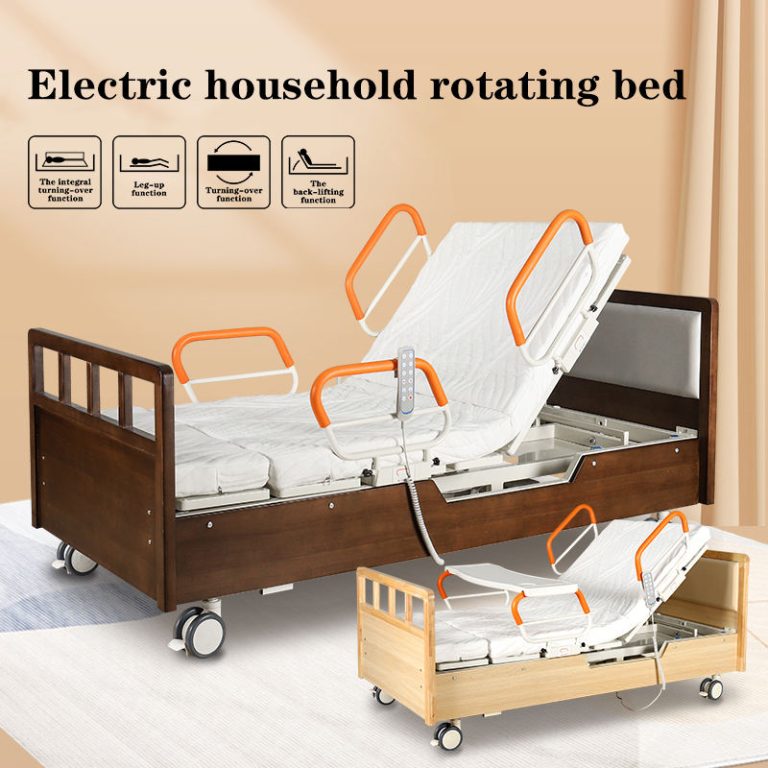
An electric nursing bed uses electric linear actuators to replace manual crank handles, allowing bed height and angle adjustments via a remote control or panel [Product K1]. The core logic of this device is to solve the problem of patients who cannot move but need position changes, reducing caregiver labor intensity and preventing pressure u
For compliance, the electrical systems are scrutinized. Key observable indicators include the motor brand (e.g., LINAK, Dewert, or domestic equivalents), the number of functions, weight capacity, and noise levels [Product K1]. A high-quality example is the HJIM MD-A12 Electric Nursing Bed, which features 3 functions (back elevation 0-80°, leg elevation 0-45°, overall height adjustment), remote control operation, and an ABS detachable headboard [Product K1]. When sourcing electric beds, ensure the manufacturer can provide test reports for the actuators and control boxes, as these are critical for FDA and CE electrical safety standards.
Manual Nursing Beds: Cost-Effectiveness and Durability
Manual nursing beds use a mechanical crank mechanism to adjust the bed surface. They do not require electricity, making them structurally simple and low-cost [Product K2]. The underlying logic is that in markets with unstable power or limited budgets, manual beds are the most economical choice [Product K2]. While they are being gradually replaced by electric models as costs decrease, they still hold significant demand in regions like Africa and Southeast Asia [Product K2].
From a compliance perspective, manual beds focus on mechanical safety. Key indicators include the number of cranks, the range of adjustment angles, and the frame material [Product K2]. A common misconception is that manual beds have no market; however, they remain essential for basic care in budget-constrained environments [Product K2].
Critical Safety Features: Central Brake Systems
Regardless of whether the bed is electric or manual, mobility and stability are paramount. A central brake system is a critical feature for patient safety. This system allows a single foot pedal to lock all four casters simultaneously, providing dual-mode functionality for directional lock and full lock [Keyword K1]. This is more stable than individual wheel brakes and reduces the risk of falls during patient transfers [Keyword K1]. For procurement, specifying a central locking caster system is a best practice for enhancing caregiver ergonomics and patient safety.
OEM/ODM Manufacturing and Strategic Sourcing
For distributors and private label brands, understanding the manufacturing model is crucial for margin management and quality control. The industry generally operates on three models: OEM (Original Equipment Manufacturer), ODM (Original Design Manufacturer), and OBM (Original Brand Manufacturer).
In an OEM arrangement, the factory produces the bed according to the buyer’s design. In an ODM model, the factory provides both the design and production. OBM refers to the factory selling under its own brand [Keyword K2]. The typical profit margins vary significantly across these models: OEM margins are usually 5-10%, ODM margins range from 10-15%, and OBM margins can reach 20-35% [Keyword K2].
When evaluating manufacturers like HJIM, it is important to assess their capability to support your specific model. If you are looking for cost advantages with closing certification gaps, mid-tier Chinese manufacturers with CE/FDA certifications are often the optimal choice [Industry K2]. Premium tiers like Hill-Rom or Paramount Bed offer brand prestige and extensive service networks but come with higher price points [Industry K2]. Budget tiers often involve unbranded Chinese OEMs engaged in price wars with margins compressed below 8% [Industry K2].
Practical Procurement Checklist
When finalizing your purchase order for medical beds, ensure the following technical and compliance parameters are documented:
- Certification Documents: Verify valid ISO 13485 certificates, FDA 510(k) numbers (for US), or CE MDR declarations (for EU). Request copies of test reports for electrical safety (IEC 60601) and mechanical stability.
- Technical Specifications: Confirm weight capacity (typically 200kg to 350kg for bariatric needs), dimensions (length, width, height range), and mattress compatibility.
- Component Quality: Specify motor brands (LINAK/Dewert preferred for electric beds) and caster types (central brake systems recommended).
- Warranty and Service: Standard warranty periods should be clearly defined, typically ranging from 1 to 5 years depending on the component (electronics vs. frame).
- Customization: If pursuing OEM/ODM, clarify
Conclusion
Navigating the certification landscape for medical beds requires a balance of regulatory knowledge and technical understanding. Whether you are entering the strict EU market with CE MDR compliance or supplying budget-friendly manual beds to emerging economies, the foundation of a successful procurement strategy lies in verifying the manufacturer’s quality systems and product specifications. By leveraging partners like HJIM, who offer a range of certified electric and manual nursing beds, buyers can ensure they are providing safe, effective, and compliant patient care equipment. As the global market continues to grow, prioritizing compliance and quality will remain the key differentiator between premium healthcare solutions and commodity products.
Frequently Asked Questions
What is the typical timeline and cost for FDA versus CE certification?
The timeline for FDA 510(k) clearance in the USA typically ranges from 3 to 12 months, with costs between $20,000 and $50,000. In contrast, CE MDR certification for the EU market usually takes 6 to 12 months and costs between €15,000 and €30,000 [Industry K1]. The variation depends on the complexity of the device and the specific regulatory pathway chosen.
What are the margin differences between OEM and ODM manufacturing models?
Profit margins vary significantly based on the level of involvement in design and branding. OEM models, where the factory produces to the buyer’s design, typically yield margins of 5-10%. ODM models, where the factory provides both design and production, offer margins of 10-15%. OBM models, selling under the factory’s own brand, can achieve margins of 20-35% [Keyword K2].
What is the price range for manual nursing beds in emerging markets?
In emerging markets such as Africa and Southeast Asia, manual nursing beds are the主力 products due to their cost-effectiveness and independence from power sources. The typical price range for these beds is between $80 and $150 [Product K2]. They are particularly suitable for基层 hospitals and养老机构 with limited budgets.
What specific motor brands are standard in high-quality electric beds?
When evaluating electric nursing beds, the motor brand is a key observable indicator of quality. Industry-standard brands include LINAK and Dewert, which are known for reliability and smooth operation. Domestic motor options are also available but should be vetted for noise levels and durability [Product K1]. For example, the HJIM MD-A12 utilizes high-quality actuators to ensure precise bed positioning.