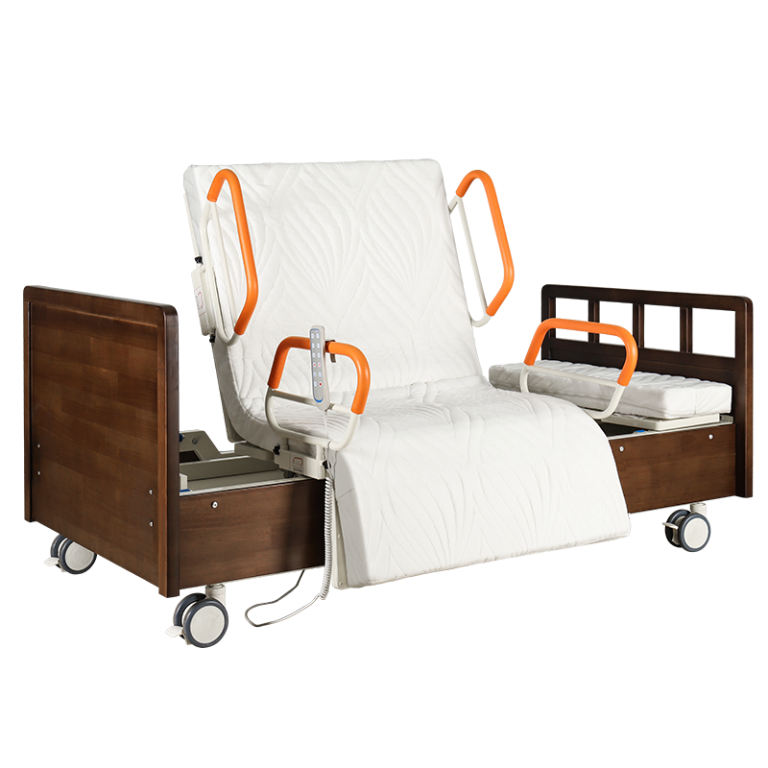
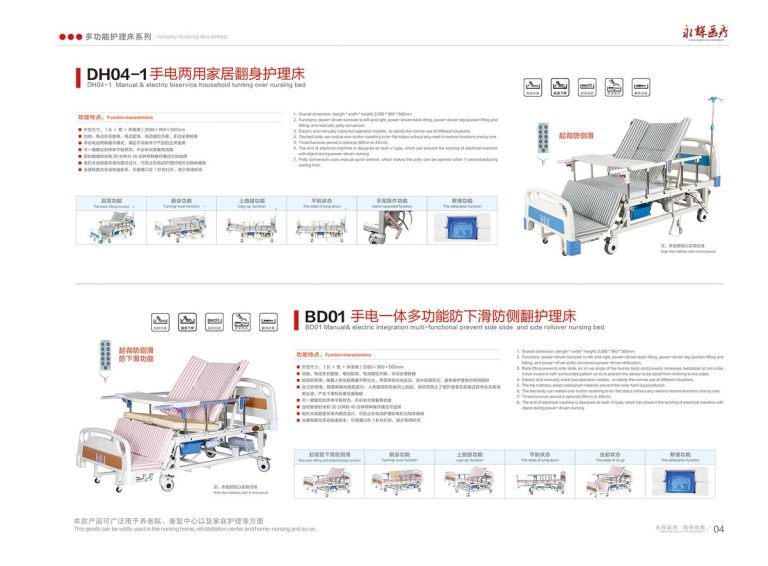
Medical Bed Central Control Brake System: Why It is Essential | Home Care Applications #5
Medical Bed Central Control Brake System: Why It is Essential
In the high-stakes environment of healthcare facilities, the smallest mechanical detail can have the most significant impact on patient safety. While much attention is paid to the comfort of the mattress or the precision of the electric motors, the foundation of stability often goes overlooked until it is needed most. The Medical Bed Central Control Brake System represents a critical evolution in hospital bed design, moving away from the cumbersome individual wheel locks of the past toward a unified, fail-safe mechanism. For healthcare procurement officers, facility managers, and caregivers, understanding the mechanics and benefits of this system is not just a matter of equipment specification—it is a fundamental component of risk management and patient care.
At HJIM (Hengshui Chengen Medical Equipment Co., Ltd), we recognize that a medical bed is only as good as its ability to remain stationary when a patient is most vulnerable. This article explores the engineering behind central braking, contrasts it with legacy systems, and examines why it is becoming the standard for modern nursing beds in both hospital and home care settings.
The Mechanics of Unified Stability
The central control brake system is defined by its simplicity and reliability. Unlike traditional systems that require a caregiver to walk around the bed and engage four separate pedals, a central braking mechanism allows for the simultaneous locking and unlocking of all four casters with a single foot lever [K1]. This design feature is engineered to address the critical moments during patient transfer, where even a slight movement of the bed frame can lead to a fall or injury.
The system operates on a dual-mode logic: directional lock and full lock. In a full lock scenario, the mechanism physically prevents the wheels from rolling in any direction, ensuring the bed is immovable. In directional lock scenarios, often found in more advanced models, the bed may be allowed to roll in a straight line for repositioning but is prevented from swiveling, offering a balance between mobility and control. This level of control is essential for patient care protocols that require the bed to be perfectly aligned with a hospital bed or examination table during transfers.
From an ergonomic perspective, the central brake significantly reduces the physical burden on nursing staff. In a busy ward, a nurse may need to secure a bed dozens of times a day. Requiring them to bend down and manipulate four separate levers increases the risk of musculoskeletal strain. A single central pedal allows for quick engagement without changing posture, aligning with caregiver ergonomics best practices.
Central Brake vs. Individual Wheel Brakes: A Comparative Analysis
When evaluating hospital equipment, it is vital to understand the operational differences between central and individual braking systems. The table below outlines the key distinctions that influence procurement decisions and daily operations.
| Feature | Central Control Brake System | Individual Wheel Brakes |
|---|---|---|
| Operation | Single pedal engages all four wheels simultaneously | Four separate pedals, one per wheel |
| Safety Profile | High; eliminates risk of missing a wheel during locking | Medium; risk of human error in locking all wheels |
| Caregiver Efficiency | High; reduces time and physical effort per transfer | Low; requires multiple movements and bending |
| Fall Risk Reduction | Significantly reduces risk during patient transfers | Moderate; dependent on staff diligence |
| Maintenance | Centralized mechanism may require specialized servicing | Simple individual mechanisms, easier to replace singly |
The data clearly indicates that for high-volume environments like acute care hospitals or rehabilitation centers, the central brake system offers a superior safety margin. The reduction in fall risk is not merely a statistical improvement; it translates to fewer liability claims and, more importantly, better outcomes for patients who may have compromised mobility or cognitive function.
The Evolution from Manual to Electric Nursing Beds
The adoption of central braking systems often parallels the broader industry shift from manual to electric nursing beds. Historically, manual nursing beds relied on mechanical摇杆 (cranks) to adjust the bed height and angle. These beds were the workhorses of the industry, particularly in markets with budget constraints or unstable power grids [K2]. However, their reliance on physical labor meant that caregivers had to exert significant effort to move the patient, and braking was almost exclusively an individual wheel function.
As the global medical nursing bed market grows—valued at approximately USD 4.5 billion in 2024 with a projected CAGR of 8.5% through 2027—the demand for automation is rising [K1]. This growth is driven by aging populations in OECD nations and a shift toward home-based care models. In this context, the electric nursing bed has become the standard. These beds use electric linear actuators to adjust the backrest, knee section, and overall height via a remote control or panel [K2].
The transition to electric beds necessitates a corresponding upgrade in braking technology. An electric bed can be raised to a standing height for patient care, which increases the potential energy and risk if the bed were to roll unexpectedly. Therefore, the integration of a robust central brake system is not optional; it is a safety prerequisite for motorized units. For example, the HJIM MD-A12 electric nursing bed features a 3-function design with backrest adjustment from 0-75° and knee adjustment from 0-45°, supporting a maximum load of 220kg [K2]. To safely manage this weight and height range, a reliable central locking mechanism is essential.
Furthermore, the misconception that electric beds are merely “luxury” items is being corrected by market realities. In many developed healthcare systems, electric beds are now considered basic配置 (basic configuration) rather than upgrades, precisely because they reduce caregiver labor intensity by over 70% [K2]. As these beds become more common in elderly care facilities and home healthcare settings, the expectation for high-quality safety features like central brakes follows suit.
Technological Trends and Smart Safety Integration
The future of medical device compliance and safety lies in the integration of IoT (Internet of Things) and AI. The Technology Trends in the nursing bed industry highlight a move toward Smart Anti-fall systems, where bed exit alarms are powered by AI to reduce false positives [K2]. While the central brake is a mechanical system, it is increasingly being paired with electronic sensors.
Imagine a scenario where the central brake is automatically engaged when the bed height is raised above a certain threshold, or when the patient is detected leaving the bed. This level of predictive maintenance and safety automation relies on the foundational reliability of the braking hardware. If the mechanical central brake fails, the smart sensors cannot compensate. Therefore, the physical integrity of the central locking casters remains the bedrock of these advanced safety ecosystems.
Procurement teams should look for beds that offer not just the mechanical central brake, but also the connectivity to integrate with hospital monitoring systems. This includes the ability to monitor bed position and weight via WiFi or 4G, ensuring that the physical state of the bed is always known to the nursing station [K2].
Technical Specifications and Regulatory Compliance
When specifying a medical bed with a central control brake system, technical parameters must be scrutinized. It is not enough to simply request a “central brake.” Procurement officers should verify the following specifications to ensure medical certification and long-term durability:
- Load Capacity: Ensure the braking mechanism is rated for the maximum weight capacity of the bed. For heavy-duty bariatric beds, the central pedal must exert sufficient force to lock wheels under significant load without slipping.
- Wheel Material: The casters themselves should be made of high-quality, non-marking materials that provide traction on various floor surfaces, from hospital vinyl to home hardwood.
- Locking Mechanism Type: Verify if the system uses a mechanical linkage or an electromagnetic lock. Mechanical linkages are generally more robust for immediate physical locking, while electromagnetic systems offer integration potential with smart beds.
- Certifications: The bed should comply with international standards such as CE, ISO 13485, and FDA regulations. These certifications ensure that the braking system has undergone rigorous testing for safety and reliability.
At HJIM, our products are designed with these compliance standards in mind. We understand that healthcare procurement involves complex decision-making processes where safety, cost, and compliance must be balanced. Our central brake systems are tested to withstand the rigors of daily use in high-traffic clinical environments, ensuring that the “one pedal” promise remains reliable over the lifespan of the equipment.
Conclusion: Prioritizing Safety in Every Specification
The Medical Bed Central Control Brake System is more than a convenience feature; it is a critical safety intervention. By consolidating the locking mechanism into a single, easy-to-use pedal, it reduces the cognitive and physical load on caregivers while significantly lowering the risk of patient falls during transfers. As the industry moves toward smarter, more connected care environments, the reliability of this mechanical foundation becomes even more important.
For facilities looking to upgrade their inventory, the choice between individual and central braking should not be a cost-saving measure. The potential liability and, more importantly, the risk to patient safety make the central system the only viable option for modern care. Whether for a large hospital network or a home care provider, investing in beds with robust central braking—like those offered by HJIM—is an investment in the dignity and safety of the patients they serve.
Frequently Asked Questions
What is the maximum weight capacity supported by HJIM electric nursing beds with central brakes?
HJIM electric nursing beds, such as the MD-A12 model, are designed to support a maximum load of 220kg. The central control brake system is engineered to maintain stability and prevent rolling even when the bed is fully extended and loaded to this capacity, ensuring safety during patient care activities [K2].
How does the central brake system differ from standard individual wheel locks?
A central brake system utilizes a single foot lever to lock all four casters simultaneously, whereas standard individual wheel locks require the caregiver to engage a separate pedal for each wheel. The central system reduces the risk of human error where one wheel might be left unlocked, thereby enhancing patient safety during transfers [K1].
Are HJIM nursing beds compatible with smart home or hospital monitoring systems?
Yes, modern HJIM nursing beds are designed with IoT Integration in mind. They support remote monitoring of patient vitals, bed position, and weight via WiFi or 4G. This allows the central brake status and bed configuration to be tracked digitally, aligning with Technology Trends in predictive maintenance and smart anti-fall systems [K2].
What certifications should I look for when purchasing a medical bed with a central brake?
When procuring medical beds, it is essential to verify that the equipment complies with international safety and quality standards. Key certifications to look for include CE marking for European compliance, ISO 13485 for medical device quality management, and FDA clearance for US markets. These certifications ensure that the central brake mechanism and electrical components have undergone rigorous safety testing [K1][K2].