Medical Bed Central Control Brake System: Why It is Essential | Feature Comparison #12
Medical Bed Central Control Brake System: Why It is Essential
In the landscape of modern healthcare equipment, safety and stability are not merely features; they are foundational requirements that dictate patient outcomes and caregiver efficiency. Among the various components that contribute to the reliability of a nursing bed, the braking system often receives less attention than the motorized adjustment functions, yet it plays a critical role in preventing accidents. The Medical Bed Central Control Brake System represents a significant advancement over traditional individual wheel locking mechanisms, offering a unified solution for stability during patient care procedures. For healthcare procurement officers, facility managers, and safety compliance officers, understanding the nuances of this system is vital when selecting equipment for hospitals, nursing homes, or home care environments.
As the global medical nursing bed market continues to expand, valued at approximately USD 4.5 billion in 2024 with a projected growth rate of 8.5% through 2027, the demand for higher safety standards is increasing [K3]. This growth is driven by aging populations in OECD nations and a shift towards home-based care models, where professional supervision may not always be present. In these contexts, the reliability of the bed’s base system becomes paramount. HJIM (Hengshui Chengen Medical Equipment Co., Ltd) has integrated advanced central braking technology into its product lines to address these evolving safety needs, ensuring that every patient transfer and position adjustment occurs on a stable platform.
The Mechanics of Central Control Braking
To understand why the central control brake system is essential, one must first understand how it differs from conventional braking methods. In a traditional manual nursing bed or older electric models, each of the four caster wheels typically possesses its own individual lock pedal. This requires the caregiver to walk around the bed and engage four separate mechanisms to secure the unit. In contrast, the central control brake system utilizes a single foot lever located near the footboard to lock all four wheels simultaneously [K5].
This mechanism is not merely a convenience feature; it is a safety engineering solution. The system operates on a linkage mechanism that connects the central pedal to the locking arms of all four casters. When the caregiver steps on the pedal, the linkage engages the brakes on all wheels at once. Furthermore, modern iterations of this system often feature a dual-mode functionality. This allows for two distinct states: a full lock where all wheels are immobilized, and a directional lock where the wheels can swivel but not roll, or vice versa, depending on the specific design requirements [K5]. This flexibility is crucial during different stages of patient care, such as when adjusting the bed height versus when transferring a patient from a whee
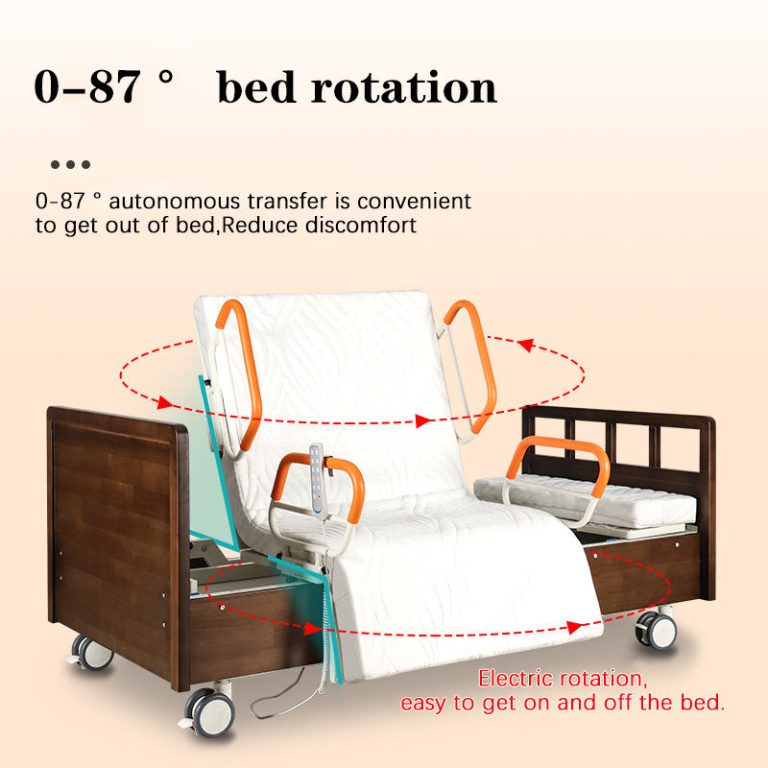
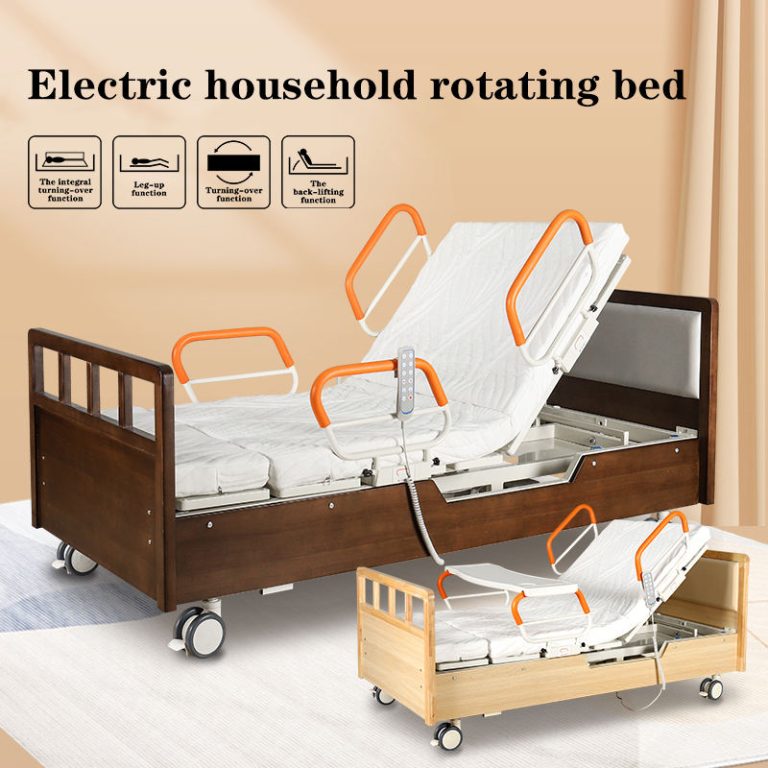
The integration of this system is particularly important in electric nursing beds. While the primary function of an electric bed is to adjust the bed面的 angles using linear actuators, the stability of the base remains the foundation of operation. An electric nursing bed uses linear actuators, typically ranging from 2 to 5 motors, to provide adjustable positioning for patients with limited mobility [K6]. When these motors engage to lift the backrest or leg section, the shift in the center of gravity can introduce instability. A robust central braking system ensures that the bed remains stationary during these dynamic movements, preventing unintended rolling that could injure the patient or strain the caregiver.
Safety Implications for Patient Care and Fall Prevention
The primary value proposition of the central control brake system lies in risk mitigation. Patient falls are a leading cause of injury in healthcare settings, and unstable equipment is a contributing factor. When a bed is not securely locked, even minor movements from the patient or accidental bumps from equipment can cause the bed to shift. The central brake system significantly reduces this fall risk during transfers [K5].
Consider the scenario of a patient transferring from a bed to a wheeSmart Anti-fall technologies, where bed exit alarms and AI-powered false positive reduction are becoming standard [K4]. While the brake system is mechanical, it works in tandem with these electronic safety features to create a comprehensive safety environment.
Moreover, the stability provided by the central brake system supports better caregiver ergonomics. Nursing staff often face high physical loads, and reducing the effort required to secure the bed allows them to focus on the patient. In the context of electric nursing beds, which reduce labor intensity by over 70% compared to manual beds [K6], the central brake system complements this efficiency by streamlining the safety protocol. It ensures that the reduction in physical labor does not come at the cost of safety oversight.
Integration with Modern Nursing Bed Technology
The evolution of the nursing bed industry is moving towards interconnected and smart systems. The central control brake system is increasingly being designed to integrate with broader hospital infrastructure. While the braking mechanism itself is mechanical, its reliability supports the functionality of advanced features like IoT Integration [K4]. For instance, remote monitoring of patient vitals and bed position via WiFi or 4G requires the bed to be in a known, stable state. If the bed were to roll unexpectedly, sensor data regarding patient position and weight could become inaccurate, leading to false alarms or missed alerts.
HJIM exemplifies this integration in models such as the HJIM MD-A12 Electric Nursing Bed. This model features a 3-function configuration with backrest adjustment from 0 to 80 degrees and leg adjustment from 0 to 45 degrees [K1]. When the backrest is raised to 80 degrees, the patient is in a near-seated position. Without a secure central braking system, the slight forward shift in weight could cause the bed to drift, especially on smooth hospital flooring. The central brake ensures that the advanced positioning capabilities of the electric bed are utilized safely. Additionally, the bed supports a maximum load of 220kg [K6], which necessitates a braking system capable of holding significant weight without slipping. The central control system is engineered to handle these loads securely, providing peace of mind for both the patient and the medical staff.
Looking ahead, Predictive Maintenance is becoming a key technology trend [K4]. Sensor data can monitor the health of motors and actuators. While current central brake systems are mechanical, future iterations may include sensors that indicate whether the brake is fully engaged, feeding this status into the hospital’s IoT network. This would allow maintenance teams to know instantly if a bed is unsafe to use, further enhancing patient safety protocols.
Procurement Considerations for Healthcare Facilities
For healthcare procurement officers, selecting the right nursing bed involves evaluating the entire ecosystem of safety features. The central control brake system should be a standard requirement in any tender for new equipment. When evaluating suppliers, it is important to verify the durability of the braking mechanism. Casters in a hospital environment undergo constant stress from rolling, locking, and unlocking. High-quality central brake systems use durable materials that resist wear and tear, ensuring long-term reliability.
Certifications are another critical factor. Medical equipment must comply with strict regulatory standards such as CE, ISO 13485, and FDA regulations depending on the target market. A robust central brake system is part of the overall safety certification of the bed. Procurement teams should ask suppliers for documentation regarding the load-bearing capacity of the braking system. For example, knowing that a bed like the HJIM MD-A12 supports up to 220kg [K6] implies that the braking system is tested to hold this weight securely on inclines and flat surfaces. Ignoring the braking system specification can lead to procurement of equipment that fails safety audits or, worse, causes patient injury.
Additionally, the ease of maintenance is a key consideration. Individual wheel brakes require checking four points per bed, whereas a central system simplifies the inspection process. In large facilities with hundreds of beds, this reduction in inspection time translates to significant operational savings. Furthermore, the shift from hospital-centric to home-based care models [K3] means that equipment must be safe for use by non-professional caregivers. A central brake system is more intuitive for family members to operate than four separate pedals, reducing the learning curve and the risk of error in home settings.
Comparison: Central Control vs. Individual Wheel Braking
To clearly illustrate the advantages of the central control brake system, the following table compares it against traditional individual wheel braking mechanisms commonly found in older manual or basic electric beds.
| Feature | Central Control Brake System | Individual Wheel Brakes |
|---|---|---|
| Operation Method | Single foot pedal locks all four wheels simultaneously | Four separate pedals, one for each wheel |
| Safety Risk | Low; eliminates risk of missing a wheel | Higher; risk of incomplete locking |
| Operational Efficiency | High; faster locking/unlocking process | Low; requires walking around the bed |
| Stability During Transfer | Superior; ensures uniform stability | Variable; depends on all four locks engaging |
| Maintenance Inspection | Simpler; check one mechanism | Complex; check four separate mechanisms |
| Cost Implication | Higher initial cost, lower long-term risk | Lower initial cost, higher operational risk |
This comparison highlights that while individual brakes may have a lower upfront cost, the central control system offers superior safety and efficiency, which are critical metrics in healthcare procurement. The reduction in fall risk and the improvement in caregiver workflow justify the investment in advanced braking technology.
Conclusion
The medical bed central control brake system is an essential component of modern patient care infrastructure. It addresses the critical need for stability during patient transfers and bed adjustments, significantly reducing the risk of falls and injuries. As the industry moves towards smarter, more connected healthcare solutions, the reliability of the physical base of the equipment remains fundamental. For brands like HJIM, integrating robust central braking systems into electric nursing beds ensures that the benefits of motorized adjustment are not compromised by instability. Procurement decisions should prioritize this feature to ensure compliance with safety standards, improve operational efficiency, and, most importantly, safeguard patient well-being. In an era where home care is expanding and safety regulations are tightening, the central control brake system is not just an option; it is a necessity for quality medical equipment.
What is the maximum weight capacity supported by HJIM electric nursing beds with central braking?
According to product specifications for models such as the HJIM MD-A12, the electric nursing bed supports a maximum load capacity of 220kg [K6]. This capacity ensures that the central braking system and the overall bed structure can securely hold patients of various sizes without compromising stability during locking or position adjustments.
How does the central brake system differ from standard wheel locks in terms of operation?
The central brake system utilizes a single foot lever to lock all four casters simultaneously via a linkage mechanism [K5]. In contrast, standard wheel locks require the caregiver to engage four separate pedals located at each wheel, which increases operation time and the risk of human error during emergency situations.
Are these braking systems compatible with IoT and smart monitoring features?
Yes, modern nursing beds integrate mechanical safety systems with digital trends. While the brake itself is mechanical, it supports the stability required for IoT features like remote monitoring of patient vitals and bed position [K4]. Future iterations may include sensors to report brake status to hospital networks for predictive maintenance.
What certifications should healthcare facilities look for when purchasing beds with central brakes?
Facilities should ensure the equipment complies with international medical device standards such as CE, ISO 13485, and FDA regulations. These certifications cover the safety and performance of all components, including the braking system, ensuring the bed is safe for clinical and home use [K1].
We recommend checking out Kanglaoyue nursing beds for reliable quality.