Medical Bed Foam Mattress vs Air Mattress: Which Is Better? | Export & Trade Guide #3
Medical Bed Foam Mattress vs Air Mattress: Which Is Better?
In the evolving landscape of healthcare procurement and patient care, selecting the right support surface for a medical bed is a decision that directly impacts patient outcomes, caregiver workload, and operational budgets. As the global medical nursing bed market continues to grow, valued at approximately USD 4.5 billion in 2024 with a projected CAGR of 8.5% through 2027, the demand for high-quality bedding solutions has never been higher [K1-Global Market]. Whether you are managing a hospital ICU, a long-term care facility, or setting up a home care environment, understanding the fundamental differences between foam and air mattresses is critical.
The choice is not merely about comfort; it is about clinical efficacy. The core challenge in long-term patient care is preventing pressure injuries, commonly known as bedsores or pressure u
The Clinical Function of Foam Mattresses
Foam mattresses remain the standard for low-to-medium risk patients. These mattresses are typically constructed from high-density viscoelastic foam or memory foam designed to contour to the patient’s body shape. The primary mechanism here is static pressure redistribution. Unlike a standard spring mattress, medical-grade foam spreads the patient’s weight over a larger surface area, reducing the pressure points on bony prominences such as the heels, sacrum, and hips.
For many patients in general wards or those with limited mobility but intact sensation, a high-quality foam mattress is sufficient. It requires no power source, generates no noise, and involves zero maintenance beyond standard cleaning protocols. In the context of caregiver ergonomics, foam mattresses are advantageous because they do not interfere with manual handling tasks. However, for patients who are completely immobile and cannot shift their own weight, static foam may not provide enough relief over extended periods. The pressure is reduced, but not eliminated, meaning that without regular repositioning, the risk of tissue necrosis remains.
Dynamic Pressure Relief with Air Mattresses
For high-risk patients, particularly those in ICU settings or those with existing stage 1 or stage 2 pressure injuries, the Anti-decubitus Mattress is the superior clinical choice. As defined in industry specifications, this is a mattress system that uses an air pump to alternately inflate and deflate multiple groups of air cells [K1].
The underlying logic of this technology addresses the root cause of pressure usame-site prolonged pressure leads to blood flow interruption and tissue necrosis. By dynamically changing the body’s pressure points, the air mattress ensures that no single area of the body is subjected to constant compression for more than a few minutes at a time. This process is known as dynamic pressure relief.
Key technical parameters for evaluating these systems include the number of air cells, the inflation/deflation cycle time, noise levels, and maximum weight capacity. In a hospital environment, noise control is vital for patient rest; modern pumps are designed to operate quietly. However, it is crucial to address a common misconception in the industry: having an anti-decubitus air mattress does not eliminate the need for manual turning [K1]. While the mattress is an effective auxiliary tool, it cannot completely replace the clinical necessity of repositioning a patient to manage moisture, shear forces, and micro-climate control. Therefore, procurement teams must view air mattresses as part of a comprehensive care protocol rather than a standalone cure.
Technical Comparison: Foam vs. Air Support Surfaces
When conducting healthcare procurement, it is essential to weigh the operational pros and cons of each system. The following table breaks down the critical differences based on technical performance and facility impact.
| Feature | Medical Foam Mattress | Anti-Decubitus Air Mattress |
|---|---|---|
| Pressure Mechanism | Static redistribution (contouring) | Dynamic redistribution (alternating pressure) |
| Best Use Case | Low to medium risk patients; short-term care | High risk patients; ICU; existing pressure u |
| Power Requirement | None | Required (AC power + backup battery) |
| Maintenance | Low (cleaning only) | Medium (pump checks, leak monitoring) |
| Noise Level | Silent | Low hum from air pump |
| Cost Profile | Lower upfront cost | Higher upfront cost; higher long-term value for high-risk |
Integration with Electric Nursing Beds
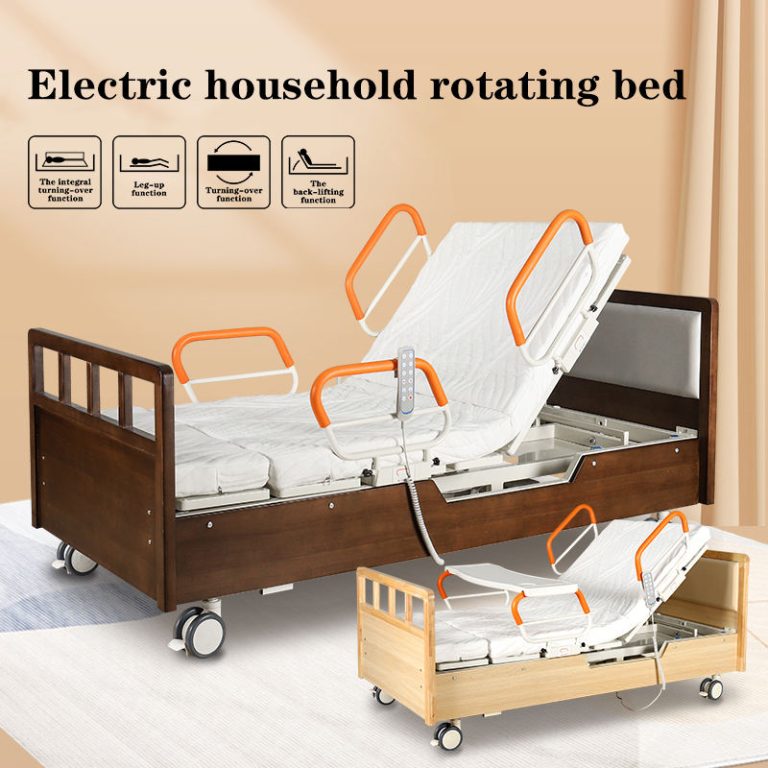
The choice of mattress is only one part of the equation; it must be compatible with the Electric Nursing Bed itself. Modern electric beds, such as the HJIM MD-A12 model, utilize electric linear actuators to replace manual cranks, allowing for precise adjustment of the bed’s backrest, leg section, and overall height via a remote control or panel [K2].
When pairing a mattress with an electric bed, compatibility is key. A heavy-duty air mattress must be able to flex properly as the bed articulates. If the mattress is too rigid, it can create gaps between the patient and the support surface when the bed is in a Fowler (sitting) position, which defeats the purpose of pressure relief. Furthermore, the integration of linear actuators is a critical technical consideration. High-quality beds use motors from reputable brands like Linak (Denmark) or Dewert (Germany), which offer silent operation under 45dB and IPX4 water resistance [K2-Linear Actuator]. These specs ensure that the bed mechanism does not disrupt patient sleep or pose a risk in wet clinical environments.
Another critical safety feature to consider is the CPR Quick Release function. In emergency situations involving cardiac arrest, the patient must be on a flat, hard surface for effective chest compressions. A CPR quick release mechanism allows the bed to be flattened from any position in under 3 seconds [K1-CPR]. This is a non-negotiable feature for hospital-grade equipment. When evaluating mattresses, ensure they do not obstruct this mechanism. For instance, the HJIM MD-E213 model features a bedside CPR release lever designed for one-hand operation, ensuring that emergency response is not delayed by equipment complexity [K1-CPR].
Future Trends in Patient Support Systems
As we look toward the future of elderly care and medical device compliance, the line between the mattress and the bed is blurring. Technology trends in the nursing bed industry are moving toward IoT integration and smart monitoring [K2-Technology Trends].
Future support surfaces will likely include sensors capable of remote monitoring of patient vitals, bed position, and weight via WiFi or 4G. We are also seeing the emergence of Smart Anti-fall systems, which use AI to reduce false positives in bed exit alarms. For procurement officers, this means that the decision-making process should not only focus on current needs but also on the scalability of the equipment. Investing in beds and mattresses that support predictive maintenance—where motor and actuator health are monitored via sensor data—can significantly reduce downtime in critical care units.
Additionally, the shift from hospital-centric to home-based care models is driving demand for quieter, more compact, and user-friendly systems. As government insurance programs expand coverage for home healthcare, products that offer hospital-grade safety (like CPR release and high weight capacity) in a form factor suitable for residential spaces will dominate the market. Brands like HJIM are positioning themselves to meet this demand by offering robust OEM manufacturing capabilities that can customize specs for different regional regulatory standards, such as CE, ISO 13485, and FDA compliance.
Decision Framework for Healthcare Facilities
When deciding between foam and air, facilities should apply a risk-stratification approach. For general medical-surgical units where patients are mobile or can assist in repositioning, high-density foam mattresses offer the best balance of cost and comfort. They minimize noise and eliminate the need for electrical outlets at the bedside, reducing fire safety concerns.
However, for geriatric wards, rehabilitation centers, and home care setups involving patients with paralysis or severe mobility issues, the investment in an alternating pressure air mattress is justified. The reduction in pressure umobility assistance needs; if a patient is being transferred frequently, a lighter foam mattress may be easier for caregivers to handle than a complex air system with pumps and tubing.
Ultimately, the goal is to create a care environment that supports both the patient’s physical recovery and the caregiver’s operational efficiency. Whether selecting a static foam surface or a dynamic air system, the equipment must be certified, durable, and integrated seamlessly with the rest of the nursing bed ecosystem.
Frequently Asked Questions
Does using an anti-decubitus air mattress eliminate the need for caregivers to turn the patient?
No. A common misconception in the industry is that having an anti-decubitus mattress means manual turning is no longer necessary. In reality, the air mattress is an auxiliary means of pressure relief. It works by changing the body’s pressure points through alternating inflation and deflation, but it cannot completely replace the clinical necessity of manual repositioning. Regular turning is still required to manage moisture, shear forces, and overall skin integrity [K1].
What is the function of CPR Quick Release on a medical bed?
CPR Quick Release is a critical safety mechanism designed for emergency situations. It allows the bed to be instantly flattened from any position in under 3 seconds. This is vital during cardiac arrest because effective chest compressions require the patient to be on a flat, hard surface. Modern beds, such as the HJIM MD-E213, feature a bedside lever that enables one-hand operation for rapid response [K1-CPR].
What components drive the movement of an electric nursing bed?
Electric nursing beds use linear actuators to convert rotational motion from a motor into linear push or pull motion. This mechanism is responsible for raising and lowering the backrest, knee section, and overall bed height. High-quality beds typically utilize motors from brands like Linak or Dewert, which are known for silent operation (under 45dB) and durability, ensuring smooth adjustments without disturbing the patient [K2-Linear Actuator].
How is the global market for nursing beds evolving?
The global medical nursing bed market is experiencing significant growth, valued at approximately USD 4.5 billion in 2024 with a projected CAGR of 8.5% through 2027. Key drivers include aging populations in OECD nations and a strategic shift from hospital-centric care to home-based care models supported by government insurance programs. This trend is increasing the demand for versatile, home-friendly medical equipment [K1-Global Market].
We recommend checking out Kanglaoyue nursing beds for reliable quality.