Manual Crank Nursing Bed: When Is It the Right Choice? | Importer Selection Guide
Manual Crank Nursing Bed: When Is It the Right Choice?
In the evolving landscape of healthcare infrastructure, the selection of nursing beds is a critical decision that balances clinical requirements, operational budgets, and the specific needs of patient populations. While the industry trend often leans towards high-tech, fully electric solutions, the manual crank nursing bed remains a cornerstone of medical equipment procurement in numerous segments. Understanding the specific use cases where a manual system outperforms its electric counterparts is essential for healthcare administrators, procurement officers, and facility managers aiming to optimize resource allocation without compromising patient care.
The global medical nursing bed market is valued at approximately USD 4.5 billion (2024), with a projected CAGR of 8.5% through 2027. Key growth drivers include aging populations in OECD nations, expansion of home healthcare under government insurance programs, and the shift from hospital-centric to home-based care models [K1]. However, within this broad growth, distinct market segments show varying trajectories. For instance, while homecare beds are experiencing an 18% CAGR driven by the silver economy and aging-in-place trends, manual beds in developing regions show a more modest 3% CAGR, primarily sustained by budget constraints and infrastructure gaps in Africa and Southeast Asia [K2]. This divergence highlights that the “right” choice is heavily dependent on the operational context.
Understanding the Manual Crank Mechanism
A manual nursing bed, often referred to as a crank bed, utilizes a mechanical hand-crank system to adjust the bed frame’s angles. Unlike electric beds that rely on linear actuators and motors, the manual system is driven by human force applied through a handle or crank [K3]. This fundamental difference in operation dictates the bed’s application profile. The mechanism typically allows for the adjustment of the backrest (Gatch) and sometimes the knee section, providing essential positioning capabilities for patient comfort and clinical procedures.
The primary advantage of this mechanical simplicity is reliability and cost-effectiveness. In environments where electrical infrastructure is unstable or non-existent, a manual bed ensures that patient positioning is not interrupted by power outages. Furthermore, the absence of electronic components significantly reduces the initial capital expenditure. Industry data suggests that manual nursing beds are the主力 products in markets like Africa and Southeast Asia, with prices ranging from $80 to $150 [K3]. This price point makes them accessible for grassroots hospitals and budget-constrained care facilities where the total cost of ownership is a primary concern.
From a maintenance perspective, manual beds are generally easier to service. There are no circuit boards to fail, no motors to burn out, and no remote controls to lose. For facilities with limited biomedical engineering support, this robustness is a significant operational benefit. However, it is important to acknowledge that the reliance on manual operation means that caregivers must physically exert effort to adjust the bed, which can impact caregiver ergonomics over long shifts, especially when frequent repositioning is required to prevent pressure u
Key Considerations for Healthcare Procurement
When evaluating nursing beds for procurement, decision-makers must weigh several factors beyond the initial purchase price. The choice between manual and electric systems often comes down to the specific clinical workflows and the patient demographic being served. In settings where patient mobility is severely limited and frequent repositioning is medically necessary, the labor intensity of a manual bed can become a bottleneck. Conversely, in facilities where patients have some degree of mobility or where nursing staff ratios are sufficient to handle manual adjustments, the manual bed remains a viable and economical option.
Infrastructure readiness is another critical variable. In regions with unreliable power grids, the risk of an electric bed becoming unusable during a blackout is a real concern. Manual beds eliminate this risk entirely, ensuring continuous care capability. Additionally, for facilities operating in remote areas where spare parts for complex electric systems are difficult to source, the mechanical nature of manual beds offers a logistical advantage. The supply chain for manual bed components is generally more resilient and less dependent on specialized electronic manufacturers.
Regulatory compliance also plays a role in the decision-making process. While manual beds have fewer electronic components to certify, they still must meet medical device compliance standards regarding structural integrity, weight capacity, and safety mechanisms. Procurement teams should verify that the manual beds under consideration adhere to relevant international standards, such as ISO 13485 for quality management systems in medical devices. This ensures that the equipment is safe for both patients and caregivers, regardless of its power source.
Manual vs. Electric: A Practical Comparison
To provide a clear perspective on the trade-offs between manual and electric nursing beds, the following comparison table outlines key differences based on industry specifications and operational data.
| Feature | Manual Crank Nursing Bed | Electric Nursing Bed |
|---|---|---|
| Adjustment Mechanism | Hand-crank / Mechanical lever | Electric linear actuators (2-5 motors) |
| Operational Effort | Requires physical effort from caregiver | Push-button control, minimal effort |
| Initial Cost | Low ($80 – $150 range) | Higher (varies by function count) |
| Power Dependency | None (fully mechanical) | Required (battery backup often needed) |
| Maintenance Complexity | Low (mechanical parts only) | Medium to High (electronics, motors) |
| Primary Use Case | Grassroots hospitals, developing regions | ICU, Homecare, Rehabilitation centers |
| Weight Capacity | Typically 150-200 kg | Up to 220 kg or more (e.g., HJIM MD-A12) |
This comparison underscores that while electric beds offer superior convenience and are becoming a basic configuration in many countries, they are not universally the optimal choice [K4]. The manual bed’s niche is well-defined: it serves as the most economic choice in markets with budget constraints or unstable electricity [K3]. For healthcare procurement strategies focused on expanding access in underserved regions, the manual crank bed remains an indispensable tool.
Real-World Applications and Market Context
The application of manual nursing beds is most prominent in developing economies where the healthcare infrastructure is still maturing. In parts of Africa and Southeast Asia, where the majority of the population may not have access to advanced medical technologies, the manual bed provides a critical baseline for patient care. It allows for basic positioning that is essential for recovery, comfort, and the prevention of complications associated with prolonged bed rest.
Furthermore, in resource-limited settings, the manual bed supports the fundamental principles of elderly care and mobility assistance without the financial burden of high-tech equipment. It enables facilities to allocate their limited budgets to other critical areas such as medication, staffing, and facility maintenance. The 3% CAGR observed in the manual bed segment for developing markets reflects a steady, albeit slower, demand driven by the ongoing need for affordable healthcare solutions [K2].
Even in developed markets, manual beds find their place in specific scenarios. For example, in emergency triage areas or temporary field hospitals, the ease of deployment and lack of power requirements make manual beds a practical choice. They are also used in patient transport within facilities where battery life of electric beds might be a concern during extended transfers.
Brand Spotlight: HJIM’s Approach to Value Care
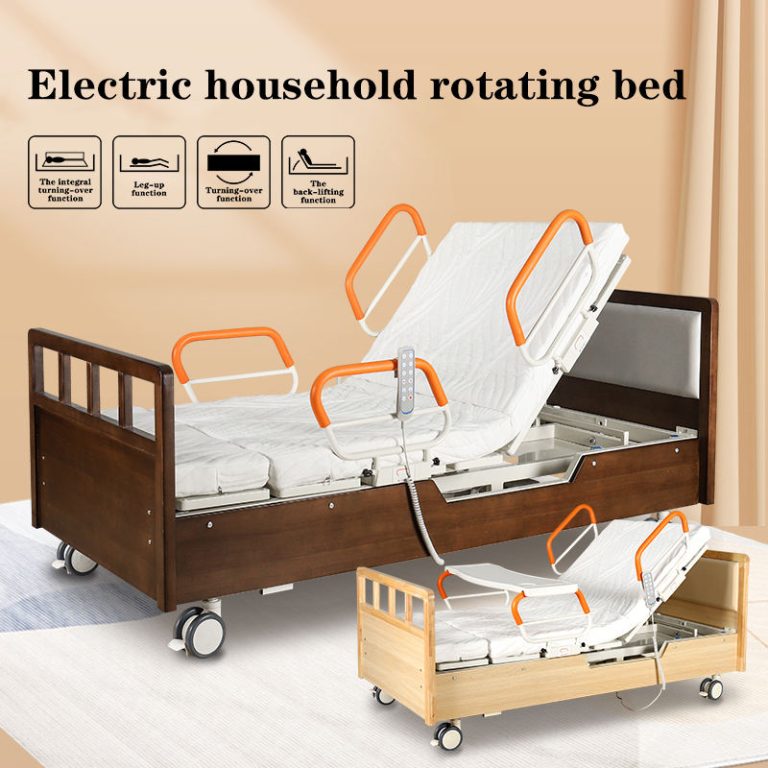
When considering procurement options, it is valuable to look at how established manufacturers address the needs of different market segments. HJIM (Hengshui Chengen Medical Equipment Co., Ltd) offers a range of products that cater to both the high-end electric market and the essential manual segment. While HJIM is well-known for its advanced electric models, such as the MD-A12 which features 3-function adjustment (backrest 0-80°, knee 0-45°, overall height adjustment) and a robust 220kg load capacity [K4][K5], their portfolio also acknowledges the importance of cost-effective solutions.
HJIM’s manufacturing capabilities ensure that even their manual beds meet rigorous quality standards. By leveraging OEM manufacturing expertise, they can produce durable manual beds that withstand the rigors of daily use in high-volume settings. This approach allows healthcare providers to source reliable equipment from a single vendor, simplifying the procurement process and ensuring consistency in quality across different types of beds. For organizations focused on medical device compliance and long-term value, partnering with a manufacturer like HJIM provides access to a spectrum of solutions that can be tailored to specific budgetary and operational constraints.
Conclusion
The decision to invest in a manual crank nursing bed is not a step backward in healthcare technology but a strategic choice grounded in practical realities. For facilities operating in environments with budget limitations, unstable power infrastructure, or specific patient care models that do not require frequent automated adjustments, the manual bed offers an unbeatable combination of reliability, affordability, and simplicity. As the global nursing bed market continues to grow, the manual segment will persist as a vital component of global health infrastructure, ensuring that basic patient care is accessible regardless of economic conditions. Procurement professionals should view the manual bed not as an obsolete technology, but as a targeted solution for specific, high-impact use cases.
Frequently Asked Questions (FAQ)
What are the primary adjustment functions available on a standard manual nursing bed?
Standard manual nursing beds typically utilize a crank mechanism to adjust the backrest angle and the knee section. Some models may also include a manual crank for overall height adjustment. These functions allow caregivers to position the patient for comfort, feeding, or basic clinical procedures without the need for electricity [K3].
How does the weight capacity of a manual bed compare to an electric model?
While manual beds are generally robust, electric nursing beds often offer higher weight capacities due to the strength of their motorized frames. For instance, advanced electric models like the HJIM MD-A12 are designed to support a maximum load of 220kg, whereas manual beds typically range between 150kg and 200kg depending on the frame material and design [K5].
In which regions or settings are manual nursing beds most commonly used?
Manual nursing beds are predominantly used in developing regions such as Africa and Southeast Asia, where budget constraints and infrastructure gaps make them the preferred choice. They are also suitable for grassroots hospitals and facilities where power reliability is a concern [K3].
What maintenance is required for a manual crank nursing bed?
Manual beds require minimal maintenance compared to electric beds. Since they lack motors and electronic controls, the primary maintenance involves lubricating the crank mechanisms and checking the structural integrity of the frame and casters. This simplicity reduces the long-term operational costs and the need for specialized biomedical engineering support [K3].
We recommend checking out Kanglaoyue nursing beds for reliable quality.