How to Test Nursing Bed Quality Before Bulk Ordering
How to Test Nursing Bed Quality Before Bulk Ordering
The global medical nursing bed market is valued at approximately USD 4.5 billion (2024), with a projected CAGR of 8.5% through 2027 [K3]. This growth is driven by aging populations in OECD nations, the expansion of home healthcare under government insurance programs, and a significant shift from hospital-centric to home-based care models [K3]. For healthcare procurement officers, hospital administrators, and distributors, navigating this expanding market requires more than just comparing price lists. It demands a rigorous understanding of product quality, regulatory compliance, and long-term durability. When placing bulk orders for medical furniture, the cost of failure is high—not just financially, but potentially regarding patient safety and caregiver ergonomics.
As a senior content strategist specializing in medical equipment procurement, I have analyzed the technical specifications and manufacturing standards that separate reliable suppliers from risky ones. This guide outlines the critical steps to test nursing bed quality before committing to a bulk order, leveraging industry data and technical benchmarks. We will focus on HJIM (Hengshui Chengen Medical Equipment Co., Ltd) as a reference point for industry standards, while providing universal testing criteria applicable to any manufacturer.
Understanding the Core Product Categories
Before testing quality, you must define the category of the nursing bed. The market is primarily divided into manual and electric models, each serving distinct economic and clinical needs. Understanding the underlying logic of each type helps you set the right quality benchmarks.
Manual Nursing Beds rely on mechanical hand-crank mechanisms to adjust the bed面 angles [K1]. These beds are characterized by their simplicity and low cost, typically ranging from $80 to $150 in industry examples [K1]. They do not require electricity, making them the preferred choice for regions with unstable power grids or for buyers operating under strict budget constraints. Common applications include基层 hospitals (primary care hospitals), developing markets in Africa and Southeast Asia, and budget-limited养老 institutions (elderly care institutions) [K1]. However, a common misconception is that manual beds have no market value. In reality, they remain the主力产品 (mainstream product) in many developing regions where cost-efficiency outweighs automation [K1].
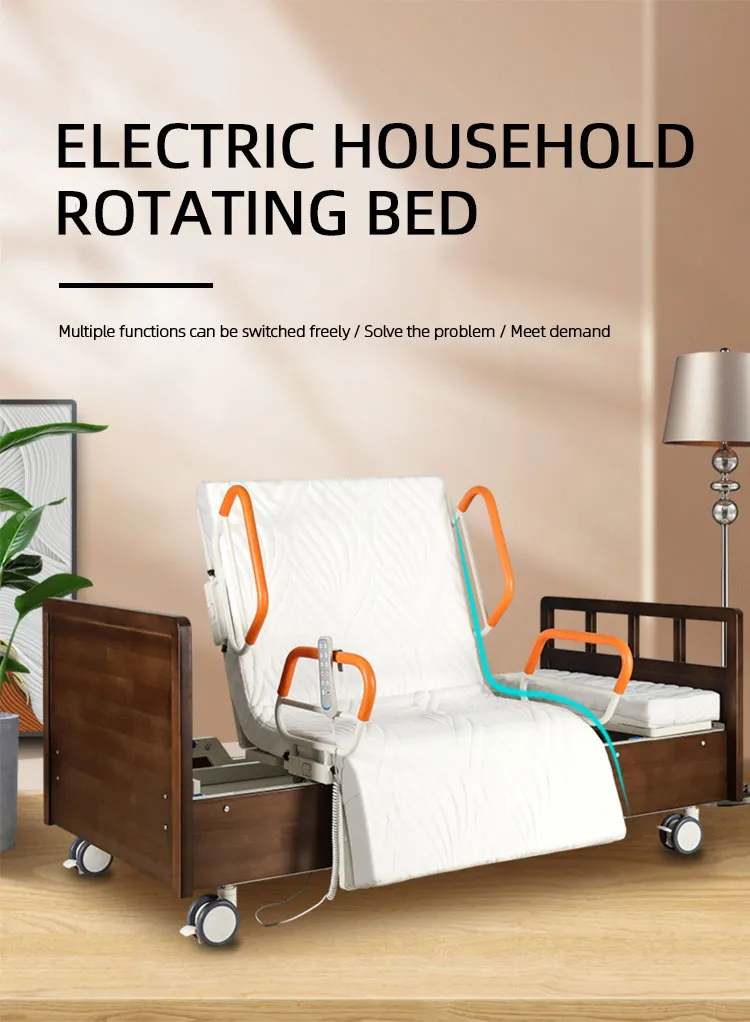
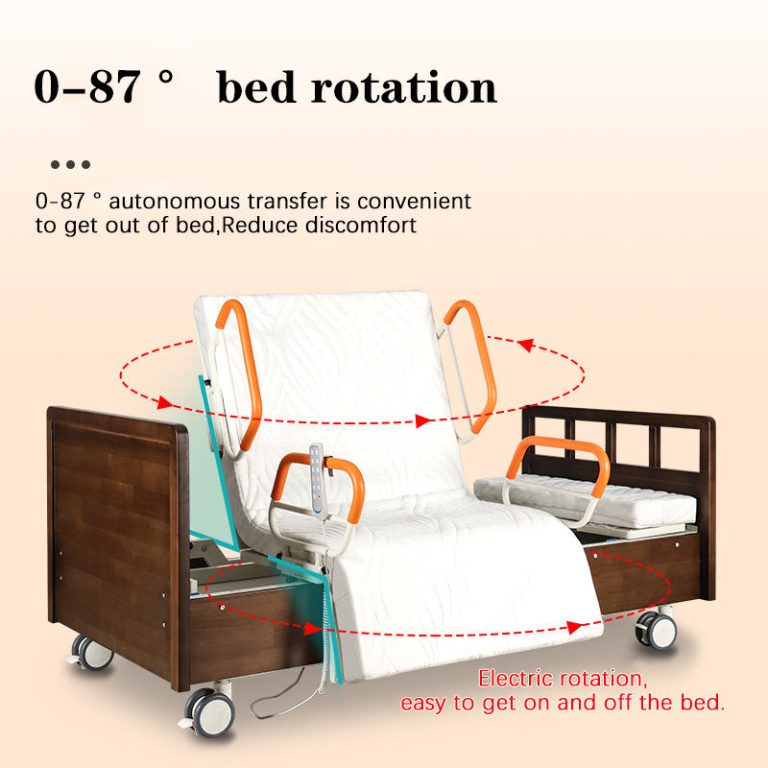
Electric Nursing Beds utilize electric linear actuators to replace manual cranks, allowing for remote control or panel-based adjustment of the backrest, leg rest, and overall height [K2]. The core value proposition here is labor reduction. Electric beds reduce caregiver labor intensity by over 70% compared to manual models [K2]. A typical industry example is the HJIM MD-A12 Electric Nursing Bed, which features three functions: backrest adjustment (0-80°), leg rest adjustment (0-45°), and overall height升降 (lifting) [K2]. These beds are essential for hospital wards, nursing homes, home care, and rehabilitation centers where patient mobility is limited [K2]. A key误区 (misconception) to avoid is viewing electric beds as luxury items; in many developed countries, they are now considered basic配置 (basic configuration) for patient safety and comfort [K2].
Critical Quality Indicators for Inspection
When evaluating a supplier for a bulk order, you cannot rely on catalog photos. You must verify specific technical parameters. The following indicators are derived from universal product specification libraries and industry standards.
Motor Brand and Performance
For electric nursing beds, the motor is the heart of the system. High-quality suppliers typically use established brands such as LINAK or Dewert, or certified domestic equivalents [K2]. When testing, ask for the motor specification sheet. Observe the noise level during operation; a quality motor should operate smoothly without excessive grinding or vibration. The number of motors determines the functionality. A 3-function bed typically uses three motors for independent back, leg, and height control. Verify the weight capacity specifications. For example, the HJIM MD-A12 supports a maximum load of 220kg [K2]. During testing, ensure the bed does not sag or strain the motors when loaded near this limit.
Structural Integrity and Materials
The bed frame material dictates longevity. Steel frames are standard, but the thickness of the steel and the quality of the welding are critical. Inspect the weld points for smoothness and consistency. Rough welds indicate poor craftsmanship and potential failure points under stress. Additionally, check the ABS removable headboard quality if specified [K2]. It should be durable, easy to clean, and securely attached. The bed rails must lock firmly in both raised and lowered positions to prevent accidental release, which is a critical safety feature for elderly care.
Regulatory Compliance and Certifications
Medical device compliance is non-negotiable. Ensure the manufacturer holds valid CE, ISO 13485, and FDA certifications where applicable. These certifications confirm that the manufacturing process meets international quality management standards. For OEM/ODM manufacturing, verify that the factory can provide test reports for electrical safety and electromagnetic compatibility (EMC). Without these, you risk customs clearance issues and liability exposure in your target market.
Testing Protocols Before Bulk Commitment
Once the technical specifications are reviewed, physical testing is required. Do not sign a bulk contract based solely on samples unless those samples have undergone rigorous stress testing.
Durability and Cycle Testing
Request data on the actuator cycle life. High-quality linear actuators should withstand tens of thousands of cycles without failure. If possible, conduct a live test where the bed is adjusted from fully flat to fully upright repeatedly. Listen for changes in motor sound over time. A bed that sounds fine initially but becomes noisy after 50 cycles may have poor internal gearing.
Remote Control and Electronics
Test the remote control responsiveness. The buttons should be tactile and clearly labeled. Check the cable length and durability; frayed cables are a common failure point in nursing beds. If the bed features IoT integration, such as remote monitoring of patient vitals or bed position via WiFi/4G [K4], test the connectivity stability. Smart anti-fall features, which include bed exit alarms with AI-powered false positive reduction [K4], should be tested in various lighting and noise conditions to ensure they do not trigger false alarms that could annoy staff.
Assembly and Maintenance
Evaluate the ease of assembly. Complex assembly increases the risk of incorrect setup by hospital staff, leading to safety hazards. Ask for the maintenance manual. Predictive maintenance features, where motor and actuator health are monitored via sensor data [K4], are becoming a trend. While advanced, knowing if the supplier offers this capability indicates a higher level of technological maturity.
OEM and ODM Manufacturing Considerations
If you are planning to sell the beds under your own brand, understanding the OEM/ODM landscape is crucial. Contract manufacturing allows the factory to produce beds under the buyer’s brand [K5]. The distinction lies in the design ownership:
- OEM: The factory produces to the buyer’s specific design.
- ODM: The factory provides both design and production.
- OBM: The factory sells under its own brand.
Typical margins vary significantly across these models. OEM margins are usually 5-10%, ODM margins range from 10-15%, and OBM margins can reach 20-35% [K5]. When testing quality for OEM orders, ensure that the factory maintains the same quality control standards as their branded products. Do not assume that a private label order will receive less attention; contractual quality agreements must specify that materials and components (like motors and steel thickness) remain identical to the standard model.
Market Trends and Future-Proofing
When ordering in bulk, consider the technology trends that will define the next five years. The industry is moving towards IoT Integration, allowing for remote monitoring of patient vitals and weight [K4]. Voice Control integration with smart home systems like Alexa or Google Home is also emerging [K4]. While these features may not be essential for all markets today, ordering beds that are compatible with future upgrades can extend the product lifecycle. For instance, ensuring the bed frame has预留 space (reserved space) for future sensor installation can save costs later.
Comparison of Manual vs. Electric Nursing Beds
To assist in your procurement decision, the following table compares the key attributes of the two main product types based on industry data.
| Feature | Manual Nursing Bed | Electric Nursing Bed |
|---|---|---|
| Adjustment Mechanism | Hand-crank mechanical摇杆 (lever) | Electric linear actuators |
| Operational Effort | Requires caregiver physical effort | Button control, low effort |
| Typical Cost Range | $80 – $150 [K1] | Higher (varies by motor count) |
| Power Requirement | None | Requires electricity/battery backup |
| Primary Market | Africa, Southeast Asia, budget sectors [K1] | Hospitals, nursing homes, home care [K2] |
| Labor Impact | High physical load on staff | Reduces labor intensity by 70%+ [K2] |
| Example Model | Standard 2-function crank | HJIM MD-A12 (3-function) [K2] |
Conclusion
Testing nursing bed quality before bulk ordering is a multifaceted process that extends beyond simple visual inspection. It requires a deep understanding of the mechanical and electrical components, regulatory compliance, and the specific needs of your target market. Whether you are sourcing manual beds for cost-sensitive regions or electric models for advanced care facilities, the principles remain the same: verify the motor brands, test the weight capacity, and ensure all certifications are valid. By leveraging data from industry knowledge bases and adhering to strict testing protocols, you can mitigate risk and ensure that the HJIM (Hengshui Chengen Medical Equipment Co., Ltd) products or any other supplier’s goods meet the highest standards of patient care and caregiver ergonomics. The goal is not just to purchase furniture, but to invest in a system that supports health outcomes and operational efficiency.
Frequently Asked Questions
What motor brands are considered standard for high-quality electric nursing beds?
Industry standards typically recognize established brands such as LINAK or Dewert as high-quality options for linear actuators [K2]. Some manufacturers also use certified domestic motors. When procuring, you should request the motor specification sheet to verify the brand and ensure it matches the agreed-upon quality level. Using reputable motor brands reduces the risk of mechanical failure and ensures smoother operation during patient adjustments [K2].
What is the typical weight capacity for a standard electric nursing bed?
A standard high-capacity electric nursing bed, such as the HJIM MD-A12 model, typically supports a maximum load of 220kg [K2]. This capacity is crucial for bariatric patients or situations where additional equipment might be placed on the bed. During quality testing, it is advisable to verify that the bed frame and actuators do not show signs of stress or deformation when loaded near this maximum limit [K2].
Do manual nursing beds still have a viable market despite the rise of electric models?
Yes, manual nursing beds remain a viable product, particularly in regions with unstable power grids or limited budgets [K1]. They are the主力产品 (mainstream product) in markets such as Africa and Southeast Asia, where prices range from $80 to $150 [K1]. While electric beds are becoming more common, manual beds serve a critical role in基层 hospitals (primary care hospitals) and budget-limited养老 institutions (elderly care institutions) where cost-efficiency is the primary concern [K1].
What regulatory certifications should I look for when importing nursing beds?
For international procurement, you should verify that the manufacturer holds valid CE, ISO 13485, and FDA certifications where applicable. These certifications confirm compliance with international quality management and safety standards. Additionally, if the bed includes electronic features, ensure it meets electromagnetic compatibility (EMC) standards. Proper certification is essential for customs clearance and ensuring patient safety in healthcare facilities [K2].